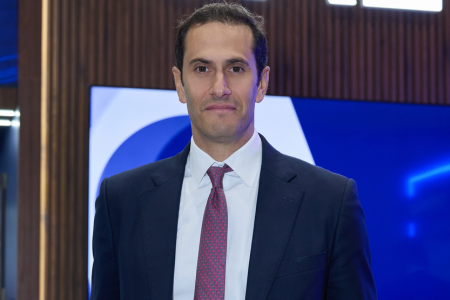







As airlines face growing operational complexity, the aviation industry is turning to data, artificial intelligence and automation to improve efficiency, reduce disruption and support faster decision-making. From fuel optimisation and disruption management to weather intelligence and aircraft connectivity, technology is reshaping how airlines and air navigation service providers manage their operations. In this conversation, Yann Cabaret, CEO of SITA for Aircraft, explains how SITA is extending its optimisation approach from fuel efficiency to disruption management, while also encouraging a more collaborative co-innovation model with airlines and air navigation service providers. He also points to a future in which operations teams manage exceptions rather than timelines, and in which shared intelligence across weather, maintenance, and communication networks could make aviation operations far more resilient.
SITA recently acquired Big Blue Analytics and its OCC Assistant Manager platform. What was the strategic thinking behind that acquisition?
We acquired Big Blue because they are the experts in what they do, they built a truly unique solution, using their expertise and data science. This technology can handle a level of complexity that humans simply can’t process effectively on their own.
A useful analogy is SITA’s earlier acquisition of Safety Line, a France-based company focused on fuel optimisation. It used data, artificial intelligence, and machine learning to model aircraft performance and optimise climb profiles by accounting for aircraft performance and weather conditions, then provided recommendations to pilots to reduce fuel burn.
That model worked well. We signed around 50 airlines for that solution, with particularly strong adoption in India. From there, we began asking whether the same logic could be applied to another major aviation challenge beyond fuel: disruption management.
SITA is already deeply present in airline operations control centres, or OCCs. We have products such as the SITA Mission Watch. We have been working in the OCC environment for nearly two decades, so we understand how it works and what are the challenges.
That is the logic behind the acquisition of Big Blue Analytics. It is a smaller company than Safety Line was when we acquired it, but I could see the same qualities in its DNA that I had seen in Safety Line four or five years earlier. The team of experts, having worked really hard to develop a solution that solves real challenge in a way that brings the most value to airlines.
The other reason is that disruption-management solutions in the market tend to be very large, complex, and time-consuming to implement. We felt this was a good place to start doing something different. The market reaction after the press release was positive.
How does OCC Assistant Manager change the way airlines recover from operational disruptions compared with traditional approaches?
Disruption is one word, but it covers a very wide range of situations, from a pilot calling in sick to an airspace closure. The scale and complexity can be very different.
Today, depending on the airline and the complexity of its operation, a duty manager often makes decisions on the spot: whether to wait, dispatch, delay, or cancel a flight. Much of that decision-making comes from the duty manager’s experience, judgement, and instinct.
At the other end of the spectrum are. traditional systems that generally run optimisation just for one parameter – crew or passengers.
And then lastly, there are complex projects that are done by consulting firms. These ones will take between 6 and 18 months to develop and install, and we have seen that they are not performing as expected. While the airline continues to lose money due to disruptions.
The OCC Assistant Manager tool from Big Blue Analytics applies a combination of AI and optimisation techniques to cut down the combinatorial complexity and deliver an answer in a few minutes.
And then the best part is that, unlike any other tools, it evaluates all key parameters at the same time: crew, passenger, aircraft and considering maintenance – optimizing and solving across the board. It arrives at a decision that is already optimized across multiple constraints (crew, aircraft, passengers, etc.), which is extremely hard to do manually.
That speed changes the operational response. The system can recommend a scenario based on the airline’s priorities, whether the focus is protecting passengers, protecting the network, or balancing both.
SITA has said the platform can reduce disruption costs by up to 30%. How can airlines measure and validate those savings?
Our experience with fuel savings is helpful here. In fuel optimisation, the challenge is to prove that a new trajectory is actually saving fuel. We do that by demonstrating that we can accurately predict fuel consumption.
For example, an airline can send us Quick Access Recorder, or QAR, data without the fuel figure, and we can predict how much fuel the aircraft consumed. The airline can then compare our prediction with the actual figure.
A similar logic applies to disruption management. The system can operate in the background for a period of time, observing how the airline currently manages disruption and what decisions are actually taken. That creates a reference case for how the airline operates without the product.
You can then compare that with the scenarios recommended by the system. Over time, the airline can benchmark the difference in delay minutes, impacted customers, and other operational or financial indicators.
What will an airline Operations Control Centre look like five years from now as AI becomes more deeply embedded in operations?
If you go into an OCC today, you will usually see dispatchers working with a timeline, often in the form of a Gantt chart. Over time, I think that the Gantt chart will disappear from the dispatcher’s main view.
The screen will increasingly show only exceptions: what is happening, what cannot be handled automatically, and the scenarios available for the dispatcher to choose from.
The dispatcher will focus on exceptions to the process and on decisions that require human judgement. The duty manager will see the decisions that are above the dispatcher’s level, such as those affecting a large number of flights, putting the network at risk, or carrying major financial implications.
How will future OCC systems help operations teams manage complex disruptions more effectively?
Today, these systems mainly use specific data sets such as crew, flights, aircraft, and passengers. That is the first phase.
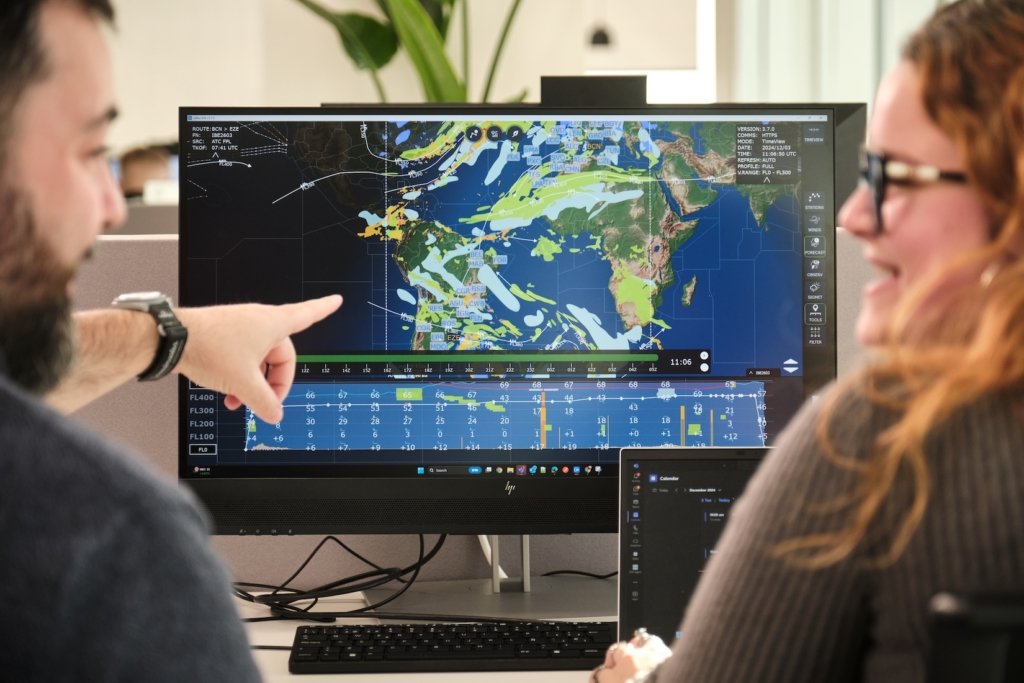
Over time, more data will be added to the decision-making process. The long-term roadmap includes external constraints such as weather, airport status, airport equipment availability, and airspace restrictions.
And the SITA has also a unique positing on the market as it connects many stallholders: airlines, airports, ANSPs. And the disruption is not affecting only airlines, it’s a network challenge and we believe we can bring these stakeholders together to solve it better.
There is probably a 20-year roadmap, or even more, ahead of us. The system will gradually take more parameters into account before providing solutions.
SITA recently demonstrated the use of advanced weather intelligence with DSNA in France. How quickly can that move into day-to-day operations with other Air Navigation Service Providers?
More accurate weather data allows an ANSP to apply restrictions with greater precision, both spatially and in terms of timing. Take a country such as India, where strong storms or weather phenomena can occur. A storm may last 15 minutes, but an ANSP may apply restrictions an hour before and an hour after. A 15-minute event can therefore create two hours of restrictions.
Better real-time weather data allows the airspace to be managed more accurately. That is how savings are generated: by avoiding unnecessary restrictions and using the sky more efficiently through better decisions.
Airlines already use this type of product every day. Mission Watch, for example, is used in about 120 airline OCCs today, including in India.
ANSP adoption is different because many ANSPs do not operate this way today. Some still receive PDF files in the morning with three-hour, six-hour, or 12-hour forecasts and limited updates during the day. For ANSPs, the technology itself is not the issue. The real step is integrating it into their safety assessment and demonstrating in their standard operating procedures that it is safe to use operationally.

My view is that this adds safety, but ANSPs must prove that to authorities. We are now looking for ANSPs with a real problem to solve and a clear case for change. DSNA has one because it manages busy airspace, particularly in summer when storms can create major disruption across Europe if airspace is closed too widely.
We have also spent time with the air navigation authority in Brazil, DECEA, where strong weather phenomena and heavy traffic around areas such as São Paulo create similar constraints.
CAAS in Singapore is another strong example, with a large airport, heavy traffic, complex weather, and limited airspace. These are the types of ANSPs that can show the path.
India also has weather-related constraints around coastal areas. Could shared weather intelligence become a useful operating model in such environments?
The idea is that controllers, dispatchers, and pilots could all have access to the same data. People have been talking about this for years, but now it is much closer.
This does not replace the aircraft’s weather radar, and the pilot remains in control. We are not changing that principle. What changes is the way the system uses time more efficiently.
SITA’s partnership with Ethiopian Airlines points to a more collaborative approach to product development. What has changed in the way SITA for Aircraft co-innovates with carriers?
With artificial intelligence coming in, the development side of activity becomes slightly less central than it used to be. A good line I heard recently is that product managers will increasingly become problem managers.
In other words, they need to own an industry problem. The best way to understand that problem is to sit with the customer and ask, “What is your real problem?” Usually, you do not get the answer immediately because people tend to think in terms of solutions, systems, and products rather than problems.
The more time you spend with customers, and the more “why” questions you ask, the closer you get to the real issue. That is what we are doing much more now, compared with the legacy approach of conducting a market survey, building a business case, developing a product, and then expecting everyone to want it at launch.
The new approach is to co-develop with airlines or airports and build the product around a real operational problem. Mission Watch for Air Traffic Control, for example, will effectively become a DSNA co-development project if and when it is widely deployed, because the en-route controllers were the ones explaining the problem to us.
AI helps because it allows faster prototyping and faster development. You can go back quickly to the customer and ask whether the solution actually solves the problem, or at least helps with the problem they have.
Indian airlines use SITA’s OptiFlight. What has SITA learned from India’s operating environment, and when do you expect the solution to expand to wide-body fleets?
Wide-body deployment is already underway.
I do not think there was anything truly unique or difficult in India from an aircraft perspective. Indian airlines operate quite modern fleets, so we were not dealing with aircraft types we had not seen before.
On the contrary, collaboration with Indian airlines has been very positive. We found a strong willingness from pilots to do better and operate more efficiently. There was curiosity about how technology can help, and a willingness to apply recommendations. In that sense, India has been more on the easy side than the challenging side.
Are you adding more customers or fleets in India beyond IndiGo and Air India?
We are adding new fleets, particularly the long-range fleets and are always in discussions with operators for the implementation of SITA OptiFlight. We started with climb optimisation, and the next major step with airlines is cruise optimisation.
The focus is on optimising the cruise phase, including speed, levels, and horizontal trajectory. That is essentially four-dimensional optimisation of the cruise phase.
What fuel-saving results are airlines seeing from OptiFlight today?
What we do differently is provide savings reports, because we can measure what an aircraft would have consumed without the solution and compare that with the recommendations made by the system.
For take-off on a long-range aircraft, the average saving globally is about 150 kilograms of fuel per take-off. For a single-aisle aircraft such as the Airbus A320, it is about 75 kilograms per take-off. With fuel prices where they are today, airlines can calculate what that represents financially.
As India’s MRO sector grows, how is SITA positioning its communications infrastructure to support future maintenance and aircraft-health monitoring requirements?
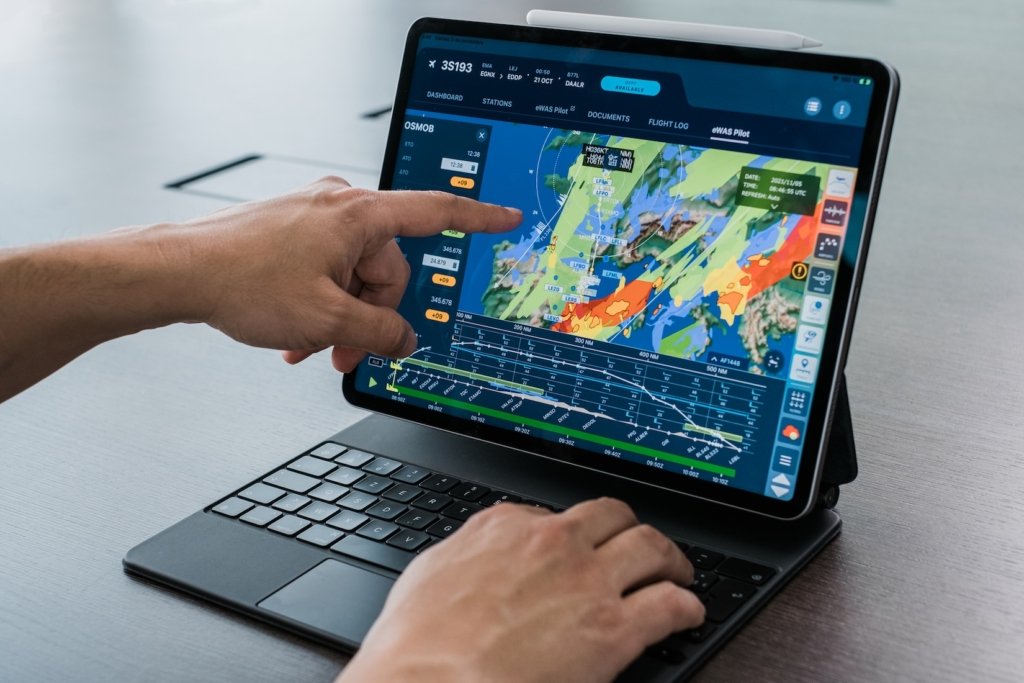
Today, some engine reports are sent through Very High Frequency, or VHF communication, and SITA supports that. We have deployed stations in India and completed a programme over the last two years to add new stations to cope with increased traffic. That programme has been quite successful.
The long-term, 10-year view is that engine reports will not necessarily be sent through VHF. They are likely to move to other satellite communication, or SATCOM links, and air-to-ground links.
I personally see VHF Data Link, or VDL, remaining in place for core safety and flight-optimisation traffic. Larger data sets needed for aircraft maintenance are more likely to be sent through systems such as Starlink, Jupiter, or other constellations. VDL is likely to remain in place, but not as the carrier for all of this going forward.
India is investing heavily in airport and airspace modernisation. How do you assess the country’s preparedness for future traffic growth?
From what I have seen, there is strong recognition at the highest levels in India of the importance of aviation and the level of investment required. That is quite impressive.
This also includes investment in the training of air traffic controllers. India has taken a very ambitious and bold approach to controller training and to preparing for future traffic growth.
When it comes to modernising the tools being used, the challenge is similar to other parts of the world: how quickly does the industry adopt new technology? Whether it is weather intelligence, flight optimisation, or airspace optimisation, that is probably the challenge ahead.
As global air traffic continues to grow, where do you see the biggest vulnerabilities in aviation communication infrastructure?
There is a need to deploy stations at the right speed and to make sure that every aircraft is enabled for data link. Voice communication is relatively inefficient by nature.
The challenge is to deploy data links at scale, ensure those links are always on, maintain high levels of performance and availability, and make sure aircraft are equipped to use them.
Future technologies will come, including concepts such as hyperconnected Air Traffic Management, or ATM. But we need to recognise that, at scale, what exists today and will continue to exist for the next decade is VDL.
The aircraft are equipped, the technology is proven, and the safety assessment has been completed. The common challenge is to deploy VDL at scale, secure additional frequencies, and ensure that aircraft use data link.
How do you view the communications requirements of emerging autonomous air mobility platforms?
Autonomous air taxis will depend on a very different type of air-to-ground technology. You are not going to embed a VDL radio in such aircraft because the avionics alone weigh around 15 kilograms.
SITA is not currently active in direct air-to-ground communication for autonomous taxis. One reason is that these solutions are likely to be relatively regional, involving different frequency bands, authorisations, certifications, and equipment.
As a global company, we have not yet found a path where we could offer a global solution to what may remain a regional challenge.
Also Read: SITA says Aviation’s Record Tech Investment depends on Data Coordination