










For years, India has spoken of becoming a global air-cargo hub. It has the geography, a rapidly expanding manufacturing base, a huge domestic market and a growing network of modern airports. Yet it has still not been able to perform the role that Dubai, Singapore and Hong Kong have built into the architecture of global trade.
That question will be central to the 7th ACFI World Conclave 2026, to be held in New Delhi on 12–13 August under the theme ‘Reimagining Global Trade: India at the Forefront of Developing Resilient Supply Chains’.
More than 700 delegates from across the air cargo, aviation and logistics ecosystem are expected. Behind the conference, however, lies a larger ambition: to make India an important node in the changing global trade lanes.

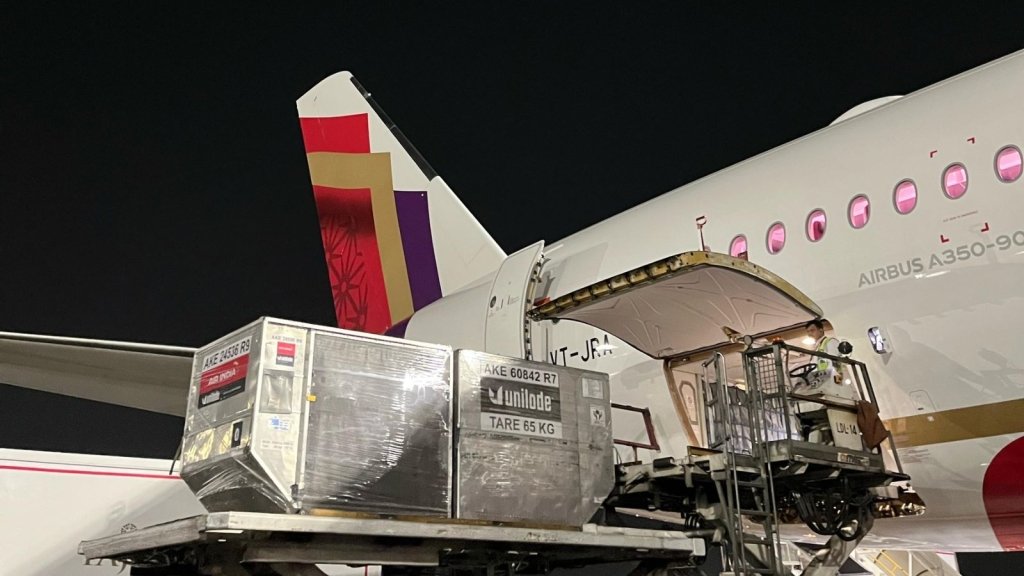
Ramesh Mamidala, Vice President of the Air Cargo Forum India (ACFI) and Head of Cargo at Air India, believes India is closer to that possibility than ever before. But he also identifies one of the biggest impediments to its hub ambitions. “The single biggest reason has been our re-screening requirement due to the old TP (Transshipment Policy), which fortunately is changing,” he says. “A successful pilot is underway, and hopefully this will change very soon, and our airports will be able to successfully compete with the airports you mentioned.”
That change could prove more important than another new cargo terminal. A hub does not merely handle cargo originating or terminating in its own country. Its real strength lies in attracting international-to-international traffic—cargo simply passing through.
India’s airports have historically been strong in origin-and-destination traffic. The challenge is to persuade a shipper moving cargo between Southeast Asia and Europe, or Asia and Africa, to route it through India rather than established hubs in the Gulf or East Asia.
Mamidala sees the opportunity clearly. “This is WIP (Work in Progress), from my perspective,” he says. “Several shippers and agents do find our airlines and airports very attractive as we are geographically well located between SEA/FE (South East Asia/Far East) and ME/EU/UK. Once successfully implemented, our hubs will successfully connect courier, mail, general cargo and perishables across the continents very efficiently.”
The words “once successfully implemented” are critical. Geography may give India an advantage, but geography alone does not create a hub. India needs a system in which an international shipment can arrive at one airport, transfer to another flight and leave the country without being subjected to processes designed for domestic import or export cargo.
“Complete implementation of the new TP policy (Transshipment Permit or Transshipment Bond/Procedure) in its true spirit and develop airside infrastructure to accommodate the anticipated growth in TP volumes of all types—I2I (International to International), I2D (International to Domestic), D2I (Domestic to International) and D2D (Domestic to Domestic),” says Mamidala.
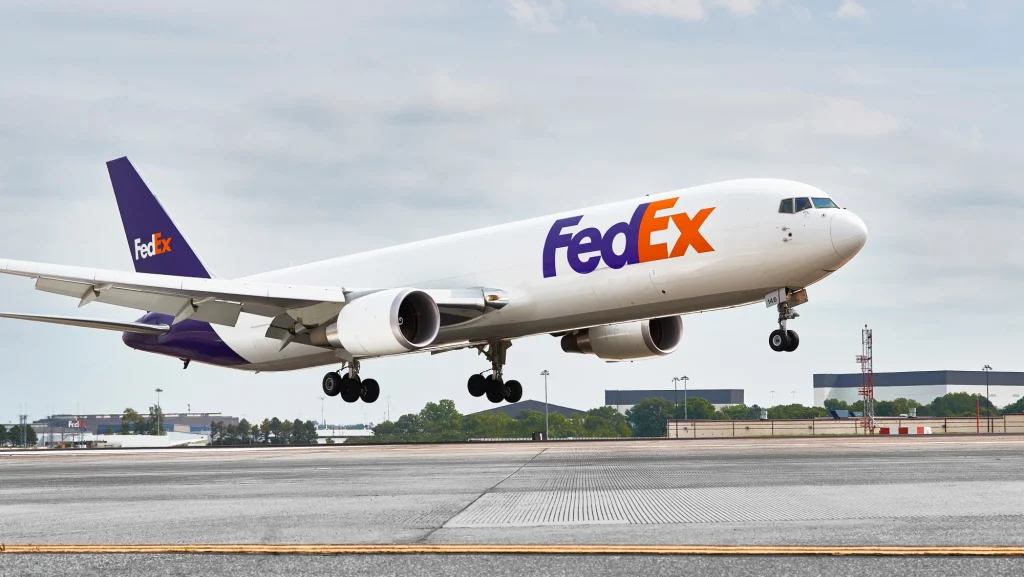
Today, he acknowledges, transshipment cargo is still treated too much like Indian import/export cargo. “This is the case today, but I see this changing positively.”
The economics matter just as much. India’s cargo competitiveness cannot be judged simply by terminal handling charges.
The calculation begins at the factory gate and includes trucking, handling, screening, storage, documentation, customs processes and the cost of the final uplift. Mandatory re-screening adds to that cost.
“The mandatory rescreening does make [it] more expensive, less competitive, etc. However, as the policy, process and technology change, this situation will change,” Mamidala says.
Infrastructure remains important, but India must also look beyond established Tier-1 gateways. To me, it is a combination of all of them, Mamidala says when asked whether infrastructure or processes and regulation represent India’s fundamental problem. “Tier 1 airports have done better on infra, processes and regulations, but now the challenge will be to build and get all of these right in our Tier 2 and Tier 3 airports, which is where I personally expect the export growth to come from, helping the country to achieve 10 MMT in about 5-6 years.”
The 10-million-tonne target illustrates the scale of India’s ambition. Achieving it, however, will require a considerably more integrated cargo ecosystem. Digitalisation is another missing piece.
Mamidala believes the solution is already identified in policy discussions. “The solution which also figures in the National Air Cargo Policy Draft is the National Air Cargo Community System. It is high time that we implemented this through PPP mode.”

The backdrop is favourable. India is benefiting from changing global supply chains, manufacturing diversification and rising e-commerce. But India cannot become a global hub simply by building more capacity. It must build a system in which that capacity can be used efficiently.
For Mamidala, the urgency comes from the changing geography of global trade. “With so much happening globally, there is a need to reshape and remodel the air cargo business globally, and very relevant for India as well. I see the trade lanes changing, new hubs are evolving, etc. To facilitate trade in the new global scenario, policies, processes, regulations, systems, etc. need to change.”
That is ultimately what the ACFI World Conclave must address. Its value will be measured not by the number of discussions it generates, but by whether government and industry can agree on specific changes and implement them. For India, however, the larger prize lies beyond the conference hall: turning years of hub ambition into execution.
Also Read: AISATS’s Multi-Modal Cargo Hub at Noida International Airport: North India’s Gateway to Global Trade
With more than four decades across print and audiovisual media, Tirthankar (TG) Ghosh is a veteran journalist specialising in aviation, air cargo and logistics. His reporting combines deep industry knowledge, original research and sharp analysis to produce authoritative, evidence-led journalism.