






- Air India’s first retrofitted Boeing 787-8 brings its older Dreamliners in line with the airline’s new 787-9 cabin standard, signalling a move toward a more uniform long-haul product across the fleet.
- The new Business Class suite places Air India back in the competitive range on India–Europe and long-haul routes, though it remains a step below the top tier in terms of space, storage, and overall cabin finish.
- With 25 more Dreamliners and 13 Boeing 777s lined up for retrofit, the programme now shifts from engineering milestone to execution—delivering the same product consistently across a growing and mixed widebody fleet.
There is a moment in every airline’s transformation when the promises stop being slides in a boardroom presentation and start being something a passenger can experience for themselves.
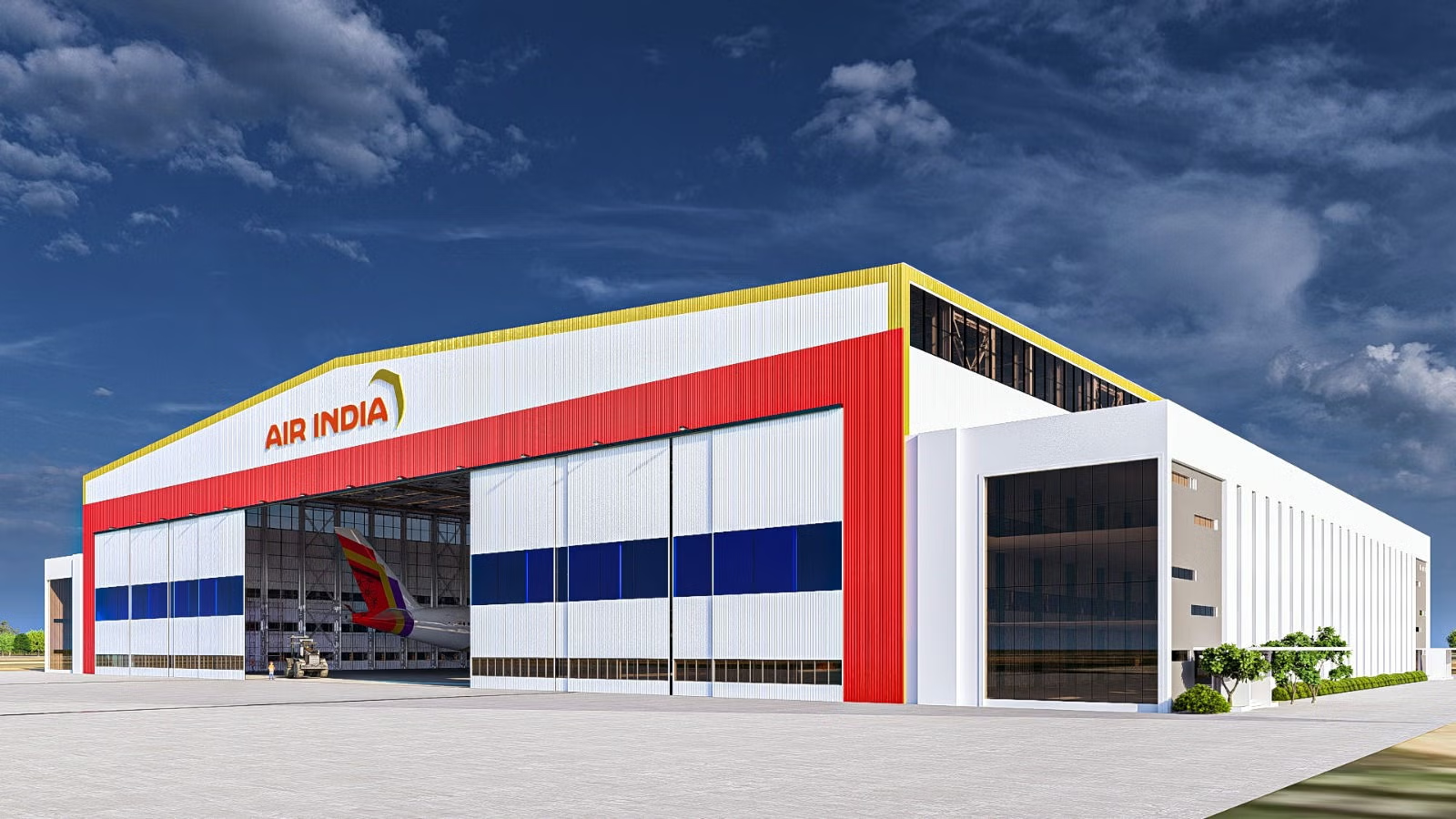
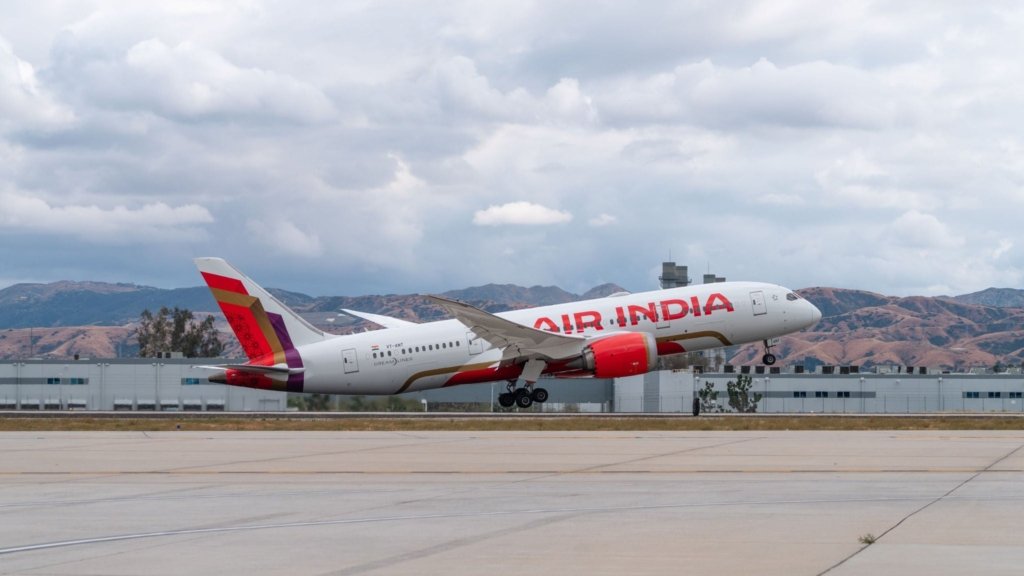
For Air India, that moment arrived on a tarmac in California, when a twin-aisle Boeing 787-8—registration VT-ANT, a workhorse that had spent years ferrying passengers in a two-class configuration reflecting an earlier phase of the airline’s long-haul product, rolled out from Boeing’s Modification Centre in Victorville.
The aircraft, wearing a new livery and carrying, inside its fuselage, a cabin that the airline says now defines what the new Air India looks and feels like on its key long-haul markets across Europe, the UK and Australia where Gulf and Asian carriers have traditionally attracted premium Indian traveller for the better part of two decades.
VT-ANT is the first of 26 Boeing 787-8 aircraft in Air India’s legacy fleet to undergo a complete cabin transformation, and it landed back in Delhi in April 2026 as the opening statement of a retrofit programme that will eventually reshape what passengers experience on more than 300 weekly flights to the UK, Europe and Australia.
The retrofit also brings the 787-8 into alignment with the airline’s newer Boeing 787-9 product standard, effectively creating a common long-haul cabin architecture across the Dreamliner fleet.
Each figure tells part of the story: 12,825 manhours across 45 days, 475 metres of seat fabric, 169 metres of carpet, 646 litres of paint—the arithmetic of a rebuild, not a refresh. What they do not fully capture is the depth of the engineering involved, because this aircraft did not simply receive replacement seats.
Galleys were overhauled, all lavatories refreshed, overhead bins replaced or refurbished, a new Cabin Service System installed, and the Crew Application Panel interface—the system through which crew manage lighting, temperature, and the cabin environment—was updated end to end.
This goes well beyond the lighter cabin refreshes airlines sometimes describe in shorthand; it is a comprehensive reconstruction of the passenger experience on an aircraft that was, until recently, a weaker fit with the premium image Air India is now trying to project.
What the Cabin Now Offers
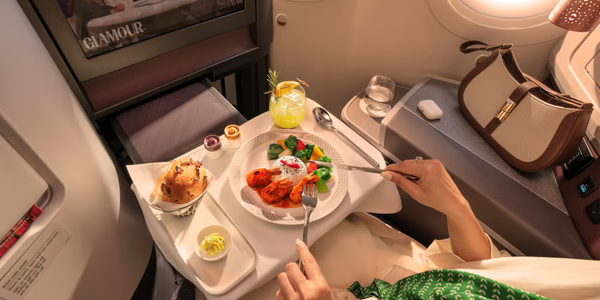
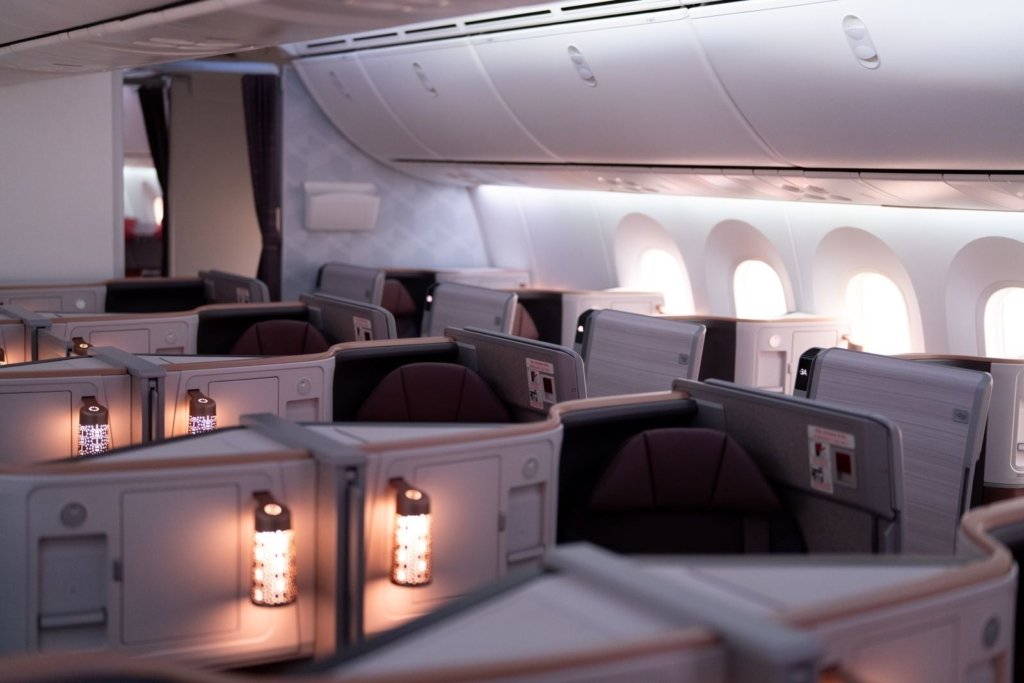
Business Class on the retrofitted 787-8 carries 20 suites in a 1-2-1 configuration, built around a customised version of the Elevate Ascent seat.
Elevate Ascent is a current-generation reverse-herringbone platform already deployed by multiple international carriers, positioning Air India within an established global product category rather than a bespoke or transitional design.
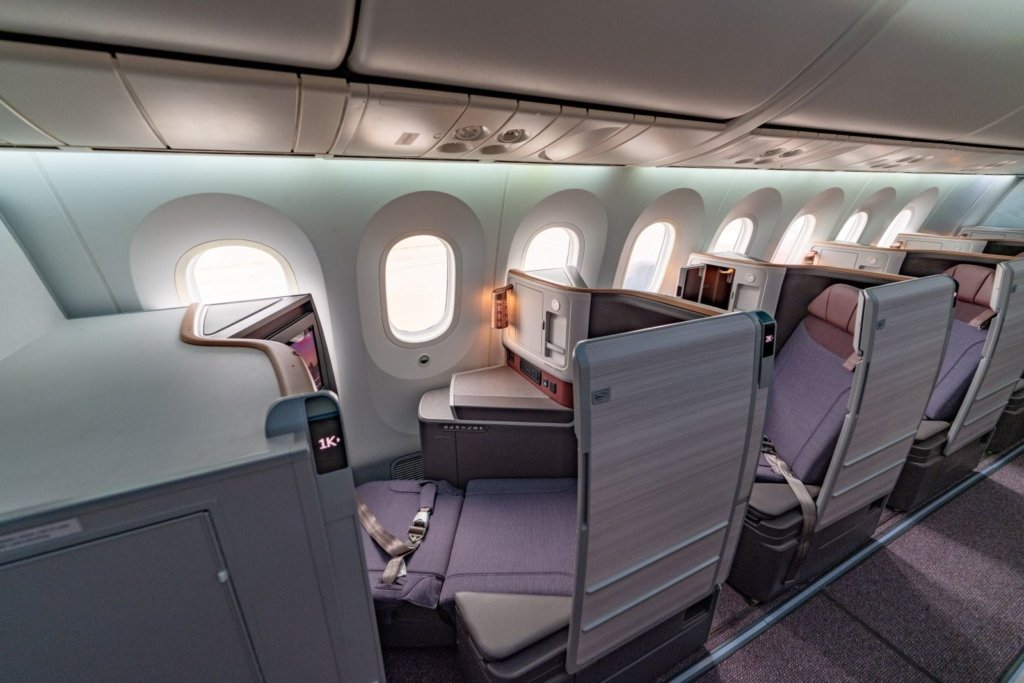
The 1-2-1 layout means every passenger has direct aisle access—no climbing past neighbours on a red-eye to Heathrow—and each suite has a sliding privacy door, a fully flat 79-inch bed, a 17-inch 4K QLED HDR screen, and multiple charging options.
And a cluster of design details, including a jaali-inspired feature lamp and a dedicated vanity mirror, that give the suite an identity rather than the more generic look seen across many modern business-class cabins. A 42-inch pitch rounds out a suite that, in total, represents the most complete Business Class Air India has put on a legacy aircraft.
In practice, the Elevate Ascent is an established reverse-herringbone platform, not an experimental one, and Air India has chosen to customise it for its own cabin identity rather than deploy it off the shelf—a distinction that matters when you consider that the 787-8’s fuselage is narrower than the 787-9 and fitting 20 suites into it with a 1-2-1 layout requires engineering choices that inevitably shape the end product.
Against the benchmarks that matter on India’s long-haul routes—Qatar Airways’ QSuite, Singapore Airlines’ business class, and Emirates’ product on its latest refurbished 777s—Air India’s suite belongs in the same conversation as those products; it does not yet lead it.
The 79-inch bed length and the privacy door bring Air India firmly into competitive range, though suite dimensions and stowage depth leave it slightly short of the very top. For an airline that only recently began replacing an ageing long-haul cabin standard, that still represents substantial ground Air India has covered.
Premium Economy puts 25 passengers on RECARO’s PL3530 seat in a 2-3-2 configuration, with 38-inch pitch, 7-inch recline, a 6-way headrest, calf rest, leg rest, and a 13.3-inch 4K screen.
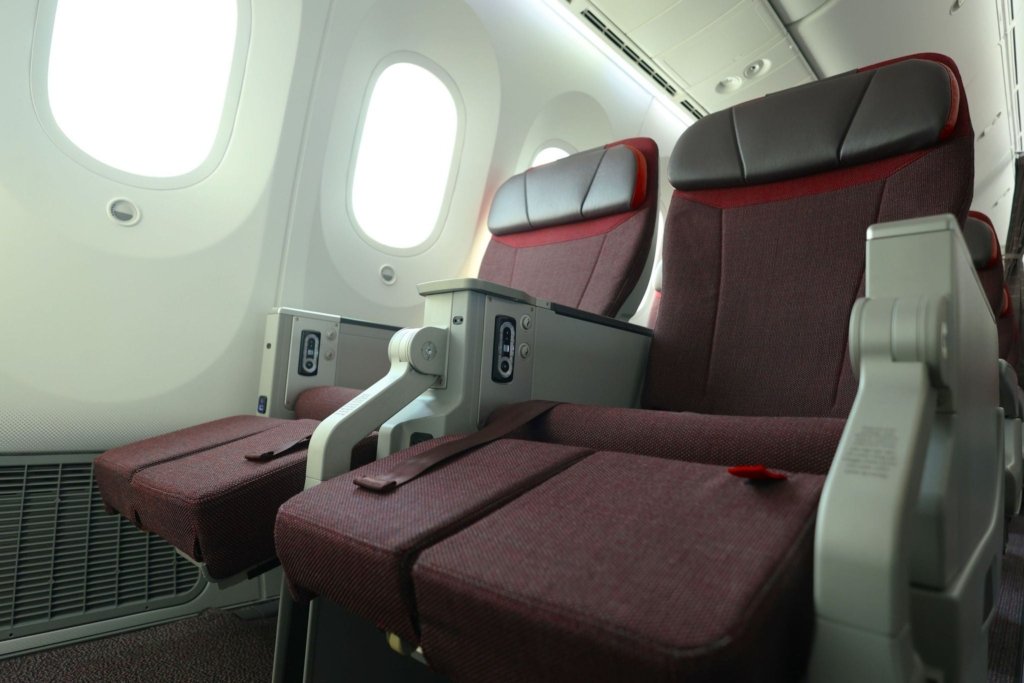
Photo: Air India
The PL3530 is widely used across long-haul fleets and is positioned as a full-feature Premium Economy seat rather than an extended-legroom variant, which places Air India’s offering in line with current international standards on comparable routes.
The PL3530 is a well established platform, widely flown and well regarded for its ergonomics, but the spec that most directly shapes a nine-hour sector—seat width—is absent from what Air India published.
In a 2-3-2 layout on a 787-8 fuselage, width is tighter than what a wider-body aircraft delivers in comparable configurations, and that trade-off matters on long-haul sectors in a way that pitch alone does not capture.
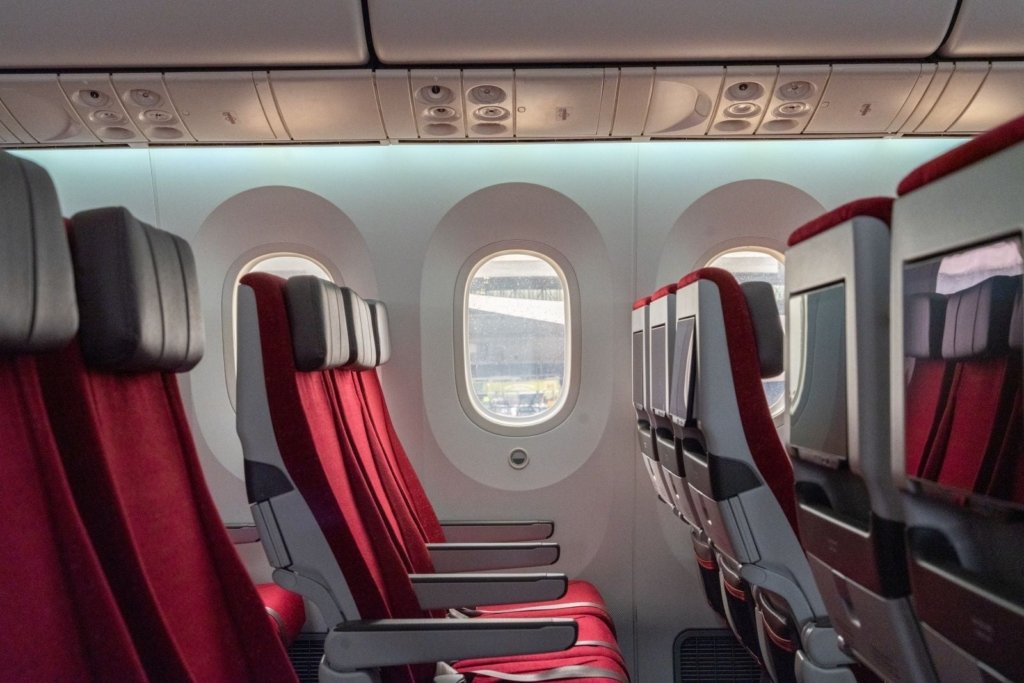
Economy carries 205 passengers on the RECARO CL3710 in a 3-3-3 layout at 31/32-inch pitch with 5-inch recline. That is at the accepted industry baseline for long-haul economy; Air India’s economy product does not redefine the class, but every seat now has an 11.6-inch 4K screen and dual USB charging, which on the aircraft’s previous interior would have been a meaningful upgrade in itself.
The IFE Commitment
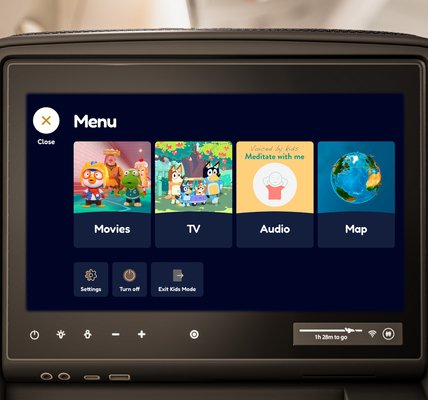
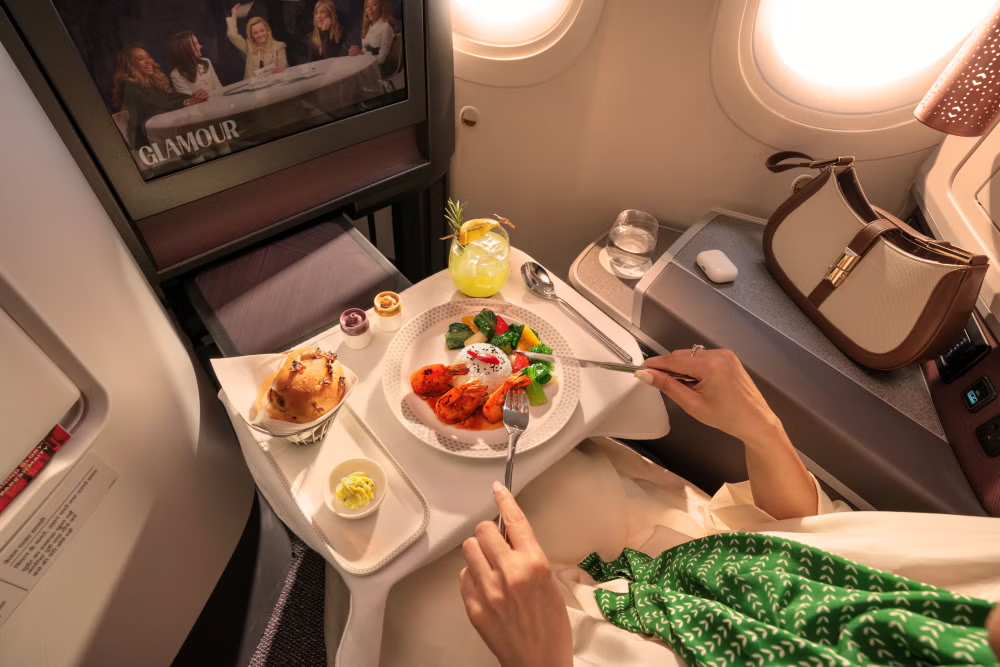
All 250 seats across the three cabins are equipped with Thales’ AVANT Up IFE system, and that choice carries more significance than a spec line typically does. Air India is the first carrier in the Asia Pacific region to fly with AVANT Up—a distinction that Thales announced when the 787-9 entered service in February 2026, and that the retrofitted 787-8 now extends to the legacy fleet.
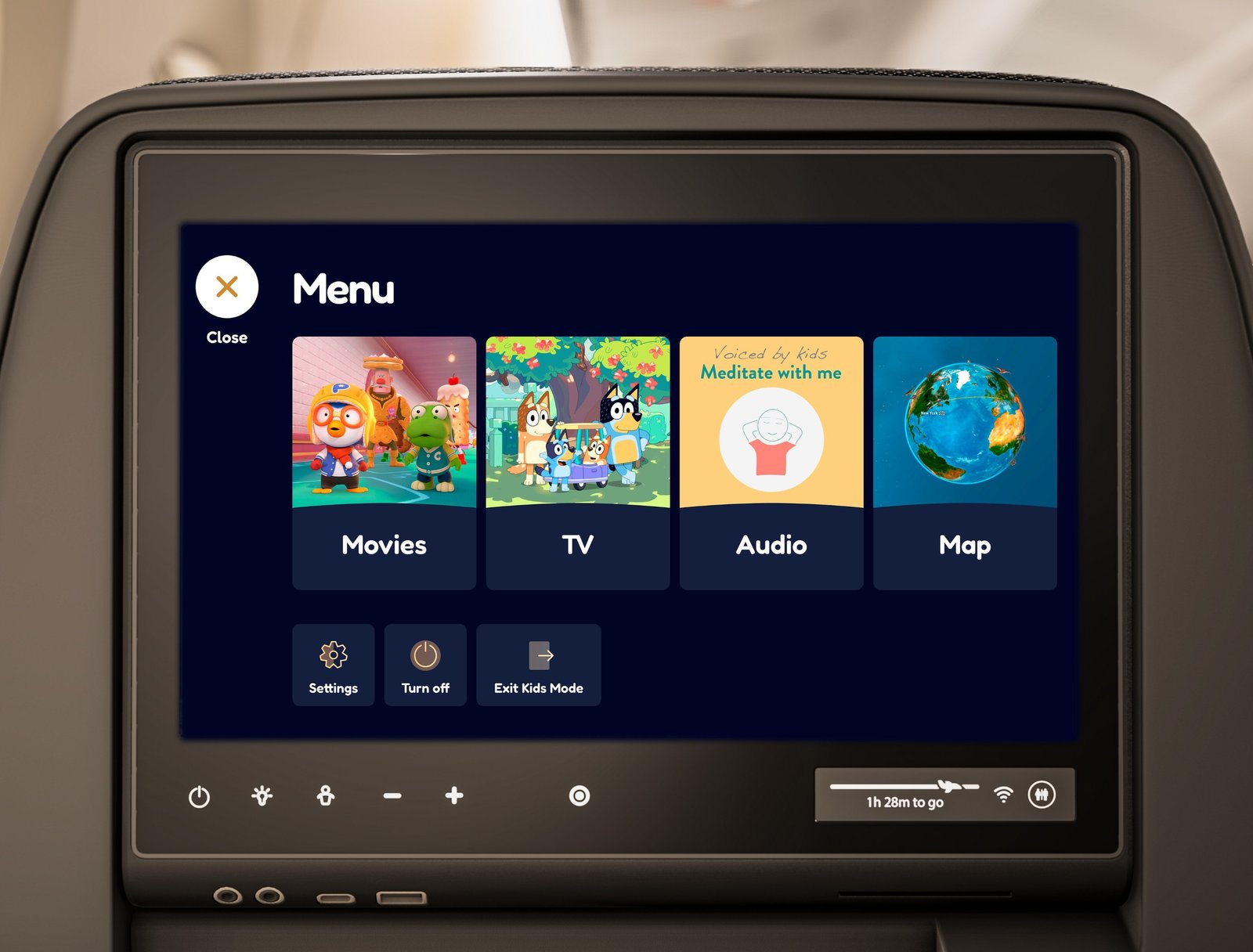
The system delivers 4K QLED HDR screens across all classes, 60W USB-C and USB-A fast charging built into each seat, and Bluetooth pairing—not as an afterthought but as part of the platform architecture.
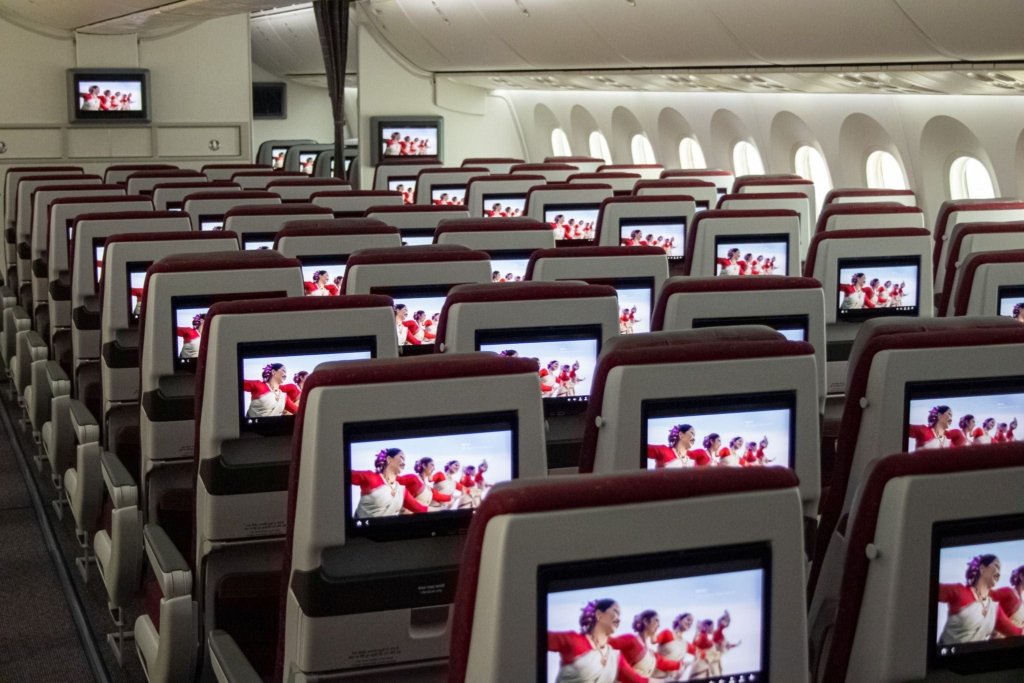
Photo: Air India
What makes AVANT Up relevant beyond its screen quality is the maintenance commitment Air India has structured around it.
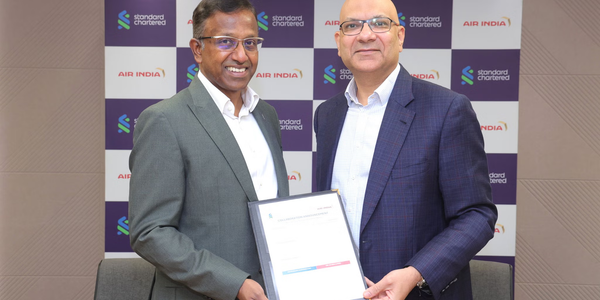
On 20 April, the day after VT-ANT’s unveiling, Air India and Thales signed a 10-year FlytCARE agreement covering IFE maintenance across the airline’s widebody fleet—a long-term service arrangement that signals Air India is not simply fitting a system and moving on, but building a sustained operational relationship around the technology that every passenger on these aircraft will interact with for the duration of their flight.
On a fleet of this size and complexity, that distinction between a hardware transaction and a service ecosystem matters significantly for reliability and content quality over time.
What Comes Next
Two more B787-8 aircraft are already in the modification process at Victorville as of this announcement, and Air India intends to complete all 26 before the end of 2027. After those, the programme shifts to 13 Boeing 777-300ER aircraft, with work scheduled to begin in early 2027 and completion targeted for October 2028—a timeline that has already absorbed supply chain delays and is being tracked carefully by the industry.
Running in parallel with the retrofit programme, Air India is inducting new 787-9s and expects its first Airbus A350-1000 deliveries through 2026, aircraft that will arrive directly from the production line with bespoke interiors already installed.
The A350-1000 carries a different product ambition altogether—Air India has been developing a First Class cabin for that aircraft, having moved away from Safran Unity to a bespoke First Class concept developed with Airbus after supply chain constraints made the original plan unworkable.
That product will serve Delhi and Mumbai to London Heathrow and New York JFK, and it will offer a product standard that the retrofitted 787-8 was never designed to match.
How Air India manages the sequencing of this programme matters beyond individual aircraft completions.
By the time Air India finishes the 777-300ER retrofits in late 2028, it will be operating a fleet that spans three distinct generations of cabin product: the retrofitted legacy widebodies, the new 787-9s, and the A350-1000s with First Class.
Managing that range—matching aircraft to routes so that the right product reaches the right passenger—is where the network planning and product discipline of this transformation will ultimately be judged.
VT-ANT is the opening statement of that story, with the full chapter still being written. It is an aircraft that has been rebuilt from the inside to carry a brand that has changed everything about itself in four years, on routes where the competition has been setting standards for two decades.
Whether Air India holds that pace through 25 more 787-8s, 13 777-300ERs, and an entirely new generation of aircraft arriving from Toulouse and Seattle simultaneously is the question the industry will be watching—because the answer will determine whether Vihaan.AI becomes one of the great airline turnaround stories, or the cautionary tale of a transformation that ran out of runway before it was done.
Also Read: India’s Two-Tier Aviation Economy: Protected vs Penalised