











Photo: ElvishRoy99/Wikimedia Commons
Irregular operations remain one of the most persistent and expensive operational challenges facing airlines today. Industry estimates put the cost of disruption at approximately $60 billion annually, equivalent to roughly eight per cent of airline gross revenue.
For an industry that already operates on thin margins, this figure represents one of the largest controllable cost categories an airline carries and, consequently, one of the greatest opportunities for margin recovery.
The scale of the problem is significant. On any given day, one in five scheduled flights is delayed, equal to more than 30,000 delayed flights worldwide every day. Each disruption affects crew scheduling, aircraft utilisation, passenger connections, and airline reputation, extending well beyond the initial delay.
For much of the industry’s history, disruption management has operated on a reactive basis: a problem occurs, and the operations control centre works to resolve it and return the schedule to normal. This model has functioned adequately when volumes were manageable and operational data was relatively contained within a single system or department. Rising traffic volumes and increasingly complex networks are placing that model under growing strain.
Passenger travel is forecast to grow by 87 per cent by 2044, and the global commercial fleet is expected to expand by 35 per cent by 2034, requiring an estimated 267,000 new commercial pilots over the same period. This scale of expansion creates sustained pressure on operations control centres, which cannot simply be resolved by adding operational headcount in proportion to growth, given the cost implications of doing so.
The Limits of Fragmented Systems
A significant part of the difficulty lies not with the people managing disruption, but with the software supporting them. Operational systems across the industry have typically been selected and implemented individually, department by department, with each system optimised for its own narrow function rather than for the operation as a whole.
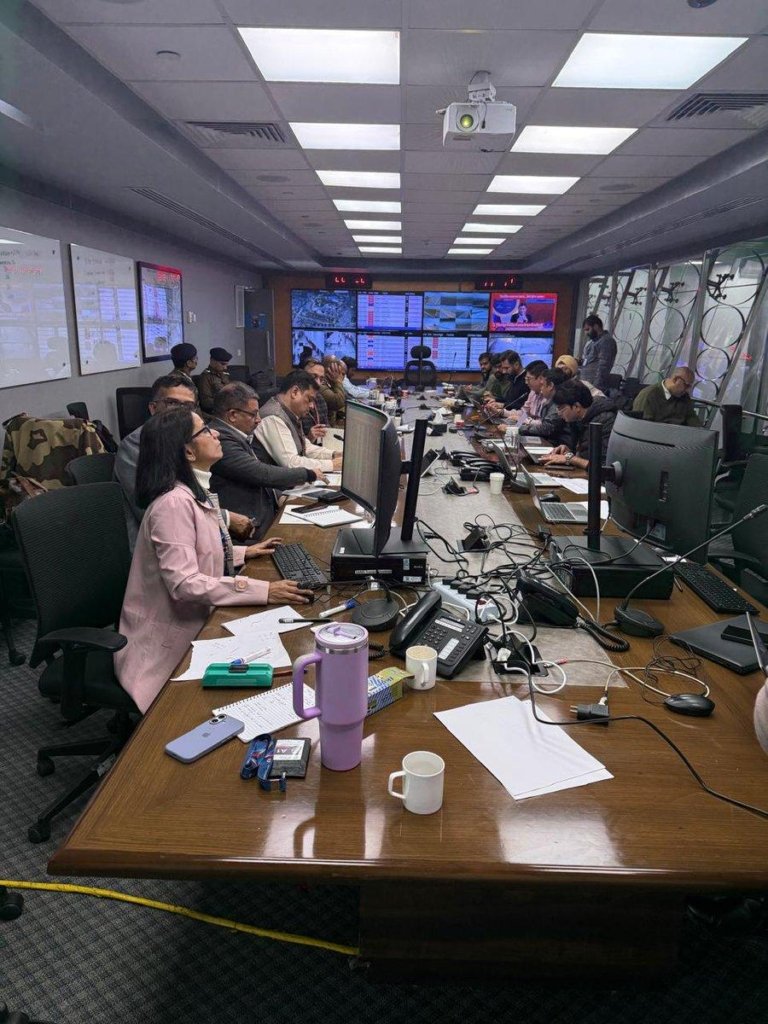
Photo: MoCA/X
Data sharing between these systems tends to be limited, and workflows that require coordination across departments, such as reconciling an aircraft swap with crew duty and rest requirements, remain largely manual.
This fragmentation has a direct business impact. When systems cannot communicate the information required to make an informed decision, airlines risk delaying or cancelling flights that could otherwise have been protected, or failing to account for revenue implications when disruption decisions are made.
The consequence is that even well-resourced airlines running strong individual systems can still produce weaker outcomes for the operation as a whole, because those systems were never designed to solve problems together.
Predictive and Unified Operations
The direction the industry appears to be moving in rests on two related principles: unifying operational data and workflows across functions that have traditionally operated separately, and shifting from a reactive to a predictive posture.
A unified approach connects crew operations, maintenance control, dispatch and passenger recovery, so that a disruption is addressed as a single, shared problem rather than a series of disconnected departmental issues. This includes shared situational awareness, so operators across functions can see the same information and prioritise accordingly, and integrated decision support that considers the wider consequences of a given recovery option before it is implemented.
Predictive disruption management extends this further, using operational data to identify schedule fragility before disruption occurs. This might involve analysing which parts of a day’s schedule would produce a cascading impact across several aircraft, rather than a contained, single-flight delay, and flagging that risk to operators with enough lead time, potentially ten to twelve hours, to make a lower-cost adjustment rather than a reactive one under time pressure.
Photo: Wikimedia Commons
There is active debate within the industry over how far artificial intelligence should be used in disruption management.
Because airline operations are conducted within a safety-regulated environment, few in the industry support full automation of operational decision-making, and operator confidence in a system that cannot explain its reasoning remains low.
The more broadly accepted position is that artificial intelligence should support operators by providing options, context and reasoning that allow for faster, better-informed decisions, while the operator retains responsibility for the final call.
This is consistent with the underlying objective: recovering a meaningful share of the eight per cent of gross revenue currently lost to disruption represents a substantially larger opportunity than reducing headcount within operations centres.
These developments point to an industry moving gradually away from fragmented, best-of-breed systems and reactive workflows, toward integrated, data-sharing operations supported by predictive analytics, with artificial intelligence used to strengthen human decision-making rather than replace it.
Also Read: GE Aerospace engineers in Bengaluru advance new services technologies to support customers

Aviation Jeta is an aviation news platform covering airlines, airports, aircraft, and global aviation developments. We publish accurate, well-researched, and detailed aviation news and industry insights from around the world.