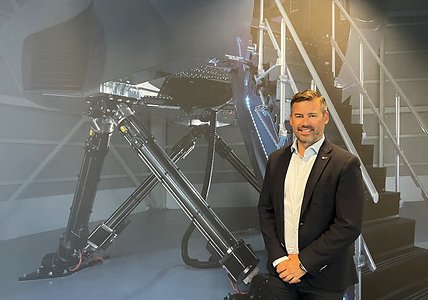









Air traffic growth is compelling air navigation service providers to reconsider how they modernise critical systems. The task is not simply to introduce newer technology, but to improve capacity and interoperability while maintaining operational continuity, national control and safety. For technology providers, this means adapting systems to local operating requirements, working with domestic industry and offering modernisation paths that do not depend on a single commercial or deployment model. Atech ATM Business Vice President Marcos Resende explains how these priorities are shaping the company’s approach to international growth, particularly its efforts to adapt systems to local operational requirements and work with domestic industry on ATM modernisation.
What are Atech’s primary strategic priorities in the global ATM market?
Our strategy begins with the technology base that we have developed in Brazil. Atech operates under its own brand as a wholly owned Embraer Group company, with a focus on air traffic management and command-and-control systems. We provide mission-critical systems to the Brazilian Air Force.
Brazil has a distinctive institutional model because air traffic management is conducted through the Brazilian Air Force, rather than a separate civil organisation such as the Airports Authority of India. We support the principal components of ATM, including area, approach and tower control, air traffic flow management and aeronautical messaging.
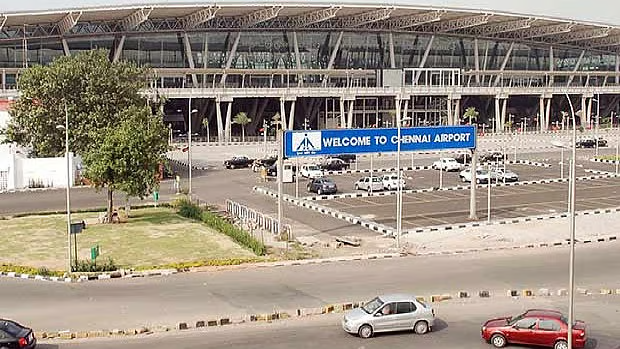
A second priority is international growth. India is our largest flow-management reference outside Brazil: the national C-ATFM system, anchored by the Central Command Centre in New Delhi, has been operating since 2017. In 2025, South Africa selected Atech to implement a new generation of its flow-management system, and that project is under way.
We are also pursuing another advanced flow-management opportunity in Asia. Our objective is to take the technology and operational experience developed through our ATM and command-and-control work to more international customers.
Our third priority is continued investment in future capabilities. We want to expand internationally with strong local partners who understand their countries and markets. Throughout that expansion, one principle remains non-negotiable across Atech and Embraer: safety comes first.
For Brazil, we supply our complete ATM product suite:
- SAGITARIO: Tactical Air Traffic Control (ATC) combining Radar, ADS-B, and weather surveillance data for real-time situational awareness.
- SIGMA / SKYFLOW: Air Traffic Flow Management (ATFM) platforms designed to balance capacity and traffic demand.
- LEO & eFPL JANUS: Initial Flight Plan Processing (IFPS) paired with mobile flight planning tools for automated ICAO rule validation.
- AQUILA & CYGNUS: SWIM-compliant data integration and Aeronautical Message Handling Systems (AMHS).
What key operational lessons did Atech gain from deploying SKYFLOW in India?
The Indian programme was extremely important to the development of SKYFLOW. We already had a flow-management solution, but the requirements established by the Airports Authority of India were particularly demanding and required substantial development and product upgrades.
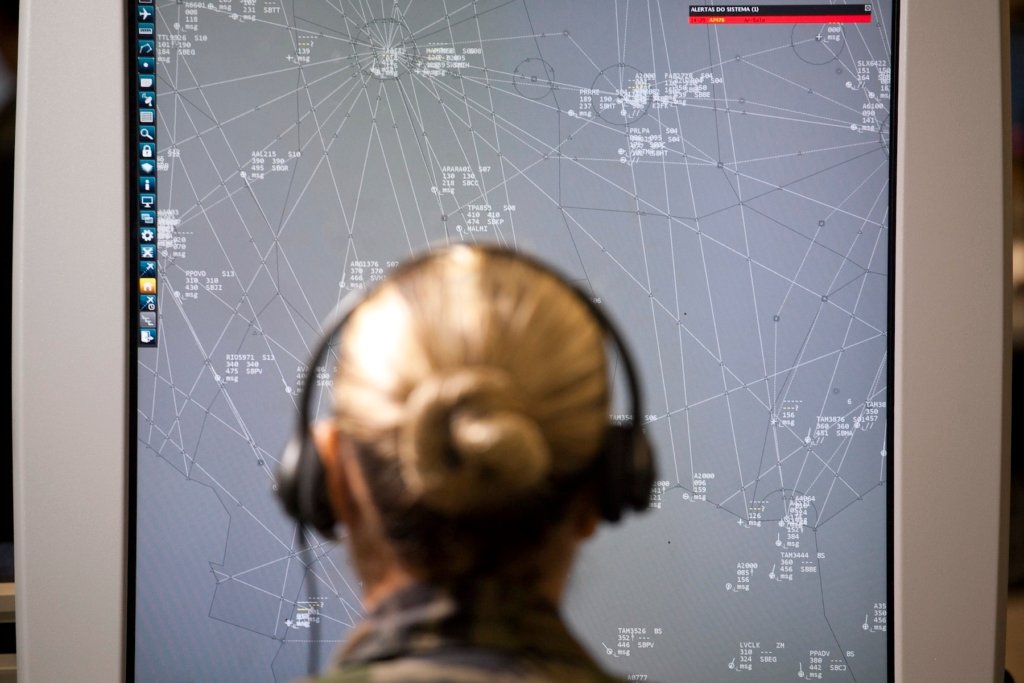
That work made the offering stronger and more complete. It also validated, outside Brazil, technology that had originally been developed for the Brazilian operating environment.
A product may perform very well for its first customer, but deployment in another country introduces different procedures, requirements and expectations. India provided that essential international validation.
AAI was rigorous in holding us to every commitment. The process was demanding, but it was also highly constructive for Atech.
The improvements and lessons from India are now informing the next-generation system that we are implementing in South Africa.
How does Atech work with local partners, particularly under Make in India?
In India, we worked with a local engineering partner who performed a significant portion of the implementation and ongoing support.
Especially with initiatives like ‘Make in India’, having a local partner to co-develop software components and deliver localised maintenance is essential for long-term operational success.
Alongside its core ATFM business, which emerging areas is Atech prioritising?
Air Traffic Flow Management (ATFM) remains our highest priority because global traffic density continues to rise, and ICAO has established mandates requiring member states to implement standardised ATFM capabilities.
We see scope both to evolve the capability already deployed in India and to bring our flow-management technology to other customers in the region.
We are also investing significantly in unmanned traffic management. Atech has contributed technology and ATM expertise to the development of urban air traffic management. In both areas, strong local partners can help us develop the market and adapt the solutions to national operating requirements.
How is Atech helping ANSPs modernise without large upfront capital investments?
Capital budget constraints are a universal challenge for ANSPs. To address this, we are shifting from traditional software/hardware sales toward an “ATC-as-a-Service” model called ATMAS (ATM Automation System).
We now have a Brazilian case in which the customer does not purchase the hardware and software through a conventional one-time acquisition. Instead, it procures the capability as a service, while Atech provides the systems required for operation.
Under ATMAS, instead of an ANSP spending large sums upfront (CapEx) to purchase hardware servers and software licenses, Atech delivers the complete operational platform as a service.
We assume full responsibility for system deployment, technical support, infrastructure maintenance, and hardware repairs at no additional cost, while the client pays an ongoing operational subscription (OpEx). This lowers the financial barrier to entry for developing navigation service providers.
How does SKYFLOW Cloud give ANSPs greater deployment flexibility and reduce their dependence on dedicated hardware?
While tactical air traffic control remains on-premise for safety reasons, support applications – such as flow management (SKYFLOW Cloud) and flight plan processing (LEO) – are moving to the cloud.
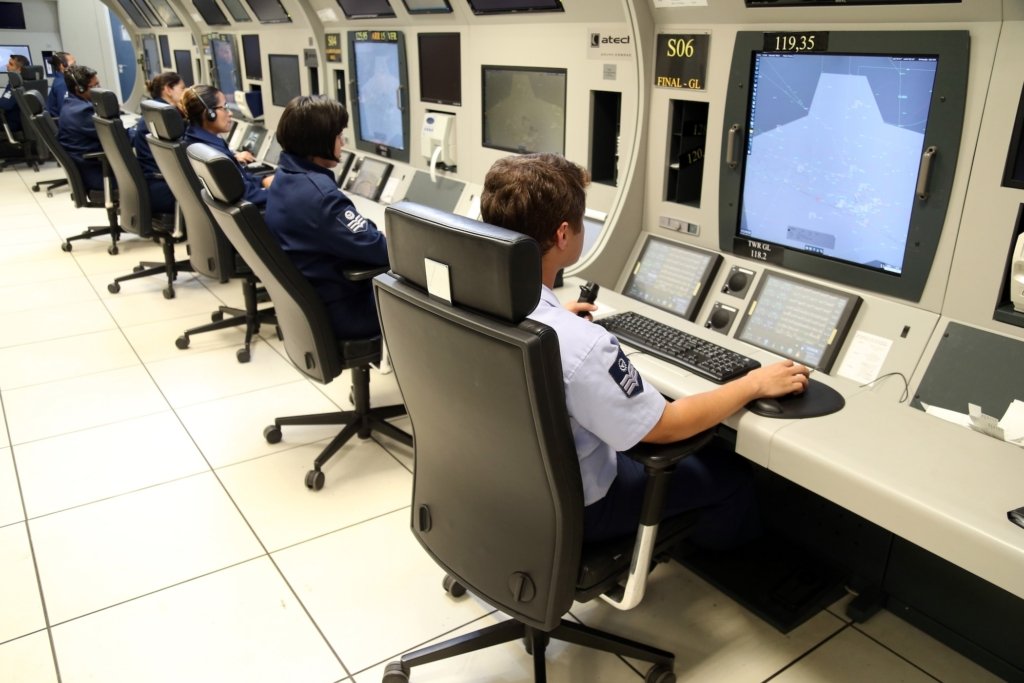
Cloud deployments eliminate the need for ANSPs to maintain dedicated physical data centres, drastically lowering procurement and maintenance overhead. This adoption also mitigates global hardware supply chain risks.
Our SKYFLOW Cloud solution provides full ICAO-compliant ATFM functionality without forcing a specific deployment model on the customer.
If an ANSP prefers local hardware, we support it; if they choose a cloud setup, the system is fully native and ready to run.
How does the SingleATM Platform simplify system integration and future upgrades?
The SingleATM Platform, co-developed with CISCEA for Brazil’s Airspace Control System (SISCEAB), utilizes a Micro Service Oriented Architecture.
Traditionally, ATM systems were monolithic “black boxes” that were expensive to modify and integrate. By decoupling system functionality into orchestrated microservices, SingleATM allows us to:
- Reduce deployment costs: Individual modules can be updated or tested independently without re-certifying the entire software suite.
- Increase interoperability: Disparate third-party or legacy sub-systems exchange data through standardised API layers.
- Offer flexible hosting: The microservices framework runs seamlessly across on-premise servers, cloud environments, or hybrid setups.
How does Atech build cybersecurity into new ATM platforms while protecting legacy systems?
At Atech, cybersecurity is treated as “Security by Design”. Cyber resilience requirements are established during the initial software architecture phase rather than being patched on after development.
For legacy systems already in the field, we implement external security wrappers and firewalls to insulate them from network threats. For new platforms – like our SingleATM Platform – stringent software security and operational resilience frameworks are built directly into the microservices layer to ensure full compliance with international civil aviation cybersecurity standards.
How will Atech’s Urban ATM approach integrate eVTOL operations with conventional air traffic?
We have been researching this field for more than ten years. Within Atech, we use the term Urban Air Traffic Management, or UATM, because the challenge is broader than managing a single category of unmanned aircraft.
We cannot simply segregate a block of airspace and reserve it permanently for one type of operation. The different systems will need to interact and exchange information. Urban airspace is particularly complex because conventional airports, helicopters, drones and, in the future, eVTOL aircraft may all operate in the same region.
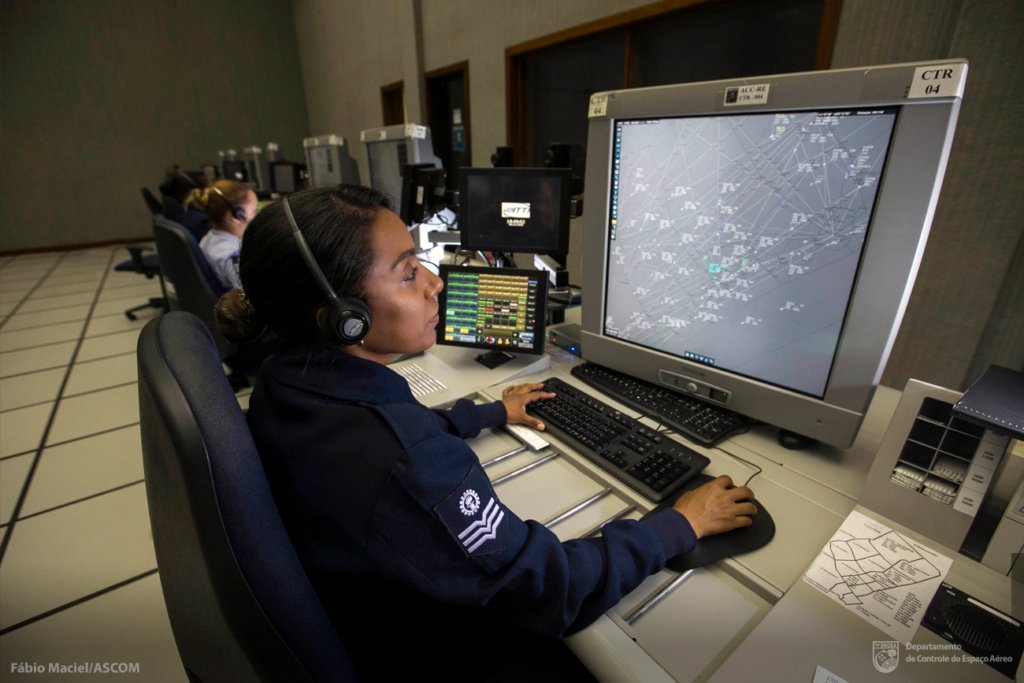
We expect conventional ATM and emerging UTM technologies to converge over time into a more integrated and digital environment. ATM still relies heavily on voice communication, but as traffic scales, digital and system-to-system communication will become increasingly important for coordinating different operations.
This will be a gradual transition. Urban operations compress many movements into a restricted area and short time intervals, so existing technologies, protocols and algorithms must be adapted. We are validating use cases now. India, Brazil and other participants are also developing approaches, and these technologies will ultimately require international harmonisation so that aircraft can operate safely across national boundaries.
Where can artificial intelligence add value in ATM, and why must final decisions remain with human controllers?
We are already using artificial intelligence in system development and to analyse the large volumes of data generated by ATM systems. Allowing AI to assume direct operational control, however, remains a much more distant prospect.
Air traffic management still operates with a human in the loop, and the final operational decision is made by a person. Transferring that responsibility to a system would require extensive testing, validation and progressive improvement. The central challenge is not simply whether the technology can perform a task, but whether its performance can be demonstrated to be safe.
Autonomous vehicles illustrate how difficult that validation can be even on the ground. In aviation, the complexity and consequences are greater. I therefore expect AI to support system development, data analysis and operational decision-making well before it assumes direct control. That supporting role is already becoming a reality.
Also Read: Atech signs contract with ATNS to modernise air traffic flow management in South Africa