










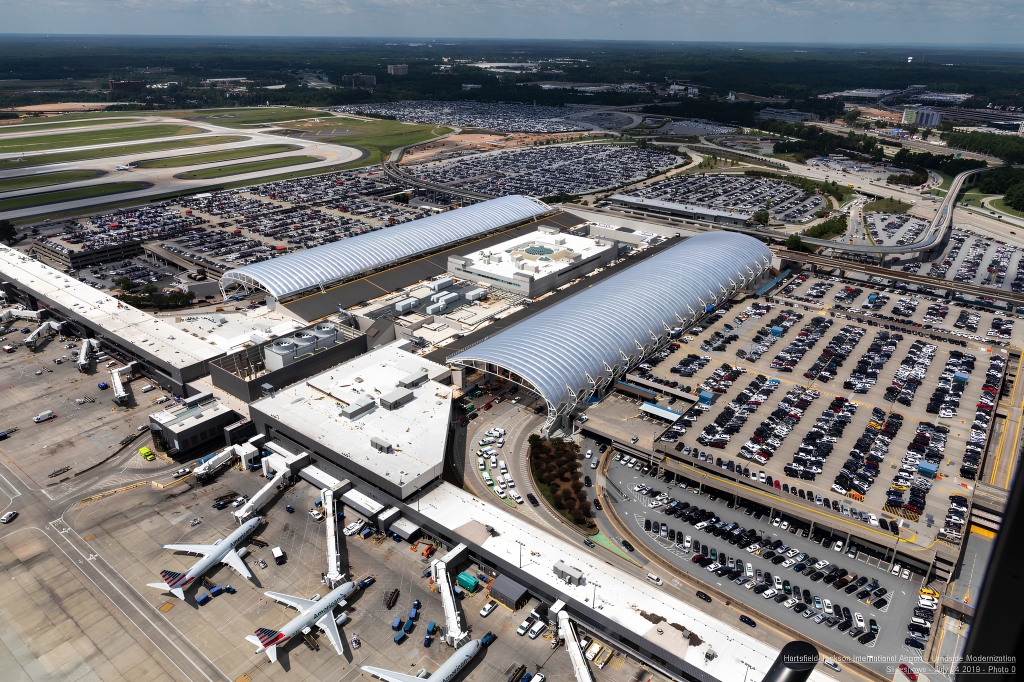
- Hartsfield–Jackson Atlanta International Airport consistently ranks as the busiest airport in the USA due to its central location and role as a major hub for Delta Air Lines, handling over 90 million passengers annually with highly efficient operations.
- Dallas/Fort Worth International Airport and Denver International Airport dominate domestic connectivity, serving as massive airline hubs with strong coast-to-coast and international route networks.
- International gateways like Los Angeles International Airport, John F. Kennedy International Airport, and Miami International Airport play a critical role in connecting the United States to Europe, Asia, Latin America, and the Pacific, driving both passenger traffic and global trade.
Busiest Airports in the USA
The United States has one of the largest and most advanced aviation networks in the world. With millions of domestic and international travelers every month, several airports handle enormous passenger volumes every year. The busiest airports in the USA are not just transit hubs—they are economic engines that connect cities, countries, and continents.
In this article, we explore the busiest airports in the United States, what makes them so busy, and why they play a critical role in global aviation.
How Are the Busiest Airports in the USA Measured?
Airports are ranked as “busiest” based on several factors, including:
- Total passenger traffic (domestic + international)
- Aircraft movements (takeoffs and landings)
- Hub activity for major airlines
- Geographic location and connectivity
- Volume of connecting passengers
Passenger traffic is the most commonly used metric, and it is the basis for this list of the busiest airports in the USA.
1. Hartsfield–Jackson Atlanta International Airport (ATL)
Location: Atlanta, Georgia
Why it’s busy: Major airline hub + central US location
Hartsfield–Jackson Atlanta International Airport consistently ranks as the busiest airport in the USA and the world. Its central location makes it ideal for connecting flights across North America.
Key Highlights
- Primary hub for Delta Air Lines
- Handles more than 90 million passengers annually
- Extremely efficient airport layout
- Strong domestic and international connectivity
Atlanta’s airport is famous for its fast operations and high-frequency flights, making it the undisputed leader among the busiest airports in the USA.
2. Dallas/Fort Worth International Airport (DFW)
Location: Texas
Why it’s busy: Massive hub for American Airlines
Dallas/Fort Worth International Airport is one of the largest airports in the world by land area and one of the busiest airports in the USA by passenger traffic.
Key Highlights
- Main hub for American Airlines
- Serves domestic and international routes
- Five large terminals with advanced infrastructure
- Strong cargo and passenger operations
DFW’s size and airline dominance allow it to handle huge passenger volumes efficiently.
3. Denver International Airport (DEN)
Location: Colorado
Why it’s busy: Geographic advantage + low-cost carrier hub
Denver International Airport has grown rapidly over the past decade and is now among the busiest airports in the USA.
Key Highlights
- Major hub for United Airlines
- Strong presence of Southwest Airlines
- Central location for coast-to-coast connections
- Large runway system for all aircraft types
DEN benefits from its location and modern design, making it one of America’s fastest-growing airports.
4. Chicago O’Hare International Airport (ORD)
Location: Illinois
Why it’s busy: Historic aviation hub
Chicago O’Hare has long been a cornerstone of US aviation and remains one of the busiest airports in the USA.
Key Highlights
- Major hub for United Airlines and American Airlines
- Extensive domestic and international routes
- High number of aircraft movements
- Critical Midwest connection point
Despite weather challenges, O’Hare continues to be one of the most important airports in the country.
5. Los Angeles International Airport (LAX)
Location: California
Why it’s busy: International gateway to the US West Coast
Los Angeles International Airport is the busiest airport in the USA for international passengers on the West Coast.
Key Highlights
- Major gateway to Asia and the Pacific
- Hub for multiple airlines
- Strong domestic and international traffic
- One of the most recognizable airports globally
LAX handles a mix of business, tourism, and entertainment industry travel, keeping it consistently busy.
6. John F. Kennedy International Airport (JFK)
Location: New York
Why it’s busy: International travel hub
JFK is one of the busiest airports in the USA for long-haul international flights.
Key Highlights
- Major international gateway
- Strong transatlantic and intercontinental traffic
- Hub for multiple global airlines
- High premium and business-class traffic
JFK plays a vital role in connecting the US with Europe, Asia, Africa, and the Middle East.
7. Orlando International Airport (MCO)
Location: Florida
Why it’s busy: Tourism-driven travel
Orlando International Airport is one of the busiest airports in the USA due to tourism.
Key Highlights
- Gateway to theme parks and resorts
- Heavy family and leisure traffic
- Strong domestic connectivity
- Seasonal peaks during holidays
Tourism demand makes Orlando one of the fastest-growing major airports in the country.
8. McCarran International Airport (LAS)
Location: Las Vegas, Nevada
Why it’s busy: Entertainment and convention travel
Las Vegas airport handles massive passenger volumes driven by tourism, conventions, and events.
Key Highlights
- High leisure travel volume
- Strong domestic flight network
- Major weekend traffic spikes
- Important for business events and trade shows
Las Vegas remains one of the busiest airports in the USA despite limited international traffic.
9. Miami International Airport (MIA)
Location: Florida
Why it’s busy: Latin America and Caribbean hub
Miami International Airport is a major international hub and one of the busiest airports in the USA for international cargo.
Key Highlights
- Strong connections to Latin America
- Major hub for American Airlines
- Heavy international passenger traffic
- Leading US airport for international freight
MIA plays a crucial role in connecting North America with South America.
10. Phoenix Sky Harbor International Airport (PHX)
Location: Arizona
Why it’s busy: Growing population + airline hub
Phoenix Sky Harbor has grown steadily and is now among the busiest airports in the USA.
Key Highlights
- Hub for American Airlines and Southwest
- Strong domestic route network
- Rapid population growth in the region
- Efficient airport operations
PHX benefits from favorable weather and expanding travel demand.
Why These Airports Are So Busy
The busiest airports in the USA share several common factors:
- Hub status for major airlines
- Central or strategic geographic location
- Strong domestic and international demand
- Large metropolitan populations
- Tourism and business travel
These airports serve as transfer points for millions of connecting passengers.
Economic Impact of the Busiest Airports in the USA
Busy airports are powerful economic drivers. They:
- Create thousands of jobs
- Support tourism and trade
- Attract global businesses
- Boost regional development
Airports like ATL, LAX, and DFW contribute billions of dollars annually to the US economy.
Future Trends for US Airports
The future of the busiest airports in the USA includes:
- Terminal expansions
- AI-driven security screening
- Sustainable aviation initiatives
- Electric ground vehicles
- Improved passenger experience technologies
As air travel demand continues to grow, these airports are investing heavily to handle future traffic.
Domestic vs International Traffic
Some airports dominate domestic travel (ATL, DEN), while others focus heavily on international routes (JFK, LAX, MIA). Together, they form a balanced aviation network across the country.
Final Thoughts
The busiest airports in the USA are more than just transportation hubs—they are vital infrastructure supporting commerce, tourism, and global connectivity. From Atlanta’s unmatched efficiency to Los Angeles’ international reach, each airport plays a unique role in America’s aviation system.
As passenger demand continues to rise, these airports will remain at the center of US air travel for decades to come.

Ajeet Yadav is an aviation enthusiast covering airline news, airports, aircraft, and industry developments through well-researched and reliable reporting.