


















Key Takeaways
- Psychometric assessment in aviation evaluates personality, cognitive abilities, and competencies to understand individual learning and performance differences.
- IATA’s guidance outlines requirements for psychological testing of flight crew, highlighting its role in selection and ongoing training.
- Aleksandra Kapela emphasizes that assessments should adapt to aviation’s specific demands and support training and development.
- Psychometric tests do not diagnose mental health issues but can reveal how individuals cope under pressure, necessitating separate clinical assessments.
- Effective use of psychometric data can enhance training by tailoring support to individual strengths and weaknesses throughout a pilot’s career.

Aviation training assesses performance across technical knowledge, aircraft handling, decision-making, communication and workload management.
Yet two people who meet the same entry requirements may learn differently, respond differently under pressure and require different levels of support during training. Understanding those differences is one of the purposes of psychometric assessment.
IATA’s guidance on pilot aptitude testing covers cognitive abilities, personality traits, social and interpersonal abilities and operational abilities.
In Europe, commercial air transport rules require flight crew to undergo psychological assessment before commencing line flying, with cognitive abilities, personality traits, operational and professional competencies, and social competencies among the assessment criteria.
The information gathered through these assessments need not be limited to the initial selection decision. In a discussion with Aviation Jeta, Aleksandra Kapela, Associate Aviation Psychologist at Symbiotics Ltd., explained how psychometric assessment can help identify individual strengths and areas requiring development during training and at later stages of an aviation career.
“We need to know the person behind the machine,” Kapela said. For her, this applies to student pilots, qualified pilots and instructors, including those moving through different stages of training and upgrades. The assessment can provide information about characteristics that may influence how an individual learns or responds when conditions become difficult.
Personality, Cognition and Competencies
Kapela broadly groups the areas being assessed into personality, cognitive ability and competencies.
Personality assessment can provide information about behavioural tendencies, including how a person deals with pressure or approaches learning. Cognitive testing examines areas such as information processing, learning and response to changing situations. Competencies are more directly open to development through training.

IATA’s pilot aptitude guidance includes memory, information-processing speed and accuracy, concentration, allocation of attention, multitasking, psychomotor abilities and spatial abilities among the cognitive areas that may be assessed.
Its guidance also covers operational abilities such as problem-solving, decision-making, workload management and situational awareness.
The choice of assessment is important. Kapela said a general psychometric test developed for another profession cannot simply be applied to aviation.
The assessment has to reflect the characteristics of the job and the environment in which the individual will work. EASA similarly requires psychological assessment to be appropriate to the complexity and challenges of the flight crew’s operational environment and based on the safety-critical requirements of the role.
The same assessment would not necessarily be appropriate across aviation roles. Kapela referred to pilots, instructors and cabin crew, pointing out that the attributes being assessed need to reflect the demands of each role. For instructors, this includes how they work with trainees, while cabin crew require attributes associated with passenger interaction and recognising and responding to situations in the cabin.
For pilots, she said a standard set of assessments can take around an hour to 90 minutes, depending on the tests selected and what the organisation wants to examine. Some tests can be completed remotely, while organisations may also conduct them on site.
Kapela cautioned against treating the result as an exact forecast of behaviour. “It is not a crystal ball,” she said. “We are looking for clues.”
Those clues can indicate behavioural tendencies and identify strengths or areas requiring attention. Kapela said she does not regard the tests simply as pass-or-fail exercises, although a finding that raises a serious safety concern would have to be considered in a selection decision.
Using Assessment Beyond Selection
Selection is where psychometric assessment is most readily associated with aviation, but Kapela sees value in retaining relevant information once training begins.
She said organisations commonly conduct assessments during selection or enrolment, with some using them again when a pilot experiences difficulties, at particular stages of training or before an upgrade. The reason for reassessment depends on the characteristic being examined. Personality traits tend to change slowly, whereas competencies can be developed through training and assessed again.
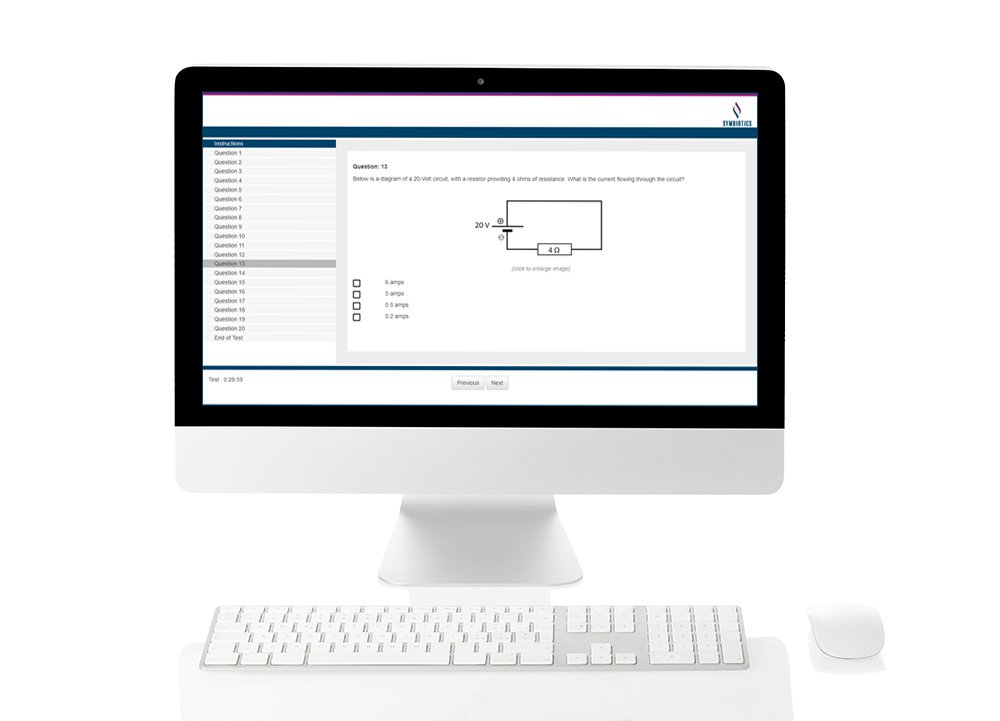
For a training department, this can provide additional information when an individual struggles in a particular area.
Rather than looking only at the outcome of an exercise or check, instructors can consider whether there are areas that require further development and adapt training where appropriate.
IATA’s aptitude-testing guidance notes that an applicant profile can also inform for subsequent training.
Its competency-based training material covers pilot development from aptitude testing and initial licensing through operator and instructor/evaluator training.
She also highlighted the importance of understanding an instructor’s teaching style and interaction with trainees. Different learning and teaching styles may affect how effectively information is communicated, particularly when a trainee is having difficulty.
The usefulness of such information depends on the quality of the assessment and how the results are interpreted. EASA requires psychological assessments covered by its commercial air transport rules to be validated and performed or overseen by a psychologist with relevant aviation knowledge and expertise in psychological assessment.
Psychometrics and Mental Health
The discussion takes on a different dimension when pilot mental health is considered. Kapela was clear that psychometric assessment should not be used to identify or diagnose mental-health conditions.
“Psychometric tests, they are not specifically a tool for well-being or mental health aspects,” she said. They may provide information about how an individual tends to deal with pressure, but a mental-health concern requires appropriate clinical assessment.
European rules make the same separation. EASA states that the psychological assessment conducted by an operator before line flying should not be considered a clinical psychological evaluation. Its aeromedical provisions deal separately with mental-health assessment and referral for specialist psychiatric or clinical psychological evaluation when required.
Kapela also raised the difficulty aviation personnel may have in acknowledging that they need help. Pilots can feel pressure to remain capable of handling demanding situations without reporting personal difficulties, fatigue or emotional problems. She said well-being and peer-support programmes are needed so that people can raise concerns and obtain appropriate help.
For Kapela, psychometric assessment has a role beyond the initial selection decision. Information on cognitive abilities, personality and competencies can remain useful during training and career development, provided it is interpreted for the purpose for which it was collected. It cannot predict every response to an abnormal situation or diagnose a mental-health condition, but it can give instructors and training teams a better understanding of the individual they are training.
Also Read: Pilot Wellbeing: Aviation’s Most Overlooked Safety Risk