






AgustaWestland AW109 Trekker: The Gold Standard in Light Twin-Engine Helicopters

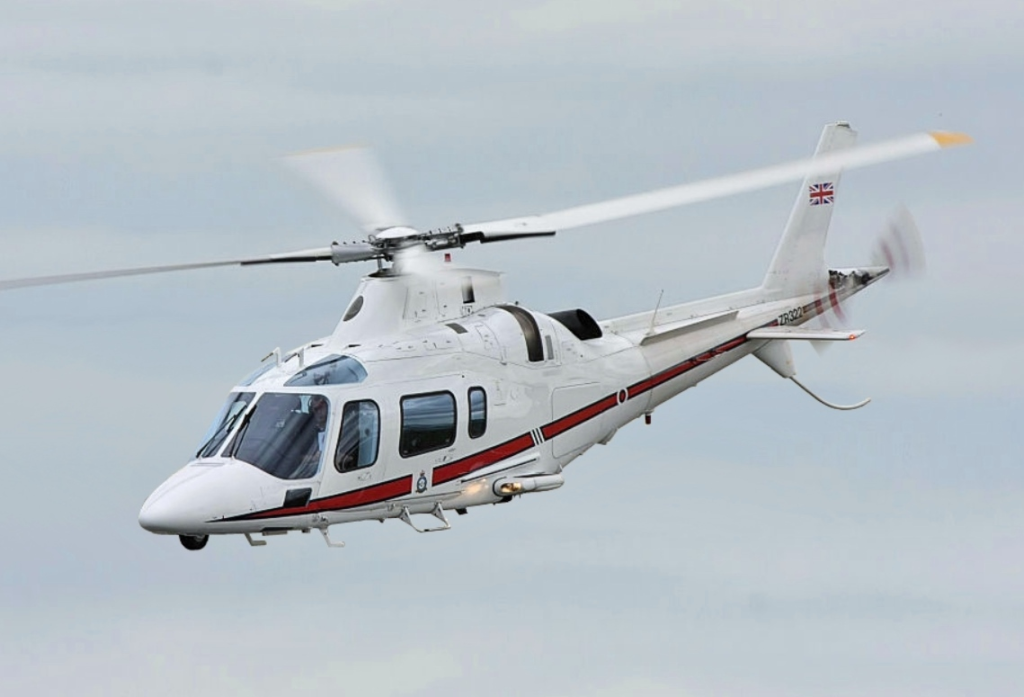
AgustaWestland AW109 Trekker
Introduced in 2016 by Leonardo Helicopters (formerly AgustaWestland), the AW109 Trekker represents the culmination of nearly five decades of continuous refinement to the legendary AW109 platform. This rugged, mission-adaptive aircraft was specifically engineered to meet the growing demand for a cost-effective yet uncompromising light twin-engine helicopter capable of operating in the world’s most challenging environments. With over 1,200 AW109 series helicopters delivered globally by 2024, the Trekker variant has become a preferred choice for emergency medical services (EMS), law enforcement, corporate transport, and utility operations.
The Trekker’s development was driven by operator demand for a helicopter that could bridge the gap between single-engine models and larger twins, offering twin-engine safety without the complexity of heavier aircraft. Priced at approximately $7.5 million, it occupies a strategic market position between the Bell 429 GlobalRanger and Airbus H145, delivering superior value through its innovative fixed skid landing gear configuration that reduces maintenance costs by 15-20 per cent compared to retractable systems. This design choice, combined with its robust Pratt & Whitney powerplants, has made it particularly popular with operators requiring dependable performance in austere conditions. It has established itself as the benchmark for reliability, operational flexibility and cost-effective operations in both urban and remote settings.
Cabin Experience
The helicopter boasts one of the most generous, adaptable, and passenger-focused cabin spaces in its class, measuring 6.23 feet (1.90 meters) in length, 5.25 feet (1.60 meters) in width, and 4.43 feet (1.35 meters) in height, which can be configured to accommodate up to seven passengers in high-density layouts, such as EMS missions with a stretcher and medical team, or six occupants in luxurious VIP arrangements. The cabin’s modular design makes it adaptable for rapid reconfiguration, transitioning seamlessly from executive travel to search-and-rescue (SAR) or cargo transport.
As its sliding doors measuring 1.25 meters (4.1 feet) facilitate easy loading and unloading, the Trekker proves to be highly useful for EMS and law enforcement roles where speed is critical. As for VIP and corporate purposes, the cabin can be outfitted with premium finishes, including leather upholstery, advanced noise insulation, and customisable amenities such as reading lights and climate control. Natural light floods the interior through large windows, providing excellent visibility for both passengers and crew. Mission-critical equipment or luggage is securely stowed within a dedicated baggage compartment with 3.5 cubic meters (123 cubic feet) of storage without compromising cabin comfort. The in-flight storage is capable of securing up to 300 kg (661 lb) of mission-critical equipment. This space is ingeniously designed with multiple tie-down points and power outlets, accommodating everything from medical devices to corporate luggage with equal facility.
Technology (Engine and Avionics)
The Trekker is powered by twin Pratt & Whitney PW207C turboshaft engines, each delivering 710 shaft horsepower (shp). This dual-engine configuration leads to enhanced safety and performance redundancy, particularly valuable in hot-and-high conditions or over hostile terrain. The engines are equipped with Full Authority Digital Engine Control (FADEC) systems, optimising fuel efficiency while reducing pilot workload.
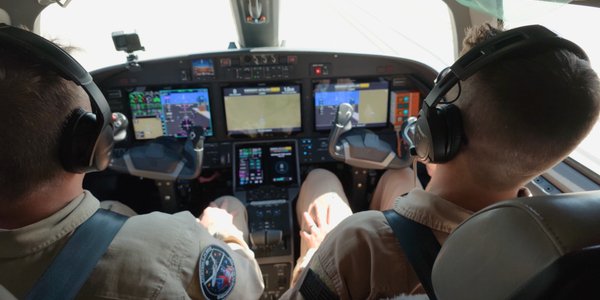
The helicopter’s four-blade main rotor system and fenestron tail rotor contribute to its exceptional agility and low acoustic signature, making it well-suited for urban operations where noise reduction is a priority. The Garmin G1000H™ integrated glass cockpit features dual 10.4-inch high-resolution displays that provide pilots with critical flight data, Synthetic Vision Technology (SVT), and a Helicopter Terrain Awareness and Warning System (HTAWS). These systems significantly enhance situational awareness, particularly in low-visibility conditions.
To ensure all-weather capability, the helicopter is equipped with an optional three-axis autopilot and IFR-certified navigation suite, including GPS/WAAS and VHF omnidirectional radio range (VOR) systems. Redundancy is further ensured through dual hydraulic circuits and backup instrumentation, while the Central Maintenance Computer (CMC) streamlines diagnostics and reduces downtime. The helicopter is also Night Vision Imaging System (NVIS) compatible, with specialised lighting for missions requiring night vision goggles (NVGs).
Performance
With a maximum speed of 285 km/h (154 knots) and a cruising speed of 260 km/h (140 knots), the aircraft’s range extends to 859 kilometres (464 nautical miles) on standard fuel, enabling non-stop flights between major metropolitan areas such as Los Angeles and San Francisco or London and Paris. When undertaking extended missions, the helicopter’s fuel capacity of 816 litres (215 US gallons) ensures ample endurance, while its service ceiling of 5,486 meters (18,000 feet) allows it to operate comfortably above adverse weather.
The Trekker’s maximum take-off weight (MTOW) of 3,175 kilograms (7,000 pounds) supports a variety of payload configurations, including external cargo hooks capable of lifting up to 1,000 kilograms (2,200 pounds). This makes the helicopter suitable for utility roles such as firefighting with a Bambi bucket, offshore crew transfers, or heavy-lift operations. Its high rate of climb—9.1 meters per second (1,791 feet per minute)—ensures quick ascent in emergency scenarios, while the Category A performance certification guarantees safe operations in congested or obstacle-rich environments.
Leonardo’s global support network comprising 35 authorised service centres worldwide provide 24/7 technical support in twelve languages, ensuring exceptional operational readiness. The maintenance program features 150-hour minor inspections and 3,000-hour major intervals, supported by a component exchange program with 98 per cent availability. With direct operating costs of $1,250/hour and 95 per cent dispatch reliability, the Trekker delivers outstanding value across its 12,000-hour airframe lifespan.
Recent upgrades include a 2023 MTOW increase to 3,200 kg (7,055 lb) and new composite rotor blades offering 5 per cent performance improvement. The Garmin G1000 NXi upgrade path ensures the avionics suite remains at the technological forefront, while ongoing studies into hybrid electric propulsion promise to further enhance the platform’s capabilities.
Specifications at a Glance
| Category | Metric | Imperial |
| Length | 13.04 m | 42 ft 9 in |
| Rotor Diameter | 11.00 m | 36 ft 1 in |
| Height | 3.50 m | 11 ft 6 in |
| Cabin Length | 1.90 m | 6 ft 3 in |
| Cabin Width | 1.60 m | 5 ft 3 in |
| Cabin Height | 1.35 m | 4 ft 5 in |
| Passenger Capacity | Up to 7 | Up to 7 |
| Max Take-off Weight | 3,175 kg | 7,000 lb |
| Max Range | 859 km | 464 nm |
| Max Speed | 285 km/h | 154 kts |
| Cruising Speed | 260 km/h | 140 kts |
| Service Ceiling | 5,486 m | 18,000 ft |
| Rate of Climb | 9.1 m/s | 1,791 ft/min |
| Engines | 2 × Pratt & Whitney PW207C | 710 shp each |
| Fuel Capacity | 816 L | 215 US gal |
Key Takeaways
The Trekker combines unparalleled versatility with robust performance, safety and operational efficiency. With over 150 units delivered since 2016 and growing operator acclaim for its power reserve, reliability, and cost-effectiveness, the Trekker continues to set the standard for light twin-engine performance well into the future. Its spacious and reconfigurable cabin, coupled with cutting-edge avionics and robust twin-engine performance, makes it an ideal platform for a wide array of missions—from EMS and law enforcement to corporate travel and utility work. Operators such as Air Methods in the United States, Swiss Air-Rescue (Rega), and the South African Police Service have embraced the Trekker for its reliability in challenging conditions and lower operating costs compared to competitors. The AW109 Trekker continues to set the benchmark in the light twin-engine helicopter market, combining advanced technology with unparalleled mission adaptability.

Ajeet Yadav is an aviation enthusiast covering airline news, airports, aircraft, and industry developments through well-researched and reliable reporting.