








As India asserts itself as one of the world’s fastest-growing aviation markets, the challenge extends beyond inducting new aircraft. It also requires a highly qualified workforce to support that growth safely. In this interview, Simon Azar, Vice President, Civil Aviation, Asia-Pacific at CAE, discusses how the global training provider has evolved from a simulator supplier into an end-to-end training and workforce partner. He outlines CAE’s growing presence in India, the use of training approaches such as Competency-Based Training and Assessment (CBTA) and Multi-Crew Pilot Licence (MPL) programmes, and its plans to add simulator capacity in line with airline demand.
After more than two decades in India, how have airlines’ expectations of CAE changed?
CAE has been around for nearly 80 years. Our mission is to help airlines operate safely by supporting their training and workforce needs, whether for pilots, cabin crew or maintenance technicians.
The biggest change is that airlines no longer see us only as a simulator supplier. They now expect three things: a strategic training partner, end-to-end workforce solutions and training capacity that can scale with their growth.
We continue to develop our products, including the 7000XR and the wider simulator portfolio, but our role now extends well beyond equipment. We also bring a large cadre of instructors and advanced courseware and curricula, including competency-based training and assessment (CBTA) and multi-crew pilot licence (MPL) programmes.
This enables us to support airlines across the training lifecycle, from cadet induction to recurrent and upgrade training. That support is particularly important in India and across Asia-Pacific, where airlines are preparing to induct a large number of aircraft. We now have four training centres in India, and as our customers expand their pilot bases, we can grow with them. Simulator products remain important, but they are now part of a much wider training system.
India is one of the world’s fastest-growing aviation markets. What are the biggest training and workforce challenges facing its airlines?
India’s aviation growth depends on more than aircraft entering service. Infrastructure must expand, but airlines also need enough trained personnel to support that growth safely.
We expect India to need 22,000 new pilots by 2034. The challenge is to induct them at the required pace and ensure they are properly qualified to operate. Newer training approaches, including CBTA and MPL programmes, can help airlines meet that requirement.
CAE has extensive experience with these training models. We believe that experience can help the Indian aviation industry build its workforce at the pace required to support its growth.
As CAE retires 25 commercial simulators and reallocates capacity across its global network, how does India fit into the review?
At the global level, the review is about matching our capacity with customer demand. That includes reallocating simulators between locations as requirements change.
India is in a different position because demand here is growing.
The discussion is therefore not about retiring simulators, but about keeping pace with the market and our customers.
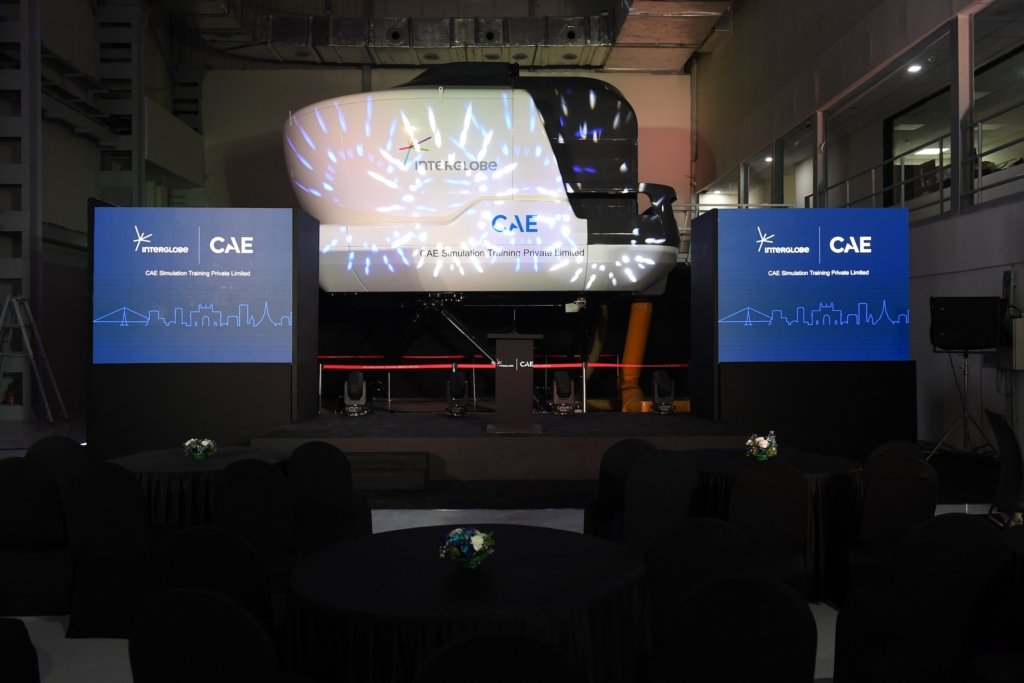
We recently opened our fourth training location in Mumbai, India with two devices.
The first was installed a few months ago, and the second is now being installed. At present, we are looking at bringing additional devices into the country.
How will the growth of India’s A350 and 787 fleets affect CAE’s training model, and where is training capacity currently available?
The A350 and 787 are both well-established platforms within CAE’s network, so supporting them does not require a different training model. We already provide training on both aircraft types outside India. As Indian airlines induct them, we will align our simulator capacity and training services with their entry-into-service timelines.
At present, we have A350 and 787 training capacity in Vietnam, 787 capacity in Singapore, and A350 capacity in Japan and Europe. Indian airlines already train with us in Singapore on the 787. If demand reaches the level required to support those devices in India, we will bring them into the country.
If India adopts MPL training, what safeguards should be built into the framework from the outset?
CAE has more than a decade of experience running MPL programmes for a range of airlines. That experience has shown that the first requirement is close alignment among the regulator, the airline and the training organisation.
An MPL programme cannot be generic. It must be built around the airline’s specific operating procedures and workforce needs, with qualified instructors, standardised assessments and strong governance. We apply those principles consistently across our MPL programmes.
The framework must also support continuous oversight and improvement. Training outcomes and performance should be reviewed regularly, using data to assess each trainee’s progress and adapt the programme where required.
How is CAE helping customers in India use technology to improve training effectiveness and workforce readiness?
Technology is enabling us to design and deliver more effective training programmes.
At CAE, much of this work is focused on CBTA and MPL, both of which are important areas of investment for us.
MPL is an advanced, competency-based programme that uses data, immersive technologies and newer training solutions to improve learning outcomes and operational readiness.
This is ultimately what airlines need when preparing the next generation of crew.
What is the scale of CAE’s simulator network in India, and how does it compare with its presence elsewhere in Asia-Pacific?
India already has one of CAE’s largest simulator networks in Asia-Pacific. We currently have 17 simulators across four centres, located close to the main pilot bases of our airline partners so that we can support them more effectively.
There is also room to expand. Our Mumbai centre has four additional simulator bays. By comparison, we have about a dozen simulators in Singapore and a similar number in Japan, while Thailand has four simulators and two available bays.
As more companies add training capacity in India, how is CAE approaching further expansion, and do you see any impediments?
India presents an incredible opportunity for CAE, and we do not see any impediments to further expansion. Our approach is based on close alignment with airline demand.
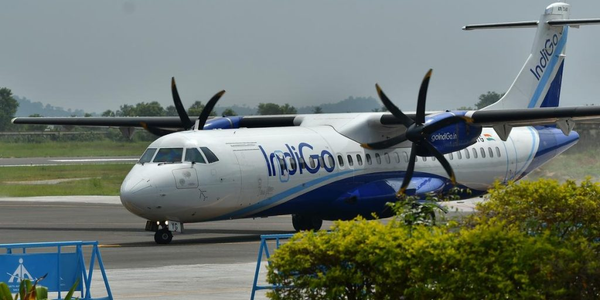
We have long-term agreements with our customers and remain in constant communication with them. IndiGo is one example.
As our airline partners plan their workforce requirements over the short and long term, we adjust our capacity accordingly.
If additional devices are needed, we will be there.
Our priority is to remain a trusted partner that airlines can rely on for their end-to-end training and workforce needs, while continuing to support the wider aviation training ecosystem in India.
Also Read: Operationalising a Fully Compliant Competency-Based MPL Programme: A Global First