









- Airbus delivered 351 aircraft in the first half of 2026, including 237 in the second quarter, and retained its full-year target of around 870.
- The company plans to raise A320 Family production to 70–75 aircraft a month by the end of 2027, alongside higher A220, A330 and A350 output.
- Airbus reported €33.18 billion in first-half revenue, while its annual sourcing from India now exceeds US$1.5 billion.
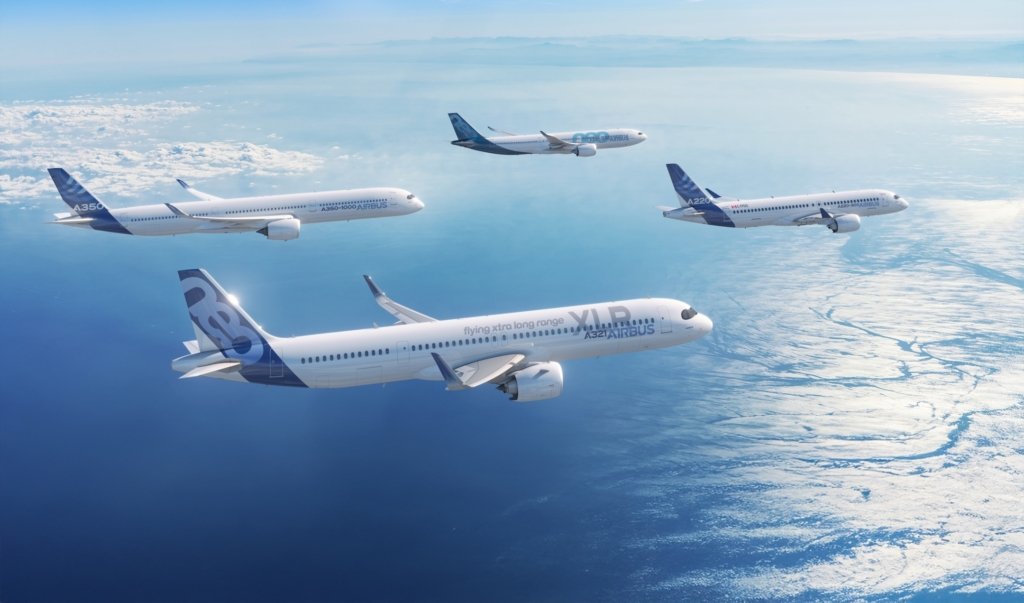
Photo: Airbus
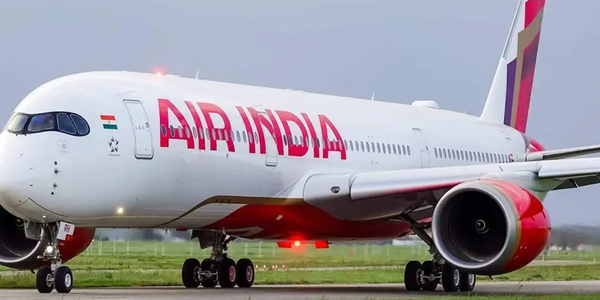
Airbus has reaffirmed its target of delivering around 870 commercial aircraft in 2026, a milestone that places India at the heart of the European planemaker’s growth strategy as the country’s two largest airlines — IndiGo and Air India — together hold orders for well over 1,300 Airbus aircraft, ensuring that India will remain one of the company’s biggest delivery markets for years.
The manufacturer reported a sharp rebound in aircraft deliveries during the second quarter, handing over 237 aircraft between April and June, nearly 40% more than a year earlier.
For India, the delivery outlook carries enormous significance.
IndiGo alone has placed orders for roughly 1,000 Airbus aircraft, including its record-breaking order for 500 A320neo Family aircraft announced in 2023. Its firm A350-900 order now stands at 60 aircraft after it converted 30 purchase rights into firm orders, doubling its initial commitment.
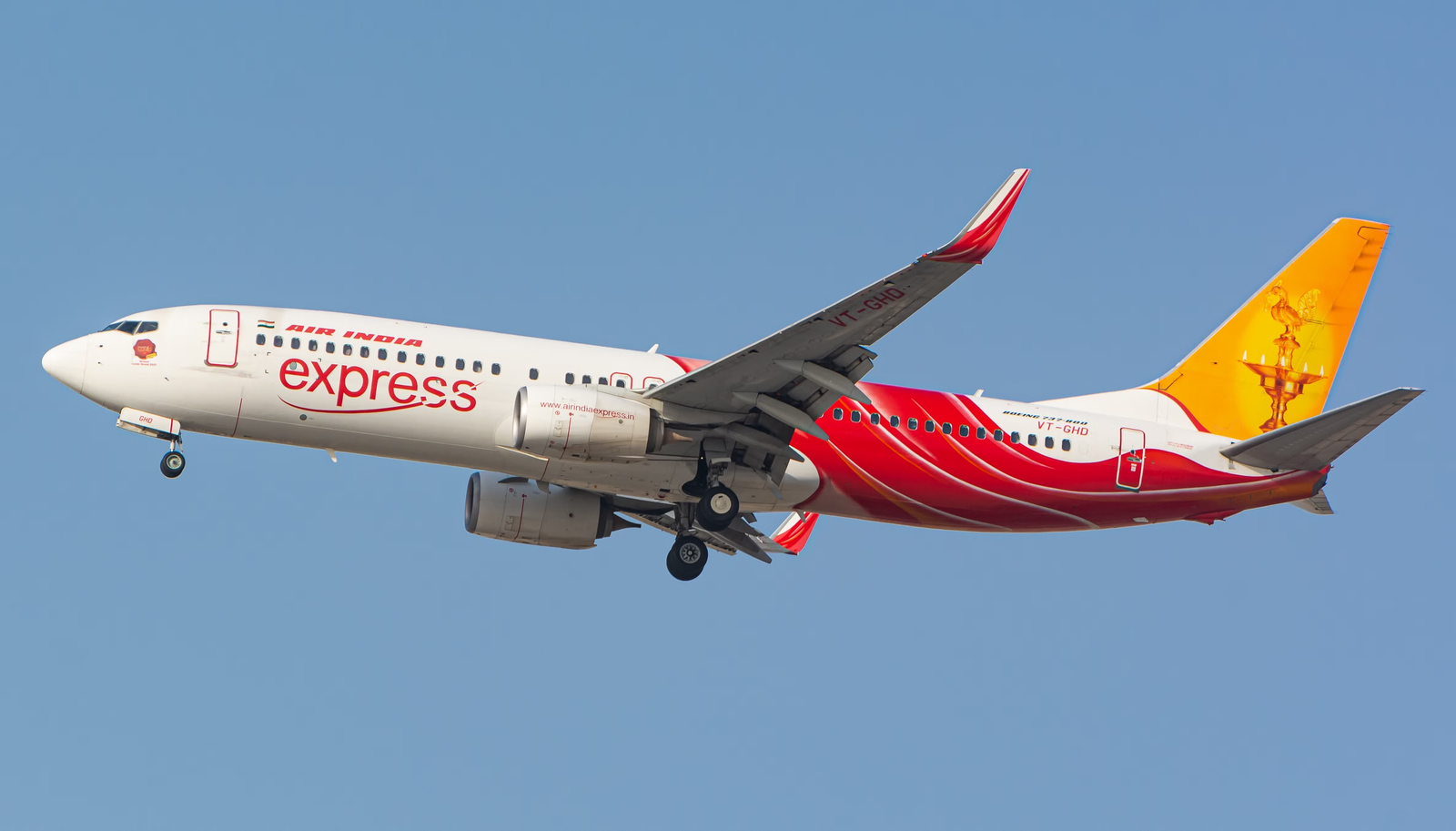
Air India has an active Airbus pipeline exceeding 340 aircraft, strengthened by its 2024 order for another 100 Airbus jets, including 90 A320 Family aircraft and 10 A350s, while also converting part of its A321neo order into the longer-range A321XLR variant.
The massive Indian order backlog means Airbus deliveries over the remainder of the decade will increasingly be destined for Indian carriers as they expand domestic networks and launch new long-haul international routes.
The emergence of the A321XLR is expected to reshape India’s international aviation market by allowing airlines to profitably operate thinner long-haul routes to Europe, Central Asia and Southeast Asia that previously required larger widebody aircraft.
Airbus’ confidence in meeting delivery targets follows a stronger financial performance during the first half of 2026. The company reported revenue of €33.18 billion, up 12% from a year earlier, while reported EBIT rose to €2.75 billion from €1.62 billion. Adjusted EBIT increased 24% to €2.73 billion, and net income climbed 47% to €2.24 billion, driven largely by higher commercial aircraft deliveries.
Second-quarter performance was even stronger, with revenue rising 28% to €20.53 billion and adjusted EBIT jumping 54% to €2.43 billion, reflecting a surge in aircraft handovers after production constraints eased.
Airbus Chief Executive Guillaume Faury said the results reflected “the higher level of commercial aircraft deliveries” and a strong performance from the Defence and Space business while the company continued ramping up production to meet growing demand.
Commercial aircraft remain the backbone of Airbus’ business.
The division generated €23.88 billion in first-half revenue, accounting for about 72% of the group’s total revenue, while Defence and Space contributed €6.32 billion and Airbus Helicopters €3.68 billion. Commercial aircraft revenue increased 15% year-on-year as deliveries accelerated.
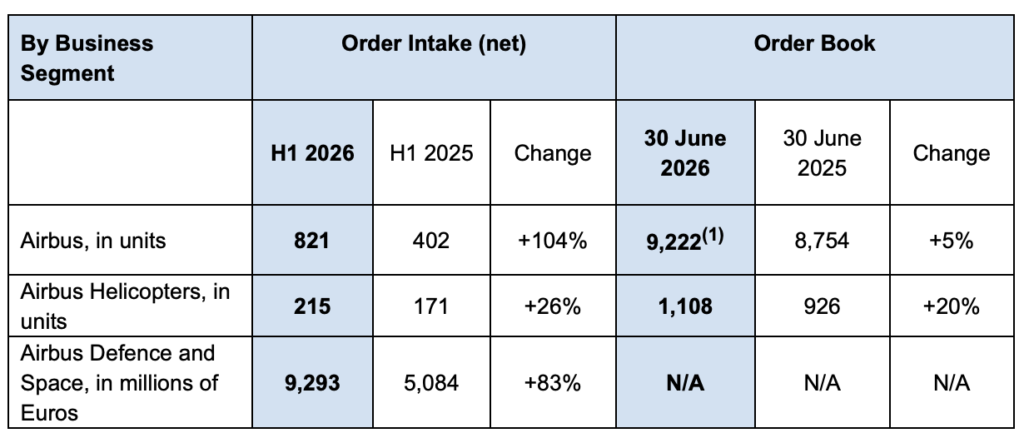
The Asia-Pacific region continues to be one of Airbus’ most important growth engines, led overwhelmingly by India and China. While Airbus does not disclose regional revenue figures, the company’s commercial momentum in Asia is reflected in its record order book of 9,222 commercial aircraft, with Indian airlines representing one of the largest single-country backlogs worldwide.
India has also become increasingly important to Airbus beyond aircraft sales.
The company now sources more than US$1.5 billion annually in components, engineering services and software from India through supplier networks and engineering centres in Bengaluru, Hyderabad, New Delhi and Vadodara, making the country an integral part of Airbus’ global manufacturing ecosystem.
Despite improving deliveries, Airbus acknowledged that supply chain pressures persist, particularly for engines and critical aerospace components. Nevertheless, the company maintained its production plans, targeting 70-75 A320 Family aircraft per month by the end of 2027, alongside higher production rates for the A220, A330 and A350 programmes.
The company also left its full-year financial guidance unchanged, projecting approximately 870 commercial aircraft deliveries, €7.5 billion in adjusted EBIT, and €4.5 billion in free cash flow before customer financing for 2026.
For India, those production targets are more than corporate milestones. They represent the pace at which the country’s airlines can add capacity to meet one of the world’s fastest-growing aviation markets. With IndiGo and Air India continuing to expand aggressively, Airbus’ ability to sustain higher production rates will be critical in determining how quickly India’s airlines can modernise fleets, open new international routes and accommodate rapidly rising passenger demand.
Also Read: Airbus Reports Strong 2025 Results as Engine Supply Shapes 2026 Delivery Plans

R Suryamurthy has been an economic analyst and journalist for more than three decades and has worked for The Telegraph, Tribune and Press Trust of India.