






The Stranger in the Store: Why Airport Retail Still Doesn’t Know Its Passengers

- Duty-free conversion has fallen from 66% in 2017 to about 53%, raising questions about whether airport retail still understands the passengers moving through its stores.
- Passengers now arrive with clearer preferences, less patience for generic promotions and different emotional states, making pressure-based selling less effective inside the terminal.
- AI-led airport retail is beginning to address this by understanding traveller behaviour, preferences and journey context in real time, helping stores move from unwanted selling to more relevant engagement.
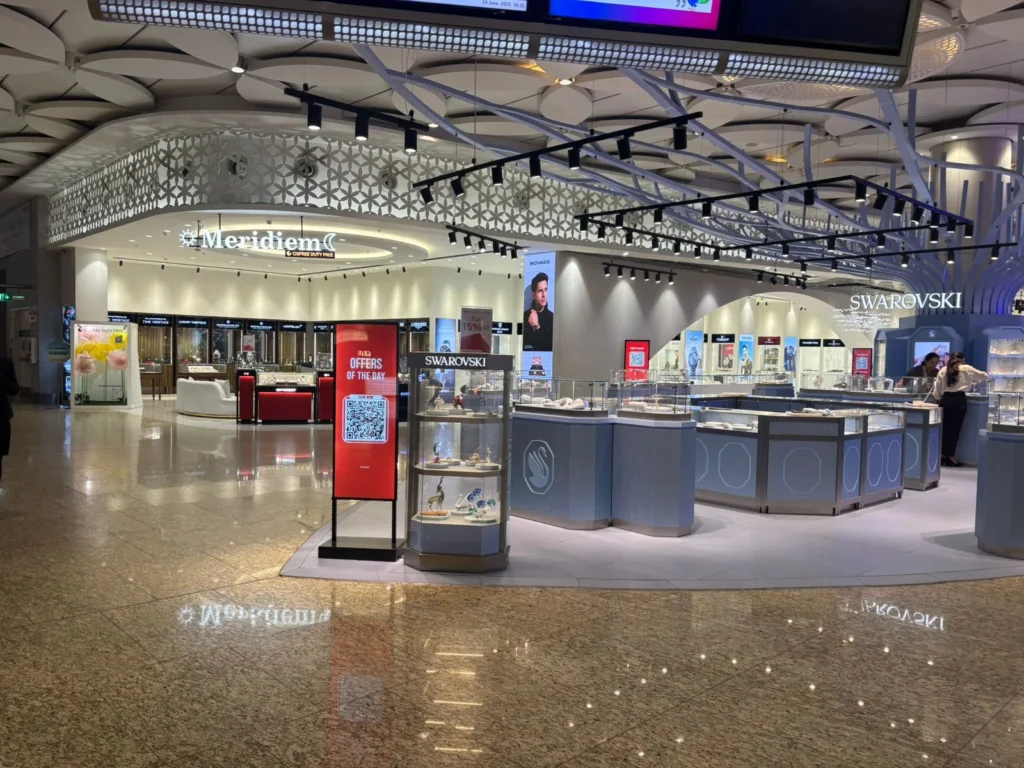
Picture this. You have just cleared security. The tension of the queue, the shoes off, laptop out, the silent calculation of whether you packed anything you should not have, is gone. You have fifty minutes before your gate opens. For the first time in several hours you are neither rushing nor waiting. You are, briefly, free.
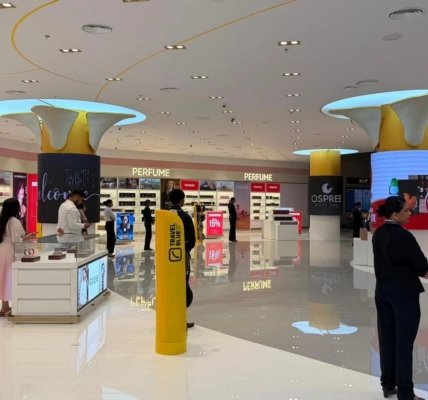
You walk into the duty-free zone and something happens that has happened to you at airports all over the world. A sales representative materialises at your shoulder with a fragrance bottle and a proposition. You smile politely and keep walking. Two aisles over, another steps forward with a skincare promotion. You redirect. By the time you reach the far end of the store you have successfully avoided everyone and bought nothing, and you find a seat near your gate and open your phone.
The store saw you. It counted you. It logged you as a visitor who did not convert. But it never actually knew you were there.
“The store saw you. It counted you. It logged you as a visitor who did not convert. But it never actually knew you were there.”
That gap, between counting a person and understanding one, is the central commercial problem of airport retail. And it has remained unsolved not because the technology to address it did not exist, but because the industry never had sufficient reason to believe the existing model was broken.
The model still produced revenue. The concessions still got paid. The minimum annual guarantees still got met. The store waited, and enough people stopped, and the numbers looked acceptable enough that the question was never asked with sufficient urgency.
The urgency is arriving now, from an unexpected direction. Reliance Retail launched its first AI-powered store in Bengaluru in 2022 and has since aggressively expanded the concept across its network. The technology involved is not the story.
What is the story is the philosophy behind it. Reliance, one of the largest retail operators in the world by scale and ambition, decided that the fundamental operating model of a physical store needed to be rebuilt around intelligence rather than around product. The store would stop being passive. It would start reading its environment. It would know, in real time, something meaningful about the person standing in front of it. And it would respond accordingly.
That is not an airport story. It is a retail story. But it is precisely the retail story that airport commercial directors should be reading most carefully, because it describes exactly what airport retail has never managed to become.
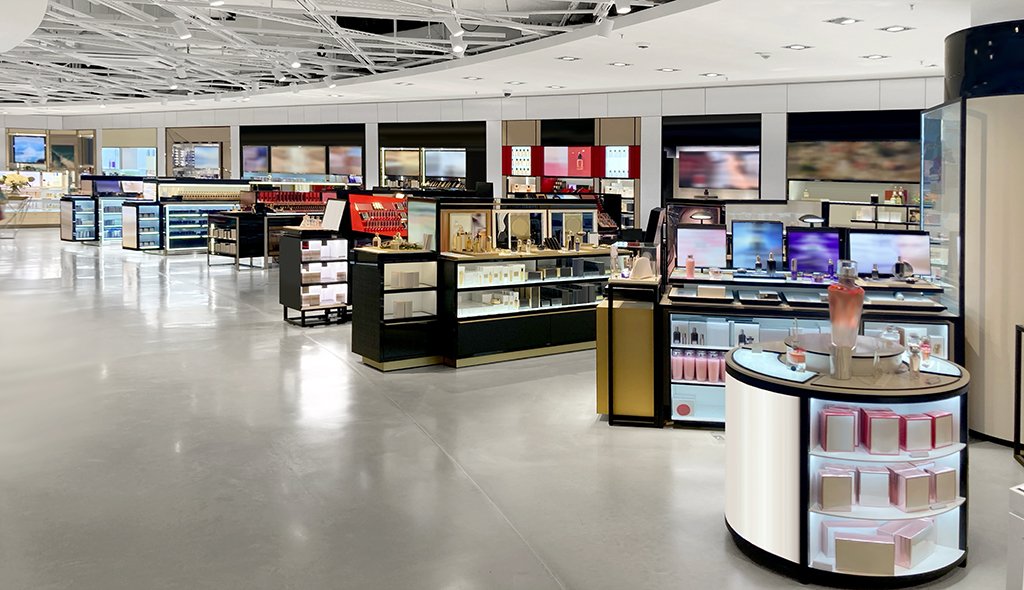
The numbers that sit behind this observation are not comfortable ones for the industry.
According to industry data, global duty-free conversion rates peaked at 66% in 2017 and had declined to around 53% by 2022.
Those figures measure the share of passengers who enter a duty-free zone and actually make a purchase. They were falling not because fewer passengers were flying.
Passenger volumes had been growing steadily through that period and have since recovered beyond pre pandemic levels in most major markets. They were falling because the offer was becoming progressively less relevant to the people it was being made to.
Think about what has changed in the life of a traveller between 2017 and today. They shop on their phone while in a taxi to the airport. They have already seen, compared, and in many cases pre-purchased the category they were interested in before they ever reached the terminal. They carry a device that knows their location, their preferences, their price sensitivity, and their history.
When they arrive at a duty-free store and encounter a generic promotion presented by a stranger who knows nothing about them, they are experiencing one of the last remaining retail environments on earth that makes no attempt whatsoever to know who they are. The contrast is not lost on them.
This is what researchers in environmental psychology have been pointing toward for some time. The emotional state a passenger carries into a retail zone is the single most powerful predictor of whether they will engage or avoid. Pleasure emotions, the sense of ease, interest, and mild excitement that comes with a positive environment, correlate directly with spending.
Stress, time pressure, and the particular discomfort of feeling pursued rather than invited, produce avoidance behaviour. A passenger who has been approached twice before reaching the middle of the store has already made a decision that no subsequent promotion is likely to reverse.
The industry has understood this in theory. What it has lacked is the mechanism to act on it at the individual level, at scale, in real time. That mechanism now exists.
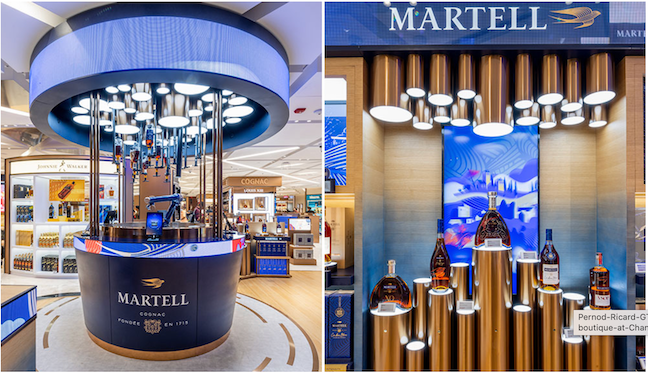
At Singapore Changi Airport, Pernod Ricard and Lotte Duty Free opened what became the first AI-powered boutique of its kind inside an airport.
The space is thirty-three square feet. That detail matters because it proves the point is not about square footage.
The boutique features an AI ambassador that guides passengers through a preference conversation, digitalised merchandising that responds to those preferences, and a robot bartender that prepares a personalised recommendation based on the assessment.
The passenger is not being sold to. They are being asked about themselves. And then, for the first time in most of their airport retail experience, they receive a response that reflects what they just said.
Changi’s managing director of airside concessions described it as harnessing the power of data and technology to deliver personalised, customer-centric experiences. That sounds like corporate language until you stand next to it and watch what happens when a passenger who has walked past six other promotions stops and stays.
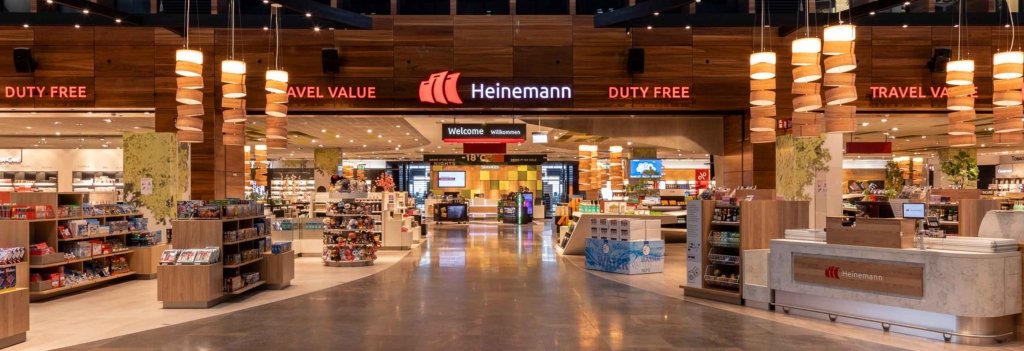
Berlin Brandenburg Airport has taken a different but related angle, applying AI profiling to understand that two fundamentally distinct traveller types move through its terminals in ways that have completely different commercial implications.
The speed oriented traveller and the experience-seeking traveller do not just want different things. They are not reachable through the same physical arrangement of retail, the same promotional format, or the same moment in their journey. Intelligence that maps which type is predominant in a given zone at a given time changes what the commercial environment should look like at that moment. Not next month. Now.
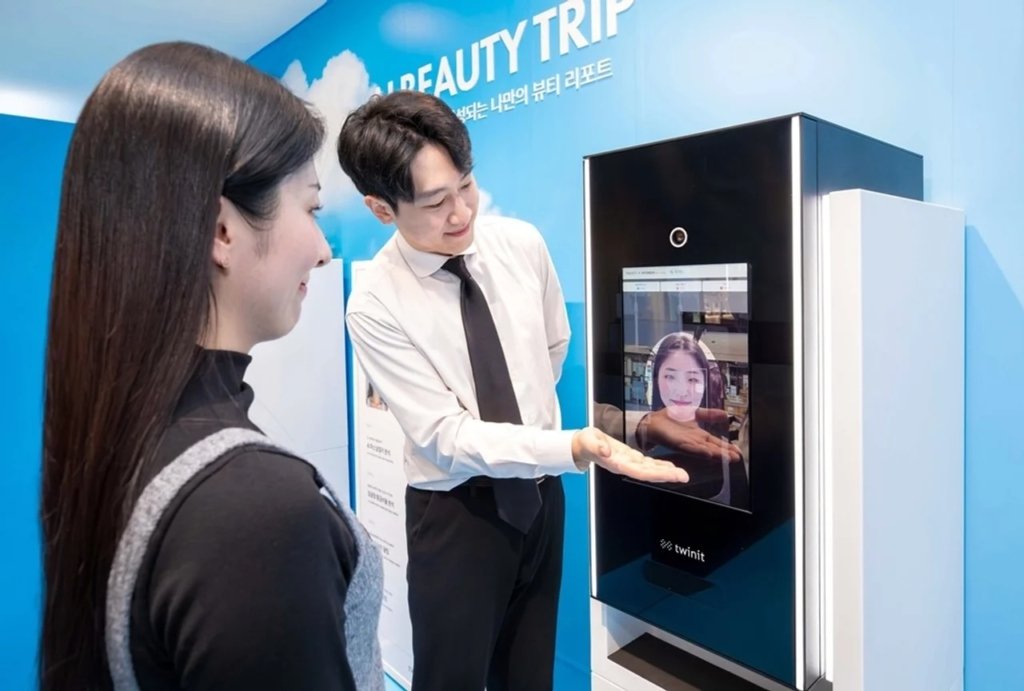
Photo: Hyundai Department Store Group
ARI, one of the most commercially progressive travel retailers in operation today, has committed to building a Digital Centre of Excellence with AI at its centre, specifically to drive this kind of real-time intelligence into its store operations.
Hyundai Duty Free in Seoul has launched its TWINIT AI beauty zone at its flagship Trade Centre store, where facial and skin analysis generates personalised product recommendations for each individual who enters.
This was a direct response to a measurable reality: discount-driven beauty sales across Asia Pacific declined approximately ten per cent year on year in 2024.
The mass promotion that once moved volume stopped working because the passengers it was designed to capture had changed. They knew their preferences. They did not need to be told a category was on sale. They needed to be shown something that was right for them specifically.
Global Travel Retail Magazine’s Blueprint analysis, looking ahead to the shape of airport shopping by 2030, describes AI systems that will map passenger movement from check-in to gate, track time spent within retail areas, and read whether a passenger is in a rushed, neutral, or browsing state before any commercial interaction begins. The store, in this model, no longer presents itself the same way to everyone. It reads the room. More precisely, it reads the person.
“The store no longer presents itself the same way to everyone. It reads the room. More precisely, it reads the person.”
What is remarkable about this trajectory is how long it has taken to arrive at an airport near you, given that the data required to enable it has existed inside airport systems for years. Boarding passes carry nationality and destination.
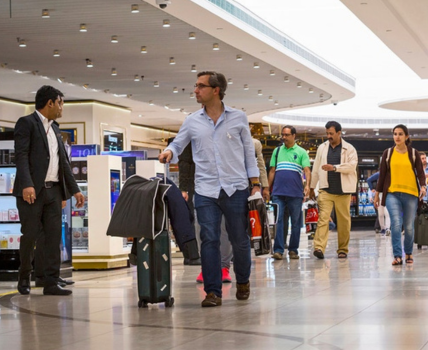
Flight manifests indicate travel purpose. Security timestamps establish how long ago stress ended. WiFi analytics show where passengers pause and for how long. Research confirms that thirteen minutes is the average time a passenger spends in an airport retail zone before moving on. Thirteen minutes in which the store, at most airports, still knows nothing about who is inside it.
The practical consequence of this gap goes beyond conversion rates and revenue per passenger, though those numbers are significant. The global travel retail market is valued at approximately sixty-seven billion dollars, and non-aeronautical revenue per passenger remains the primary metric separating commercially excellent airports from commercially adequate ones. The deeper consequence is that airport retail is training passengers, journey by journey, to treat it as an obstacle to navigate rather than an experience worth having.
Every passenger who walks away from an irrelevant approach carries that memory into their next transit. Every airport that feels the same as every other airport, with the same categories and the same promotions and the same dynamic of avoidance, is slowly teaching its passengers not to stop.
The airports that understood this earliest are the ones whose commercial performance looks like a different industry. The model is not complicated. Know something real about the person standing in front of the store. Respond to what you know. Trust that relevance converts better than pressure.
Reliance arrived at that conclusion through the logic of domestic retail competition, where online alternatives have forced every physical retailer to either justify their existence with a better experience or accept slow decline.
Airports have not faced that competitive pressure in the same form because their passengers cannot go somewhere else. They are already there. The captive audience, for decades the envy of every retailer outside the terminal, turned out to be the very thing that removed the urgency to improve.
That protection is running out. The passenger who knows what a personalised experience feels like, because they get one everywhere else they shop, increasingly notices its absence at the airport. They still buy. But they buy less than they would if someone had taken the trouble to know them. The store that does not know you are there will keep counting you as a visitor who did not convert. The smarter question is what it would take for the store to finally know you were there at all.
*About the Author – Ashraf Fathi is a senior airport commercial advisor with eighteen years of experience in airport and travel retail strategy across MENA and Africa.
Also Read: Behind Noida Airport’s Tariff Order: Airlines, Regulators and a High-Stakes Aviation Gamble

Ashraf Fathi has 29 years of professional experience, 18 of them in global travel retail. He was Country Managing Director of Dufry Group (now Avolta) from 2008 to 2018, and now runs Ashraf Fathi Advisory, serving airport authorities, travel retail operators, luxury retailers and institutional investors across MENA and Africa.