












Layered Defence: How Airports Can Counter the Growing Drone Threat

- Unauthorised drone activity is disrupting airports worldwide, with even an unverified sighting capable of halting flights, causing delays and exposing gaps in airport security.
- Countering the threat requires a layered system combining controlled geozones, UTM, RF sensors, radar, cameras, threat assessment software and clear response procedures.
- In India, the NSCS roadmap calls for coordinated regulation, real-time monitoring, airport-specific SOPs, trained personnel and legal authority to deal with hostile drones.
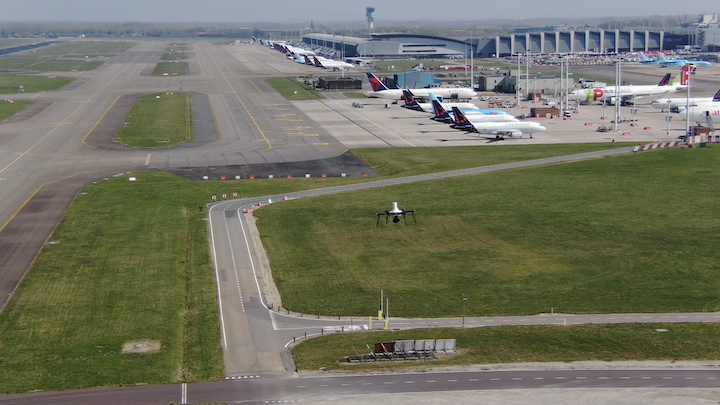
As rogue drones increasingly disrupt airports from Europe to India, aviation security experts say the solution lies not in shutting down runways every time a drone is sighted but in building an integrated counter-drone ecosystem that combines regulation, technology, intelligence and coordinated response.
The urgency is evident. Drones were involved in nearly two-thirds of reported near-mid-air collisions at the 30 busiest U.S. airports in 2024. In 2025, drone activity disrupted operations at Copenhagen, Munich, Berlin and Brussels airports, while repeated drone threats linked to the Russia-Ukraine conflict forced closures at Russia’s Sochi and Vnukovo airports. Earlier this year, a drone sighting temporarily suspended operations at Amritsar Airport, underscoring that India’s rapidly expanding aviation network is equally exposed.
The challenge has become more acute as lessons from Ukraine and the Middle East demonstrate how inexpensive commercial drones can be transformed into surveillance platforms, precision weapons or instruments of economic disruption. Airports have emerged as particularly attractive targets because even an unverified drone sighting can halt aircraft movements, triggering cascading delays and millions of dollars in losses.
Security experts say the answer is a Counter-Unmanned Aircraft System (C-UAS) strategy that moves beyond ad hoc responses to create a layered, intelligence-driven defence.
The first step is establishing controlled geozones around airports rather than imposing blanket no-fly restrictions. Under such a system, drone operators must obtain digital authorisation before entering controlled airspace, allowing airports to distinguish legitimate operations from rogue aircraft.
Similar frameworks already exist under the U.S. Federal Aviation Administration’s Low Altitude Authorisation and Notification Capability (LAANC), while Europe is integrating comparable systems through U-space regulations.
These geozones must be integrated with a UAS Traffic Management (UTM) platform, creating a digital registry of every authorised drone flight. According to the International Civil Aviation Organization (ICAO), UTM provides a structured framework for safe, efficient and coordinated drone operations while enabling airport operators to immediately identify unauthorised drones.
Detection is the next critical layer.
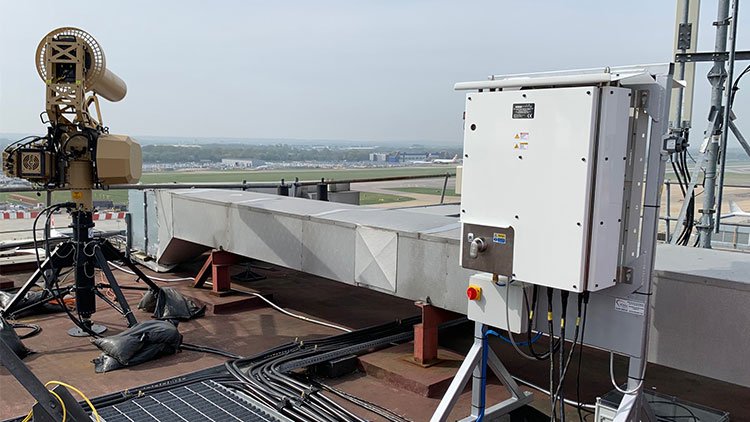
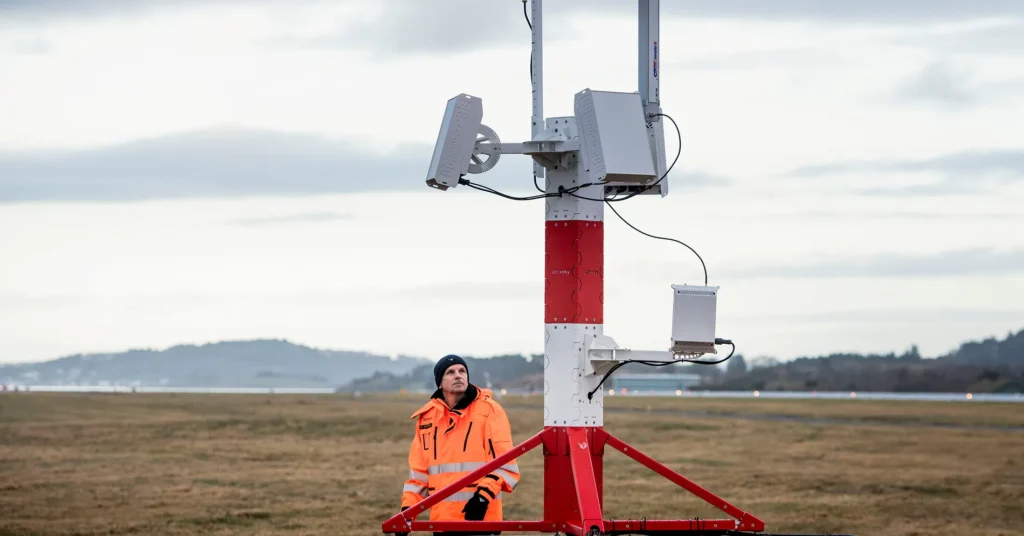
Experts increasingly recommend Radio Frequency (RF) sensors as the foundation of airport counter-drone systems because they passively monitor communications between drones and their controllers without interfering with aviation systems. RF sensors provide wide-area coverage, minimise false alarms caused by birds or balloons, and enable authorities to locate both the drone and its operator.
However, aviation security specialists caution that hardware alone cannot provide complete situational awareness.
Modern counter-drone software integrates detection feeds with real-time visualisation, flight authorisation databases and historical analytics. Instead of merely displaying drone locations, these platforms analyse recurring flight paths, identify operational hotspots and distinguish authorised drones from potential threats in real time.

The data also enables airports to develop Concepts of Operations (CONOPS)—detailed operational procedures that define when a drone requires monitoring, when security agencies should be alerted and when flight operations must be suspended.
Experts say intelligent threat assessment is equally important.
Not every drone entering airport airspace poses an immediate danger. Advanced software increasingly uses artificial intelligence to classify threats based on multiple variables, including whether the drone is authorised, whether it has entered predefined danger zones near active runways or critical infrastructure, and whether its behaviour suggests hostile intent.
This approach significantly reduces false alarms while ensuring rapid response to genuine threats. As drone technology evolves, specialists warn that airports can no longer depend on a single detection method.
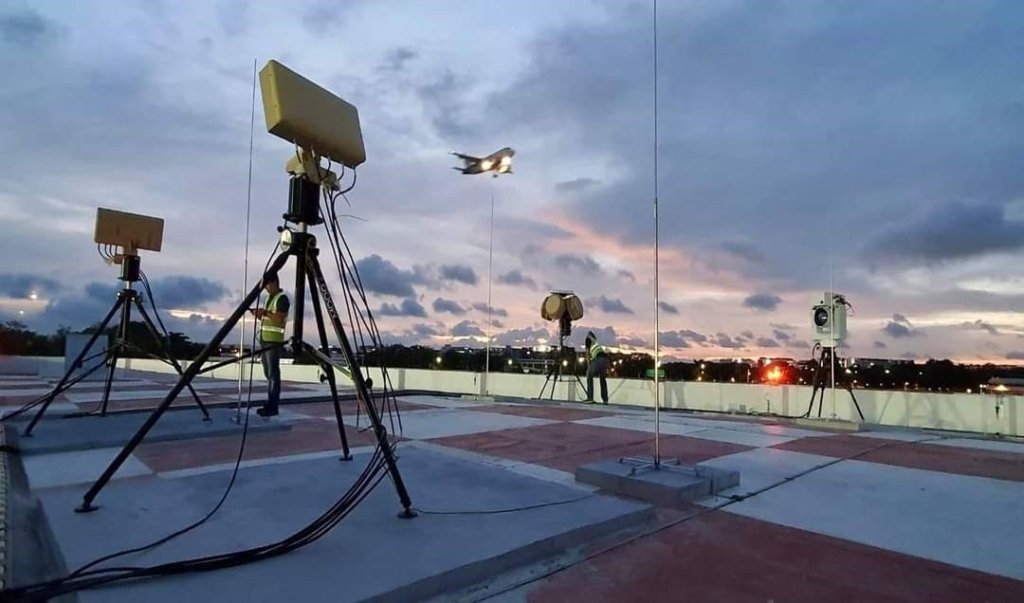
Sophisticated drones increasingly operate through encrypted communications, 4G or 5G networks, fibre-optic links or autonomous navigation, making them invisible to conventional RF systems. To overcome these limitations, airports are deploying multi-layered detection architectures that combine RF sensors with radar, electro-optical and infrared cameras and acoustic sensors.
Each technology addresses a different vulnerability. Radar detects drones regardless of communication method, electro-optical cameras provide visual confirmation, while acoustic sensors can identify drones in areas where RF or radar coverage is limited.
“No single sensor will solve this problem,” aviation security specialists said during the International Airport Summit in Berlin, recommending integrated systems that combine multiple technologies to achieve high-confidence detection while minimising false positives.
Yet experts stress that detection alone is insufficient.
Once a drone has been identified as hostile, authorities require legal powers and operational procedures to neutralise it safely.
Counter-drone measures broadly fall into two categories—kinetic systems such as interceptor drones, nets and lasers, and non-kinetic systems including RF jamming, GPS spoofing and cyber takeover technologies.
However, both approaches present significant challenges in civilian airports.
Kinetic systems risk debris falling near aircraft or fuel infrastructure, while electronic jamming could interfere with legitimate aviation communications and navigation systems. Consequently, experts recommend that active countermeasures be employed only under clearly defined legal authority involving aviation regulators, law enforcement and national security agencies.
India’s own National Security Council Secretariat (NSCS) has already outlined a comprehensive roadmap that closely mirrors global best practices. The guidelines call for a multi-agency steering committee led by the Indian Air Force, supported by the Ministries of Home Affairs and Civil Aviation, intelligence agencies and research organisations to coordinate counter-drone policy and deployment.
The framework also recommends real-time drone monitoring through cloud-based UTM infrastructure, stringent drone registration and pilot certification, vulnerability assessments of vital installations, creation of a central counter-drone threat signature library, operational testing of counter-UAS systems before deployment, airport-specific standard operating procedures, and a dedicated legal framework empowering authorised agencies to detect, monitor, disrupt and, where necessary, neutralise rogue drones.
The NSCS guidelines also emphasise continuous training of civil security personnel, integration with the country’s air defence network and regular collaboration with research institutions and industry to counter emerging threats such as autonomous drone swarms.
While drones will become increasingly important for commercial and public applications, their misuse by hostile actors poses a growing threat to critical infrastructure. To stay ahead of the evolving threat, the document concluded that India requires a unified drone regulatory architecture that combines UTM, strict airworthiness standards, training, legal enforcement, and deployment of counter-UAS systems at vulnerable installations.
For India, which plans to add dozens of airports over the coming decade, aviation experts say the opportunity is to build these capabilities into future airport infrastructure rather than retrofit them later. As drones become both economic enablers and instruments of hybrid warfare, airport resilience will increasingly depend on layered intelligence, integrated technology and coordinated governance rather than emergency runway closures after every drone sighting.
Also Read: Singapore’s UTM Push Draws Attention to India’s Drone Traffic Framework

R Suryamurthy has been an economic analyst and journalist for more than three decades and has worked for The Telegraph, Tribune and Press Trust of India.