












Bell 412
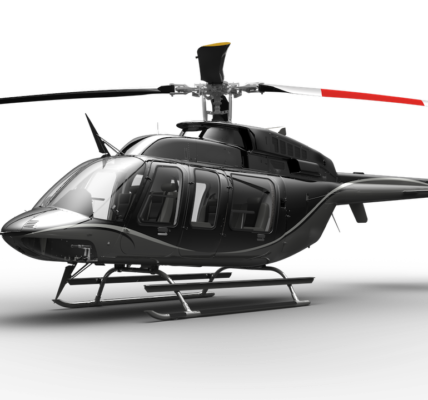
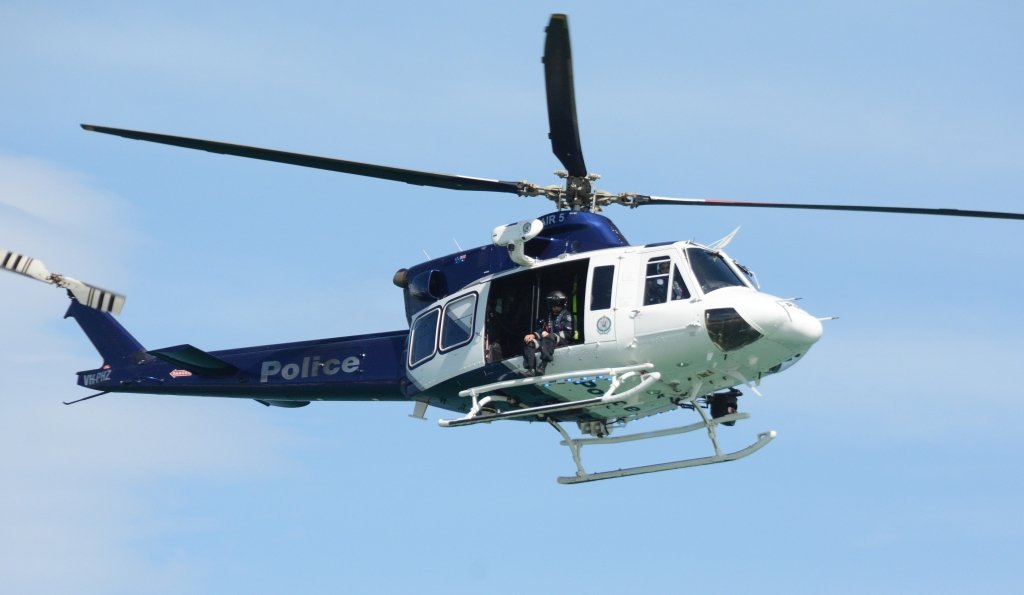
The Bell 412, developed by Bell Textron Inc, a subsidiary of Textron Inc (NYSE: TXT), has been designed to perform in the most challenging environments. The aircraft has become a favourite choice for a wide range of missions, including public safety, Helicopter Emergency Medical Services (HEMS), troop transport, energy sector operations, and firefighting.
With its impressive hover performance and spacious cabin, the aircraft comes handy for missions where performance and reliability are non-negotiable. The aircraft is equipped with advanced avionics, substantial cargo capacity, and powerful engines.
Cabin Experience
The cabin is designed to provide maximum versatility and comfort, ensuring that both passengers and crew have the space they need for a wide range of missions. The helicopter can accommodate up to 14 passengers, making it suitable for troop transport, HEMS, and other critical operations where large teams are involved.
With a cabin volume of 220 ft³ / 6.2 m³ and an additional 28 ft³ / 0.8 m³ in the aft baggage compartment, the Bell 412 ensures that essential cargo and equipment can be easily stowed without compromising passenger comfort. The spacious and configurable cabin allows for rapid reconfiguration to meet the needs of different missions, from medical evacuations to firefighting operations.
Cockpit
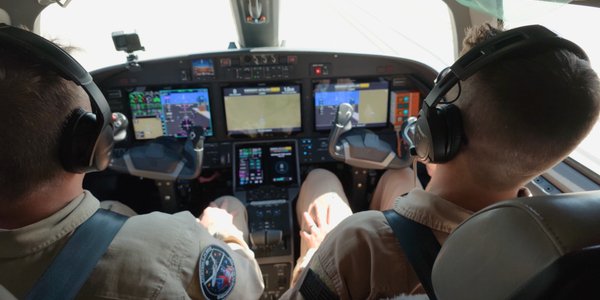
The cockpit is designed with the pilot’s needs in mind, offering a highly ergonomic and intuitive layout that enhances situational awareness and reduces pilot workload. Equipped with the Bell BasiX Pro™ Integrated Avionic System, the cockpit integrates advanced navigation and communication technologies that enable pilots to operate effectively in even the most challenging environments.
Key features of the cockpit include high-resolution displays that provide real-time terrain and map data, enhancing pilot awareness during complex missions. It is also loaded with power situation indicator, a single indicator that allows for quick and efficient monitoring of critical aircraft systems. Its LED cockpit lighting and panels offer clear visibility in all lighting conditions, reducing pilot fatigue during long operations.
The cockpit’s design ensures that pilots have access to all necessary information at a glance, allowing them to focus on the mission at hand while maintaining the highest standards of safety and efficiency.
Technology: Engine and Avionics
The aircraft is powered by a pair of Pratt & Whitney PT6T-3DF engines, known for their reliability and performance in extreme environments. These engines provide the power necessary to operate in high-altitude and hot conditions, ensuring that the helicopter can perform its mission regardless of the environmental challenges. In terms of avionics, it is equipped with the latest technology to enhance both safety and operational efficiency:
Garmin GTN-750 NAV/COM/WAAS GPS offers precise navigation and communication, essential for missions that require pinpoint accuracy. Helicopter Terrain Avoidance Warning System (H-TAWS) capability increases safety by providing real-time terrain data, helping pilots navigate safely in challenging environments. Automatic Dependent Surveillance-Broadcast (NextGen, Standard ADS-B out, Optional ADS-B in) enhances airspace awareness by broadcasting the aircraft’s position to other nearby aircraft and ground stations, improving safety and coordination in crowded airspaces.
Performance and Capabilities
With In Ground Effect (IGE): 11,400 feet and Out of Ground Effect (OGE) of 6,700 feet, the aircraft excels in hover performance, allowing it to operate effectively in confined spaces and high-altitude environments, which are critical for search and rescue missions, mountain operations, and other demanding scenarios.
The Bell 412 offers substantial payload capacities, making it ideal for missions that require the transportation of large groups, heavy cargo, or essential equipment. Whether configured for internal or external loads, the helicopter’s performance remains uncompromised, ensuring mission success even in the most extreme conditions.
Specifications
| Specification | Details |
|---|---|
| Hover Performance (IGE) | 11,400 feet |
| Hover Performance (OGE) | 6,700 feet |
| Maximum Seating Capacity | 1 + 14 |
| Cabin Volume | 220 ft³ / 6.2 m³ |
| Aft (Baggage) Compartment Volume | 28 ft³ / 0.8 m³ |
| Standard Fuel Capacity | 331 US gallons / 1,251 litres |
| Auxiliary Fuel Capacity (Optional) | 33 or 163 US gallons / 123 or 617 litres |
| Empty Weight (IFR Standard Config.) | 6,815 lbs / 3,091 kg |
| Max Gross Weight (Internal) | 12,200 lbs / 5,534 kg |
| Max Gross Weight (External, Optional) | 13,000 lbs / 5,897 kg |
| Useful Load (Internal, IFR Standard) | 5,385 lbs / 2,443 kg |
| Useful Load (External, IFR Standard) | 6,185 lbs / 2,805 kg |
| Cargo Hook Capacity | 5,000 lbs / 2,268 kg |
| Engine | 2x Pratt & Whitney PT6T-3DF engines |
| Avionics System | Bell BasiX Pro™ Integrated Avionics System |
| Navigation System | Garmin GTN-750 NAV/COM/WAAS GPS |
| Safety Systems | Helicopter Terrain Avoidance Warning System (H-TAWS), ADS-B Out (Standard), ADS-B In (Optional) |
| Cockpit Lighting | LED lighting and panels |
Recent Deployments
In July 2024, the Bernalillo County Sheriff’s Office in Albuquerque, New Mexico, expanded its public safety capabilities by adding a Bell 412EPI to its Metropolitan Air Support Unit (MASU). This delivery underscores its reputation as a multi-mission ready aircraft, perfectly suited for the diverse and challenging requirements of parapublic operations.
“Safety and efficiency in response operations are paramount to the Bernalillo County Sheriff’s Office. With the integration of the Bell 412EPI into our Metro Air Support Unit, we are enhancing our capability to manage emergencies effectively and significantly improving our service to the community,” said Sheriff John Allen.
Takeaways
The Bell 412 remains a benchmark in the helicopter industry, offering unparalleled versatility, advanced technology, and robust performance. Its ability to perform in extreme environments while maintaining a high degree of safety and efficiency makes it a preferred choice for a wide range of public safety and military.
The aircraft has made significant impact worldwide, with over 54 per cent of its global fleet involved in parapublic and military missions. This widespread adoption highlights the aircraft’s versatility and reliability in various operational contexts, from urban environments to remote and rugged terrains.
The helicopter’s ability to adapt to different mission profiles—whether it’s fighting fires, transporting troops, conducting search and rescue operations, or providing emergency medical services—makes it an invaluable asset to operators around the globe.
Also Read