











Aviation India: 2027 will be a landmark year for India and aviation sustainability

Indian aviation has arrived at a critical new phase in its sustainability journey, as 2027 will mark India’s entry into the mandatory phase of the Carbon Offsetting and Reduction Scheme for International Aviation (CORSIA), significantly increasing the number of international routes connected to India that fall within the scheme.
In addition, India is expected to bring in its first sustainable aviation fuel (SAF) blending mandate next year, albeit at a low initial level of 1% of the total aviation fuel they use.
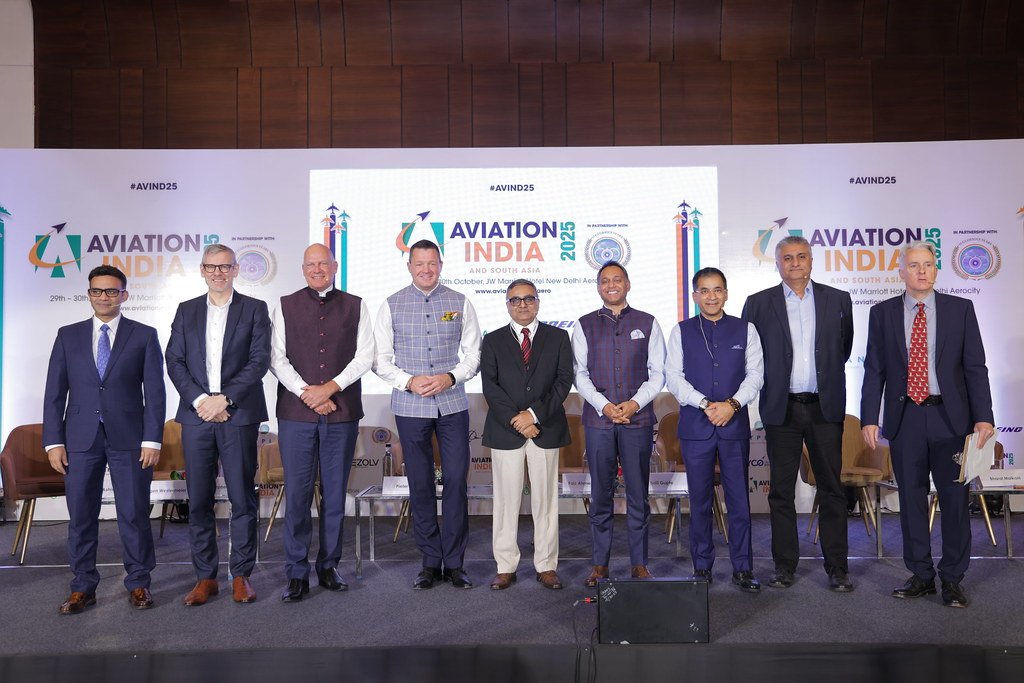
As India enters the mandatory phase of CORSIA, a new report from global consulting and digital services company ICF, written to coincide with the third Aviation India Summit, being held in Delhi on 3-4 November, asks: “What changes, and why it matters?”
“India is set to be one of the main engines of global aviation growth, but more aircraft and more passengers also mean more emissions, which raises the question of how the sector should address the emissions that come with that growth,” said the report.
From 2027, India’s participation will increase obligations not only for Indian airlines but also for international airlines serving the country. ICF analysis shows that India’s participation could account for around 10% of projected global CORSIA offsetting obligations between 2027 and 2035, with much of this impact linked to non-Indian airlines serving the country.
“This reflects India’s growing importance within the global aviation network and shows why its participation in CORSIA matters well beyond the obligations of its own airlines,” say the report authors, Africa Abajas, Sustainable Aviation, Senior Manager, ICF, and Urvashi Pundir, Sustainable Aviation, Senior Consultant, ICF.
The report explains how the global offsetting scheme works within the Indian context, stressing that CORSIA addresses growth, rather than total emissions and that in the first phase the exposure of buying offsets for Indian airlines is modest.

It also looks at how SAF can lower the offsetting obligation, but its impact remains limited at the current SAF volumes projected under India’s blending roadmap. Additionally, the analysis reinforces the need to turn India’s SAF ambition into actual supply.
According to the authors: “India’s aviation growth story is only beginning, and managing its emissions will take a combination of solutions. SAF, new technologies and operational improvements will be essential, but their impact depends on how quickly they scale.”
CORSIA will not address all of aviation’s emissions, nor was it designed to. But as international aviation grows, understanding what the scheme covers, how its obligations arise and how it interacts with SAF will become increasingly important.
“For India, one of the world’s fastest-growing aviation markets, that discussion is no longer a distant one,” the report concludes.
Africa Abajas of ICF will be presenting the findings of this report on 4 November at Aviation India Summit in the session: Indian air transport: Can the growth and decarbonisation agendas go hand in hand?
Download the report here.
Also Read: India’s SAF transition must move from policy ambition to commercial scale

Aviation Jeta is an aviation news platform covering airlines, airports, aircraft, and global aviation developments. We publish accurate, well-researched, and detailed aviation news and industry insights from around the world.