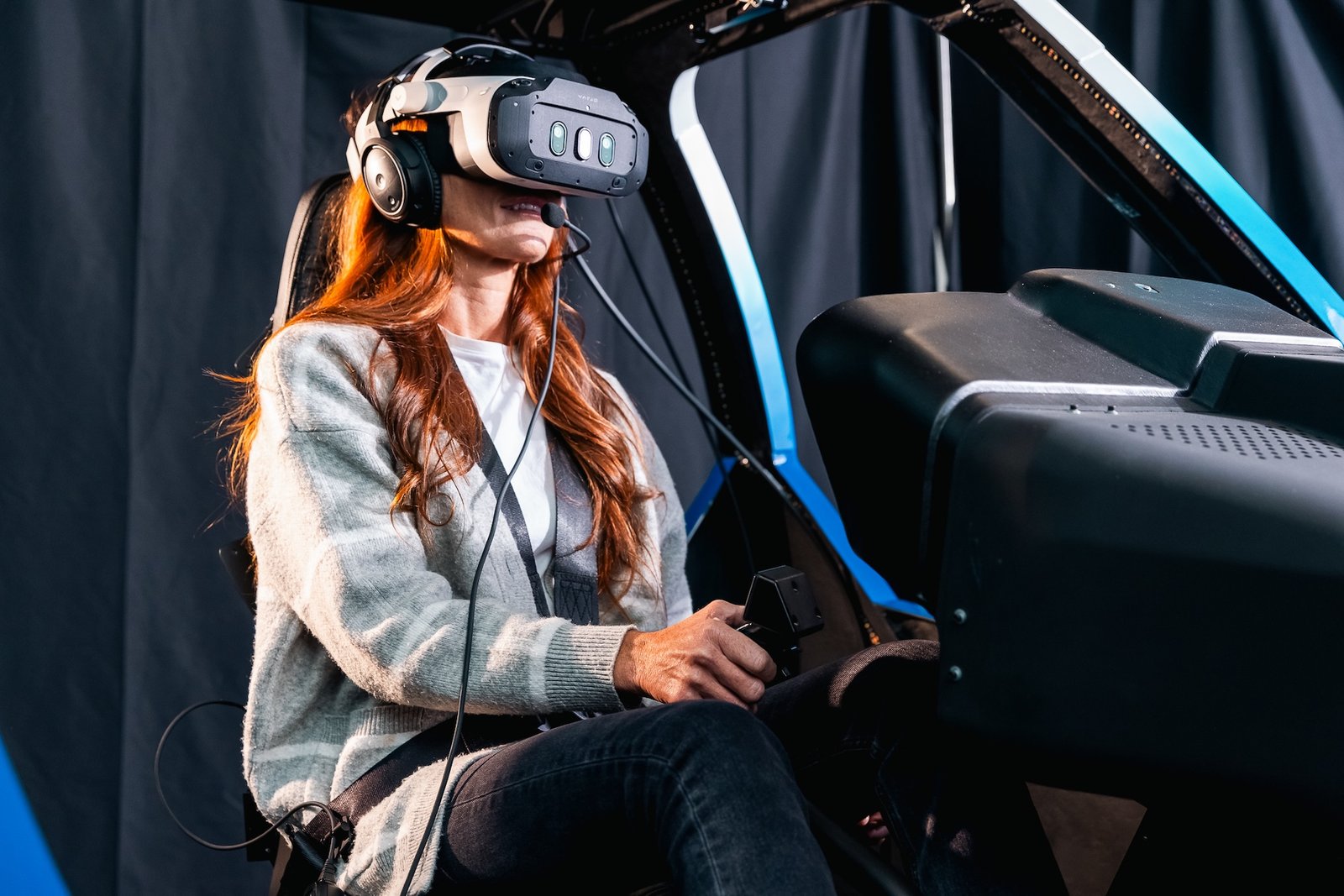






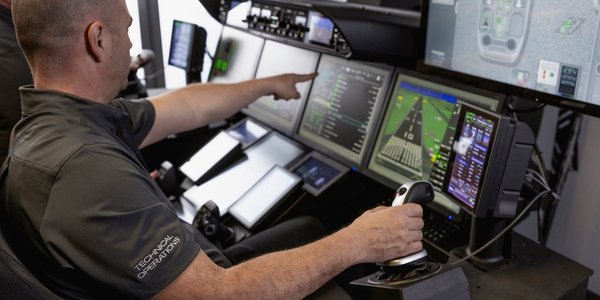





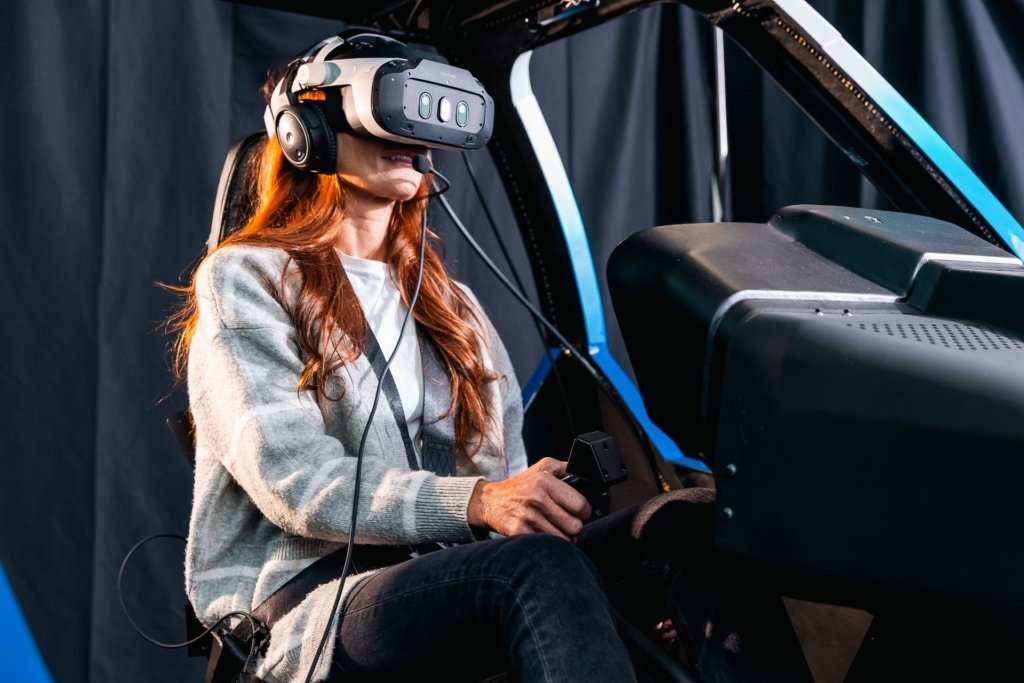
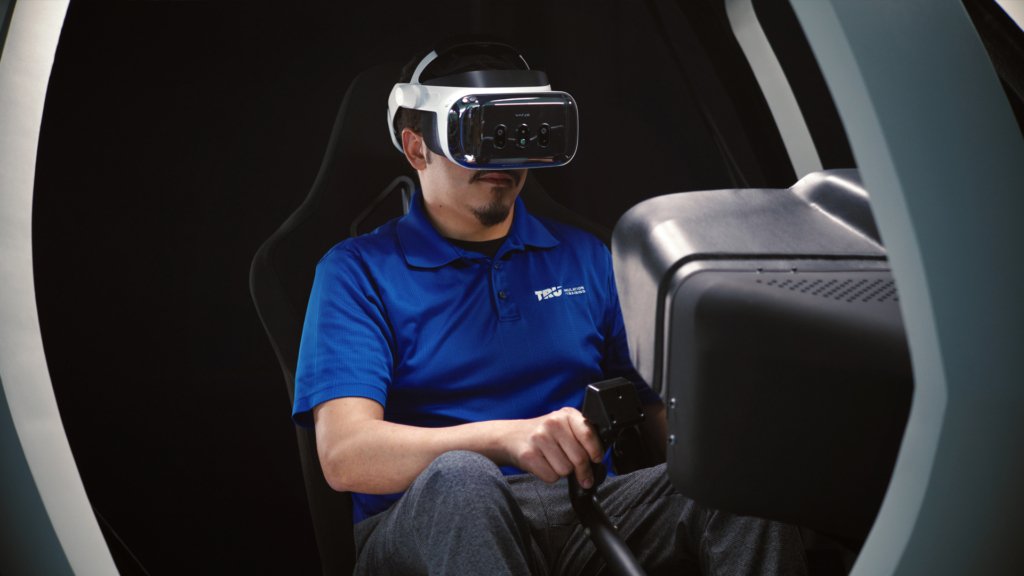
The Bell 505 Veris is a virtual reality-based Flight Training Device (FTD) that retains a physical cockpit, flight controls, and motion, while using a VR headset to provide the view outside the helicopter.
Developed by TRU Simulation, a Textron company and Bell affiliate, the Veris was unveiled in 2024 with the Bell 505 as its first aircraft application. The Bell 505 version received U.S. Federal Aviation Administration (FAA) Level 7 FTD qualification in September 2025, with Bell Training Academy as the launch customer.
TRU Simulation has since expanded the Veris platform across rotorcraft and fixed-wing training, with configurations for the Cessna 172 Skyhawk, Airbus H125, and the recently announced Cessna Grand Caravan Ex.
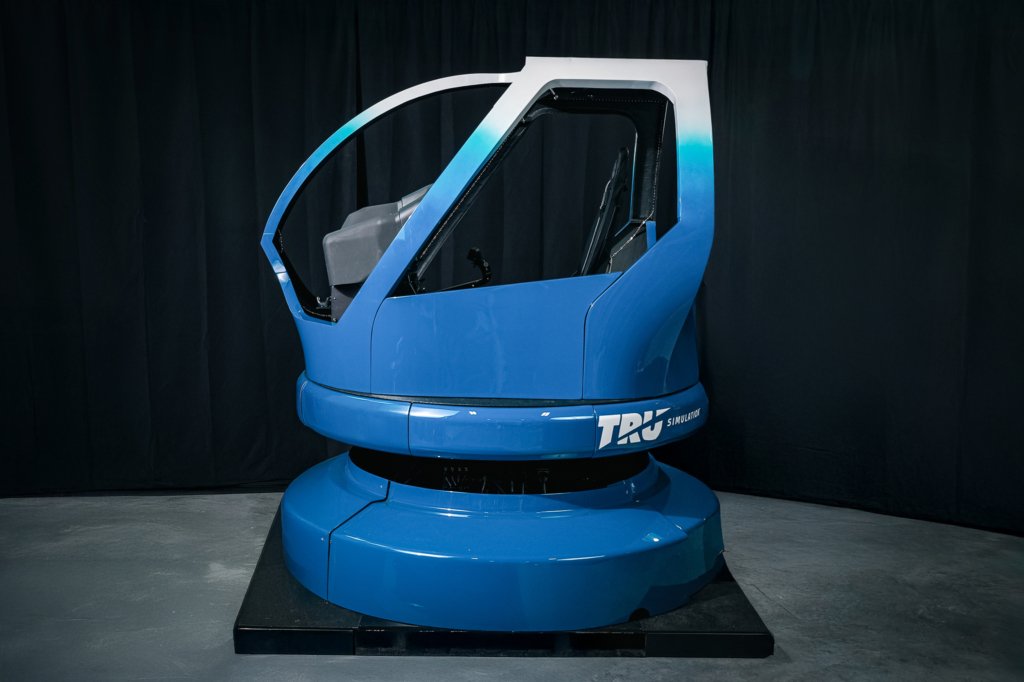
For the Bell 505, TRU worked with Bell’s aircraft data package and 3D models and incorporated Bell/Garmin OEM hardware.
The simulator also draws on the flight data and software baselines found in TRU’s higher-level simulation products.
Unlike VR trainers, where the cockpit exists only within the virtual environment, the Veris retains physical flight controls, switches and avionics.
The headset takes the place of the large visual display or projection system normally installed around a simulator cockpit. This combination brings aircraft-specific hardware together with an immersive virtual environment.
Physical Controls, Motion and VR
The Bell 505 Veris uses TRU’s REALFeel digital-electric control-loading system. Control loading provides the forces and resistance a pilot feels when operating the flight controls.
In the Bell 505 configuration, the pilot receives this feedback through the cyclic, collective and pedals as the simulated helicopter responds to control inputs. REALFeel and the same flight data and software baselines are also used in TRU’s Full Flight Simulators (FFS).
The cockpit is mounted on a fully electric six-degrees-of-freedom motion platform. Six degrees of freedom refer to movement along and around three axes. The platform moves forward and backwards, side to side, and up and down, while also providing pitch, roll, and yaw. It can also generate vibration for helicopter simulation.

The outside view is delivered through a Varjo XR-4 Series VR/MR headset with a wide field of view and eye tracking.
Hand-segmentation technology enables pilots to see their own hands within the virtual scene as they reach for switches, avionics and other hardware in the physical cockpit.
The headset is not required for every training session. Avionics and procedural training can be conducted without it.
For flight exercises, the headset provides the external visual environment while the pilot continues to operate the physical cockpit and controls.
TRUvision, TRU’s image generator based on Unreal Engine, provides the terrain, aircraft and airport imagery seen through the headset. The visual system can simulate dynamic lighting and environmental conditions, including volumetric storms, ice accretion, smoke, fire, blowing snow and rotor wash.
Technology from Blackshark.ai provides geo-accurate 3D terrain and airports and can be used to develop customised training scenes. These can include off-airport and confined-area landings, sloping terrain, offshore operations, search-and-rescue missions, and cargo and long-line work.
The ability to customise the aircraft and training environment allows TRU to tailor simulation solutions around a customer’s mission, operating environment and training requirements.
Bell 505 Training
The Bell 505 Veris supports system malfunctions, emergency procedures, and complex flight scenarios, allowing pilots to practice situations that may be difficult or unsafe to conduct in the helicopter.
Training is managed through an Instructor Operating Station. A repeater display allows the instructor to see the view presented to the pilot through the headset. The system also supports Qualification Test Guide testing and operational readiness checks.
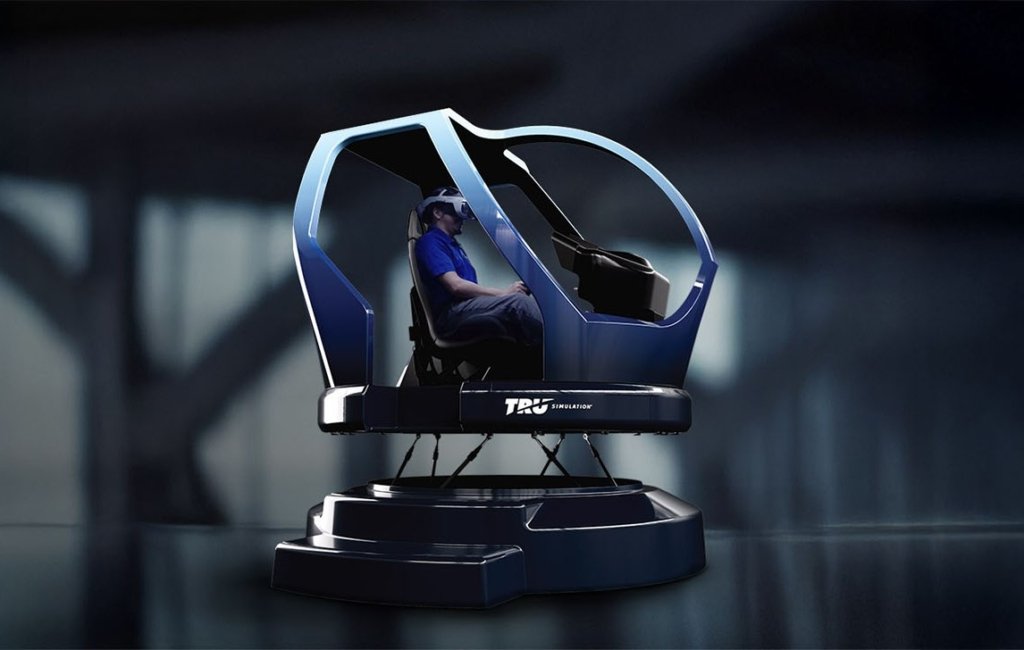
A wireless Remote Instructor Control Unit allows the instructor to operate the simulator while moving around the device. Lesson-planning and debriefing systems are also available.
The Veris measures approximately 2.23 meters long, 2.09 meters wide and 2.21 meters high. Using a headset for the outside view removes the need for the large visual display arrangement associated with conventional simulators, reducing the space required for installation.
The compact design supports TRU’s broader focus on making high-fidelity training more accessible while helping customers improve training effectiveness and pilot readiness.
The Veris’ compact, energy-efficient design can help reduce facility and operating requirements compared with more traditional simulator installations. Its simple maintenance needs and operational reliability support frequent training use, giving operators greater flexibility to incorporate simulator training into their programs.
By combining aircraft-specific hardware and flight characteristics with an adaptable virtual environment, Veris allows training to be tailored to different aircraft, missions and operating requirements. The result is a flexible platform that can help operators prepare pilots for scenarios ranging from routine procedures to challenging situations that are difficult or unsafe to replicate in the aircraft.
Also Read: What Will Drive Helicopter Growth in Asia Pacific?

Aviation Jeta is an aviation news platform covering airlines, airports, aircraft, and global aviation developments. We publish accurate, well-researched, and detailed aviation news and industry insights from around the world.