














India’s Business Aviation Sector: Bridging the Gap Between Capacity and Demand

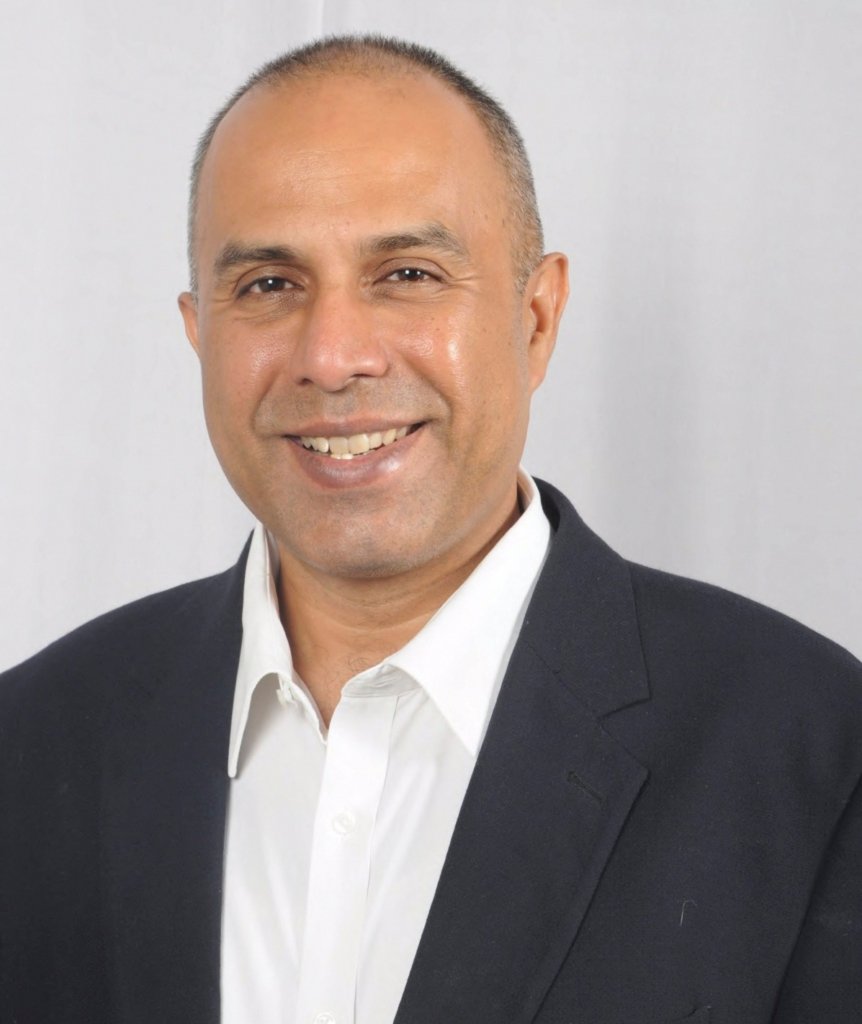
India’s business and general aviation sector remains severely constrained, operating far below its true geographic and economic potential compared to global peers. While demand spikes during peak seasons expose acute fleet shortages, overcoming this capacity gap requires targeted regulatory relaxations, practical policy implementation, and clear tax frameworks. Transitioning from a fragmented market to a thriving ecosystem hinges on enabling new operational models like aircraft management and fractional ownership, alongside dedicated frameworks for services such as helicopter emergency medical services (HEMS). According to Jayant Nadkarni, Managing Director of Flightshares, it is essential to build professional aircraft management capabilities and foster consensus across regulatory bodies to build market confidence, streamline financing, and fully unleash India’s private aviation potential.
How do you assess the current state of business aviation in India, particularly the gap between demand and available capacity?
The macro picture clearly shows that India has a very small installed base for private aviation relative to what its geographic and economic size would justify. Our fleet comprises about 200 business jets, 250+ helicopters and 250+ turboprops. Now take two other comparable emerging economies, Mexico and Brazil, which have over 1,100 business jets each. This skewed picture is even starker when you compare helicopter numbers.
Given this picture, one might conclude that India has huge latent potential.
But the truth is that, historically, we have invariably underperformed relative to our potential. If we want the future to be different this time, we need to identify and remove the key hurdles. One reason to be positive this time is the marked increase in charter demand and aircraft movements since the pre-Covid years.
For example, you will not find planes to hire during any election season. Similarly, you will not find single-engine choppers to hire during the religious pilgrimage season that stretches from April to around Diwali, with perhaps a break in between. And the list goes on. Net-net, there is a great imbalance in the market.
Does India need a separate regulatory framework for business and general aviation rather than rules derived from scheduled airline operations?
That would be great for the sector, but probably very difficult to push through. Instead, it may be easier to push through sector-specific relaxations than an entirely separate regulatory framework for the sector. We need to have the end goal in mind, rather than the means. The net effect of these measures should be to help us realise our potential.

First, we need more professionals with actual business and general aviation (B&GA) experience involved in the DGCA.
Second, the policy system should encourage them to be vocal about what the industry needs and also ensure they are listened to.
Third, we should introduce a deputation system under which DGCA officers periodically go and spend time with different operators to understand issues on the ground.
Practical experience will add to their efficacy. If pilots need annual refresher training, why not regulatory officers? The objective of these deputations needs to be purely to gain experience and understand industry challenges. There should be no “audit mindset”.
One only has to look at B&GA’s impact in the US, where its economic contribution runs into billions of dollars. India can benefit in a similar way if we remove unnecessary impediments. Only when we create broad-based consensus in policy circles will we be able to push effective reforms through.
Thereafter, the means could be a separate regulatory framework for B&GA or sector-specific relaxations – it does not matter which. Either approach serves the same end goal. In both cases, there is a need to create all-round consensus in the system.
Let us identify another problem we face. Even when there is a willingness to reform, implementation takes too long. There needs to be a concerted effort to see things through, rather than allow progress to be cast aside whenever other priorities surface.
For example, the tragic Air India crash last year, the avoidable Baramati crash in January this year, or an FAA/ICAO audit can slow down the routine processing of files. Everything is important. The system needs to ensure that even the smaller reforms move forward, rather than slow down midstream.
Should tax on business aircraft be based on actual use rather than whether they are imported for private or commercial use?
That is broadly how the system works in the US and would perhaps be good for us as well. But adopting such a model may require too extensive a tax overhaul for India.
Here too, it might be easier to get incremental tax relief and key infrastructure carve-outs. It would be good for the government to examine all its options with the end goal in mind.
Why has India’s commercially available charter fleet remained small despite the number of NSOP holders?
Let us face it, aircraft are expensive assets that are not easy to purchase and induct. Also, the process of purchasing, inducting and operating an aircraft is complex. The due process is no doubt necessary, but any buyer will hesitate when they see the complexity.
This hesitation becomes more pronounced when buyers see the difference between tax rates of 40% for private use and 5% for commercial use.
The de facto option for them is to become a commercial operator. As a result, only a few buyers with a greater need for an aircraft decide to go ahead. The rest of the buyers step back.
Incremental reform in three areas can change this. First, bring in formal enabling provisions for new business models such as aircraft management and fractional ownership.
Second, these provisions need to be backed by tax clarity to ensure buyers can easily entrust their aircraft to professional operators for management and operations.
Third, we also need operators to step forward to provide credible, robust and systematically organised services under these new models.
When these three things come together, we can expect the commercially available charter fleet to grow rapidly. If they do not, the industry will still grow but in a fragmented and stunted manner, well below our actual potential.
We need the first breakthrough moment: an enabling policy framework.
What has prevented the helicopter provisions of the 2016 aviation policy from being implemented?
Helicopters in India face a whole range of operational, infrastructure and regulatory bottlenecks. Leave aside the specifics. The underlying reason is that our system either does not recognise their potential, or despite a willingness to act, is unable to see things through.
Helicopters do not need airports and can be employed in so many different ways. Their flexibility needs to be understood and experienced first. Three measures can help address these problems.
One, get more helicopter-qualified professionals into the policy framework. Two, periodically depute DGCA officers to spend a few weeks with helicopter operators. These deputations must not be approached with an “audit mindset”.
Their objective should be to gather and take back continuous feedback on how India can benefit. Third, give sector-specific relaxations to helicopters to unleash their potential.
What is needed to expand helicopter use in HEMS, regional connectivity and public-service operations?
There have been several pilot attempts by different state governments. We now need a national mission coordinated centrally. Different elements need to come together.

First, draw on the lessons from the government’s most recently concluded HEMS pilot project in Uttarakhand.
Second, MoCA needs to create an empowered cell that brings about partnerships between qualified helicopter operators and empanelled hospitals across the country, in phases.
These partnerships should aim to cover operations, logistics and commercial arrangements for all stakeholders involved.
Third, establish an insurance backbone that ensures a HEMS operator never hesitates to launch when the first emergency call comes in.
Fourth, police departments across India need to be trained to quickly secure and cordon off temporary landing sites literally within minutes of reaching the patient, say, at a crash site. Ideally, they should be able to establish radio contact with the approaching HEMS helicopter.
Last, but not least, experienced and committed operators should ramp up their capabilities with HEMS pilots trained in mitigating the unique risks associated with emergency helicopter medevac operations.
It is important to restate that HEMS will work only with a central facilitator in the form of an empowered cell within the Ministry of Civil Aviation. It is equally important to state that the ministry should resist the temptation to replicate the UDAN model and stay away from getting involved in commercial bidding, such as HEMS tenders.
Instead, its role should be that of an enabler and facilitator, allowing market players to form partnerships between hospitals, insurers, operators and other stakeholders. Progress will be much faster and can be monitored by the empowered cell. The cell should also foster the creation of stripped-down helipads close to identified hospitals and training of police forces down to their SHO teams in simple on-the-ground actions to create temporary helipads as close to victims as possible.
In fact, a DGCA CAR on temporary helipad creation already exists! It just needs to be studied and adapted for the police forces with due training.
Will professional aircraft management expand India’s active charter capacity faster than fractional ownership?
Aircraft management is probably easier to introduce than fractional ownership. But fractional ownership potentially has the larger disruptive impact once it picks up. Both models have the potential to make underutilised aircraft available for charter and bring additional capacity into the charter market.
What is still preventing Indian banks and lessors from financing new and pre-owned business aircraft?
Financing has not developed to the extent it could. There are several reasons. One is the need for greater clarity around title, ownership structures and operational control. There is hesitation due to fears around lease defaults, repossession and subsequent resale.
A small step has been taken towards mitigating repossession risks with the recent Protection of Interests in Aircraft Objects Act. But half measures will not do. Banks and financial institutions are still overcautious.
Their financing decisions should be based on the quality of professional management available for aircraft operations, repossession, redeployment, and resale. They need a better understanding of the sector and the efficacy of risk-mitigation measures.
Has GIFT City made financing Indian-registered business aircraft more accessible, or has it mainly made leasing transactions easier to structure?
It is fair to say that GIFT City has merely made leasing easier to structure, which is good in itself. But the bigger leasing ramp-up will take place only when concerns about ownership, operational control, repossession and resale are addressed. These are the same concerns mentioned in the previous answer for banks and financiers. They also make GIFT City lessors hesitate.
A manifold increase in leasing transactions will perhaps come about only when professional management companies take root, giving banks the required comfort on repossession, redeployment and resale.
Also Read: India’s Two-Tier Aviation Economy: Protected vs Penalised