








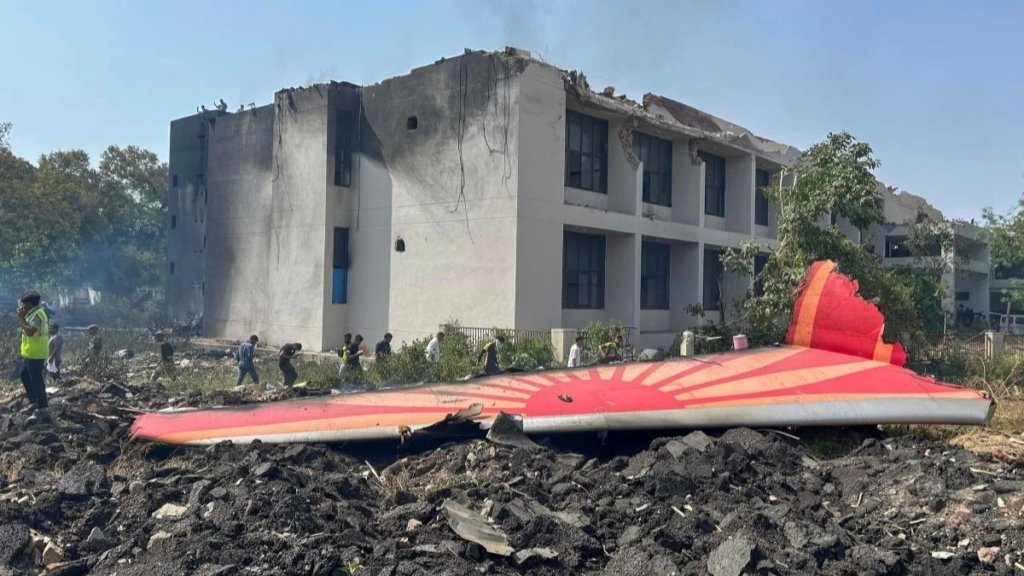
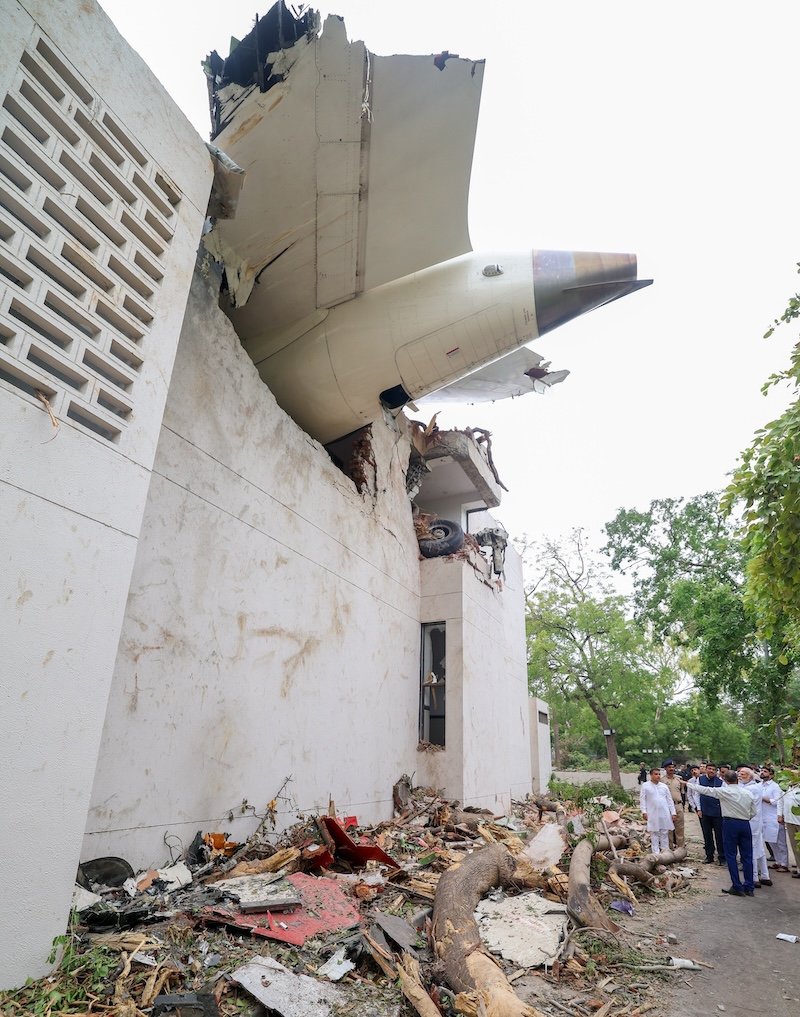
Today marks one year of the devastating Air India 171 disaster, one of India’s worst Aviation tragedies. It was also Air India’s first wide body crash since the Kanishka bombing of Air India 182 back in June of 1985. We mourn the loss of all 260 people on board and on ground, and pray for their peace.
A nation mourned, as the blame game & power politics took over the investigations. Whilst we saw all forms of politicians visit the crash site and mourn the dead, we did not see or hear any transparency from anyone in power until this day.
I, for one, have not expected the final report to be ready by 12th June for months, as many speculated. As I write this, there is no final report as yet, and neither can there be, given the provisions of law. Once the report is ready, it will need to be shared with other stakeholders for their consultation. In this case, Boeing, FAA, GE, Honeywell, CAA, etc., for their comments. That process, as per ICAO norms, would take another 60 days; thus, I expect an interim status update on the evening of 12th June 2026.
AI-171 was India’s first social media tragedy; people were shocked by it, yet at the same time, it was sickening to see voyeurism on display across all media. It was spine-chilling as it appeared to trivialise the deaths of so many and the pain of the families they left behind.
Thirty days later, what we saw was a questionable preliminary report, a clean chit for a beleaguered US airplane maker, an alleged partial CVR statement, without sharing the whole truth, and some careless whispers just loud enough to smear honourable pilots who were no longer alive to defend themselves.
The report raised more questions than it answered, and Pilots and experts shook their heads in disbelief as the report tried to give a clean chit to the Aircraft and engine makers rather than delve deeper into the reasons for the accident. It appeared to be a real hatchet job, without even having proper subject matter experts, one of whom, we learnt yesterday, has moved on.
If the CVR was retrieved, and one sentence paraphrased, then why was the entire transcript not released?
So, the question on everyone’s lips is: what really happened to AI-171? Was it a technical glitch? Was it an engine failure? Was it a FADEC failure? Was it aircraft/fuel sabotage, as some wildly (and falsely) speculated? Was it pilot suicide, as many want us to believe? Why was the world’s third largest aviation nation so clueless about how to go forth in this tragedy of epic proportions?
Why was the entire investigation shrouded in such a veil of secrecy that even high-level persons in the ministry and airline were kept out of the proceedings? Was it being remotely controlled from the US headquarters, as many in the opposition would have us believe?
As Air India grieved for its dead, the nation mourned with the families and cried with those we lost. For me, it was truly personal, as I knew Sumeet since a little after he joined IGRUA.
I also knew the two senior cabin crew, Shraddha Dhavan & Aparna Mahadik, personally, having been with Air India for so long; everything that happens there automatically becomes personal.
I would also like to remember Saineeta Chakravarthy, Roshni Songhare, Lamunthem Singson Manisha Thapa, K.N.Sharma, Maithili Patil, Irfan Shaikh, Deepak Pathak and Capt Clive Kunder.
Was the truth so shocking that we, as Indians, would not be able to accept it? Or was it done to distract the world’s focus through outrage and anger?
The handling of this tragedy has caused Indian aviation untold embarrassment in the comity of global aviation, with subterfuge, questionable practices, a system beset by a regulator with questionable morals, and an AAIB that doesn’t seem to function coherently.
One hopes that the new Indian Director General of Civil Aviation will cleanse the aegean stables of the inherited muck.
India has to repair its system, and it’s a job that the Prime Minister will need to look into deeply: the world’s fastest-growing aviation system has people who are incompetent and some who are rotten to the core.
There are a few good apples in this barrel, but overall, we are scraping the bottom, a framework in decay, without a functioning system. It’s time for the government to cleanse the regulator, bring in an independent CAA, and allow our accident investigation board to operate independently; to release the findings of AI-171 transparently; we owe it to our departed victims and their families; and let’s all learn to move on with our lives.
Air India, for its part, has maintained a dignified silence and grieved alone for its crew, its passengers, and the setbacks it faced in its transformation journey, slowly rebuilding customer confidence. In many ways, AI-171 could be the heartbreaking turning point for Air India, just as 26-11 was a tragic yet resilient testament to the courage of the brave men and women of the Taj. The Tatas have faced bigger challenges before, and Air Indians are a tough, resilient bunch, and will bounce back stronger and higher; I know them well.
Let this anniversary not be about controversy, corruption, or incompetence, but about the people of Air India 171, who have been forgotten in the maelstrom of debates. This day needs remembrance of the innocent brave men, women and children who perished one year ago. We owe it to the dead and their families to give them the truth, in a transparent fashion, however bitter it might be; even if it turns out to be something that we never wanted to accept or hear, we will have to do so; our nation’s credibility depends on it.
*Sanjay Lazar is an Aviation Expert & CEO Avialaz Consultants. He is @Sjlazars on @x
Also Read: Pilot Wellbeing: Aviation’s Most Overlooked Safety Risk

Sanjay Lazar is an Aviation Expert & CEO Avialaz Consultants. He is an aviation analyst, lawyer, & best-selling author who writes on aviation, International relations, leadership and law. He has spent 40 years in aviation and lost his entire family in the Air India Kanishka bombing in 1985.