















Two airlines operating the same aircraft type may not use identical operating procedures, so training must reflect the airlines’ SOPs and regulatory compliance.
Flight-plan changes show why this matters. A different runway, an amended air traffic control clearance, or a diversion may require the crew to revise the route, update the aircraft performance data, and check the new track and restrictions on the cockpit displays.
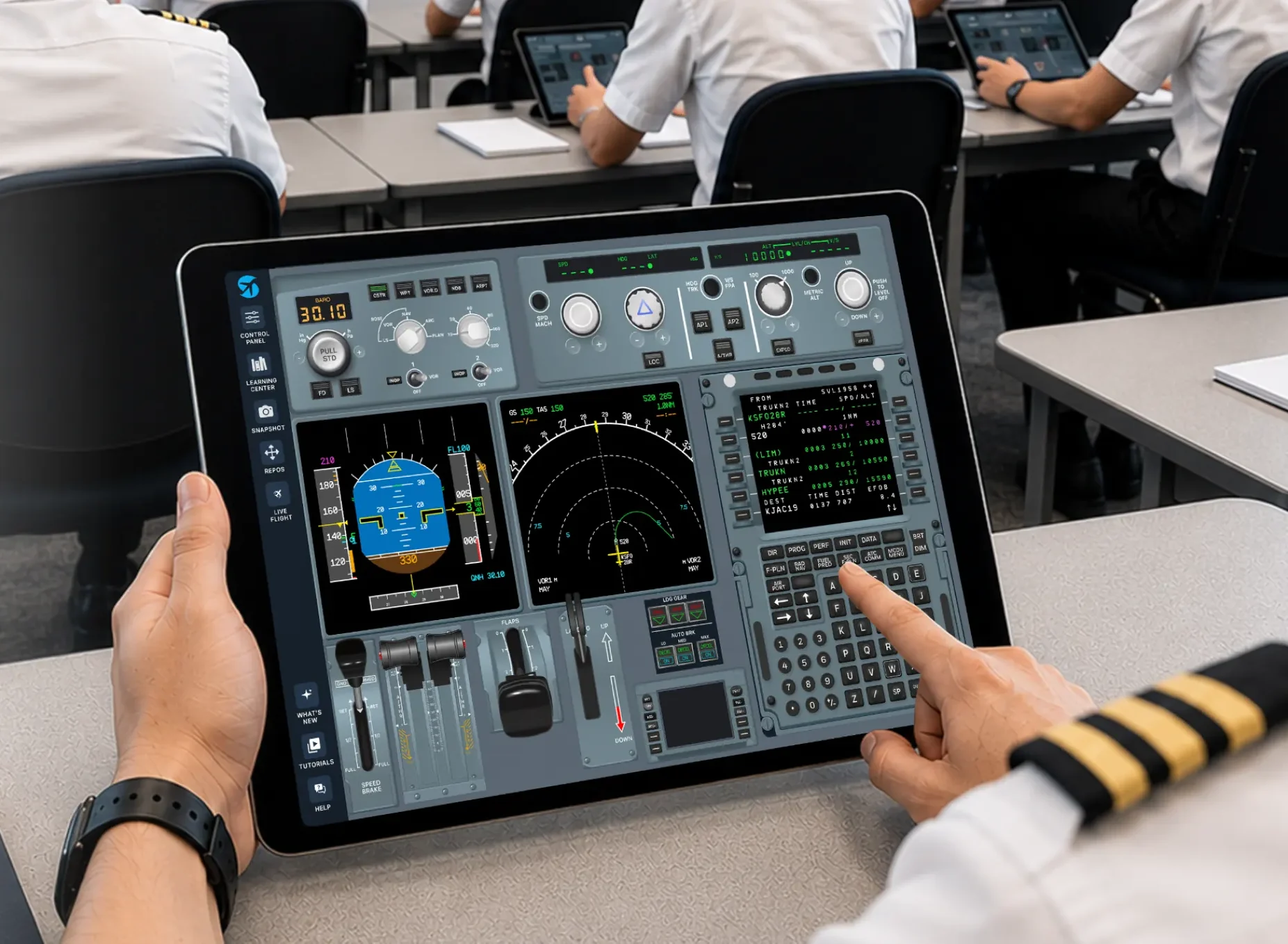
A desktop or tablet trainer provides a dedicated environment for practising these actions before they are assessed in a full-flight simulator, alongside aircraft handling, communication, flight-path monitoring and crew coordination.
Working through an FMS exercise
Pilots interact with the FMS (Flight Management System) via the Multipurpose Control and Display Unit (MCDU) on Airbus aircraft and the Control Display Unit (CDU) on Boeing aircraft. These units are used to enter and review flight-plan, navigation and performance information, while the resulting route is checked on the cockpit displays.
SimViz Labs simulates selected FMS configurations. Its current range covers systems for the Airbus A320, along with versions for the Boeing 737 NG, 737 MAX and 747-400. SimViz says it is developing trainers for the A330, A350, 777, and 787.
Controller-Pilot Data Link Communications (CPDLC) exchanges text-based messages between pilots and air traffic control. The Aircraft Communications Addressing and Reporting System (ACARS) exchanges operational information between the aircraft, the airline and other ground systems. A clearance or route amendment received through datalink can therefore be followed by the corresponding changes in the FMS. This cannot be trained on an FFS.
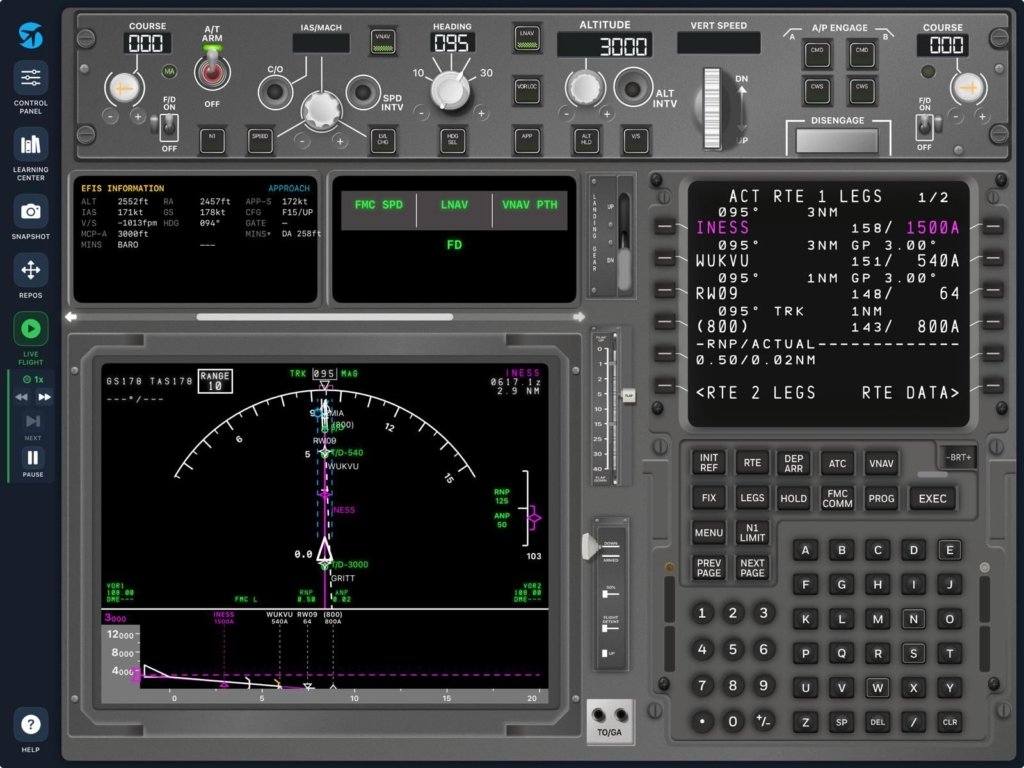
Lessons may be completed with step-by-step guidance or through independent practice. SimViz also lists a custom scenario builder and functions for saving and sharing simulator snapshots, allowing an exercise to be retained for later review.
Airline use and instructor oversight
Airline deployment requires fleet-specific configuration and a means for instructors to assign and review lessons. SimViz says its institutional software can be adapted to the operator’s FMS standard, navigation database and operating procedures, and connected to a learning management system.
Assigned lessons can be completed offline and synchronised after the device reconnects. The system supports SCORM 1.2 and 2004 course packages, xAPI exports and connections to an existing LMS through a REST interface. Instructors receive information on course progress, completion and assessment results.
“The future of pilot training is about making every minute in the simulator more valuable,” said Capt. Kush Ahuja, CEO of SimViz Labs. “Technology will give pilots intelligent, accessible and immersive tools to build proficiency before they ever enter the cockpit. The next generation of training will be more personalised, data-driven and continuous, combining simulation, VR and mobile technology to create better-prepared pilots and safer operations. Our goal is to be part of this growth journey.”
Airbus and Boeing have developed portable procedure trainers of their own. Airbus has introduced a Virtual Procedure Trainer for cockpit familiarisation, while Boeing’s Virtual Airplane Procedures Trainer, launched in November 2025, includes online and offline FMS practice for the 737 MAX.
Airbus positions its trainer as a companion to classroom and simulator instruction, while Boeing describes its software as a means of practising procedures outside conventional training environments.
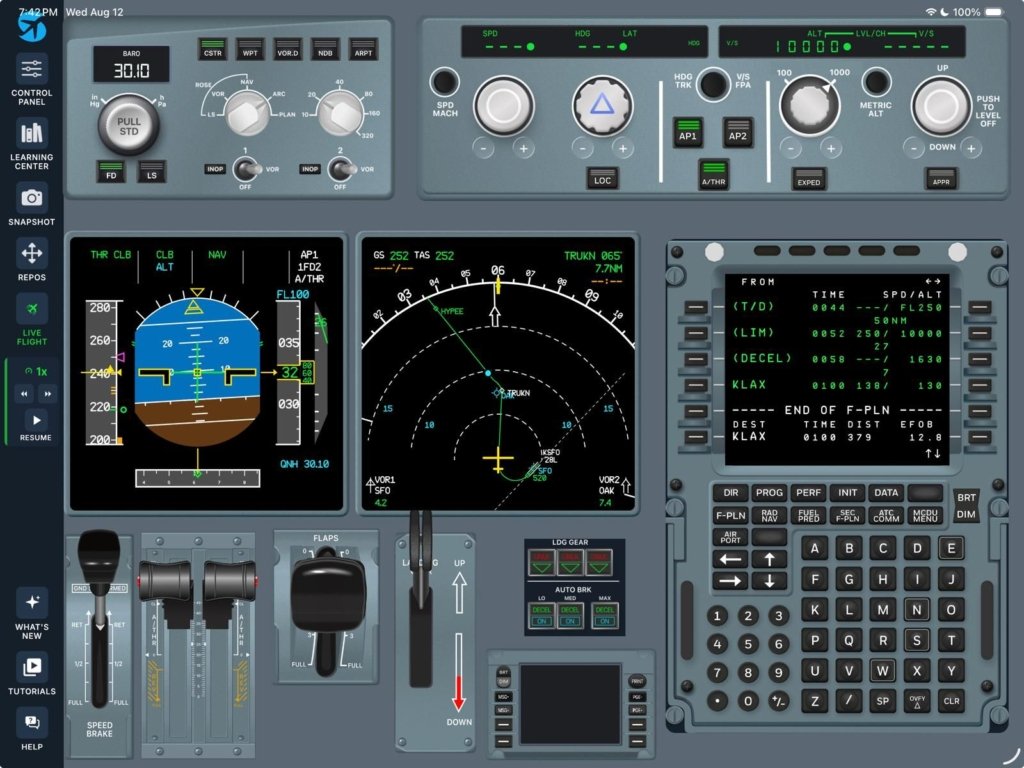
EASA’s flight simulation framework, introduced in July 2026, includes qualification provisions for touchscreen flight-deck interfaces and an optional task-to-tool method. It does not automatically grant regulatory credit to a tablet application; approval depends on the device, the exercise, and its use within an approved course. EASA says the framework assesses training equipment according to its capabilities.
FAA guidance places FMS use within the broader responsibilities of operating automated systems, monitoring the aircraft and controlling its energy. It calls for instruction that assesses whether pilots understand the lateral and vertical path commanded through the FMS. FAA Advisory Circular 120-123 on flight-path management contains this guidance.
Portable FMS trainers are intended to prepare pilots for full-flight simulator training, not replace it. They allow pilots to practise FMS functions separately before instructors assess how the system is used alongside aircraft handling, flight-path monitoring, communication and crew coordination.
Also Read: Where India’s Next Generation of Women Aviators Takes Shape