


Key Takeaways
- Sarla Aviation received Design Organisation Approval (DOA) from the Directorate General of Civil Aviation, enabling its aircraft certification process.
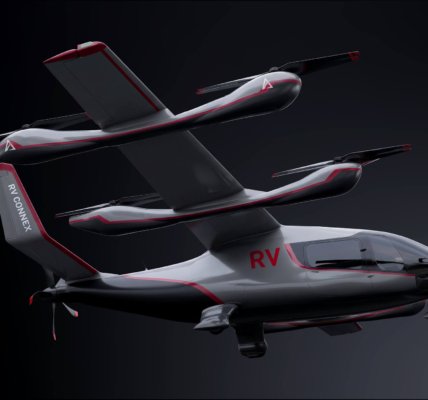
- The company develops Shunya, a powered-lift eVTOL for a pilot and six passengers, utilising six electric motors and an optional turbogenerator.
- Sarla’s 18-month prototype cycle aims for a full-scale flying vehicle by June 2028, addressing urban mobility and emergency transport needs.
- Collaboration with hospitals and infrastructure developers aims to facilitate air ambulance services and vertiports in Indian cities.
- Commercial viability will depend on safety regulations, cost structures, and the successful transition from demonstrator aircraft to service.
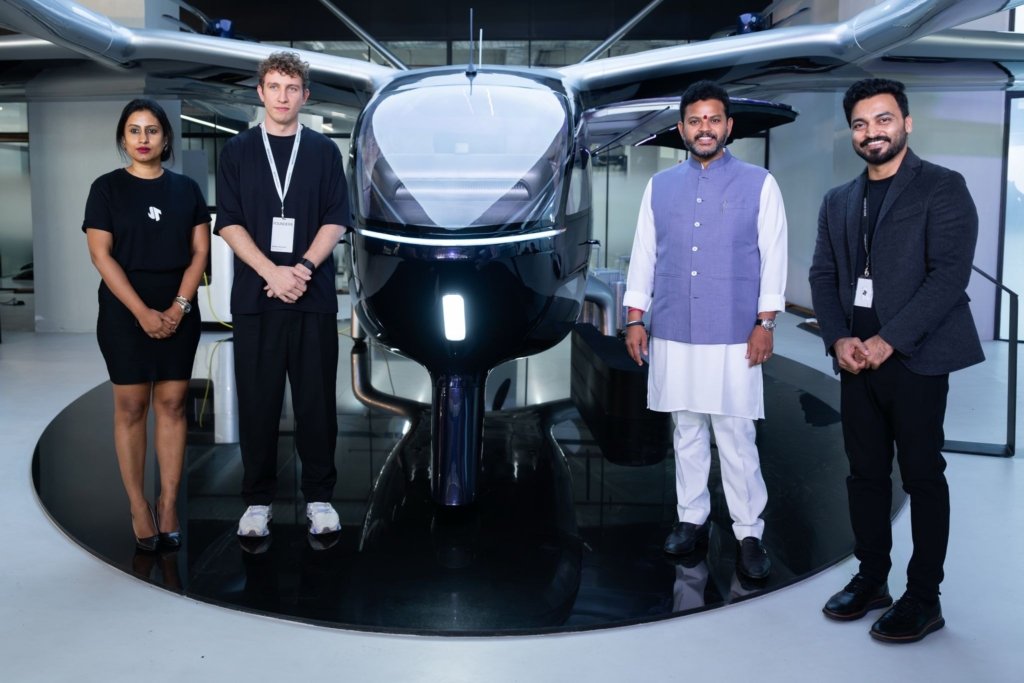
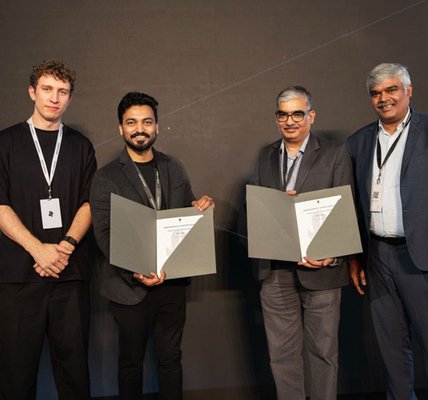
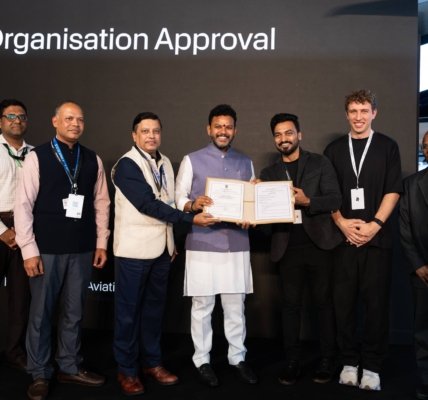
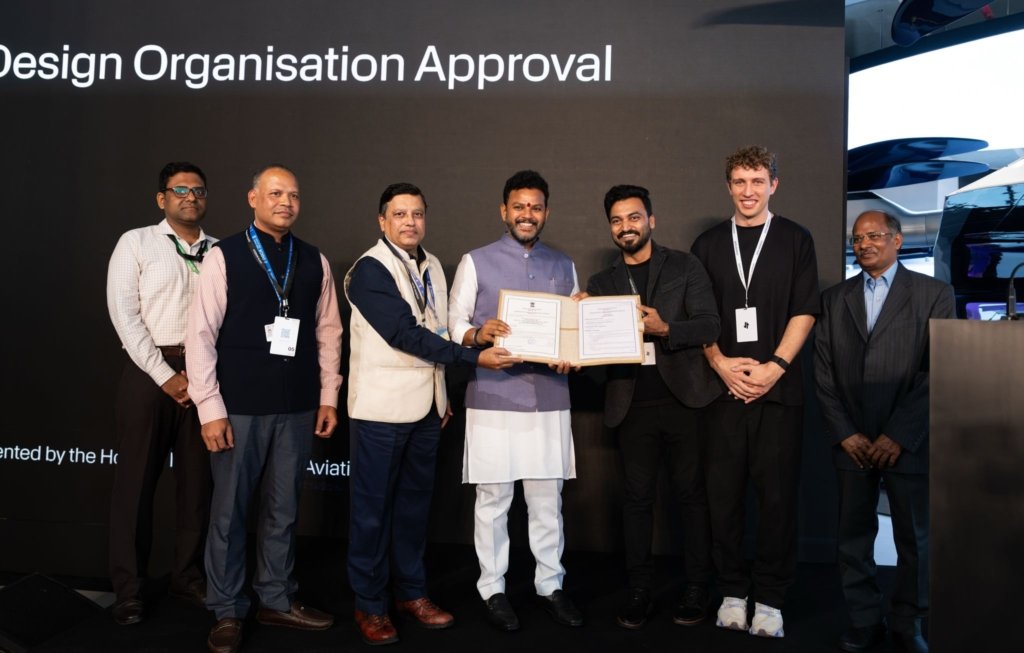
Sarla Aviation has entered the formal aircraft-certification process after receiving Design Organisation Approval (DOA) from the Directorate General of Civil Aviation at the opening of its new Bengaluru headquarters. Civil Aviation Minister Ram Mohan Naidu presented the approval, issued under CAR 21 Subpart J.
It recognises that Sarla has the design capability, procedures and independent checking system required to develop aircraft systems and components to certification standards. It is not certification of the aircraft; it allows the company to take its design forward for type certification.
Shunya: Design and Development Programme
Shunya is a powered-lift eVTOL being developed for a pilot and six passengers. Adrian Schmidt, Sarla’s co-founder and chief executive, described a propulsion architecture with six electric motors for vertical lift and a seventh, rear-mounted motor for forward propulsion.
The propulsion system uses axial-flux motors. Although the powertrain is fully electric, Schmidt said the design has sufficient space to consider a turbogenerator that could recharge the batteries in flight; power delivery from the batteries to the motors would remain electric.
The credibility behind that ambition rests on flight-test data: Sarla’s demonstrator has logged roughly 500 test flights and 18 hours of hover testing. Air Commodore Vivarth Singh, an Indian Air Force experimental test pilot, said the volume of testing reflected the process discipline required in an aircraft-development programme.
It’s a notable endorsement, because it comes from someone who has spent much of his career as an experimental test pilot on aircraft-development programmes.

Schmidt and co-founder and chief technology officer Rakesh Gaonkar worked together at an eVTOL company in Germany for seven years before founding Sarla in India.
Gaonkar said they wanted to develop an advanced mobility solution for Indian cities, where congestion affects everyday travel as well as emergency response.
The company is working on an 18-month prototype cycle. Its next demonstrator, due in January 2027, is intended to test the transition from vertical to forward flight and refine the control laws that will feed into the full-scale aircraft. “The plan is to have a full-scale flying bird in June 2028,” Gaonkar said.
Schmidt said that electric propulsion gives India an opportunity to retain manufacturing, intellectual property and a larger share of the aerospace supply chain. “We have a right to have an aerospace company in India that builds fully indigenised aerospace systems that can transport people, something that the country has never had,” he said.
About one-third of Sarla’s engineering team has worked on eVTOL programmes outside India, he said during the media interaction.
Infrastructure For Operations
The agreements signed at the event address several requirements that must be in place before commercial operations. Manipal Hospitals, Sarla and Aeromed plan to develop operating procedures and medical protocols for emergency transport.
Manipal identified inadequate infrastructure and high cost as the two principal barriers to extending air-ambulance services to Tier 2 and Tier 3 cities. Prestige Group is exploring vertiport-ready infrastructure in its developments, while Jio-bp said it would work on infrastructure for vertiports.
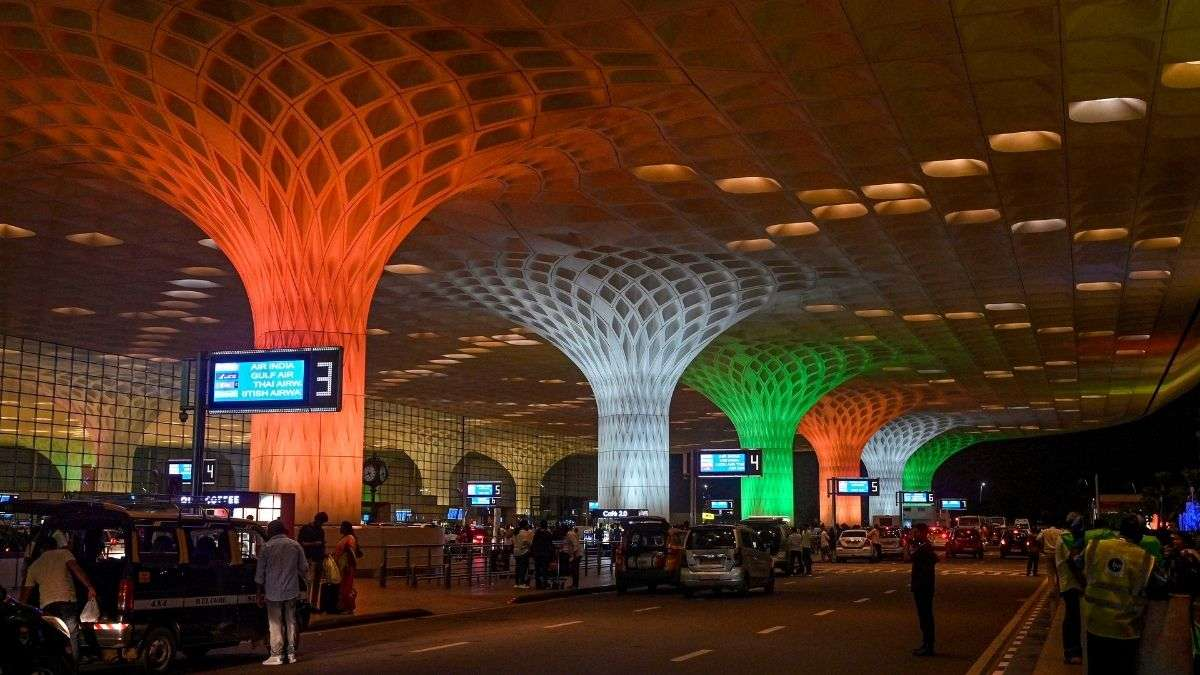
Bengaluru International Airport (BIAL) is part of a separate agreement with Sarla on airport connectivity. Its chief operating officer, Girish Nayak, said BIAL, Uber and Sarla had been discussing how their services could be integrated into a seamless passenger journey.
Naidu cited airport connectivity as an immediate use case, saying a journey between the airport and the city that can take two to four hours by road could be reduced to 20–30 minutes by eVTOL.
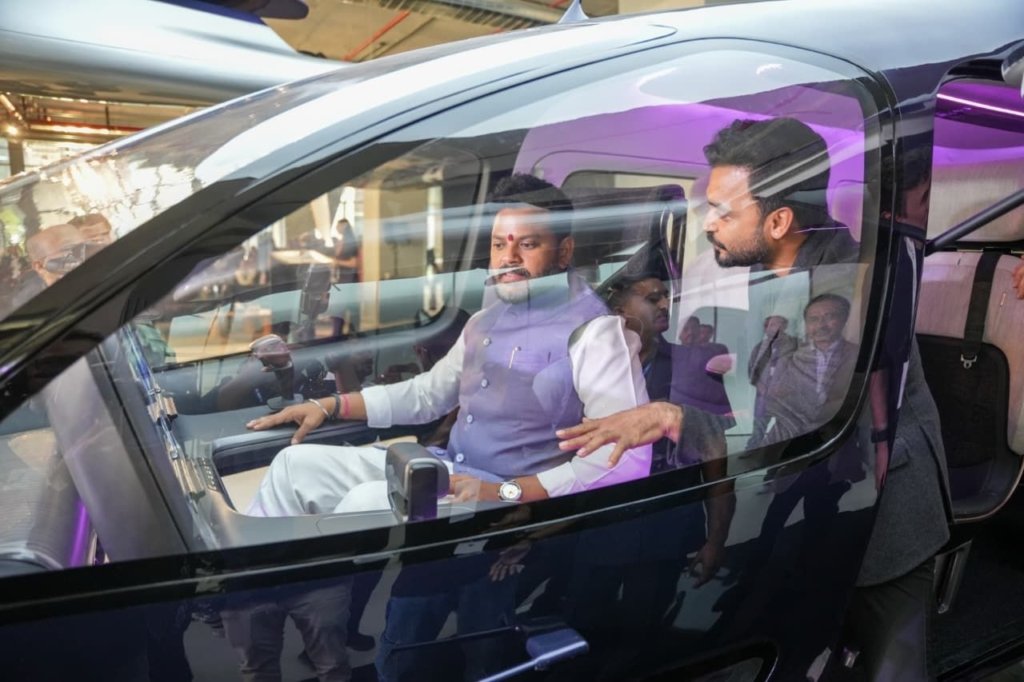
Photo: Sarla Aviation
The airspace challenge is equally significant. Jeppesen ForeFlight said Bengaluru’s four-airport environment makes navigation complex.
It encompasses Kempegowda International Airport, HAL Airport, Yelahanka Air Force Station and Jakkur Aerodrome.
Jeppesen’s work with Sarla covers airspace modelling, navigation databases, obstacle information and flight-deck software.
Hexcel is collaborating on advanced composite materials, while Tata Elxsi said it is working with Sarla on avionics and onboard software.
The programme also has potential applications outside passenger transport. Naidu referred to medical evacuation, air ambulances and cargo.
Air Commodore Vivarth Singh said the industrial capabilities required for eVTOLs—including airframes, automation, electric motors and avionics—could also strengthen India’s indigenous defence-aviation base. Major General Bharat Mehtani said vertical-lift aircraft could reduce the time needed to move troops and equipment during military operations.
Certification And Commercial Viability
Naidu’s remarks underlined that certifying the aircraft is only one part of establishing an operating system. He said six working groups are addressing eVTOL certification standards, crew licensing, air-operator permits, unified traffic management and maintenance, repair and overhaul, while the government has permitted 100 per cent foreign direct investment.
He also proposed a low-altitude traffic-management system for air taxis and drones that would operate alongside conventional air-traffic control.
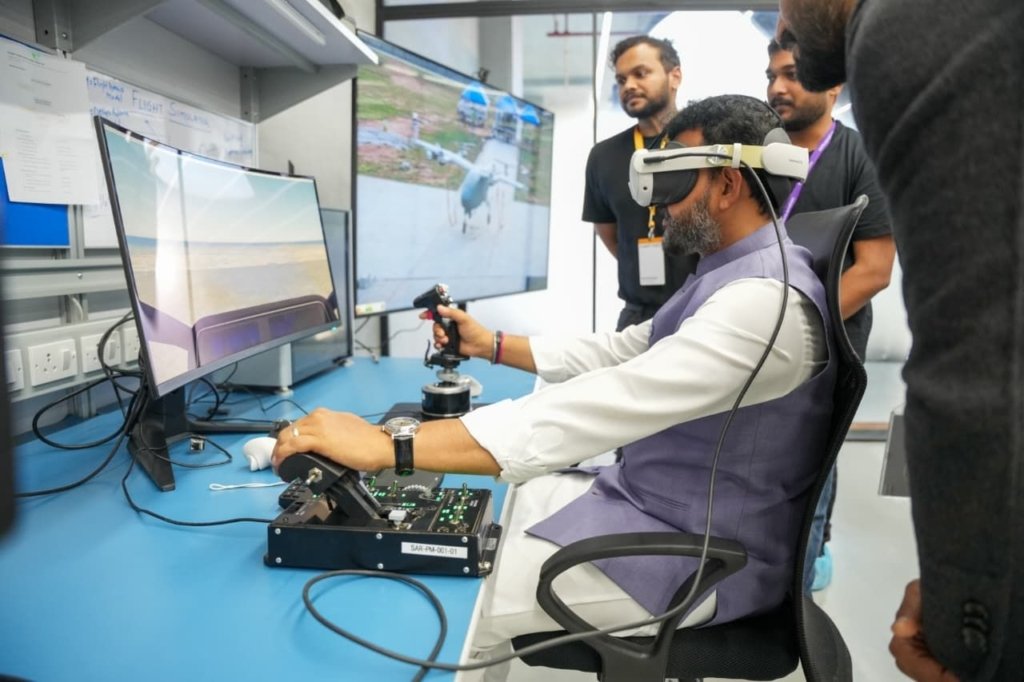
Commercial introduction, the minister said, would depend on safety validation and an affordable operating model. “If we want it to be successful, the model has to be viable. People should be able to afford it, and more and more people should be able to access this kind of technology,” Naidu said. He said local manufacture of the motors, airframe and other systems could reduce costs. He added that operations must be preceded by DGCA-supervised testing.
Naidu expects comprehensive testing during 2027 and has set an objective of seeing the first aircraft enter public use around 2028. That policy ambition is distinct from Sarla’s technical target of flying its full-scale aircraft in June 2028. The minister also envisaged applications beyond metropolitan centres—in rural areas, Tier 3 cities, hilly regions, the Andaman and Nicobar Islands and the Northeast—and said an Indian manufacturing base could ultimately support exports.
From Demonstrator to Service
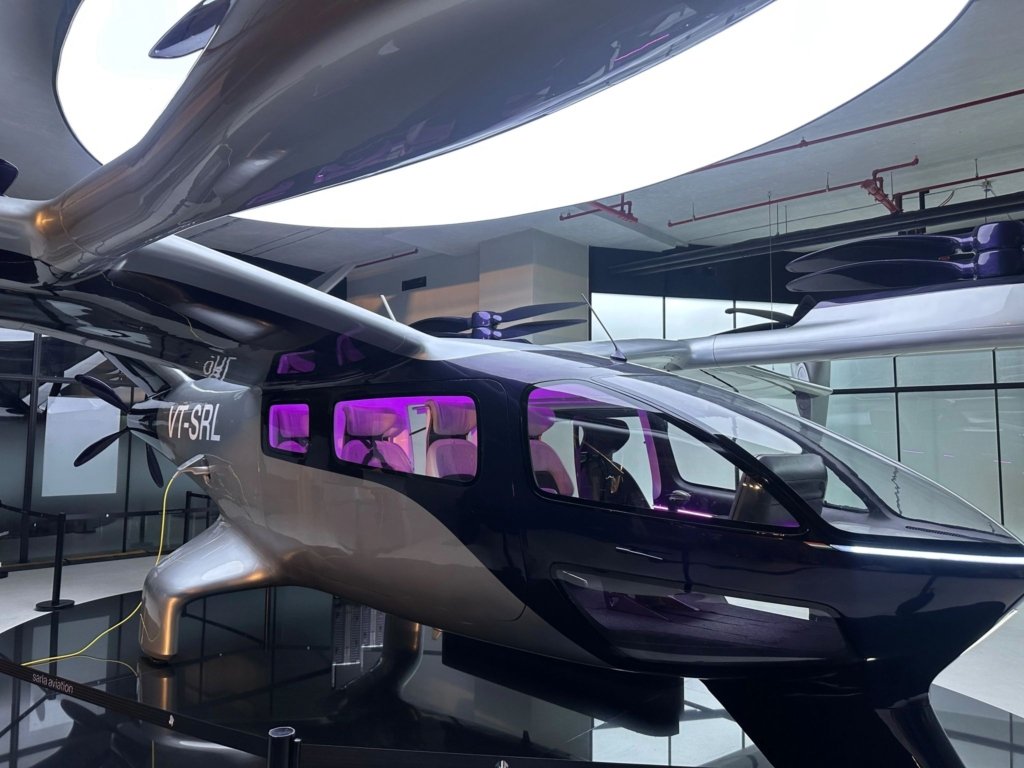
The DOA, the January 2027 transition demonstrator and the June 2028 full-scale aircraft mark three different stages of Sarla’s development programme.
Commercial service will still depend on type certification, operating rules, vertiport and traffic-management infrastructure, and a cost structure capable of taking the aircraft beyond a premium airport-transfer market.
Also Read: Singapore’s UTM Push Draws Attention to India’s Drone Traffic Framework