









Airbus Forecasts Global Air Traffic to More Than Double by 2045, With India Among the Fastest-Growing Markets

- Airbus forecasts global passenger traffic to more than double by 2045, supported by GDP growth, urbanisation and an expanding middle class.
- Airlines will need 42,060 new aircraft through 2045, including 22,240 for growth and 19,820 to replace ageing aircraft.
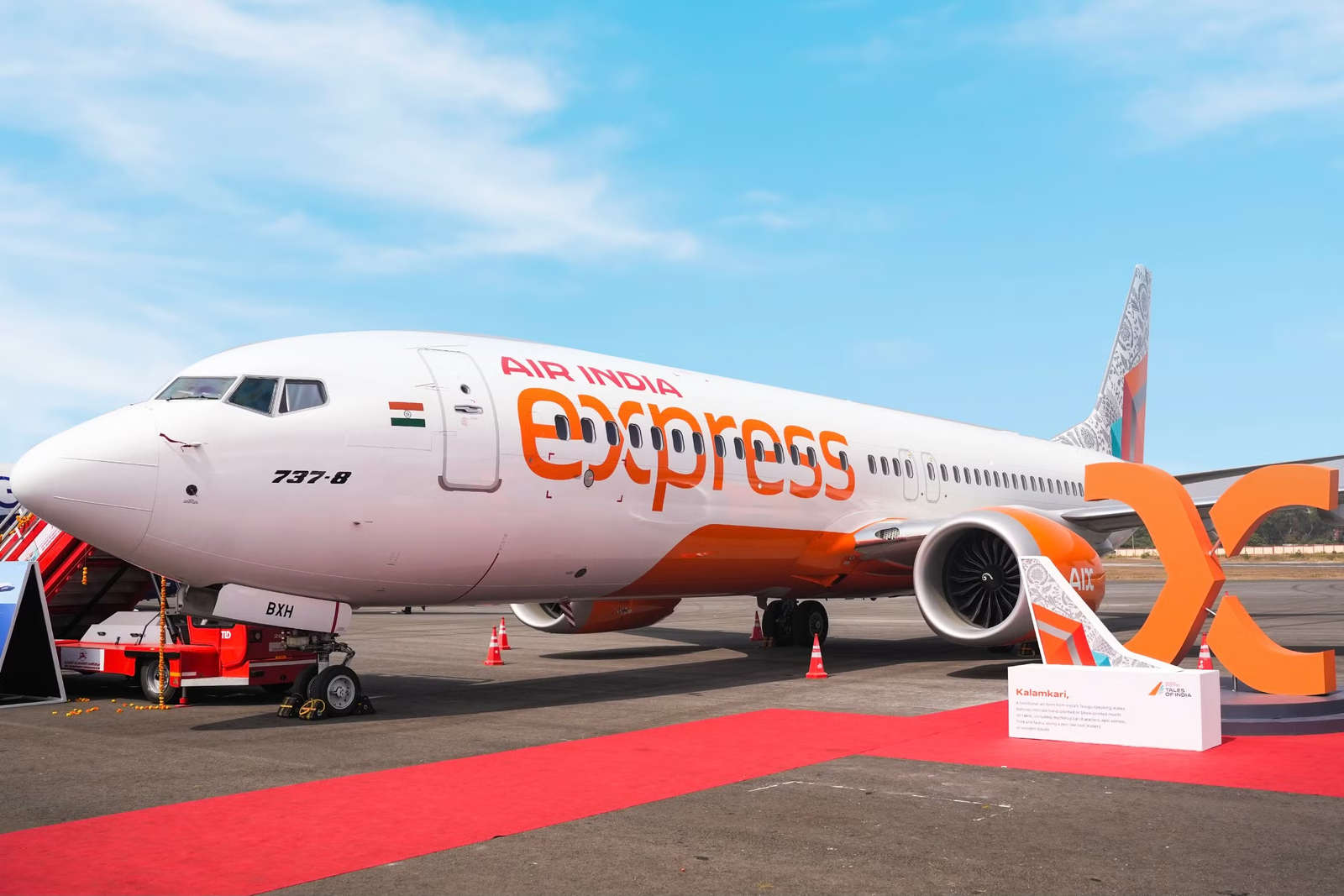
- India is expected to be a major growth market, with its domestic market ranked as the world’s third-largest traffic flow by 2045 and aircraft demand forecast at 3,480 new aircraft.

Airbus has released its Global Market Forecast (GMF) for 2026-2045, projecting that worldwide passenger traffic will grow 3.9% a year over the next two decades and take total air traffic from 9.9 trillion revenue passenger kilometres (RPK) in 2025 to 21.3 trillion RPK by 2045, more than doubling current levels.
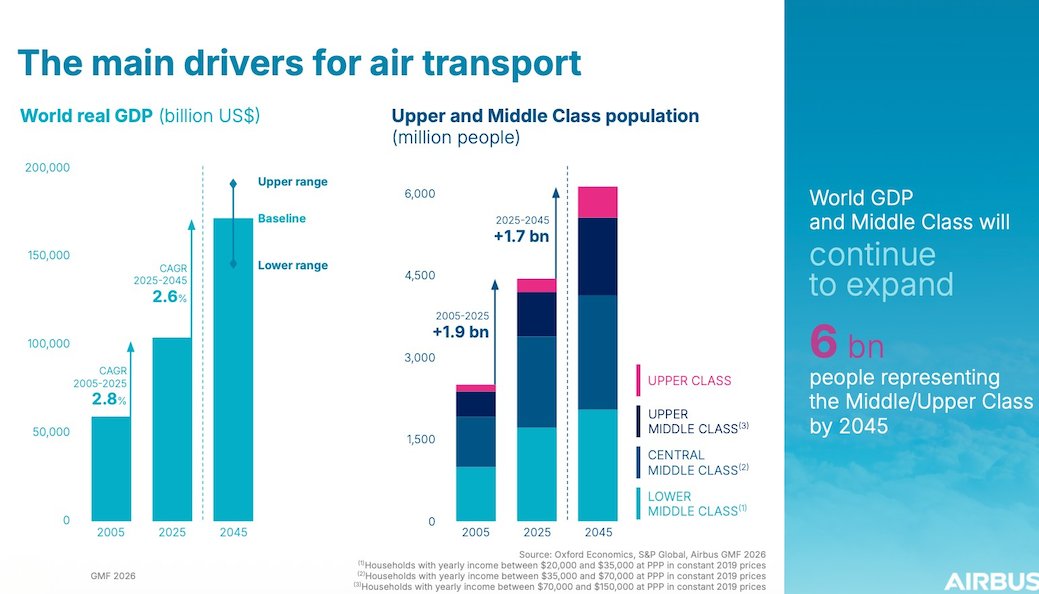
The manufacturer attributes this to global GDP growth of 2.6% a year, a rising urban population (up 1.3 billion) and an expanding middle class. Regional conflicts, tariff disputes and fuel-price swings have disrupted travel before, but passenger demand has recovered each time and kept growing over the long run.
The 2026 numbers already point that way. Airbus expects traffic to grow 2.1% this year compared with 2025, even after recent headwinds. The Middle East offers one example of how fast the industry can recover: Airbus says the region’s network and flights recovery had reached 80-90% by early July 2026, based on FlightRadar24 data in the report.
Growth Drivers
Airbus links long-term traffic growth to rising incomes and expanding cities. By 2045, the middle-class segment most likely to fly is expected to grow by 1.4 billion people, or 34%. A wider Airbus estimate puts the increase in the middle and upper class population at 1.7 billion between 2025 and 2045, taking the worldwide total to around 6 billion people.
Urbanisation is also moving beyond megacities: the number of cities with over 10 million residents rises from 33 to 37 by 2045, large cities go from 49 to 67, and medium and small cities grow from 2,251 to 2,857, with most of the increase coming below the megacity level.
Aviation’s value goes beyond ticket sales, too. Air travel contributes 3.9% to global GDP, carries 58% of international tourist trips, supports more than 6 million international students and over 300 million migrants who rely on flights to stay connected with family, and remains the only realistic link for hundreds of remote communities worldwide.
Airbus puts total aircraft demand at 42,060 through 2045: 22,240 needed to support growth and a record 19,820 to replace ageing aircraft.
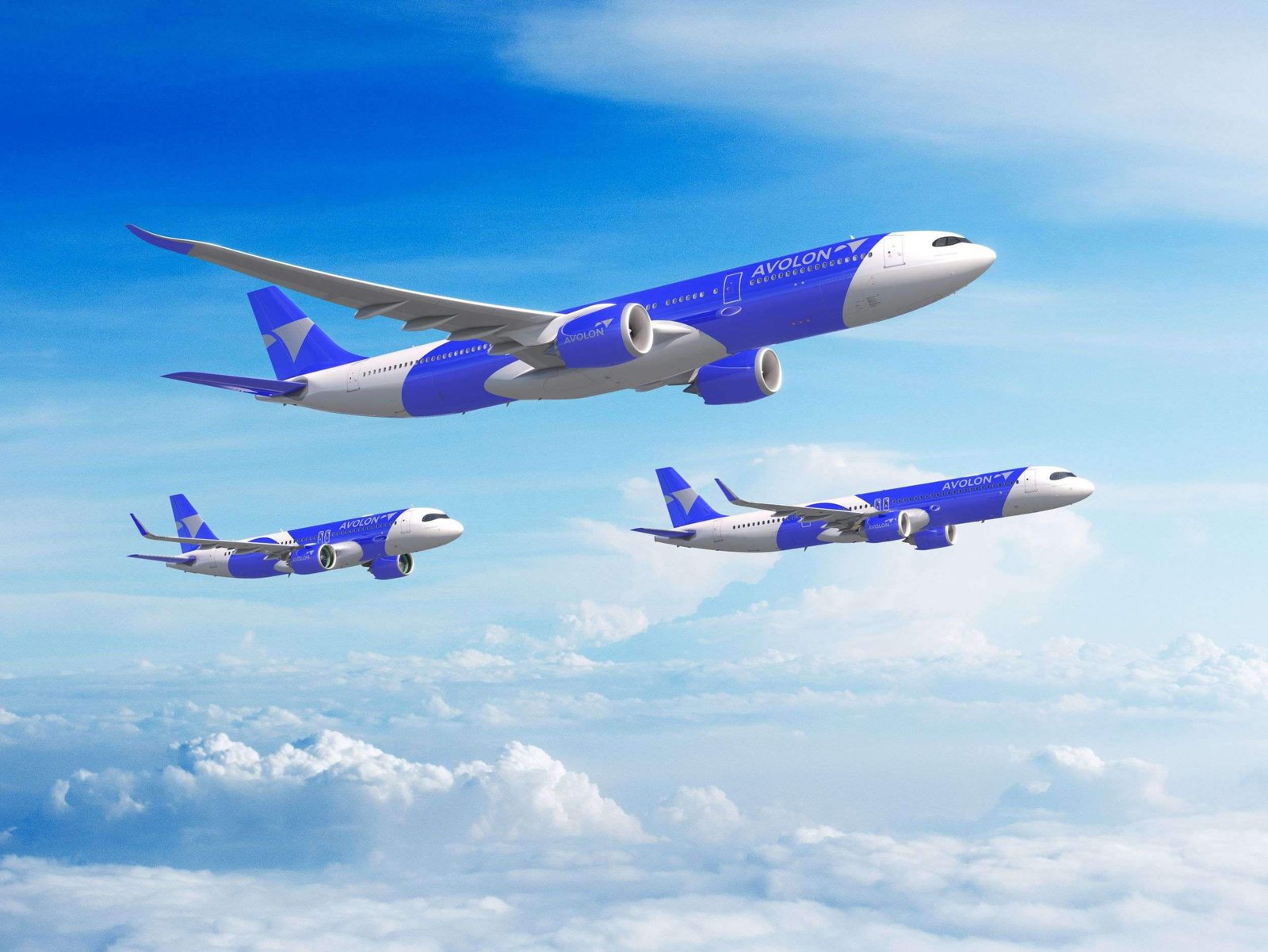
Single-aisle aircraft make up 81% of this requirement and widebodies the remaining 19%. The company’s order book stands at roughly 9,000 aircraft, supporting production rates from the A220 to the A350, including a production rate of 75 for the A320.
More than 70% of the A320 Family backlog is now for the largest variants, the A321neo and A321XLR, up from 7% in 2011. Higher-capacity routes can be served by the A330neo and the longest-haul routes by the A350, while the A350 Freighter is proving popular in the quick-to-market cargo segment.
Where India Fits Into The Picture
India stands out in the GMF, led by domestic traffic growth and future aircraft demand, and the numbers suggest a market growing faster than almost any other. Domestic passenger traffic has risen from 20.1 million in 2005 to 56.1 million in 2010, 144.5 million in 2019 and 169.4 million in 2025, well past pre-pandemic levels rather than merely back to them.
Airbus’s traffic-flow modelling ranks India’s domestic market as the third-largest traffic flow in the world by 2045, behind only the domestic markets of China and the United States, and forecasts it will grow 9.3% a year through the period, among the highest growth.
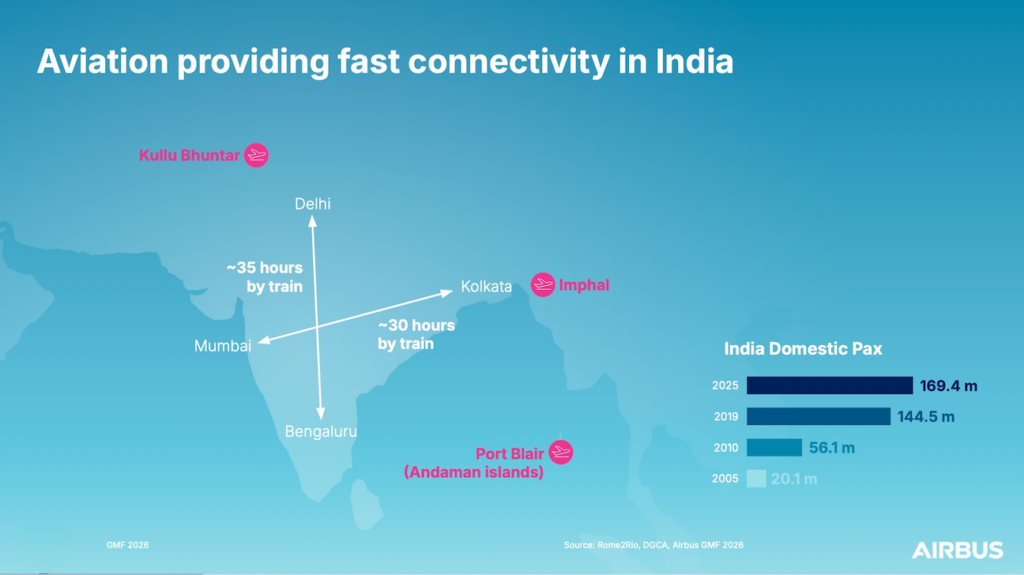
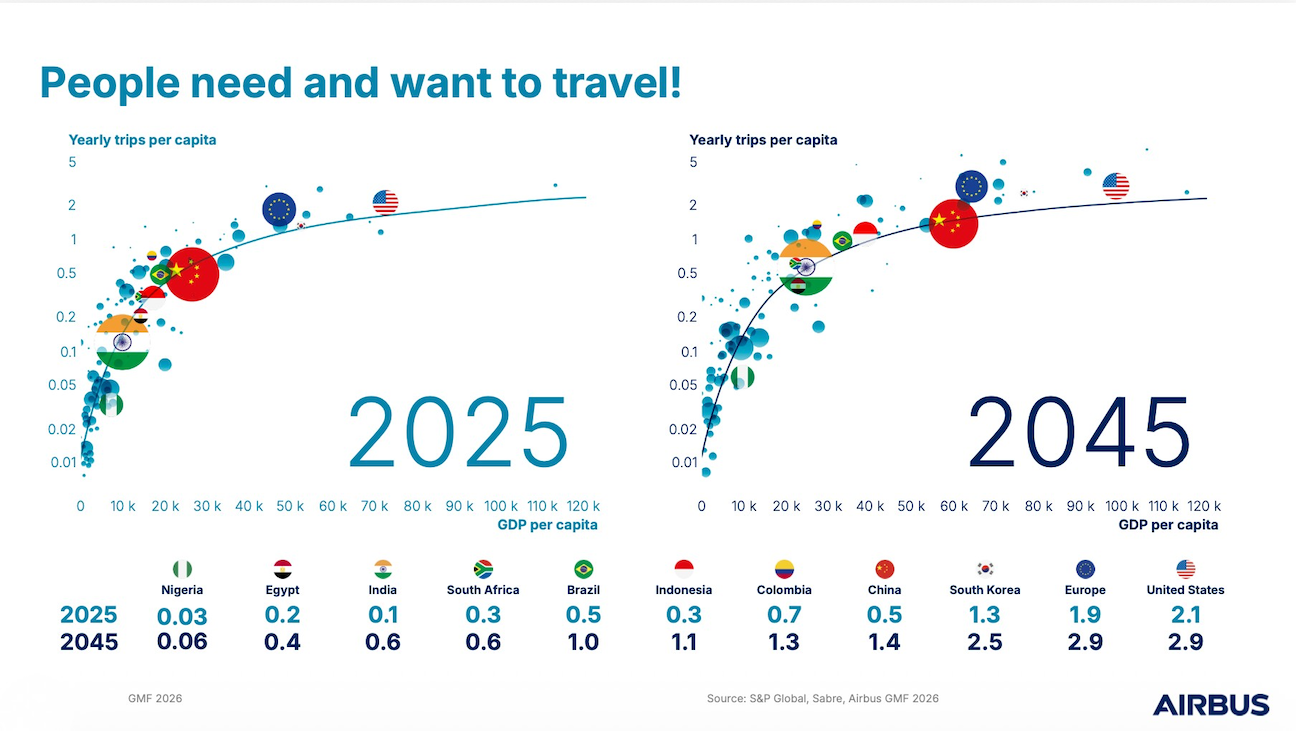
Geography helps explain why. Airbus highlights air travel’s role in providing fast connectivity in India, citing long rail journeys of around 30 to 35 hours on some major routes and flagging destinations such as Kullu Bhuntar, Imphal and Port Blair in the Andaman Islands. Rising incomes reinforce the trend: India’s yearly trips per person are forecast to rise from 0.1 in 2025 to 0.6 in 2045, with Indonesia moving from 0.3 to 1.1 and China from 0.5 to 1.4 over the same period.
This domestic focus carries through to India’s fleet requirements. Airbus estimates India will need 3,480 new aircraft by 2045, with single-aisle aircraft accounting for 91% of that demand, higher than North America and China, both at 85%.
Airbus says routes such as Riga-Tenerife and Melbourne-Alice Springs can be efficiently served by the A220, and also sees strong potential for new A220 routes across Asia-Pacific. For India, that points to how secondary-city connectivity could develop as the market matures.
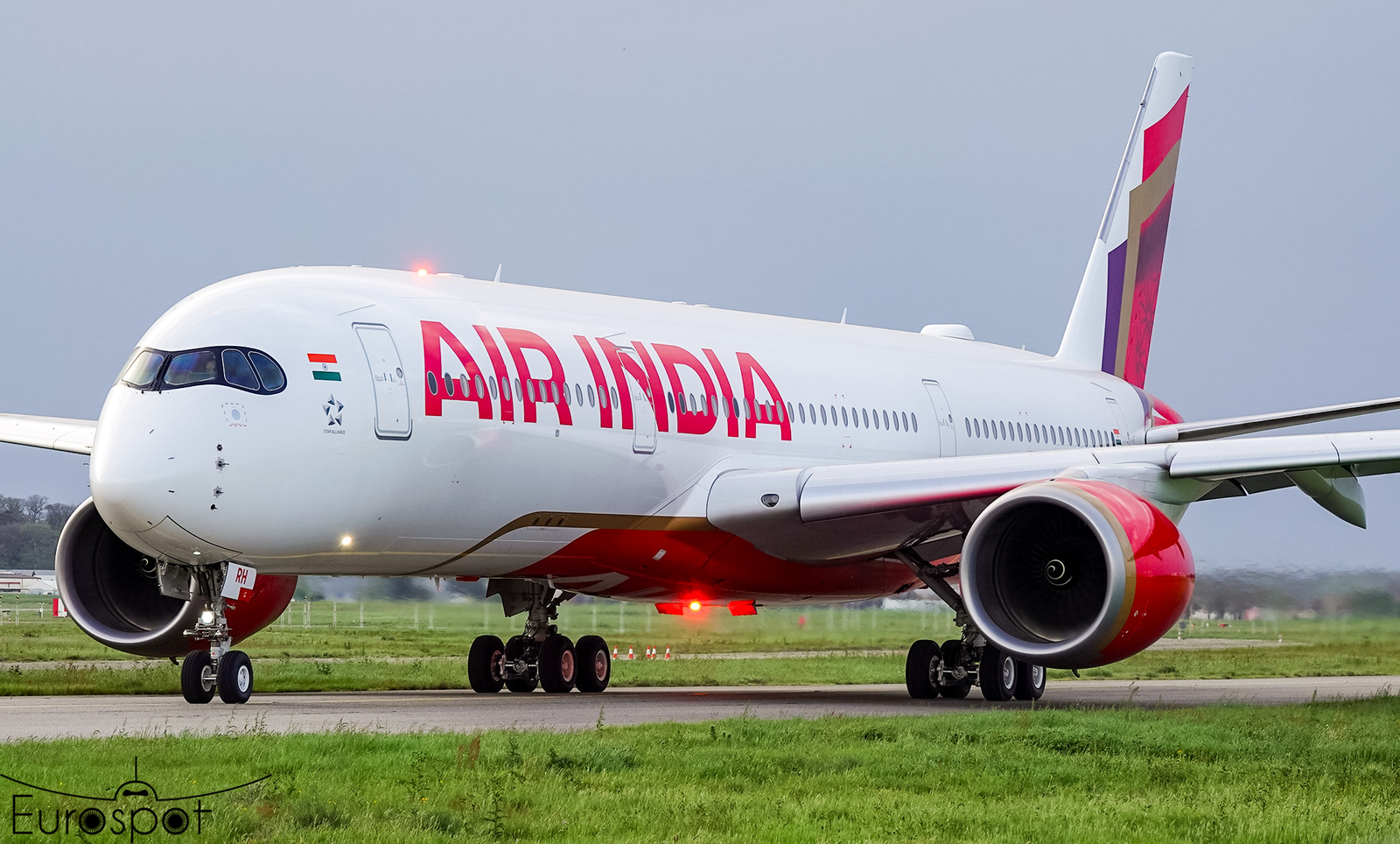
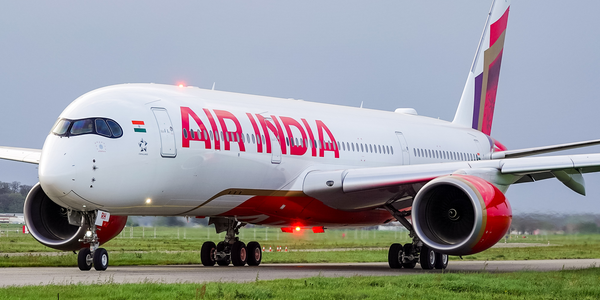
India also shows up on the long-haul side of the forecast. Delhi and Air India both appear on Airbus’s route map for the A350, flying alongside carriers such as Qatar Airways, Cathay Pacific, Singapore Airlines and Qantas. Airbus separately flags Asian, Indian and Middle Eastern airlines as expanding their networks across the United States, part of a wider pattern of carriers flying farther as newer aircraft extend their range.
A Wider Shift Across Asia-Pacific
India’s growth is part of a broader shift toward Asia-Pacific that Airbus also sees in Vietnam, Indonesia and Malaysia, helped by rising international migration and family-related “visiting friends and relatives (VFR)” travel. Migrant numbers in Asia-Pacific rose from 28.3 million in 2000 to 45.0 million in 2024, echoing similar growth in migrant populations across almost every region Airbus tracks.
This connects to a wider pattern in the forecast: air travel spreading beyond the traditional hub-and-spoke model. Airbus tracks 532 new active airports worldwide since 2005, and the number of served city pairs has grown from 17,800 in 2005 to 28,000 in 2025, with 78% of the new routes linking smaller cities and 55% of all current pairs not existing two decades ago.
Aircraft such as the A220, A321neo, A321XLR, A330neo and A350 are enablers to this shift, opening direct routes such as Lisbon-Recife, Dublin-Nashville, Algiers-Kuala Lumpur and Taipei-Phoenix that skip traditional hubs altogether, a pattern already visible in India’s own domestic network as it reaches into smaller cities.
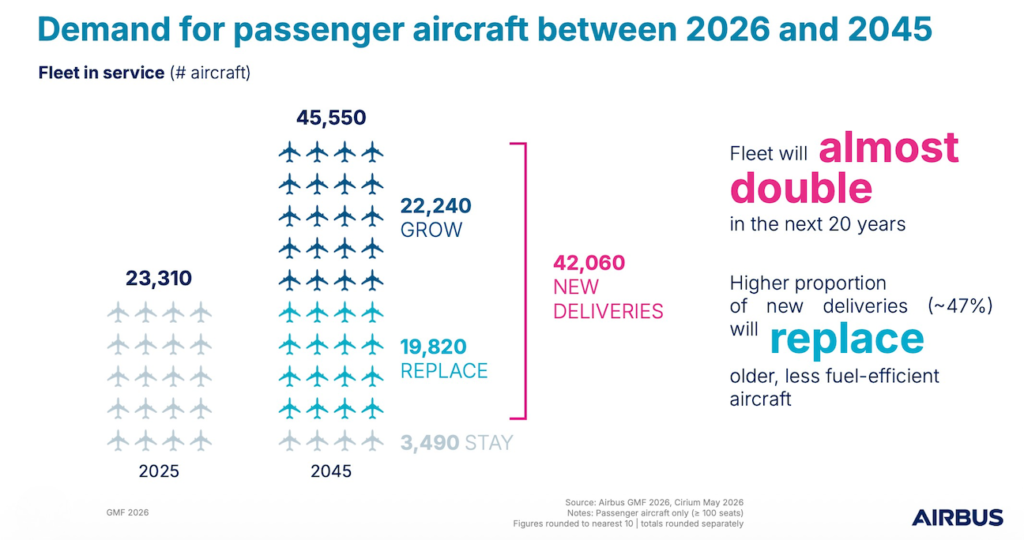
Fleet replacement accounts for a large share of Airbus’s 2045 forecast. Airbus expects new-generation aircraft to make up close to 100% of the global fleet by 2045, up from around 39% today, and it expects nearly half of all new deliveries through 2045 will go toward replacing older, less efficient aircraft rather than pure growth.
That trend, Airbus says, will hold across both established and emerging markets, India included, as carriers renew their fleets to keep pace with demand that shows no sign of slowing.
Also Read: Operational Reliability Becomes the New Battleground for Indian Airlines

Aviation Jeta is an aviation news platform covering airlines, airports, aircraft, and global aviation developments. We publish accurate, well-researched, and detailed aviation news and industry insights from around the world.