










- Bengaluru is moving closer to identifying a site for its second international airport, with a 9,800-acre site near Kanakapura Road in South Bengaluru emerging as the preferred option as Kempegowda International Airport approaches future capacity limits.
- Beyond site selection, the project is raising questions around connectivity, with experts calling for integrated road, metro and high-speed rail links from the planning stage to avoid the transport challenges seen at Bengaluru’s existing airport.
- Expected to become operational after 2032, the new airport is being positioned to absorb future traffic growth, support cargo expansion and unlock wider economic development across southern Karnataka.
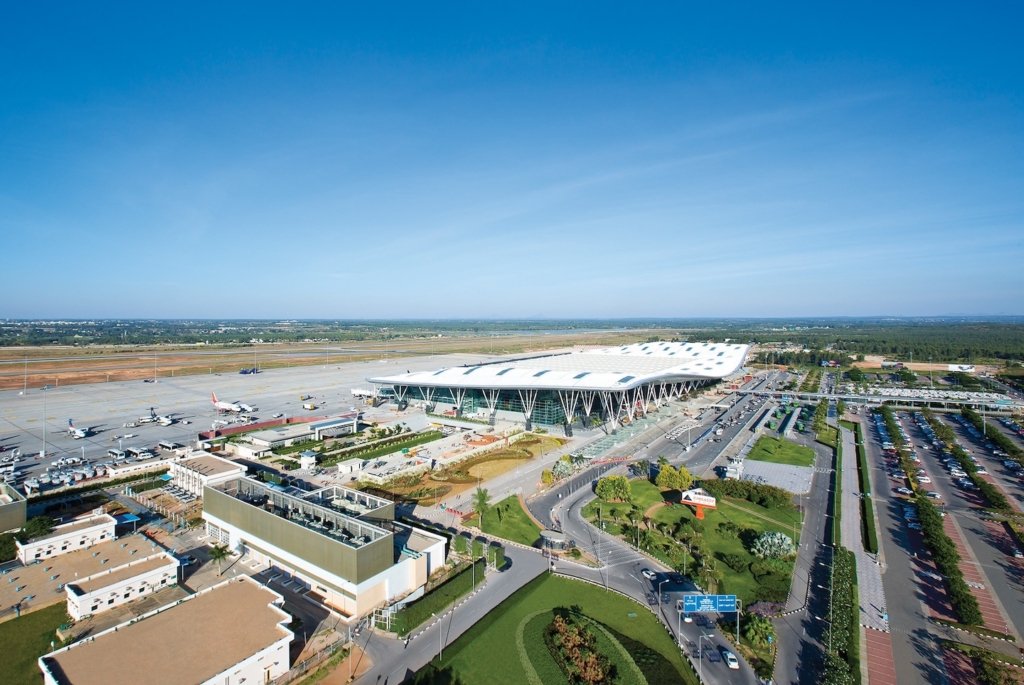
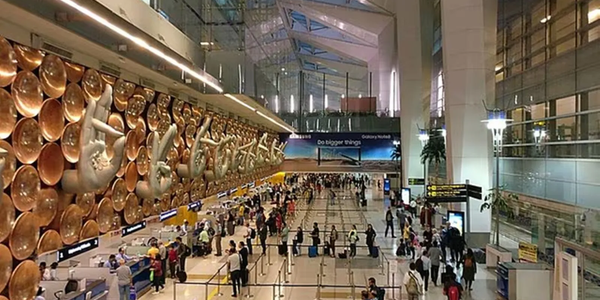
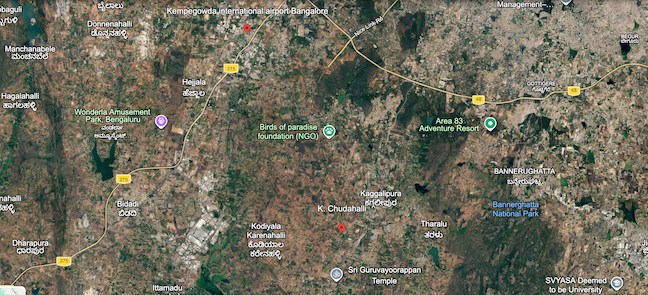
The months-long, intense search for a location to build a second international airport for Bengaluru might have reached its final stage. The new airport is now likely to come up in South Bengaluru on the Kanakapura side, merging two identified sites spanning 4,800 acres and 5,000 acres each. If green-signalled, the new facility will dwarf the 4,000-acre Kempegowda International Airport (KIA) in size.
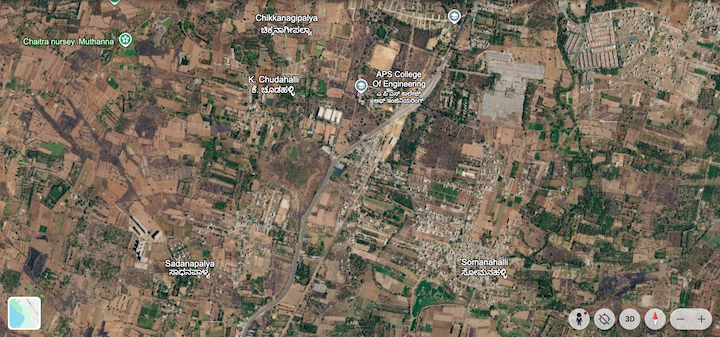
Already the country’s third busiest airport, KIA could hit its saturation mark in about six years. The new airport is expected to ease the pressure on KIA once it gets operationalised sometime in 2032. The land parcels for the new airport have been identified in K Chudahalli and Somanahalli on Kanakapura Road, with plans to merge the two sites. The choice for South Bengaluru has been reiterated multiple times by the new Karnataka Chief Minister D K Shivakumar.
Besides Kanakapura, the State Government had also identified the corridor between Kunigal and Nelamangala near the arterial Tumakuru Road on the city’s North West for the new airport. A feasibility report on all three shortlisted locations will now be prepared by the Singapore consultancy firm Meinhardt EPCM.
The Nelamangala corridor land parcel spans an area of 5,200 acres. However, the Kanakapura option is being increasingly preferred since a 9,800-acre area will fit into the airport’s mandate for minimum airspace restrictions and better connectivity.
Land For a Future Aerotropolis
The vast expanse will open up future plans for a massive aerotropolis, complete with logistics and commercial hubs alongside the airport. But aviation experts warn that this will also mandate seamless multi-modal connectivity to the city centre, both by road and rail.
They do not want a repeat of the KIA mistake, where transport connectivity was virtually an afterthought. With Metro connectivity still a good two years away, passengers to and from the existing airport heavily depend on private vehicles and cabs, triggering congestion and long, tiring commute.
A traffic demand assessment for all three identified locations and traffic forecasting are part of the feasibility study tasked to the Singapore firm. Besides, the Rs 4.96-crore contract will also assess the Airports Authority of India (AAI)’s study on site feasibility, site technical feasibility and development of a strategic framework for site selection.
To boost connectivity to the new airport, the Government has proposed Metro links to the city proper. But experts say that the best option would be to develop a high-speed rail corridor, integrated to the airport master plan.
Besides, the airport should be easily accessible by arterial roads such as the new Satellite Town Ring Road (STRR). Potential traffic choke points will have to be identified years in advance to ensure a seamless, hassle-free commute to the airport for both incoming and outgoing passengers.
Once KIA opened in 2008 with the closure of the HAL Airport for commercial operations, real estate around the new aerodrome entered boom time. However, the development was haphazard, with the accompanying infrastructure coming in much later. Urban planners want a more planned residential development around the new airport.
Locating the new airport in the Southern corridor (such as the Kanakpura Road or Ramanagara area) is apparently part of a transport strategy to serve two major urban centres—Bengaluru and Mysuru simultaneously. Ideally, the airport would be positioned so that it is approximately one hour from either city.
Years before the State proposed a second airport for the city, the Bangalore Chamber of Industry and Commerce (BCIC) had advocated for a greenfield aerodrome in a geographical triangle between Bengaluru, Mysuru and Hassan. The rationale was this: While decongesting KIA, this airport would support the Bengaluru-Mysuru Expressway and benefit food processing hubs in areas such as Kunigal and Hassan.
Proximity to existing and future agro-industrial belts, as experts reiterate, is critical to airports that do not depend on passengers alone for sustenance. Over the last 18 years, KIA has emerged as India’s number one airport for perishable shipments, holding a commanding 44% market share in South India. It currently handles over 25% of India’s total air-freighted perishable exports, and a second airport could take over a big chunk of this cargo volume.
Replicating KIA’s success
In April, KIA had surpassed the 400-million passenger mark since its launch. The airport handled 44.47 million passengers and 5,32,000 tons of cargo in the fiscal 2025-26. According to the Bangalore International Airport Limited (BIAL), international traffic rose by 23.9% to touch 7.23 million passengers while domestic traffic clocked a 3.3% growth serving 37.24 million passengers. This was cemented by a robust 22% year-on-year growth in transfer traffic. While domestic transfer volume grew by 3.2%, international transfer volume leaped by over 50%.
During the last fiscal, KIA recorded 2.8 lakh air traffic movements, a 5% growth over the previous year. The average daily flight movements stood at 769 with the highest traffic day peaking at 837 flights.
But will the second airport replicate the growth success of the Kempegowda airport? KIA’s explosive historical growth was driven by Bengaluru’s transition into a global IT mega-hub. However, the second airport is being built to absorb the overflow from KIA, projected to reach its maximum capacity of 90–100 million passengers annually between 2030 and 2035.
Besides, the second airport will be operationalised only after KIA’s exclusivity clause expires in 2032. The clause, a part of the 2004 agreement between BIAL and the Ministry of Civil Aviation, mandates that no new commercial airport is built or an existing airport upgraded within a radius of 150km around KIA. Inevitably, this means both KIA and the new airport will have to compete for airlines and routes and not enjoy a total monopoly.
Also Read: Rules, Runways and the Road to Reform

An independent multimedia journalist based in Bengaluru, Rasheed has authored hundreds of deep-dive features on civil aviation, defence and related topics. His articles have appeared in The Hindu, Deccan Herald, The Times of India and multiple online news platforms. Kappan is also a media trainer and graphic cartoonist