













- The aviation industry is rapidly adopting Artificial Intelligence, and the AI aviation market is expected to grow to more than $170 billion by 2033, as airlines increasingly use AI for operations, pricing strategies, and customer service automation.
- AI-powered predictive maintenance analyzes aircraft sensor data to detect potential failures before they occur, helping airlines reduce unexpected aircraft downtime by up to 30% while improving safety and operational efficiency.
- Artificial Intelligence is also improving the passenger experience and flight operations through technologies like AI chatbots, biometric boarding systems, and intelligent flight route optimization, which help reduce delays, save fuel, and make air travel smoother.
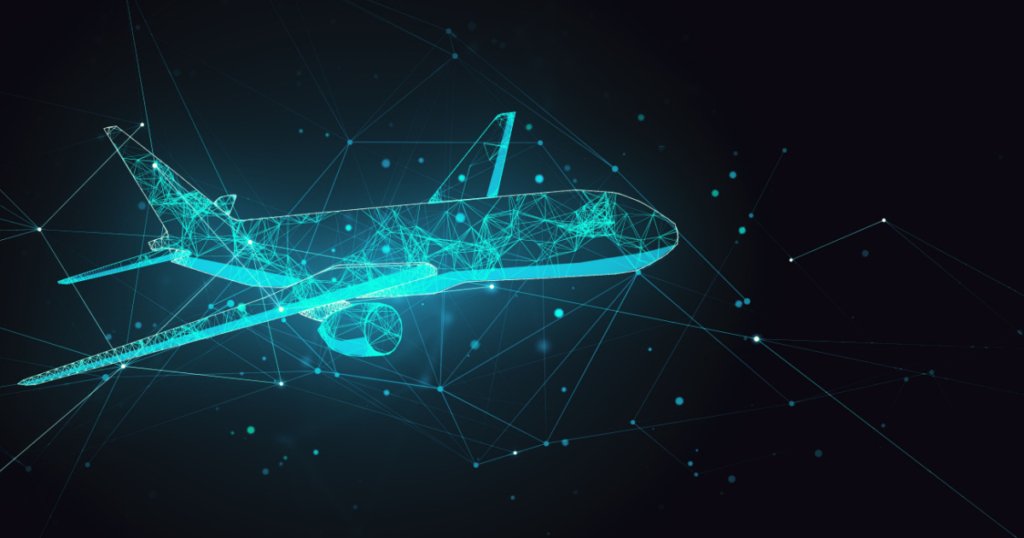
The global aviation industry is undergoing a major technological transformation driven by Artificial Intelligence (AI). From predictive aircraft maintenance to intelligent flight routing and personalized passenger experiences, AI is reshaping how airlines operate and how passengers travel. As air traffic grows rapidly worldwide, aviation companies are increasingly investing in AI solutions to improve efficiency, safety, and profitability.
According to the International Air Transport Association (IATA), the aviation ecosystem generates enormous volumes of operational data every day. Over 100,000 flights operate globally each day, producing large datasets related to aircraft performance, weather patterns, passenger behavior, and airport logistics. AI technologies are now being deployed to analyze this data and generate actionable insights that were previously impossible to process at scale.
This shift toward AI-driven aviation is not a minor technological upgrade it represents a structural change in how airlines, airports, and aircraft manufacturers operate.
Rapid Growth of the AI Aviation Market
The financial growth of AI in aviation highlights how critical the technology has become for the industry. Market research suggests that the global AI aviation market is expanding rapidly.
Recent reports estimate that the AI in aviation market was valued at about $8.63 billion in 2025 and is expected to reach $171.53 billion by 2033, representing a remarkable compound annual growth rate (CAGR) of over 45%.
Another industry report indicates that 97% of airlines are planning major AI programs or research initiatives, while 70% of airlines intend to use AI for pricing and revenue management by 2025.
These numbers demonstrate that AI adoption is no longer optional. It has become a competitive necessity for airlines seeking to remain efficient and profitable in an increasingly complex aviation environment.
Predictive Maintenance: Reducing Downtime and Costs
One of the most impactful uses of AI in aviation is predictive maintenance. Aircraft engines and systems generate thousands of sensor readings during every flight. AI algorithms can analyze this data to detect anomalies and predict mechanical failures before they occur.
Predictive maintenance systems allow airlines to schedule repairs proactively rather than reacting to unexpected failures. This approach significantly reduces operational disruptions.
Research indicates that AI-driven predictive maintenance can reduce unscheduled aircraft downtime by up to 30%.
Additionally, more than 67% of commercial airlines have already adopted AI-based maintenance solutions to monitor aircraft health and optimize repair schedules.
Major aerospace manufacturers such as Boeing and Airbus are heavily investing in predictive analytics platforms that allow airlines to monitor engines and structural components in real time.
The benefits are substantial:
- Lower maintenance costs
- Reduced flight delays
- Increased aircraft availability
- Improved passenger safety
For airlines operating large fleets, these efficiency gains can translate into millions of dollars in annual savings.
AI for Flight Optimization and Fuel Efficiency
Fuel represents one of the largest operating costs for airlines, often accounting for 25–30% of total expenses. AI systems can analyze weather patterns, air traffic conditions, and aircraft performance to determine optimal flight routes.
By continuously adjusting flight paths based on real-time data, AI can help reduce fuel consumption and minimize delays.
For example, airlines are deploying machine-learning algorithms to predict turbulence zones and unfavorable weather conditions. This allows pilots and flight planners to modify routes and maintain more efficient flight operations.
Such technology has already delivered measurable results. AI-based operational systems implemented by airlines have helped improve on-time performance and significantly reduce delays. In one case, AI-powered operational tools helped save over 400,000 minutes of flight delays by optimizing flight operations and airport coordination.
Beyond cost savings, these optimizations also contribute to environmental sustainability by reducing carbon emissions—an increasingly important goal for the aviation sector.
Enhancing Passenger Experience Through AI
Artificial Intelligence is not only transforming airline operations but also improving passenger experiences.
Many airlines now deploy AI-powered chatbots and digital assistants to handle customer inquiries, booking changes, and travel information.
Industry studies suggest that AI chatbots are capable of handling more than 70% of customer service interactions in some airlines.
Furthermore, AI is enabling several innovations in airport operations, including:
- Biometric facial recognition for boarding
- Automated baggage tracking
- Personalized travel recommendations
- Smart airport navigation systems
In the United States, for example, 29% of airports have implemented AI-based biometric boarding systems, improving both security and boarding efficiency.
These technologies reduce waiting times, improve security procedures, and create smoother travel experiences for passengers.
AI in Air Traffic Management and Safety
Safety remains the top priority in aviation, and AI is playing an increasingly important role in enhancing flight safety.
Advanced machine-learning models can analyze historical flight data, radar signals, and weather information to predict potential risks. AI-powered decision systems help air traffic controllers manage increasingly congested airspace more effectively.
Researchers are also exploring AI systems capable of integrating multiple sources of aviation data—including radar, communications, and aircraft sensors—to provide real-time situational awareness for pilots and controllers.
Such technologies may eventually support semi-autonomous flight operations and significantly reduce the risk of human error in aviation.
The Future of AI in Aviation
The aviation industry is entering an era where data-driven decision-making will dominate operational strategies. AI technologies will continue evolving across several areas:
- Autonomous aircraft navigation
- AI-powered air traffic control systems
- Smart airports with fully automated operations
- AI-based aircraft design and manufacturing
At the same time, airlines face challenges in fully implementing AI technologies. Many aviation companies still rely on legacy IT systems that limit the ability to integrate advanced analytics tools.
However, as cloud computing, big data platforms, and machine learning technologies continue to advance, the aviation industry will increasingly become an AI-first ecosystem.
Conclusion
Artificial Intelligence is fundamentally transforming the aviation industry by improving efficiency, reducing costs, enhancing safety, and delivering better passenger experiences. With billions of dollars being invested in AI technologies and nearly all airlines exploring AI initiatives, the future of aviation will be deeply integrated with intelligent systems.
As global air traffic continues to grow, AI will become essential for managing complex airline operations and maintaining high safety standards. Airlines that successfully integrate AI into their operations will gain significant competitive advantages in efficiency, reliability, and customer satisfaction.
In the coming decade, AI will not only optimize aviation operations—it may redefine how the entire aviation ecosystem functions.

Ajeet Yadav is an aviation enthusiast covering airline news, airports, aircraft, and industry developments through well-researched and reliable reporting.