














- The Embraer–Adani partnership sets out a phased approach to aircraft assembly, supply chain development, and lifecycle support rather than a standalone manufacturing announcement.
- By linking production with maintenance, training, and aftermarket capability, the framework addresses the operational realities of sustaining regional aviation networks.
- Execution—through aircraft selection, site decisions, and supplier integration, will determine whether the partnership delivers lasting industrial impact in India.

Embraer and Adani Defence & Aerospace today signed a Memorandum of Understanding (MoU) to develop what they call an “integrated regional transport aircraft ecosystem” in India—covering aircraft manufacturing, supply chain, aftermarket services, and pilot training. The agreement explicitly aims to establish an assembly line and then increase indigenisation in phases, aligned to India’s Regional Transport Aircraft (RTA) ambition and the UDAN regional connectivity vision.
The scale of what has been announced should not be overstated—there are no public timelines, production rates, aircraft variants, or site confirmations yet. But the structure of the MoU is notable: it places aircraft assembly inside a broader value-chain architecture that Adani already touches through aviation infrastructure, maintenance, and training. In regional markets, where lifecycle economics often matter as much as acquisition costs, this approach supports long-term fleet sustainability.
Why Now
India’s regional connectivity push has moved into a more operational phase. The question is no longer whether Tier-2 and Tier-3 routes can be launched, but whether they can be sustained at meaningful frequency with predictable economics. That places pressure on three fundamentals: right-sized aircraft for thinner demand, reliable maintenance and spares access, and the steady availability of trained crews.
Embraer has a longstanding presence in India with a mixed fleet already operating across commercial, defence and business aviation. Nearly 50 Embraer aircraft across 11 aircraft types are currently in service in the country, including ERJ145-based ‘Netra’ AEW&C and Legacy 600 aircraft with the Indian Air Force, and E175/ERJ operations with Star Air. Those fleets create a practical reason to strengthen support capability—particularly if India is to be treated not just as a buyer market, but as a long-term platform market.

The agreement is deliberately broad for an early-stage announcement. It is not framed only around assembly. It explicitly names four workstreams—aircraft manufacturing, supply chain, aftermarket services, and pilot training—alongside the intent to establish an assembly line and raise indigenisation over time. Embraer currently assembles its commercial jets only in Brazil, which is why an India assembly line, if realised, would represent a meaningful expansion of manufacturing geography rather than a minor localisation add-on.
The structure is designed to align production with sustainment from the start. Regional aircraft economics are frequently decided in the years after delivery: dispatch reliability, spares availability, turnaround times, and crew pipelines. By naming aftermarket and training in the same breath as manufacturing, the MoU brings Adani’s existing aviation value-chain assets into sharper focus.
Supply Chain
Embraer’s supplier disclosures provide useful context for what “supply chain development” means in practice. The company lists 4,000+ suppliers across 62 countries. That is not a programme-specific figure for a single aircraft; it is a supplier ecosystem scale indicator across Embraer’s activities. But it matters for India because it highlights a reality often missed in localisation debates: regional aircraft manufacturing is rarely a single-country endeavour, especially at the systems and sub-systems level.
For India, the near-term industrial question is not “how quickly can the aircraft be made local,” but “how many Indian suppliers can be qualified into a global-grade, multi-tier supply chain—and at what depth.” Aerospace supplier qualification is a long-cycle process defined by certification, process consistency, and quality management.
A phased indigenisation approach is consistent with how OEMs de-risk this process when building a new industrial node.

A future India assembly line—if executed—would give Embraer additional manufacturing headroom, help diversify supply-chain exposure, and improve responsiveness as deliveries rise. It would also strengthen Embraer’s position in the Indian market, where airline fleet decisions increasingly hinge on supportability and industrial partnership alongside aircraft performance.
Location Considerations
No location has been announced by Embraer or Adani. But there are two reasons location will matter more here than in an assembly-led manufacturing arrangement.
First, the agreement is not limited to assembly alone. It is about a regional aircraft ecosystem that also includes supply chain development, aftermarket, and training. That means the site logic will likely favour places where logistics, skilled labour availability, supplier clustering, and aviation services capacity can co-exist.
Second, the ecosystem approach makes it difficult to separate factory choices from the broader aviation environment. In that context, the industrial logic points toward regions that already have meaningful aerospace manufacturing momentum or are being developed explicitly as aerospace corridors.
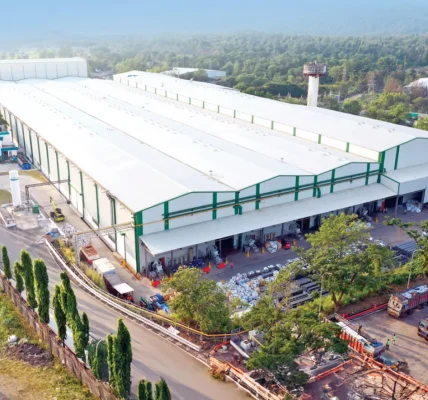
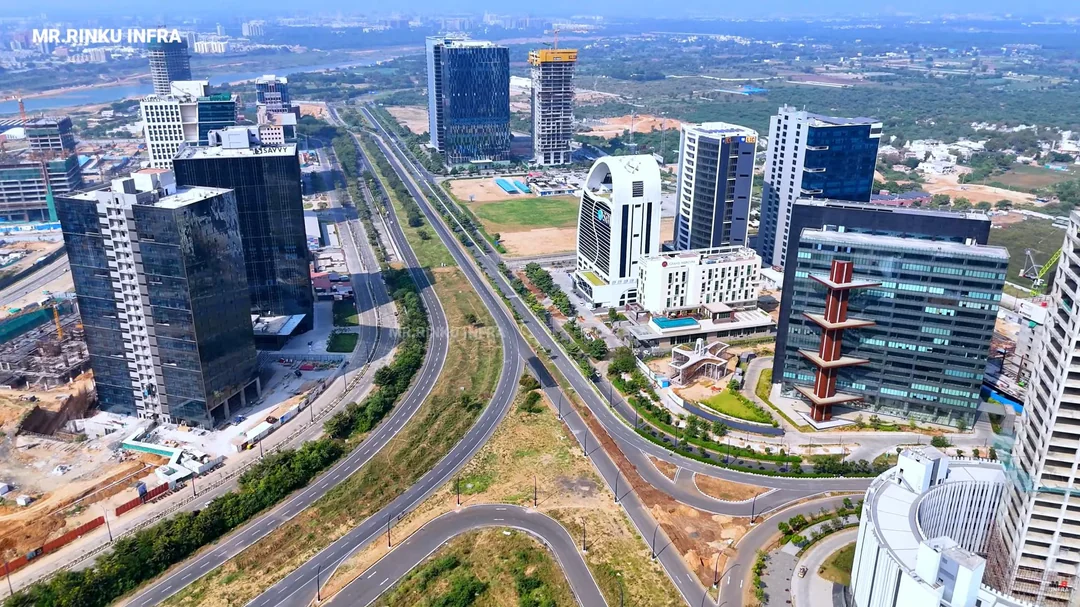
Gujarat’s advantage, for example, is multi-layered: manufacturing base, logistics connectivity, and industrial-scale execution capacity. The Bhogapuram–Visakhapatnam belt, meanwhile, has been positioned around greenfield airport infrastructure and industrial corridor ambitions, which—if realised—are the kind of backbone regional aerospace programmes tend to need.
This broader point is that aircraft assembly, sustainment, and training ecosystems do not thrive in isolation.
Operational Integration
Adani’s aviation footprint aligns closely with the support and sustainment elements outlined in the agreement. These elements are central to how regional aircraft fleets are operated and maintained over time.
Embraer’s services network globally is built around scale, spares distribution, and authorised service infrastructure, with the company stating that its support organisation includes thousands of personnel worldwide, authorised service centres, distribution hubs, and simulators.

For regional fleets, maintenance turnaround times, parts availability, and access to trained crews often determine whether routes remain viable. If the partnership results in localised capability across these areas, it could have tangible economic impact well before any significant manufacturing scale is reached.
Over the long run, the most strategic value of an India line may be that it gives Embraer optionality: a second industrial base that can support delivery expansion and absorb demand growth without being fully constrained by a single-country production footprint. Embraer’s record backlog disclosures, coupled with its steady commercial delivery run-rate, underline why OEMs look for production resilience and supply chain flexibility when demand rises.
For India, the upside is that an “ecosystem” approach—if real—can position local suppliers and services to participate in global programmes, not just domestic deliveries. But that outcome depends on depth: supplier qualification into certified aerospace work, repeatable output, and sustainment capability that meets global operator expectations.
From Framework to Execution
What will define the partnership’s trajectory is not the ambition outlined in the announcement, but the pace and depth of execution that follows. Aircraft type selection, site choice, production configuration, supplier qualification, and sustainment work packages will determine whether the framework translates into durable industrial capability.
If these elements move forward in a coordinated manner, the partnership has the potential to add a new manufacturing and sustainment node to Embraer’s global system—while creating a more integrated regional aviation value chain in India.
Whether such activity ultimately takes shape in established industrial regions like Dholera or emerging aerospace clusters such as Bhogapuram, the direction of travel is clear: regional aircraft manufacturing and support are no longer being discussed in isolation from India’s broader aviation ecosystem.
Also Read: Not Boeing, Not Airbus: Why Adani’s Embraer Bet Is About Power, Not Planes