









- IndiGo wet-leases six Norse Dreamliners to fast-track long-haul growth.
- The deal secures European slots and avoids significant upfront costs.
- IndiGo targets India–Europe traffic now dominated by Gulf carriers.

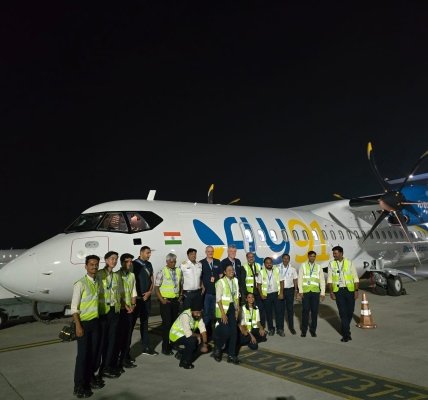
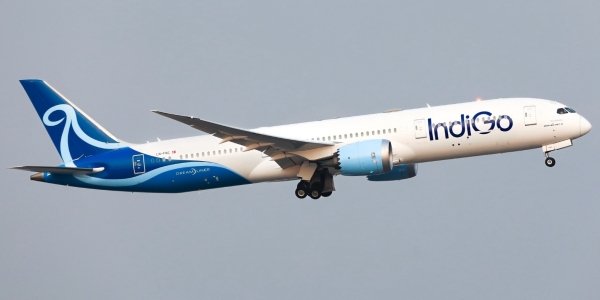
In the middle of Operation Sindoor, IndiGo and Norse Atlantic announced a deal for the damp/wet lease of another two 787-9 Dreamliner aircraft, which will start operations in 2026. This will take the deal size to six planes, or exactly half of what Norse Atlantic has. IndiGo started operations of its damp-leased 787-9 Dreamliner aircraft, which it received from Norse Atlantic on the Delhi-Bangkok route, and from July 01, shifted the aircraft to Mumbai to operate thrice a week to Amsterdam and Manchester each.
Low-cost, long-haul has often been seen as an insurmountable obstacle. With IndiGo already planning to get into that area from 2027 with their own A350s, this stopgap entry is being closely watched.
What differentiates IndiGo?

In most low-cost long-haul attempts, airlines have tried starting with a lower base of scheduled services, and the widebody long-haul has become a substantial percentage. This was true for Norwegian, WOW air, and others. While AirAsia X has not been overly successful, IndiGo starts from a position of strength. The airline offered over 135 million seats for sale across more than 20 countries and over 600 routes, both domestic and international combined.
With a fleet of over 400 aircraft, IndiGo took delivery of more Airbus planes than any other airline in 2024, and its A321XLRs will begin induction this financial year. Unlike earlier experiments, IndiGo is leveraging a massive short-haul network of over 600 routes across nearly 100 domestic airports, reducing risk by funnelling passengers from across India into its long-haul flights.
Norse’s Problem Becomes IndiGo’s Advantage
Norse Atlantic Airways, the reincarnated Norwegian long-haul operation, is seeking to offload around half of its B787 fleet, if possible, through a wet lease, highlighting the challenges of operating long-haul low-cost services. For IndiGo, such an opportunity is too good to miss—an operator with the right aircraft type, in a ready low-cost configuration and desperate to pass on a problem, presents an ideal negotiating opportunity.
IndiGo will take six aircraft, half of the fleet of 12 planes, with Norse Atlantic, which also gives it some scale and operational efficiency. Why a sudden change in plan, though, for what looked like a well-documented plan for induction from 2027? The answer probably lies in competition, Air India.
Cost vs Opportunity
To be sure, the wet or damp lease arrangement comes with its own cost and risks. For example, the ACMI (Aircraft, Crew, Maintenance, and Insurance) arrangement is more expensive, as the operating carrier actually receives more money than it would by operating under its own brand and therefore charges a premium.
Industry studies show that widebody aircraft typically make up around 20% of global ACMI leasing activity, with this share increasing during peak seasons, such as the European summer or Hajj, as airlines seek to secure extra capacity without long-term commitments.
While ACMI wet leases can be 15–30% more expensive per block hour than managing operations in-house, they provide IndiGo with the flexibility to avoid significant upfront costs. This allows the airline to act fast, scale up operations, and secure market share without the long wait or financial burden of building its own fleet.
What is the lost opportunity?
International flights, unlike domestic, have two challenges to start. The slots are hard to come by at busy airports like Amsterdam or London Heathrow, not only because they are exhausted but also because of multiple regulations in Europe restricting runway usage and timing of operations. The second challenge is bilateral rights. Once assigned, they are difficult to revoke, and negotiations can take years, with a notable example being the India-Dubai rights, which have remained unchanged for a decade, despite both sides having fully exhausted their rights.
What are the drivers?
- Consolidation: Air India is currently distracted with the merger, rebranding, consolidation, and investments in massive cabin upgrades, among others.
- Capacity Constraints: While earlier, London Heathrow was the only London airport with constraints, the focus on other airports by airlines has meant that slots are hard to come by even at other airports like Gatwick. The story repeats across Europe, and an early entry will build slot historicity.
- New airports in India: Both Navi Mumbai and Jewar airports are opening in a few months’ time. There will be additional capacity at the desired timings, which is important since the existing airports at both these places are slot-constrained.
For any airline, seeing an opportunity to move quickly and then actually being able to do something about it doesn’t happen very often, but for these reasons alone, bringing forward an existing plan makes sense, and that’s even before you look at the market potential.
Beyond just slot and bilateral drivers, IndiGo benefits from having no sunk costs on widebody pilots or engineering, using Norse’s expertise means it scales up with minimal internal training costs. Recent regulatory liberalisation by DGCA has also streamlined wet lease approvals since 2018, cutting red tape and enabling faster execution of deals like IndiGo-Norse.
Additionally, IndiGo’s direct non-stop services are designed to clawback Indian traffic that would otherwise connect via Gulf hubs like Dubai and Doha, currently accounting for over 60% of India-Europe flow, according to OAG data.
It’s not often that an airline spots a great chance to expand quickly and is actually in a position to act on it. That alone makes it smart for IndiGo to accelerate its long-haul plans, even before considering the potential size of the market.
Big market advantage

AirAsia X, Norwegian, or Wow Air were entirely dependent on international to international connections, with their local markets being a minuscule fraction of what the Indian market is. While India has for many years been an emergent market, it has also seen a fair degree of boom-and-bust periods as local airlines have struggled to survive in a market where issues such as uniforms and working conditions at times seemed more important than fuel. Today, that has all changed, and anyone who has travelled recently in India will be impressed with the levels of digital technology and biometrics in place across every major airport.
India is no longer an emerging market – it is the market of international focus and the centre for aviation growth in the next decade, regardless of what one or two Middle East markets may think, and as a local airline, IndiGo wants its share of the growth rather than let some overseas carriers take their revenues. Traffic leakage through the major hubs in the Middle East has always been a characteristic of the Indian market, and as the booking data below shows, there are large volumes of traffic that could, in a real low-cost airline model, be swayed to a non-stop versus a one-stop service.
Tail Note
While Norse Atlantic struggles to deploy its 12 Dreamliners, IndiGo will operate half of them on routes to Manchester, Amsterdam, Copenhagen, and London, and more, in the future.
Similar strategies are seen with LOT Polish Airlines and TUI, which regularly use wet-leased widebodies to handle seasonal peaks. For instance, LOT wet-leased EuroAtlantic 777s for New York and Toronto routes through March 2025, while TUI flew 787s from Nordic arms for Cancun holiday demand.
As IndiGo’s A350 deliveries begin only gradually from 2027, these leased Dreamliners are essential not just to test long-haul markets but to grow alongside future A350s—without having to wait.
Will IndiGo continue the deployment of damp leased Dreamliners? The question will need a deeper answer. IndiGo is not scheduled to receive its A350 at a fast rate, and it may want to use them for expansion rather than just replacement in the early days. A lot depends on how and what kind of response it gets for the current widebody routes it envisions.
Read More: IndiGo Disrupts India-Europe Market….