
















- India’s tax treatment of business aviation is no longer just a cost issue; it is influencing how aircraft are owned, registered and deployed, with outcomes that do not align with the intent of building a stronger domestic ecosystem.
- The problem is not confined to the headline levy. The gap in tax treatment across categories has reshaped incentives within the sector, affecting pricing, ownership structures and the way operators position aircraft in the market.
- Business aviation continues to be treated as a discretionary segment, even as it serves functions that go beyond that classification — a disconnect that remains unresolved in policy.

There is a familiar kind of institutional contradiction that does not announce itself. It builds quietly, transaction by transaction, registration by registration, until the distortion is so embedded in market behaviour that everyone has simply learned to work around it. India’s tax treatment of business aviation is that kind of contradiction.
It has been years of making the same argument. And yet, the business aviation industry finds itself doing exactly that — returning, conference after conference, with the same numbers, the same systemic concerns, and the same appeal to a government that has, in fairness, heard it all before. The regulatory posture is beginning to shift, and the cost of inaction is harder to ignore.
What is now clear is how a tax structure, put in place without a coherent business aviation development framework, has distorted the market to the point where the consequences extend beyond economics into flight safety.
It is not just that buying a jet in India costs more; it is that buying a jet in India is increasingly irrational.
Indian-owned aircraft are registered in Dubai, maintained abroad, and flown into the country as required. All the ancillary economic activity — hangarage, crew employment, ground handling, component procurement, MRO spend — flows to another jurisdiction. India collects 40% on a transaction that is structuring itself out of India’s tax net altogether. The exchequer’s actual yield from this rate is almost certainly far lower than what a reduced rate applied to a larger, domestically registered fleet would generate.
The Distortion
The 40% rate is the visible grievance. The more serious damage is structural, and it flows from the differential between the private category rate and the 5% GST applicable to NSOP aircraft. That 35-percentage-point gap was never intended to produce what it has produced — but it has, and the industry is now living with the consequences.
When the cost of importing under the private category is prohibitive, rational actors find another way.

Entities that have no intention of running a commercial charter operation acquire aircraft under NSOP cover to access the lower tax treatment.
The aircraft is not a profit centre for them — it is a cost management tool, underwritten by the parent corporate. When they do charter, they price to recover whatever they can, not to generate returns.
The genuine commercial NSOP — the operator building a real charter business with proper pricing that reflects ownership cost, direct operating costs, fixed overhead, and a margin — cannot compete. The market has been distorted by an incentive that was never meant to function this way.
There is a safety dimension that deserves more attention than it typically gets. India has 136 NSOPs. Each requires between 7 and 8 qualified supervisors to operate within regulatory compliance. That supervisory pool does not exist at scale. A tax differential has quietly created a compliance burden that the DGCA is struggling to manage across the sector. It is not an exaggeration to say that a decision made at the GST Council has consequences that reach all the way to flight operations.
The revenue argument against tax rationalisation rests on an assumption that has not been clearly demonstrated: that a 40% levy on a small number of imports generates more revenue than a lower rate applied to a larger domestic fleet. The market behaviour described by the industry suggests otherwise.
That shift is already visible in where aircraft are being based. Aircraft linked to Indian ownership but registered in foreign jurisdictions — the UAE alone has over 190 business jets, some associated with Indian owners — represent activity that is not being captured domestically, from registration and MRO spend to crew employment. India does not capture the import tax on these aircraft, while a significant share of the associated economic activity is realised elsewhere.
Relief, Not Subsidy
Since 2018, the government has released over ₹4,500 crore in viability gap funding to airlines operating regional routes under UDAN. The scheme has connected 93 unserved and underserved airports, operated 3.27 lakh flights, and carried over 1.57 crore passengers.

The intent behind it is sound — reach the unreached, connect the unconnected, make aviation accessible beyond the metros.
Nobody disputes the value of that ambition. What is worth asking, however, is why a government willing to spend at that scale to solve the last-mile connectivity problem has simultaneously maintained a tax structure that is actively preventing a private-capital-funded sector from doing the same job, without a rupee of public money.
Business aviation in India — charter operators, corporate jets, air ambulances, NSOP-registered aircraft — is not asking for a subsidy. It is asking for the removal of a penalty. The distinction matters, but it has yet to be recognised in policy.
The Infrastructure India Refuses to Call Infrastructure
There is an unspoken contradiction in how business aviation is viewed in India. The lawmakers and ministers who carry the most influence over the tax treatment of this sector are also among its most frequent users — not for leisure, but for no commercial airline can reliably serve: reaching a remote constituency, landing at an airstrip that rarely sees one flight a week, getting to a flood-affected district in four hours rather than fourteen.
Business aviation is, for a significant part of India’s political class, essential infrastructure. It is just not publicly acknowledged as such.
That same aircraft — the one that carries a minister to an inauguration in a tier-3 town — is also the fastest, most flexible platform for medical evacuation, for organ transport, for reaching a patient in a district hospital who needs to be moved in a tertiary care centre within hours.
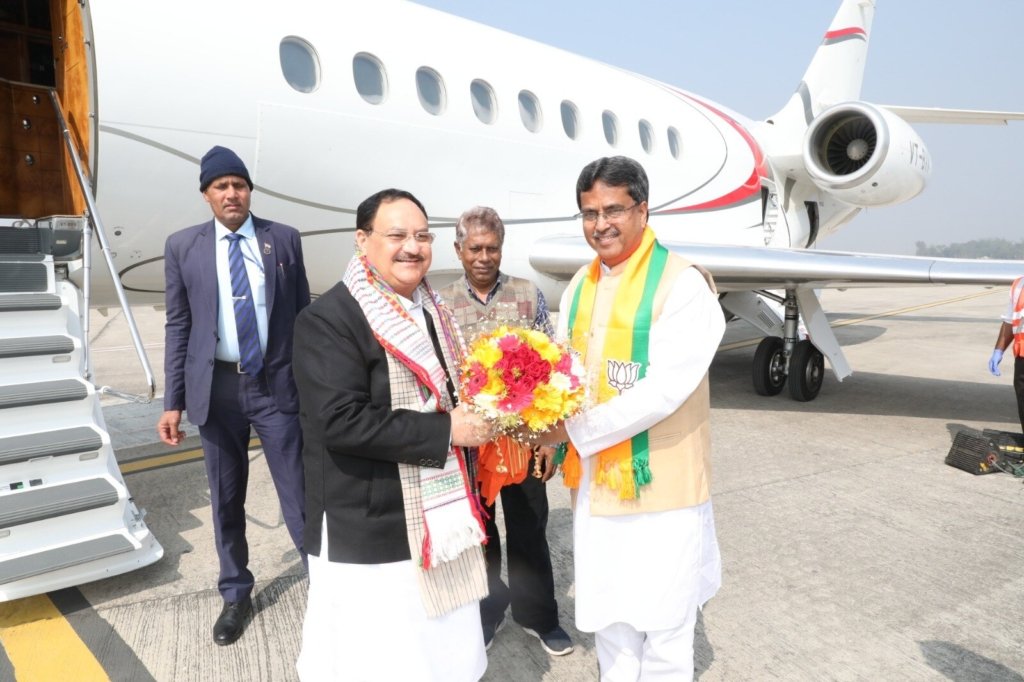
Medical tourism is a growing revenue opportunity for India; medical charters are a prerequisite for unlocking its domestic dimension.
The sector that is being taxed at 40% on imports is the same sector that can deliver on connectivity promises that ₹4,500 crore of UDAN funding has only partially fulfilled.
The public perception burden on business aviation — the luxury tag is real, but it is not immovable. It shifts when the conversation shifts from who owns these aircraft to what they do. A business aviation ecosystem that is financially viable generates employment across the sector, it retains foreign exchange that currently flows out, and it serves unconnected India in ways that scheduled airlines, bound by load factor economics, structurally cannot.
The Fix Within Reach

If the headline rate cannot be reduced in a single budget cycle, the reform with the highest immediate impact is simpler and entirely within reach: eliminate the differential. Bring the NSOP and private category import treatment to parity.
That single decision removes the incentive behind pseudo-NSOPs, restores the conditions under which genuine operators can price competitively, reduces the DGCA’s supervisory burden, and closes the gap that has been routing Indian aircraft registrations to Dubai for the better part of two decades.
The foreign exchange outflow is real. The tax collection on those transactions is limited. A 40% rate applied to an import that is being structured out of India’s tax net is not a revenue policy. It works against its own objective.
Bring that rate to 12 % or 18% on private category imports, and the arithmetic changes materially. More aircraft will be registered in India. More MRO work stays in India. More pilot training happens in India. The Civil Aviation Minister has himself noted that India can save up to $15 billion in foreign exchange by becoming an MRO hub. The business aviation sector is a direct contributor to that opportunity, if it is given a tax environment in which staying in India makes economic sense.
Business aviation in India has long crossed the threshold at which it can be honestly classified alongside sin goods. It is infrastructure for a dispersed economy — for medical access, for unserved routes, for corporate mobility in a country where tier-2 and tier-3 connectivity is still thin.
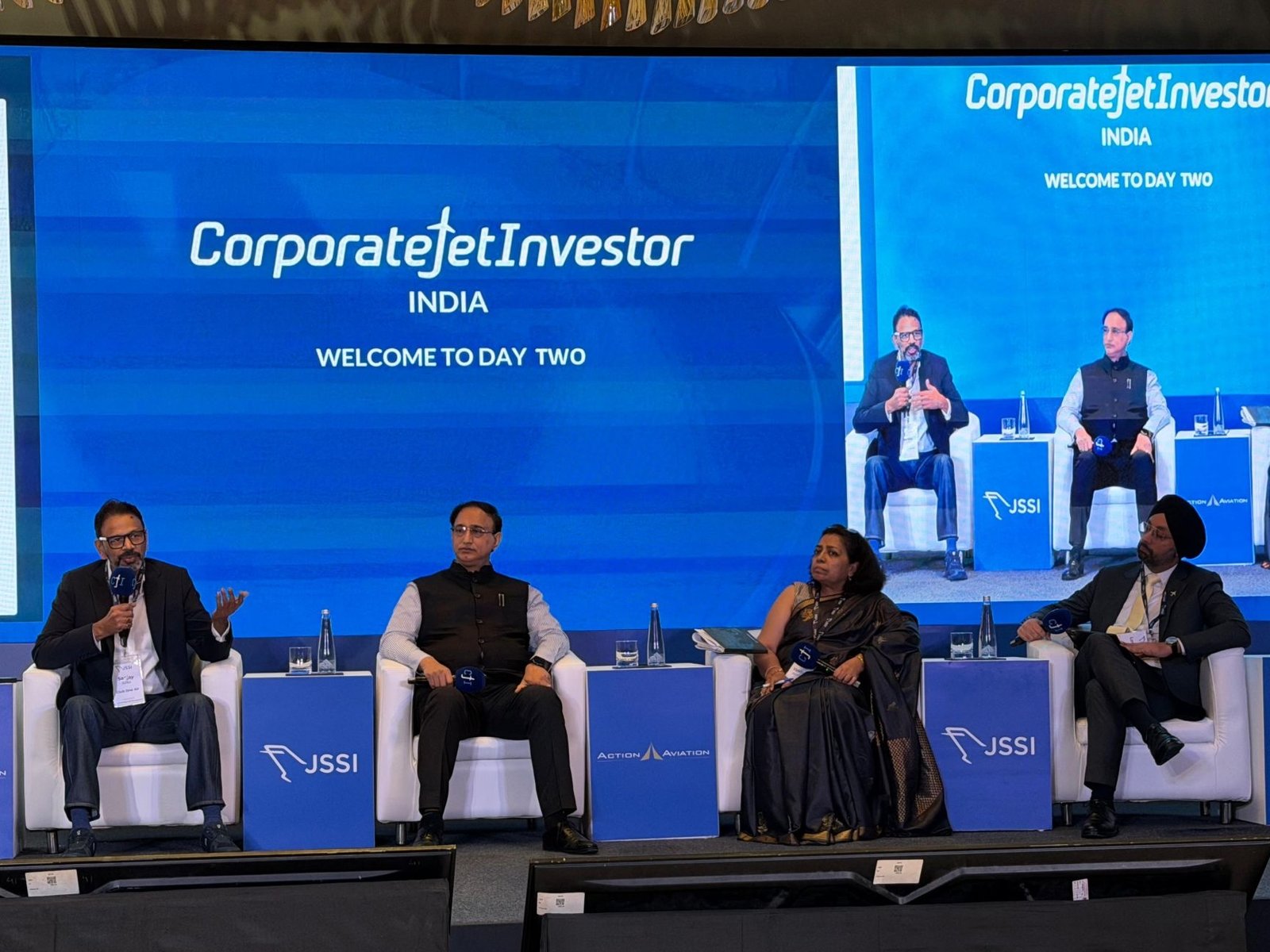
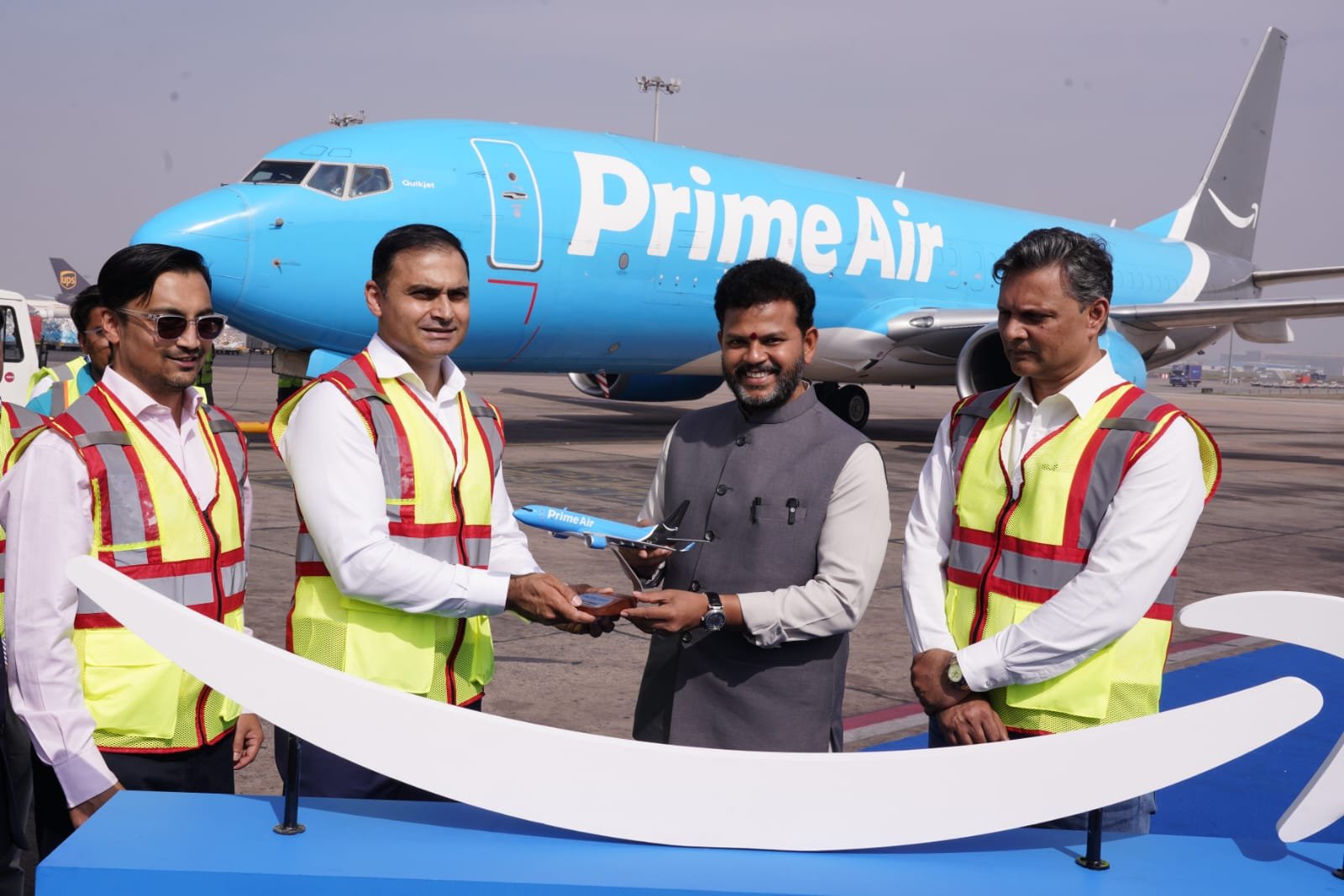
Photo: LinkedIn/ @Pavi Julka Kalsi
The industry knows what it needs to do. The regulator made it clear that it is listening. The committee exists. The case is already built. What is required now is what the MRO sector has already demonstrated is possible: a sustained, evidence-led push that replaces a legacy tax assumption with a deliberate policy choice.
Business aviation in India is not a luxury category. The tax code has not caught up with that fact. It needs to.
* The author attended the Tax Liberation session at the Corporate Jet Investor 2026 conference in Delhi.
Also Read: Rules, Runways and the Road to Reform