















- Key design reviews completed
- Earliest ever durability testing for new technology development
- Mid-decade hybrid electric ground tests meet program commitments
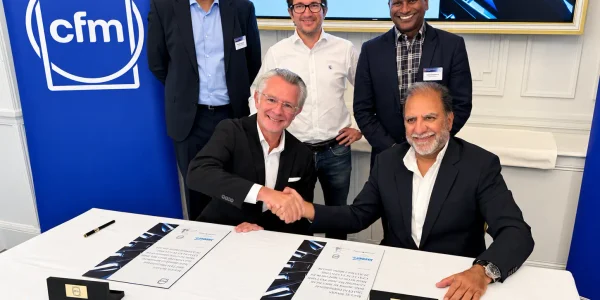
CFM International announced today ahead of Farnborough International Airshow new design and test milestones reached for the RISE program, a suite of technologies in development for next-generation aircraft propulsion.
In the five years since CFM unveiled the RISE program, approximately 500 test campaigns have been conducted on advanced engine architectures like Open Fan, compact core, and hybrid electric systems. Recently completed reviews for key Open Fan and compact core modules have confirmed design concepts.
Technologies are being matured toward ground and flight tests this decade.
Gaël Méheust, CFM International President & CEO, said: “Our engineers are doing a fantastic job maturing the most advanced technologies the industry has seen to date while balancing this innovation with the experience of more than 1.4 billion engine flight hours. As CFM, we have a unique understanding of our customers’ day-to-day operations and the important role that durability and maintainability play, in addition to efficiency. All of those learnings are at the core of everything we are doing with the RISE program.”
Advanced Open Fan testing
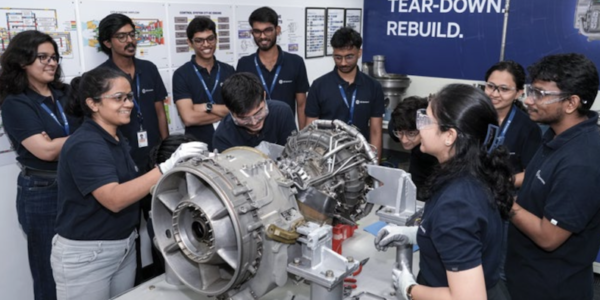
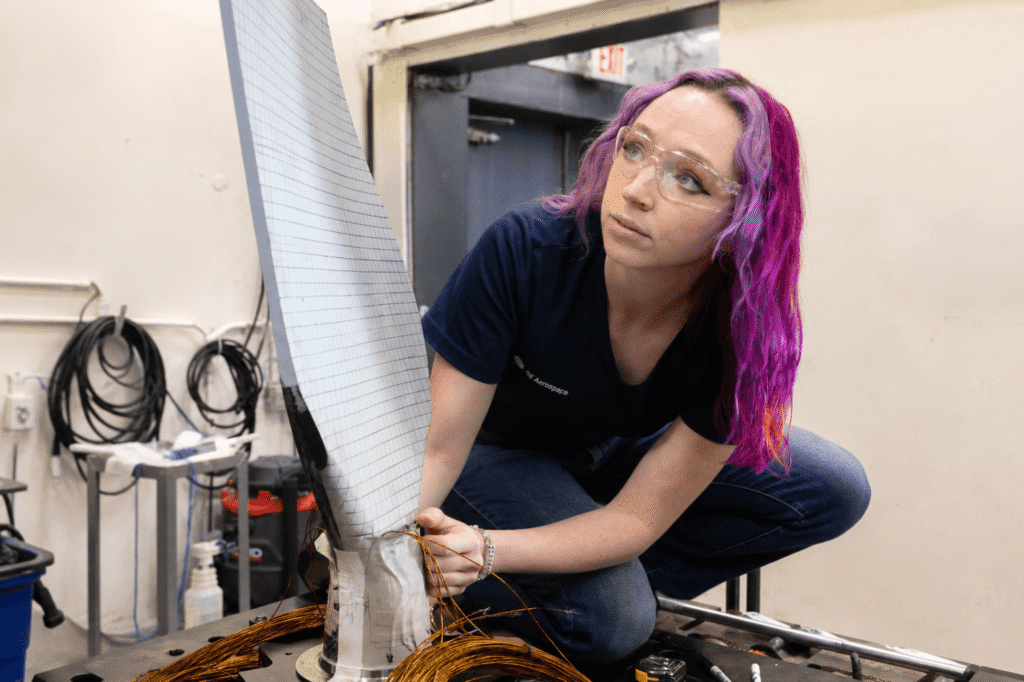
Mechanical and material tests are underway on Open Fan blades and Outlet Guide Vanes (OGVs), including impact, ingestion, fatigue, endurance, load, icing and vibration response. First results from test campaigns including wind tunnel facilities have demonstrated that aeroacoustics performance has exceeded technology maturation objectives.
Open Fan is a jet engine design that removes the traditional casing, allowing for a larger fan size with less drag to improve durability and fuel efficiency. OGVs are the second stage or row of airfoils behind the fan to help direct air flow, key to how the Open Fan design can achieve the same speeds and altitudes as turbofan engines flying today.
With Preliminary Design Reviews of the Open Fan and OGV airfoils complete, CFM is leveraging both composite turbofan blade technology experience and turboprop expertise in blade retention, variable pitch, and durable propeller structures. Unique supercomputing capabilities are optimizing designs for acoustics and aerodynamics.
Arjan Hegeman, GE Aerospace Vice President of Future of Flight Engineering, said: “While Open Fan is a new architecture, the technologies inside have been proven over decades of innovation. We’re testing real, full-size Open Fan hardware, showing real progress and a renewed ambition from CFM to advance the RISE program and deliver the vital technology step-changes for durability and efficiency to power the future of air travel.”
The first high-speed low-pressure turbine, part of the fan system, was also recently tested for more than 1,000 hours. Teams validated the LPT’s aerodynamic design as well as its aerothermal performance.
Dust ingestion tests underway
Open Fan architecture has inherent durability advantages compared to a next-generation conventional engine design, including advanced cooling systems and adaptive cycle technology for more effective particle extraction. Durability testing is being conducted earlier than ever in new technology development to improve hardware designs, which is important for customer operations. Teams also completed the compact core systems Preliminary Design Review.
More than 2,000 cycles of dust ingestion tests have been completed to evaluate next-generation high-pressure turbine (HPT) airfoil technologies in an engine core. A second dust ingestion test of RISE program HPT technologies inserted in a more product-representative LEAP-1B engine is also improving understanding of how next-generation technologies could benefit the fleet today.
Hybrid electric ground tests
Both CFM parent companies are actively ground testing hybrid electric systems through the RISE program.
Safran Aircraft Engines launched PHILEAS, a ground testing campaign at its Istres site in France. PHILEAS is a full-scale engine demonstrator equipped with two electric machines designed for the next generation of short- and medium-range aircraft engines.
GE Aerospace completed two hybrid electric engine ground tests within the last year, demonstrating the feasibility of more electric aviation with and without energy storage.
Pierre Cottenceau, Safran Aircraft Engines Engineering and R&T EVP, said: “The RISE program is gaining strong momentum, moving from concept to reality. More than 2,000 CFM engineers are advancing the technologies that will enable the next generation of propulsion. We are validating every key building block for Open Fan, supported by extensive testing capabilities. As we prepare to test a full-scale front module of the Open Fan in our new 8-meter test cell at Villaroche, we are building on decades of expertise, including for composite fan blades, to shape the future of aviation.”

Aviation Jeta is an aviation news platform covering airlines, airports, aircraft, and global aviation developments. We publish accurate, well-researched, and detailed aviation news and industry insights from around the world.