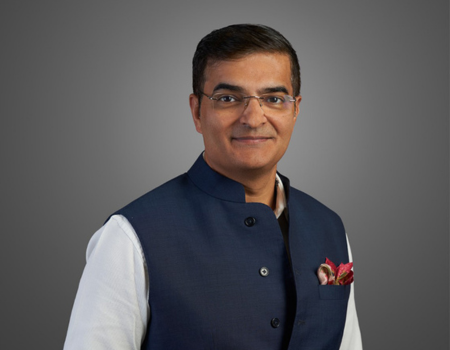









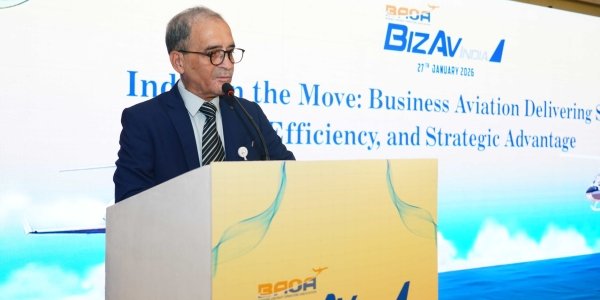







India has emerged as the world’s largest civil aircraft-ordering market, yet its participation in the global aerospace supply chain remains below 1%. Bridging this gap will require more than demand—it will require certification capability, quality discipline, access to raw materials, skills, and a long-term national roadmap. In this interview, Dr. Srinivasan Dwarakanath, Director General of the Aerospace India Association, explains why a commercial aerospace-focused industry body was formed, the five priority areas it is addressing, and how India can align policy, industry, and skills to build a globally competitive aerospace ecosystem.
What led to the formation of the Aerospace India Association, and why was there a need for a new industry body in India?
The Aerospace India Association was formed to address a clear gap in India’s aerospace ecosystem, particularly on the commercial manufacturing and supply-chain side.
While India has long had organisations representing defence manufacturing, space, and broader industry interests, there was no dedicated body focused on aerospace, similar to associations such as GIFAS in France, ADS in the UK, or BDLI in Germany.
Over the years, India has seen strong aviation growth cycles. A major surge began around 2005, when carriers such as Air Deccan, Kingfisher, Jet Airways, and Air India placed large aircraft orders. More recently, in 2023, India emerged as the largest civil aircraft-ordering country globally, bringing renewed attention to the aerospace supply chain.
Despite this demand, India’s participation in the global aerospace product design and manufacturing supply chain—estimated at USD 200 billion annually—remains below 1 per cent, or roughly USD 2 billion. The question before us was how India could meaningfully scale this participation, increase exports, and move up the value chain.
Several Indian suppliers approached us with exactly this concern: how to accelerate growth beyond incremental gains. That led to the idea of creating a focused association that could work closely with industry,government and academia to build a long-term roadmap for commercial aerospace manufacturing in India.
What are the vision and core objectives of the Association?
The vision of the Aerospace India Association is to support the development of sustainable aerospace programmes in India.
Our mission rests on two pillars.
The first is to create a robust ecosystem for aerospace design and manufacturing including raw materials, with maximum value add in India
The second is to become global leaders in aerospace product design and manufacturing by driving quality across the aerospace supply chain in India
We began with strong backing from a small group of founding members who committed long-term support. Their expectation was clear: work closely with policymakers, help define priorities, and contribute to a credible national roadmap.
How has engagement with the government shaped the Association’s work so far?
Government engagement has been critical from the outset. We made detailed representations to the Ministry of Civil Aviation and Prime Minister’s Office (PMO) highlighting structural gaps and opportunities in aircraft component manufacturing.
Some of these inputs subsequently appeared in the Prime Minister’s election manifesto, particularly around strengthening aerospace manufacturing. There was a direction from the PMO to the Ministry of Civil Aviation (MoCA) to actively pursue aircraft component manufacturing, which gave further momentum to our efforts.
Since then, we have worked closely with MoCA, maintaining a continuous dialogue. When parliamentary questions arise on aerospace manufacturing, we are often consulted directly. A key differentiator for us is speed and depth of response—our leadership team brings decades of hands-on aerospace experience, allowing us to provide informed inputs across the table.
You have spoken about a surge in global aerospace activity. What is driving this, and how does it affect India?
There are three major global drivers.
First, post-COVID workforce disruption. Many aerospace manufacturers reduced manpower during the pandemic. As demand returned, they struggled to re-hire experienced personnel, affecting both quality and delivery schedules.
Second, production backlogs. Aircraft deliveries today are still closer to 2015 levels rather than pre-COVID 2018 levels, even as passenger demand has grown sharply. This creates intense pressure on OEMs to ramp up production.
Third, geopolitical factors. Rising defence budgets in Europe and North America are shifting to Tier-1 and Tier-2 supplier capacity towards military programmes, which offer higher margins and localisation requirements. This has squeezed the capacity available for commercial aviation.
Together, these trends are pushing OEMs to diversify supply chains and explore new geographies. While several countries are competing for this opportunity, India has the scale, engineering talent, and long-term market growth to capture a significant share—provided there is a clear roadmap. This window will not remain open indefinitely, hence the need to plan and execute with urgency.
What are the key focus areas the Association is working on?
We have structured our work around five priority areas.
First, design and certification. Nearly 90 per cent of Indian aerospace firms operate on a build-to-print basis. Moving to design-and-build requires stronger civil aviation certification capabilities. We are working with the Directorate General of Civil Aviation (DGCA) and industry members to help shape this ecosystem.
Second is raw materials. Around 98 per cent of aerospace-grade materials—aluminium, titanium, high-grade steel, composites—are imported. Companies such as Hindalco already possess relevant technology overseas for aluminium. The challenge is enabling domestic production with a viable export model.
Third is quality across the supply chain. OEMs such as Airbus and Boeing have consistently highlighted the importance of driving quality across supply chain. Global initiatives like Aero Excellence from Airbus and the Platinum standard from Collins Aerospace provide structured frameworks, and our role is to help Indian suppliers adopt them effectively.
Fourth is common infrastructure. Most aerospace firms in India are MSMEs and cannot individually invest in testing, surface treatment, or certification facilities. We are working with state governments to develop shared facilities across key aerospace corridors.
Fifth is skills. Aerospace requires not only shop-floor skills but strong white-collar and leadership capabilities. Bridging the gap between engineering and manufacturing, and building the right mindset, is a key focus.
How do you plan to address skills and quality?
On skills, we have strong internal leadership with experience in national skilling frameworks. We are working closely with global OEMs and Tier-1 suppliers to ensure relevance across blue-collar, white-collar, and executive levels. The challenge is not intent, but execution—and that is where our focus lies.
On quality, standards alone are not enough. Quality has to become a practice. OEM-driven frameworks such as Aero Excellence and Platinum standard already exist, and our role is to help Indian suppliers adopt these collectively, reducing duplication and accelerating global acceptance.
This is where a dedicated commercial aerospace association can add value.
Will the Association collaborate with other industry bodies?
Yes. We are already engaging with FICCI, CII, SIATI, the Aerospace and Aviation Skill Council, Gati Shakti Vishwa Vidyalaya (GSV) and other relevant bodies wherever collaboration makes sense. We also work with the MRO Association of India. AIA acts in a complementary capacity to other bodies, viz., FICCI, CII, SIATI, etc.
The global civil aerospace supply chain is worth approximately USD 200 billion. Countries such as China, Brazil, Canada, France, Germany, and the UK each hold close to 10 per cent of the market. India can realistically aspire to similar levels over time.
How are state governments and regional aerospace clusters part of this effort?
We are engaging with multiple states in parallel. We already work closely with southern states such as Karnataka, Andhra Pradesh, Telangana, and Tamil Nadu, and have had discussions with Gujarat and others.
Our immediate priority is shaping a national aerospace roadmap so that opportunities are prioritised and aligned with policy. At the same time, we are actively exposing Indian suppliers to global OEMs and Tier-1 companies using our international networks.
What is the current membership and expansion plan?
We currently have around 25 member companies. In the initial phase, we focused on building a like-minded core group. With governance and priorities now established, we are open to expansion.
A membership base of around 150 companies would provide a strong and representative foundation.
Looking ahead, what is your long-term outlook for India’s aerospace manufacturing ambitions?
India will remain the fastest-growing aviation market for at least the next 20 years—and growth will continue well beyond that. In two decades, India may reach where China is today and then continue expanding further.
That is why our planning horizon extends to 2047 and beyond, while still identifying near-term opportunities. Having an aircraft programme anchored in the country—through partnerships if necessary—is critical, as global suppliers will not transfer their most valuable capabilities without a strong top-down anchor.
If policy, ecosystem collaboration, and execution discipline align, India’s aerospace transformation over the next four decades could be truly significant.
Also Read: Building a Global, Design-Led Capability from India