











Singapore’s UTM Push Draws Attention to India’s Drone Traffic Framework

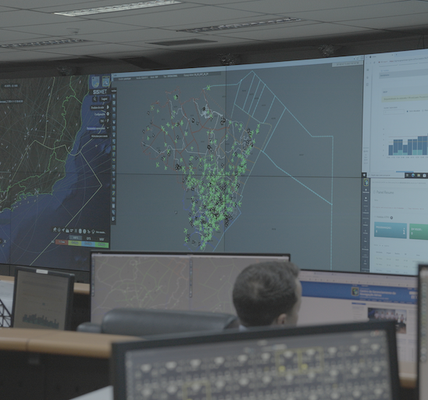
- Singapore’s Thales-led UTM platform will bring drone approvals, flight planning and live monitoring into an integrated national traffic-management portal.
- Norway’s nationwide UTM deployment shows how unmanned traffic management is being linked with wider airspace systems and future Advanced Air Mobility operations.
- India’s multi-provider UTM framework will depend on interoperability, DigitalSky synchronisation and coordination across shared low-altitude corridors.

Photo: Thales
Inspection flights around ports, offshore facilities, utilities and industrial corridors are beginning to place far greater coordination demands on low-altitude airspace Multiple drone operators may now be active inside the same airspace under separate permissions, temporary restrictions and different geofencing conditions, particularly around logistics corridors, infrastructure activity and surveillance operations.
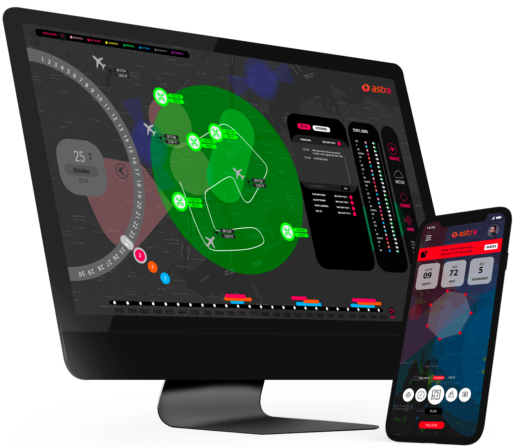
The Civil Aviation Authority of Singapore (CAAS) has awarded Thales, leading a consortium with Singapore-based technology company Deeeplabs, a contract to deliver a national Unmanned Aircraft Systems Traffic Management (UTM) platform based on TopSky-AstraUTM. CAAS described the programme as an integrated portal for approval and tracking of unmanned aircraft operations across Singapore.
The platform integrates operator and drone registration, digital flight planning, authorisation workflows, and real-time monitoring through a unified approval and traffic management platform.
CAAS also linked the deployment to faster approval processing and improved situational awareness as unmanned aircraft activity increases across Singapore’s airspace.
Deeeplabs will support deployment and operational services for the programme, bringing local digital and cloud capabilities into the project.
Thales said the system would support sectors including logistics, infrastructure inspection, maritime operations, emergency response and urban mobility.
TopSky-AstraUTM entered Thales’ portfolio following the company’s integration of AstraUTM in 2024.
The platform is structured around traffic coordination, digital authorisation, flight monitoring and conformance management for unmanned aircraft activity operating at scale.
Norway provides a clearer indication of how these systems are beginning to connect with broader airspace management functions.
Avinor selected Thales for a nationwide Unmanned Traffic Management system incorporating U-space functions along with Common Information Service (CIS) and U-space Service Provider (USSP) capabilities under European U-space regulation.
The deployment covers automated compliance monitoring, authorisation management, continuous surveillance and conflict-resolution functions across airport, metropolitan, suburban and regional environments.
U-space is Europe’s framework for highly automated unmanned traffic services supporting large-scale drone operations, including Beyond Visual Line of Sight (BVLOS) activity and future Advanced Air Mobility operations inside shared airspace.
Both programmes place unmanned traffic management closer to wider aviation infrastructure than earlier drone-permission systems. Registration, approvals, surveillance, route conformance and traffic coordination are being organised through continuously monitored traffic-management systems rather than isolated flight clearances.
India’s Multi-Provider UTM Structure Raises Coordination Questions
India’s National UAS Traffic Management Policy Framework already outlines a more distributed structure than the centrally managed systems being developed in Singapore or Norway.
The framework defines Very Low Level airspace up to 1,000 ft above ground level as UTM airspace and envisages multiple public and private UTM Service Providers operating through a DigitalSky-linked ecosystem. DigitalSky functions as the central regulatory and data-exchange platform covering registration, permissions, airspace information and integration between stakeholders.
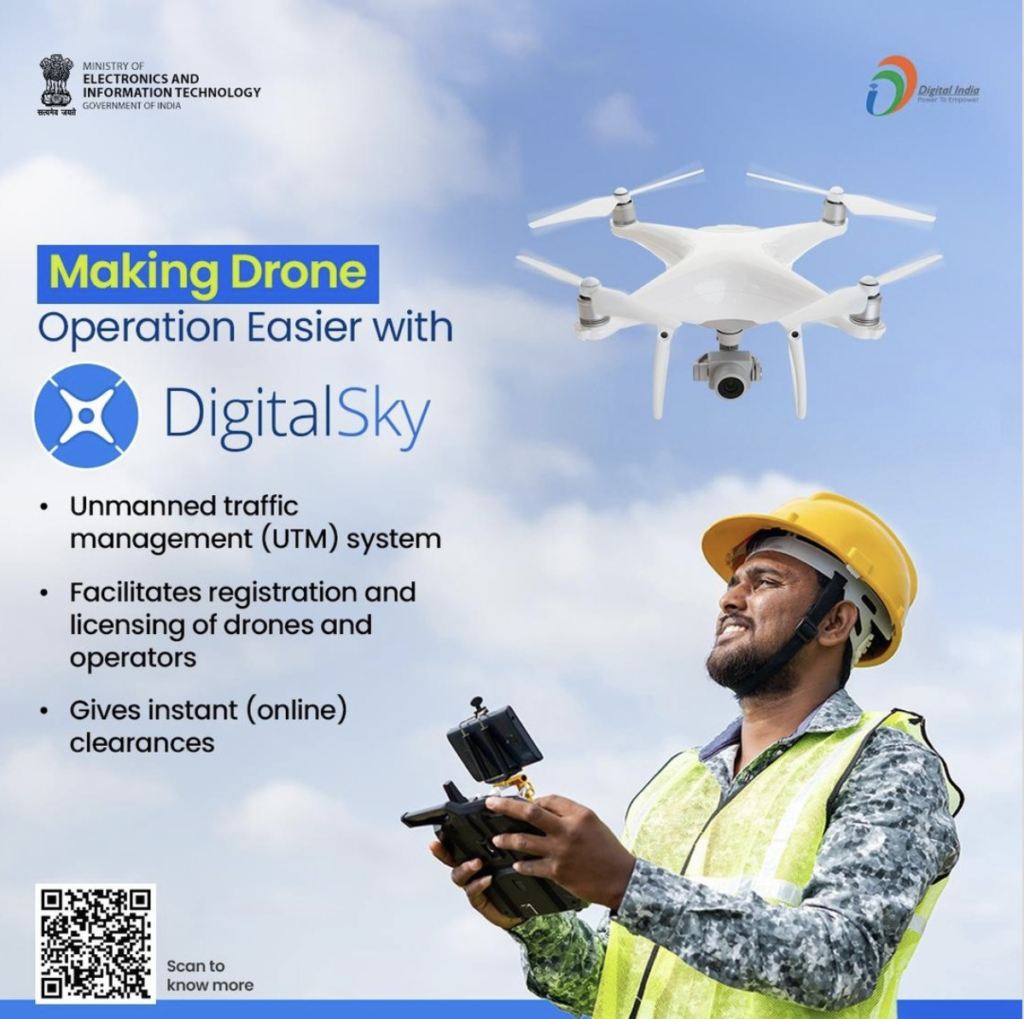
Under the framework, UTM Service Providers are expected to synchronise continuously through common interoperability standards while supporting different operational regions or categories of activity.
The framework also anticipates phased implementation through trials, integration exercises and progressive scaling of operations.
The structure relies heavily on synchronisation between providers once traffic density begins increasing across logistics corridors, inspection networks, surveillance activity and public-service operations.
Questions around traffic visibility, handovers between providers, temporary restrictions, route conflicts, geofence consistency and live coordination with conventional airspace systems become more complex once multiple UTM environments begin operating simultaneously.
Similar conditions are already visible in overseas deployments.
Norway’s structure places strong emphasis on automated compliance monitoring, common traffic visibility and integration between unmanned traffic services and wider aviation systems. Singapore’s deployment combines registration, authorisation and monitoring through a unified operational layer intended to support denser unmanned activity across the country.
India’s framework already contains many of the structural elements required for such an environment through DigitalSky, interoperability requirements and phased UTM onboarding.
The larger coordination challenge is likely to emerge once Beyond Visual Line of Sight operations, infrastructure inspections, logistics flights and public-service missions begin operating simultaneously across the same low-altitude corridors under multiple providers and jurisdictions.
Also Read: India’s Vertiport Question: Building the Foundations for Advanced Air Mobility