














SITA Integrates Google Find Hub Into WorldTracer for Baggage Recovery


Passengers sharing their bag location through personal devices is becoming a key part of airline baggage recovery. As more travellers choose to share their bag’s location when it is delayed, airlines can use that information inside their baggage systems to resolve cases faster and reduce permanent loss. To support this shift, SITA has integrated Google’s Find Hub share item location feature into WorldTracer®, the global system airlines use to find and reconcile delayed and mishandled baggage.
When a passenger chooses to share their bag’s location, airline teams can view that information directly within WorldTracer® to support recovery. This changes how airlines approach a delayed bag by adding an additional source of location information to support resolving the delay. Traditionally, recovery relied on airport scans and airline-to-airline data exchanges. Passenger-authorised location sharing adds an additional source of visibility, helping teams narrow search areas and prioritise cases when a bag does not arrive as expected.
The process remains fully controlled by the passenger. If a bag is delayed, the traveler can generate a secure link in Find Hub and provide it to the airline. Sharing can be stopped at any time. Links expire automatically. Location data is encrypted, and only the passenger decides who can access it and for how long.
“Airlines are operating in an environment where passengers expect visibility of their baggage at every step of the journey,” said Nicole Hogg, Portfolio Director, Baggage at SITA. “When a bag is delayed, uncertainty increases compensation costs, customer service pressure, and reputational risk. What we are seeing is a move from manual tracing to clearer, data-supported recovery. When passengers choose to share their bag’s location, airlines gain insight at the moment it matters most. This reflects how baggage recovery is becoming more transparent, more collaborative, and more precise.”
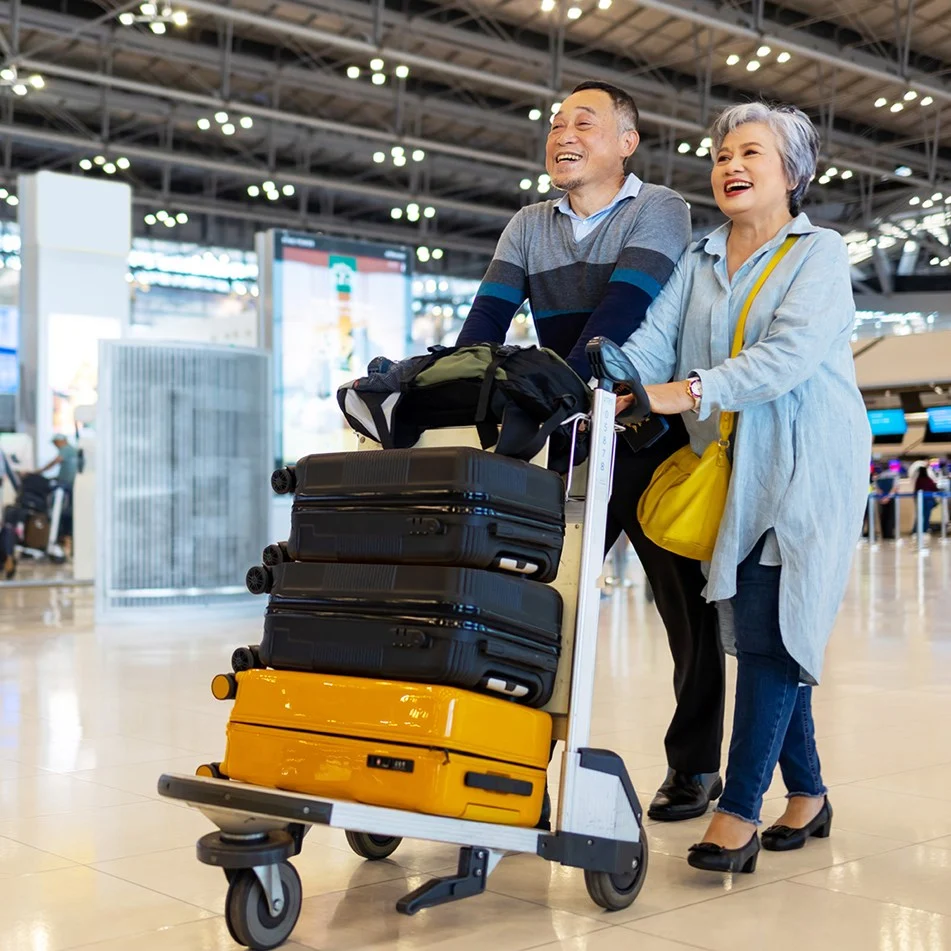
With this integration, passenger-authorised location sharing from the world’s most widely used mobile platforms can now be incorporated into WorldTracer®.
The news also reflects a broader industry move toward more open and secure data sharing across the travel ecosystem.
As airports, airlines, and technology providers work more closely together, trusted data exchange is becoming central to improving operational performance and passenger experience.
Over the past two decades, mishandling rates have fallen by 67% even as passenger volumes have more than doubled, according to the SITA 2025 Baggage IT Insights report.
This reflects steady industry progress driven by smarter systems and better data use. As travel volumes continue to rise, adding passenger-authorised location data into airline systems reflects a broader move toward clearer, more informed baggage recovery processes that benefit both airlines and passengers.
WorldTracer® is used by more than 500 airlines and ground handlers across approximately 2,800 airports worldwide. By enabling secure location sharing from major consumer ecosystems, WorldTracer® supports a more connected and transparent approach to baggage recovery at global scale.
Also Read: Asia-Pacific Sets Global Benchmark In Baggage Handling As Air Travel Hits Records