


















- The introduction of DigiYatra and the growing use of Common Use Self Service Kiosks and Self Service Bag Drop services have dramatically improved the passenger experience at Indian airports.
Indian airports are a key enabler for the rapid growth in air travel and are increasingly opting for the digitalisation of airport services to cater for a smoother passenger experience on the ground. This is a challenging endeavour, with India’s large population increasingly taking to the air; as per information provided by the Directorate General of Civil Aviation (DGCA), during January – August 2024, India’s domestic airlines carried 1054.66 lakh passengers as compared to 1006.16 lakh passengers during the corresponding period of the previous year thereby registering an annual growth of 4.82 per cent and monthly growth of 5.70 per cent. This rapidly growing influx of passengers moving through Indian airports puts special demands on airport operators to ensure their smooth flow, ensuring there is no disruption to the schedule of airline operators.
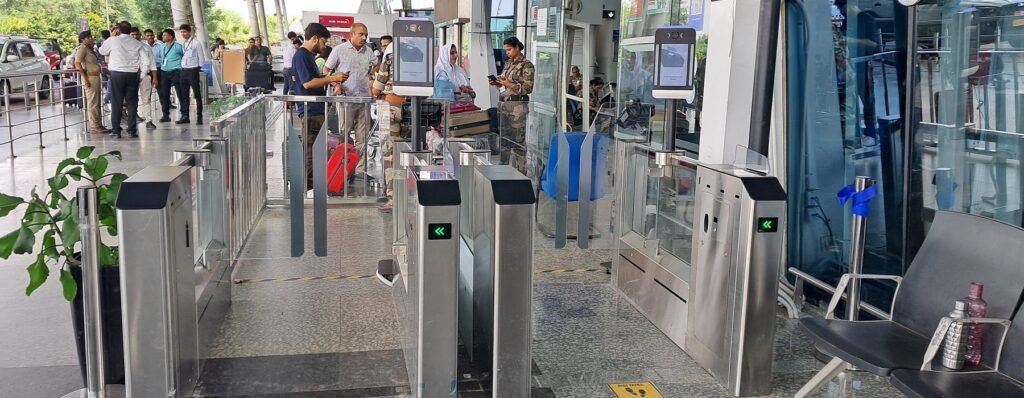
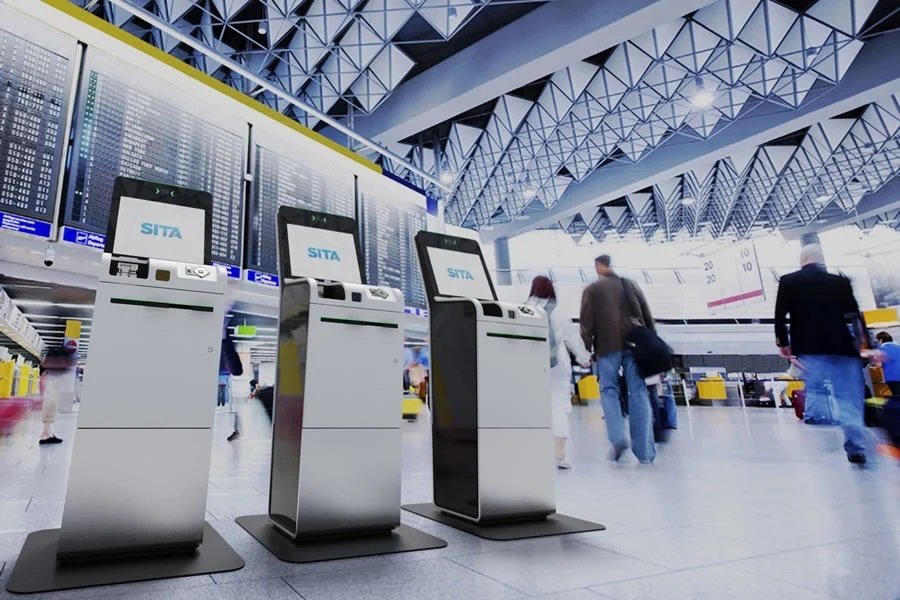
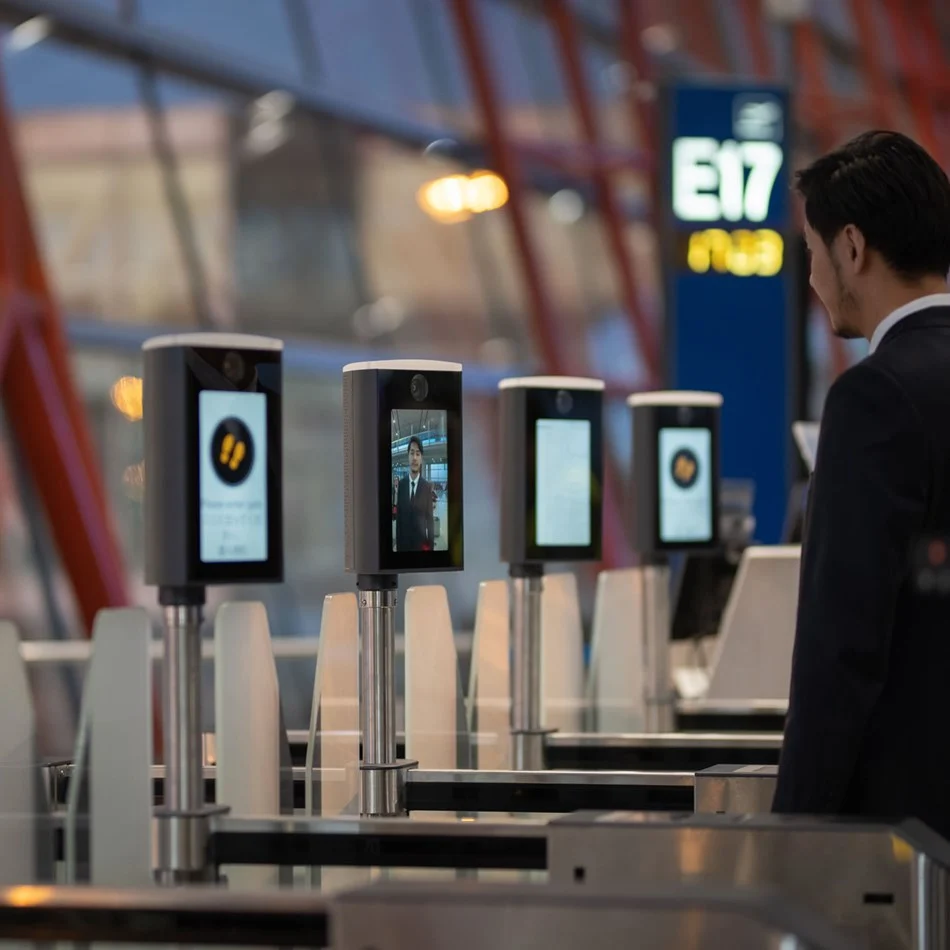
Two key changes are in evidence, both enabled by the Ministry of Civil Aviation (MoCA). The first is the greater use of Common Use Self Service (CUSS) kiosks, and the second has been the successful ‘DigiYatra’ initiative. DigiYatra is now being introduced in more and more airports, signifying the growing adoption of passenger self-service technologies across Indian airports. CUSS kiosks are making ‘low-touch’ passenger processing possible at airports and quickening up the throughput of passengers flowing through the airport system. This is evidenced in the increasing use of Common Use Terminal Equipment (CUTE), Self-Bag drop, and E-Gates/Boarding Gates at Indian airports. With many Indian airports yet to introduce Digi Yatra, self-service terminals are increasing airport efficiency by reducing manual intervention. Some of these initiatives have also resulted in traditional check-in desks being bypassed, further reducing wait times.
The Airports Authority of India (AAI) is using SITA’s state-of-the-art products and solutions, including SITA Smart Path, Passenger Flow Management (PFM) solution, and Face Pods. These technologies offer biometric solutions at most touchpoints across the airport. The increased demand for CUSS kiosks has benefited companies such as SITA Aero. In July, an article in the Financial Express reported that SITA Aero had installed nearly 600 CUSS kiosks in India in 2023. India is also emerging as an export hub for the company, which has manufactured and exported CUSS kiosks to Sri Lanka and Vietnam, with plans to expand to Indonesia and Vietnam.
Early Adopter
Earlier this year, in June, Delhi Airport became the first in India to introduce a Quick Drop Solution for Self Service Bag Drop (SSBD). It was the only second airport in the world, after Toronto, Canada, to have introduced the Self Service Bag drop facility. We are thrilled to introduce the Self Service Bag Drop Quick Drop Solution at Delhi Airport, setting a new standard for passenger convenience and efficiency in India. This initiative underscores our commitment to leveraging advanced technology to enhance the travel experience. The Quick Drop Solution not only speeds up the baggage drop process but also ensures a smoother, more enjoyable journey for our passengers. We are proud to be pioneers in this space and look forward to continuing to innovate in ways that benefit travellers,” said CEO-DIAL, Mr Videh Kumar Jaipuriar,
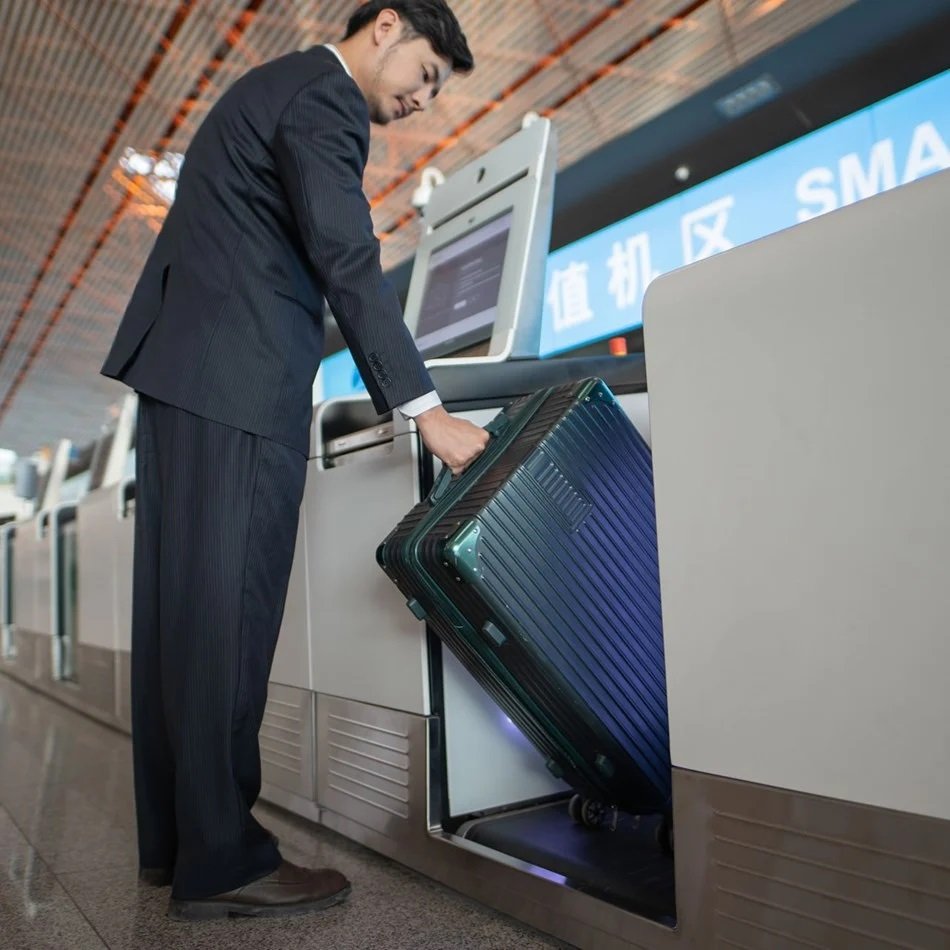
Approximately 50 Self Service Bag Drop units are now operational across Delhi Airport’s Terminal 1 and Terminal 3, which have made the baggage drop process more efficient and significantly reduced wait time. The Quick Drop Solution is currently available with only three Indian carriers, Air India, IndiGo and Air India Express. As compared to the conventional SSBD service, Delhi Airport’s Quick Drop Solution only has a one-step process with no need for validation of the boarding pass or biometrics, as these details are already available on the baggage tag. This reduces the processing time from about a minute to 30 seconds. In comparison, when using conventional SSBD units enable travellers to print their boarding passes and baggage tags at CUSS kiosks, but upon reaching the SSBD unit, passengers have to scan their boarding passes or face through biometric cameras and proceed to drop their bags on the conveyor belt, with the entire process taking around a minute.
Digi Yatra
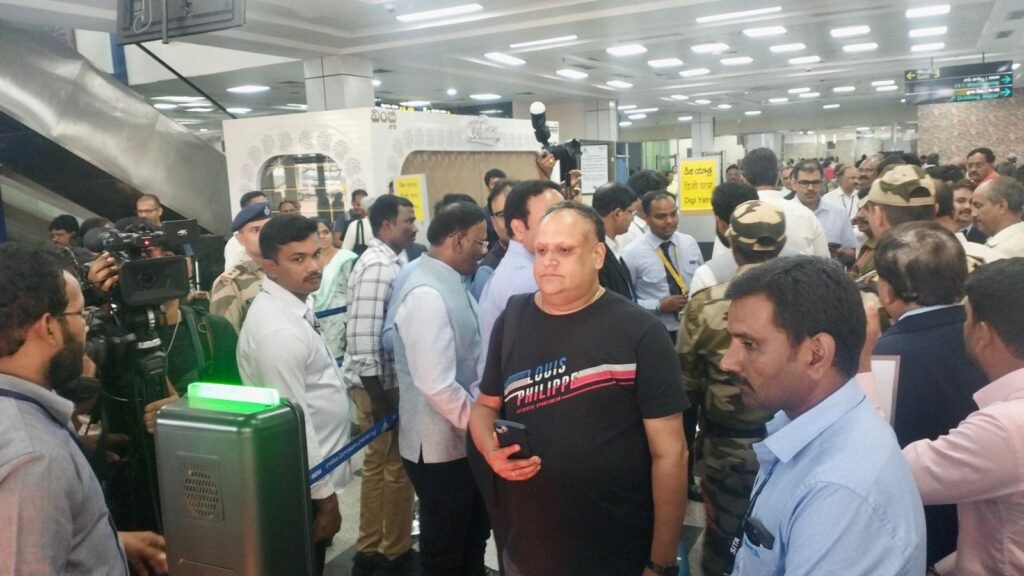
Digi Yatra was recently launched at Visakhapatnam International Airport and virtually launched for eight other Airport Authority of India (AAI) airports by Union Minister for Civil Aviation Kinjarapu Rammohan Naidu in September. The eight other AAI airports are Coimbatore, Dabolim, Indore, Bagdogra, Ranchi, Patna, Raipur, and Bhubaneshwar airports.
These new airports join six other airports which implemented DigiYatra in the month of August, namely Mumbai, Ahmedabad, Kochi, Lucknow, Jaipur, and Guwahati airports, in addition to the other airports that have adopted DigiYatra. The Digi Yatra facility was first launched at three airports, New Delhi, Varanasi, and Bengaluru, on December 1, 2022. The total number of DigiYatra-enabled airports now stands at 24. In 2023, over 20 million users experienced DigiYatra, and with its upcoming availability at 28 Indian airports, DigiYatra will cover approximately 90 per cent of India’s domestic flying population.
DigiYatra dramatically simplified the cumbersome task of managing multiple documents—boarding passes, ID proofs, and luggage tags—while navigating the airport crowd. It is part of MoCA’s strategy, which aims for Indian airports to have faster passenger processing and a smooth passenger experience at various touchpoints, especially check-in counters and self-service.
According to Naidu, the for airports that have implemented DigiYatra, the average airport entry time for a passenger has now been reduced to five seconds as compared to the average of 15 seconds in the manual process. More than three crore Indian passengers have used Digi Yatra to travel. As per MoCA data for the month of August, Digi Yatra has been used by 34,60,454 passengers. And its Digi Yatra mobile application user base was 1.29 million. The DigiYatra Foundation also plans to align with IATA’s One ID initiative for global interoperability, further improving the seamless travel experience.
Internationally, the introduction of such facial recognition enabled e-boarding systems has shown a 40 per cent reduction in time for both passengers and aircrafts in terms of boarding which tremendously improves ease of travel for passengers and enhances the throughput capabilities for airlines and airports because of the reduced processing time.
Smart Technology
Société Internationale de Télécommunications Aéronautique’s (SITA) transformative, industry-leading contactless boarding pass system, Smart Path, is being used for the DigiYatra initiative in partnership with AAI. SITA’s biometric technology will transform the way travellers navigate through Indian airports. Sumesh Patel, President, APAC, SITA said: “With a focus on delivering Digital Travel, improving airport efficiency, and future-proofing operations with smart, agile solutions, India has a unique opportunity to revolutionise its airports with truly world-class infrastructure. It is vital in this connected era that travel across the globe is as seamless as possible, and we are ready to help India continue to innovate in their digitalisation efforts with SITA technology as the DigiYatra initiative spreads across India.”
“Technology will be the defining factor for the air transport industry going forward. India has been the front-runner in the adoption of advanced technology, which will be essential to address operational challenges to meet this new demand,” Patel had said in an earlier blog post.
To prepare for the impending influx of passengers, Indian airports are transitioning to SITA’s agile cloud-based passenger processing systems. SITA had announced in July 2023 that it had secured a landmark deal with AAI to provide technology to 43 of India’s biggest airports. The deal will see improvements to over 2,700 passenger touchpoints, signifying one of the largest deployments for passenger processing. The rollout of new cloud technology will enable Indian airports to shift to common use passenger experiences where multiple airlines can leverage the same infrastructure, such as check in counters, self-service kiosks, and boarding gates.
The DigiYatra foundation has also worked hard with its technology partners, such as SITA, to ensure the implementation of resilient hardware and software solutions for passenger processing that have allowed partner airports to adapt to fluctuating passenger volumes.
NEC partnered with the Airport Authority of India to implement biometric-based touchless boarding at four airports which are Varanasi, Kolkata, and Vijayawada in collaboration with NEC and Airports Authority of India (AAI), SITA successfully launched India’s first biometric boarding experience with passengers flying with low-cost airline IndiGo out of Varanasi Airport (VNS). “It’s a real game changer, let me tell you. With DigiYatra, we have reduced the timing to less than 50 per cent, maybe 40 per cent. So previously, what used to take 10 seconds now we are taking maybe 4 seconds, and I feel very proud that Varanasi International Airport has become the pioneering airport to start DigiYatra supported by NEC, and we are forging ahead. The data showed that we had covered 56 per cent of the passengers travelling to our airport by DigiYatra,” said Aryama Sanyal, Airport Director (General Manager), Lal Bahadur Shastri International
By deploying NEC’s state-of-the-art Digital ID solution, powered by the NEC I: Delight platform, the Digital ID solution integrated with SITA, passengers can opt-in to use their face to breeze through various touchpoints and streamline processing time by up to 50 per cent. NEC’s face recognition technology has been ranked several times as the world’s most accurate face recognition technology in vendor tests conducted by the US National Institute of Standards and Technology (NIST).
Transformative Initiative
The DigiYatra initiative was first announced by MoCA in August 2018. Since its implementation, it has led to a dramatic increase in the introduction of self-service and biometric-based passenger processing solutions across Indian airports. With Digi Yatra offering contactless and paperless processing at key airport checkpoints, it has also proven environment friendly, helping save thousands of sheets of paper daily across Indian airports, supporting the broader goal of sustainable development in the aviation sector.
The DigiYatra initiative was formally launched by the then Minister of Civil Aviation and Steel, Jyotiraditya Scindia on December 1, 2022, at three airports, New Delhi, Varanasi, and Bengaluru. The first phase rollout of the DigiYatra Central Ecosystem (DYCE), involved several Indian airports, which were selected to implement the new-age, contactless and seamless process. SITA contributed to Digi Yatra’s success with its tech expertise and unique air transport experience. The beta version of the DigiYatra App was successfully rolled out at Bengaluru’s Kempegowda International Airport (BLR Airport) on August 15, 2022. The airport operator, Bangalore International Airport Ltd (BIAL), pioneered the DigiYatra effort from its early concept days, with pilot trials beginning as early as January 2017. BIAL, since then, has partnered with SITA to implement Smart Path at its new Terminal 2 at over 280 touchpoints for a seamless passenger experience
Security at the Core
There have been data security concerns despite the convenience of seamless, contactless, and paperless boarding at airports based on Facial Recognition Technology (FRT). The travellers pass through various checkpoints at airports using paperless and contactless processing that scans their facial features to validate their identity and travel details.
However, the DigiYatra Foundation states that the application is built on a foundation of robust data security. There is no central storage of passengers’ Personally Identifiable Information (PII). All passenger data is encrypted and stored securely in their smartphones. The information is shared only between the passenger and the airport of travel origin whenever the passenger’s DigiYatra ID needs to be validated. This data is only shared temporarily with the traveller’s airport of origin and the data is purged from the airport’s system within 24 hours of the passenger’s departure from the airport.
Future Ready
The increased adoption of CUSS kiosks, Self Service Bag Drop, E-Gates/Boarding Gates and the success of the DigiYatra initiative showcases the positive aspects of digitalisation of airport services. When all these three services will be in widespread use at Indian airports in the coming years, they will dramatically upgrade the travel experience and substantially enhance the passenger throughput through the checkin and boarding process.
The introduction of facial recognition enabled e-boarding systems, are especially important in the Indian context, due to the large volumes of passengers crowing Indian airports. Smooth and efficient airport services will not only help Indian carriers, but further boost the adoption of air travel in India, where the penetration of air travel is well below that of major global economies.
DigiYatra appears to have delivered, something often thought to be impossible to achieve, the approval of all its stakeholders. For the Ministry of Civil Aviation, its aim of making air travel more efficient has been achieved; Indian airports and airlines are happy as biometric boarding systems result in cost savings and greater passenger throughput, passengers have to spend less time in cumbersome checking procedures before their flight, and there are significant environmental savings in dispensing with legacy paper-based aircraft check-in and boarding procedures.