















- India’s fleet has crossed 800 aircraft, but domestic MRO activity remains weighted toward airframes, with engines and major components still handled overseas.
- Recent policy changes have improved the operating environment, but airlines continue to tie deeper localisation to certification depth, standards and predictable turnaround performance.
- Engines account for the largest share of maintenance cost and downtime, while skills remain the longest-lead constraint as India builds capacity beyond airframe checks.
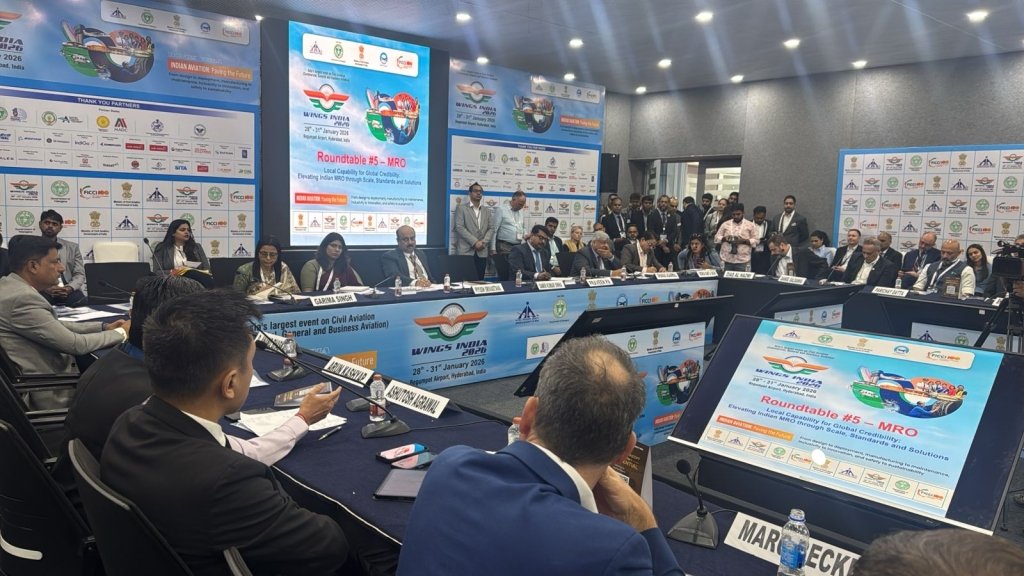
India’s maintenance, repair and overhaul (MRO) sector has been discussed for years as a latent opportunity—promising in scale, attractive in geography, and repeatedly held back by cost structures and regulation. At Wings India 2026, that framing quietly shifted. The roundtable on MRO did not revolve around policy grievances or market potential. Instead, it reflected an industry coming to terms with a more pressing reality: fleet growth has reached a point where execution gaps can no longer be deferred.
India now operates a fleet of more than 800 aircraft, supported by nearly 150 approved MRO service providers, with fleet numbers projected to rise sharply by the end of the decade. Maintenance activity has increased in parallel, particularly in scheduled airframe maintenance. At the same time, the distribution of maintenance work remains uneven across the value chain. Airframe checks account for a visible share of domestic MRO activity, while engines and major components continue to be handled largely outside the country.
Recent policy measures form part of the operating environment. These include rationalised customs duties and GST treatment for MRO services, a uniform five per cent IGST on imported aircraft parts, allowance for full foreign direct investment, long-term airport land leases and the removal of royalty charges. A further examination of royalty-related aspects at PPP airports is under way following industry feedback. These measures have lowered entry barriers, but the extent to which maintenance work is absorbed domestically depends on additional operational factors.
Scale and Scope
Participants broadly acknowledged that scale, long seen as India’s missing ingredient, is now arriving by default. Narrowbody fleets have multiplied, widebody operations are expanding, and airlines are committing to long-term growth. From an MRO perspective, this creates a predictable maintenance pipeline—something global providers look for before investing in infrastructure.
Large operators now conduct a significant volume of scheduled airframe checks within India. This marks a shift from earlier periods when such work was routinely carried out overseas. C-check activity, in particular, has increasingly moved to domestic facilities as capacity and operational familiarity have grown.
Yet scale alone is proving insufficient. Indian MRO activity remains concentrated largely around airframe work, which represents only a fraction of an aircraft’s lifecycle maintenance value. Engines, components, auxiliary power units and nacelles—where costs, complexity and turnaround times are most critical—continue to be sent overseas. Airlines described this as a structural inefficiency rather than a temporary workaround: every overseas shop visit adds cost, downtime and logistical friction, undermining sustainability even as fleets grow.
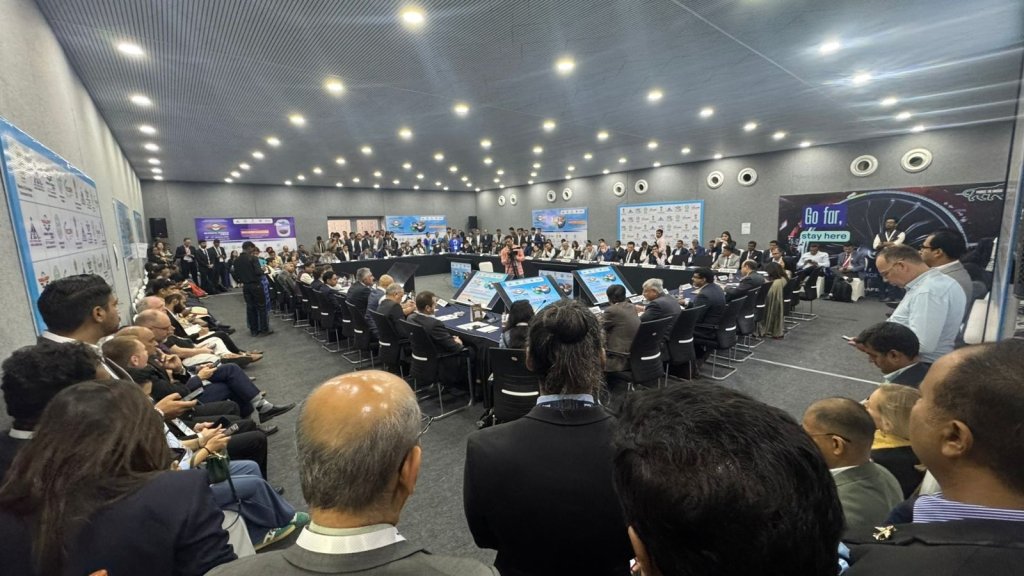
Airline inputs during the session reflected a consistent position. Domestic operators have gradually shifted basic maintenance work to Indian MROs and are willing to expand that reliance further. The hesitation lies not in confidence, but in coverage. As fleets scale, airlines need assurance that engine and component support can be handled locally with predictable turnaround times and globally accepted standards.
There was also a subtle but important shift in tone. Rather than asking for incentives, airlines spoke about commitment—volume guarantees, partnerships and phased localisation—provided capability is built credibly. The message was not that Indian MROs lack potential, but that reliability, certification and consistency must precede scale expansion.
Across the discussion, certification emerged as the central requirement for international acceptance. While India has a growing number of approved MRO entities, only a limited subset holds international certifications that allow them to compete for foreign operators or leased aircraft. Regulatory alignment and recognition were highlighted as being as important as physical infrastructure.
Cost competitiveness, often cited as India’s natural advantage, was treated with greater caution here. Global MRO customers do not prioritise low cost in isolation. Safety, quality, reliability and delivery discipline come first. Cost becomes relevant only once these benchmarks are met consistently. In that sense, the challenge for Indian MROs is less about being cheaper and more about being trusted.
Engines and Skills
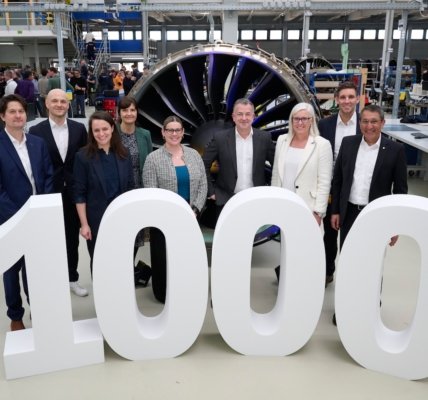
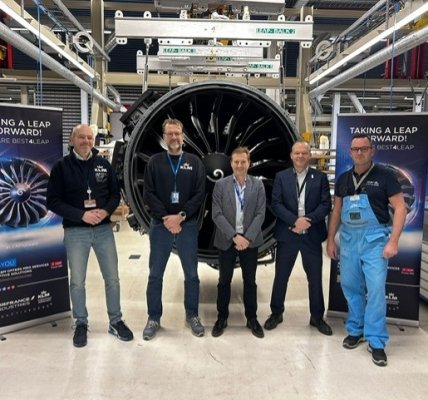
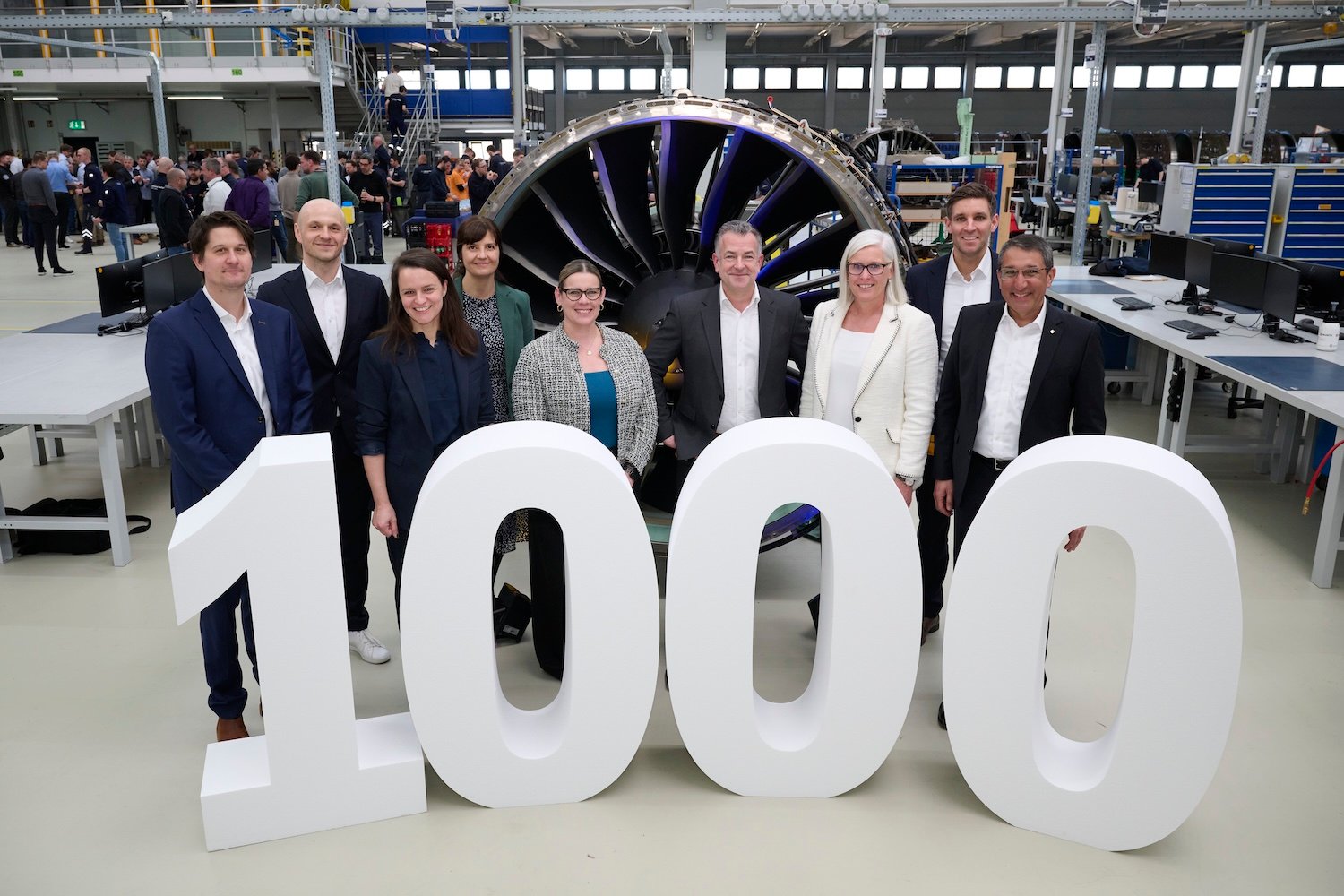
Engines emerged as the most critical pressure point. Multiple speakers cited engine maintenance as the largest contributor to maintenance costs and aircraft downtime. The discussion around recent engine MRO developments in India was framed as a positive signal, but also as an illustration of how much remains to be done. Engine capacity, participants suggested, is where meaningful localisation would have the greatest impact for airlines.
If one theme cut across airlines, MROs and OEMs alike, it was skills. Infrastructure can be financed, tooling can be imported and hangars can be built. Skilled manpower cannot be rushed. Participants repeatedly highlighted the long lead time required to build a competent maintenance workforce, particularly for engines and complex components.
India produces a large number of engineers and technicians each year, but translating that volume into industry-ready MRO talent remains uneven. Training pipelines, type certification, on-the-job exposure and retention were all flagged as pressure points. Several speakers noted that without a structured, nationally aligned approach to training, MRO expansion risks outpacing workforce readiness.
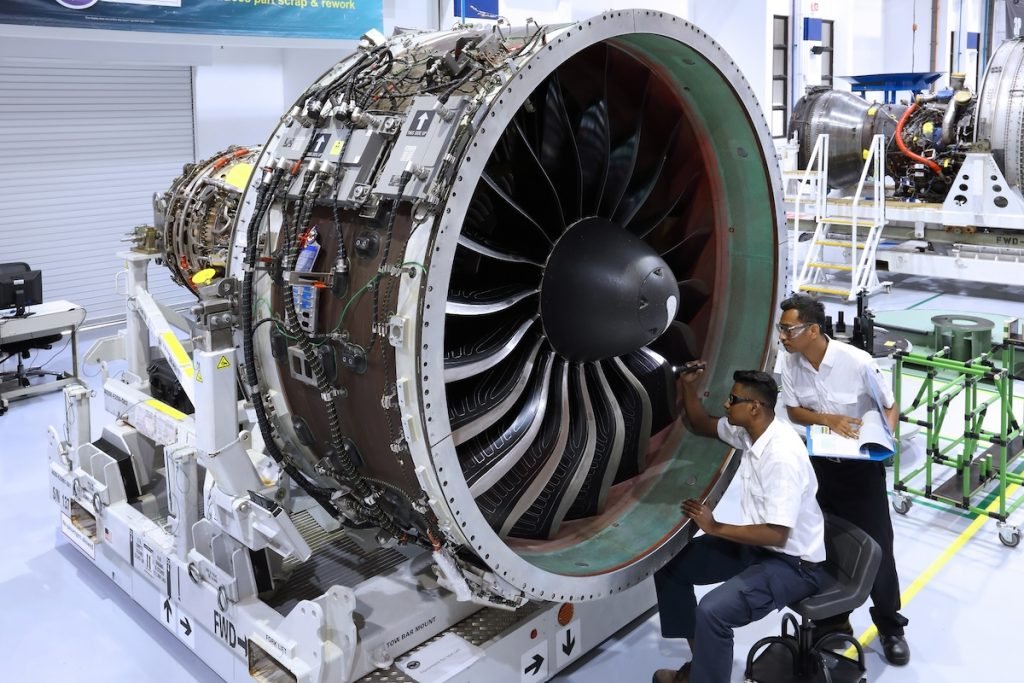
This concern also extended to supervisory and engineering roles, where experience—not just qualification—defines output quality. The implication was that talent development must move in parallel with infrastructure, rather than lag behind it.
An area that received unexpected attention was civil–military synergy. India already operates extensive military MRO infrastructure and training ecosystems. Yet the overlap between civil and defence maintenance remains limited. Participants suggested that co-located facilities, shared training pathways and selective capability transfer could help bridge gaps, particularly in engines and heavy maintenance disciplines.
The discussion stopped short of prescribing a model, but the opportunity was clearly recognised: defence MRO experience could shorten learning curves in civil aviation, while civil scale could improve utilisation of defence-adjacent facilities.
Rather than advocating for more MROs, the roundtable pointed toward concentration. Developing a small number of national MRO clusters—each with depth across airframe, engines, components and training—was seen as more effective than spreading resources thinly across dozens of facilities. Shared infrastructure, OEM partnerships and regulatory focus could help these clusters reach international relevance faster.
Technology was positioned as an enabler rather than a differentiator. Digital twins, predictive maintenance, AI-assisted inspections and robotics are increasingly baseline expectations globally. Adopting them is necessary, but not sufficient, without the underlying process discipline and skill base.
What emerged from the discussion was greater alignment across the industry. The industry is no longer waiting for regulatory approval alone, nor is it framing challenges as purely regulatory. Government reforms—on taxation, customs and foreign investment—were acknowledged as necessary preconditions. The focus has shifted to industry execution.
India’s MRO opportunity is clear, but translating it into sustained capability will depend on certified facilities, skilled manpower and predictable execution. The discussion reflected an industry focused less on intent and more on the practical conditions required to compete at global standards.
Also Read: Safran Marks a Strategic Shift with Hyderabad Emerging as the New Global LEAP Engine Hub