













Government Backs Financing Reform, Coordination to Advance India’s AAM Plans

- India’s approach to Advanced Air Mobility (AAM) is shifting from headline ambition to execution fundamentals, with financing reform, leasing structures, and infrastructure classification emerging as decisive enablers rather than aircraft technology alone.
- The government recognises that AAM cuts across aviation, urban governance, telecom, healthcare and state administrations, making inter-ministerial coordination, streamlined approvals and spectrum clarity essential to avoid early bottlenecks.
- Commercial reality remains the constraint on scale: high acquisition costs, financing terms, vertiport design, landing charges and pricing sensitivity mean early adoption is likely to be led by medical, emergency and premium use-cases rather than mass urban mobility.
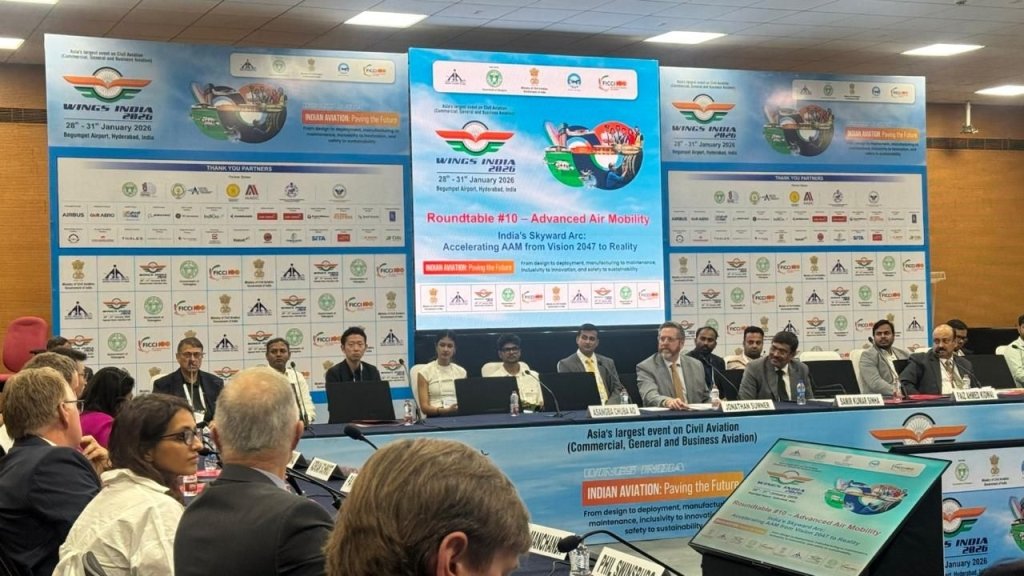
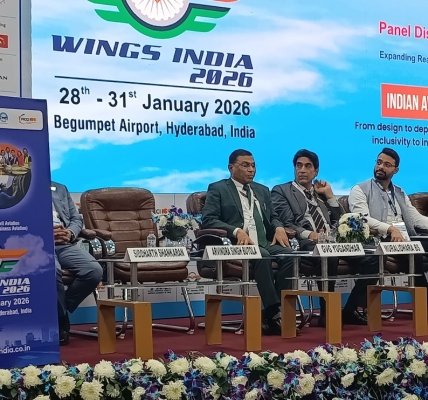
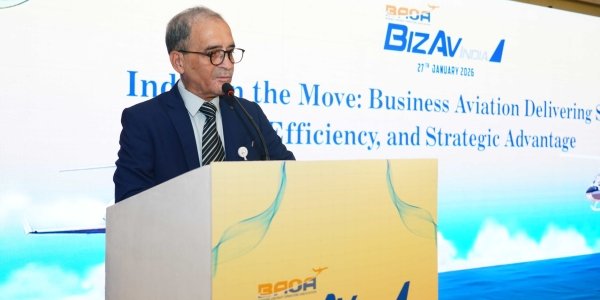
India’s push into Advanced Air Mobility (AAM) received a measured but significant endorsement from the Civil Aviation Secretary, Samir Kumar Sinha at Wings India 2026. He signalled that financing reform, regulatory clarity and inter-ministerial coordination will be central to turning ambition into execution.
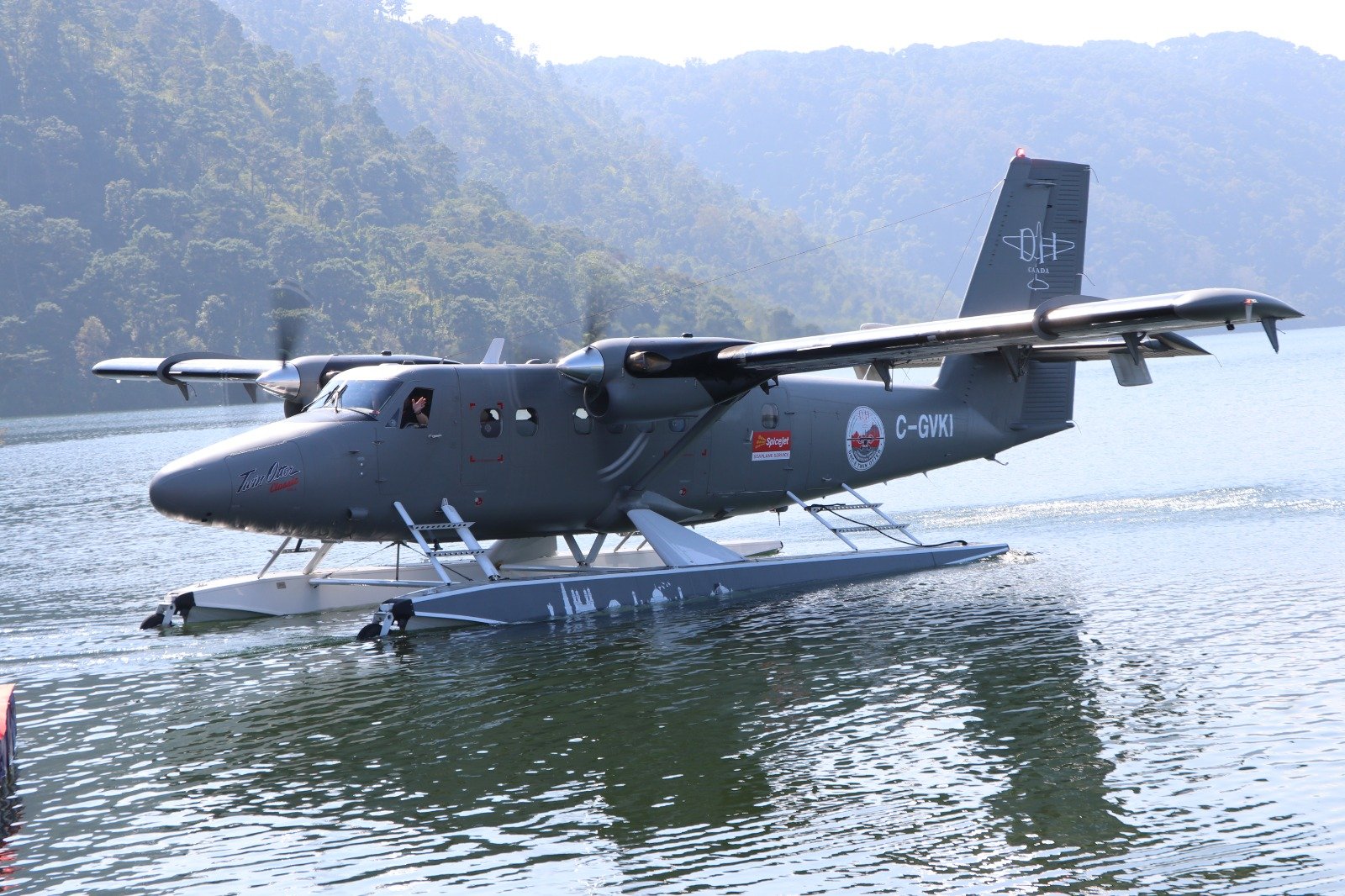
Responding to wide-ranging industry concerns at a roundtable on AAM, the Secretary began with what he described as the foundation of the sector’s viability: access to long-term, competitive financing. The Ministry, he said, is working closely with the Ministry of Finance and other departments to improve funding access for emerging aircraft segments, including eVTOLs, seaplanes and helicopters.
A key proposal under active consideration is the classification of certain aviation assets as infrastructure. Such a move would unlock long-tenure loans at lower interest rates, materially improving project economics for operators and lessors.
He acknowledged that new-generation aircraft categories do not yet feature adequately in existing large-scale financing schemes and committed to taking up the matter with relevant authorities to ensure greater inclusion and awareness. Scaling fleets into the hundreds or thousands, he indicated, would require deep pools of patient capital.
On leasing structures, the Secretary confirmed ongoing coordination with GIFT City authorities. Discussions are underway to make leasing conditions more favourable, including tax frameworks and incentives that could extend to the eVTOL and broader AAM segments. A competitive domestic leasing ecosystem, he suggested, would be critical if India intends to build a scalable fleet rather than depend entirely on overseas financial centres.
Infrastructure and Governance
Advanced air mobility, he noted, cuts across multiple domains: urban development, state governments, municipal authorities, police, fire services and airspace regulators. Given that urban administration is a state subject, close collaboration with state governments and local bodies will be indispensable.

To prevent bureaucratic friction, the Secretary proposed the creation of focused subcommittees.
One could concentrate on financing and investment frameworks. Another could streamline permissions, designated corridors, fire safety norms, police clearances and related approvals.
The objective would be to spare operators from navigating fragmented approval chains across multiple offices, a process that could stall early momentum.
On skills, he struck a pragmatic note. While additional pilots, maintenance engineers and technical personnel will be required, India already possesses a substantial aviation ecosystem. Retired armed forces personnel, existing MRO professionals and aircraft maintenance engineers could form part of a common resource pool supporting advanced air mobility. Rather than building from scratch, the sector could expand around established capabilities.
He also signalled openness to examining targeted R&D incentives and deeper coordination with the Department of Telecommunications, the Ministry of Health and Family Welfare, and state governments. Healthcare integration, particularly organ transport and emergency medical logistics, was acknowledged as a potentially strong early demand driver.
The message was cautious but clear: advanced air mobility is viewed as a strategic frontier for Indian aviation, and the Ministry stands ready to provide enabling policy direction.
Hard Realities of Scaling
Connectivity providers stressed that aircraft and vertiports alone will not determine success. The representative of a satellite communications firm underlined the importance of reliable beyond visual line-of-sight (BVLOS) connectivity in dense and complex airspace. As crewed and uncrewed aircraft begin to coexist, robust satellite communication links will be essential for command-and-control.
His central policy request was clarity around the designation of L-band spectrum as a recognised aviation safety service for UAVs and AAM platforms. While a licence framework already mandates L-band for safety services, closer coordination between the Ministry of Civil Aviation and the Department of Telecommunications would be required to formalise its operational use for navigation and control.
With reliability levels approaching 99.9999 per cent and next-generation satellite infrastructure already authorised in India, regulatory clarity on spectrum allocation could significantly strengthen the safety backbone of the ecosystem.

Policy Alignment
Industry participants argued that India should avoid drafting generic AAM regulation detached from real deployment scenarios. In the Indian context, medical services—including organ transport and emergency healthcare logistics—may represent a more practical launch segment than premium passenger mobility or e-commerce deliveries.
Such alignment would require structured engagement with the health ministry, state governments and skill development bodies. Production-linked incentives, R&D support schemes and sector-specific training programmes tailored to AAM could accelerate ecosystem readiness.
An operator with several years of helicopter charter experience cautioned that consumer adoption will take time, even when pricing becomes more accessible. Drawing on modelling assumptions that included a $5 million aircraft flying roughly 80 hours per month, landing charges in the ₹10,000 range per sector and four passengers per sortie, he estimated that a 15-minute urban journey could cost approximately ₹9,000 per seat.
In a price-sensitive market like India, that sharply defines the initial target demographic. Early adopters may need to come from medical, corporate or premium commuter segments before broader democratisation becomes feasible.
Breaking down the value chain reveals where optimisation is required: aircraft acquisition costs, financing structures, landing charges, localisation of manufacturing and infrastructure efficiency. Without improvements across these variables, unit economics could constrain scale.
Vertiport Design
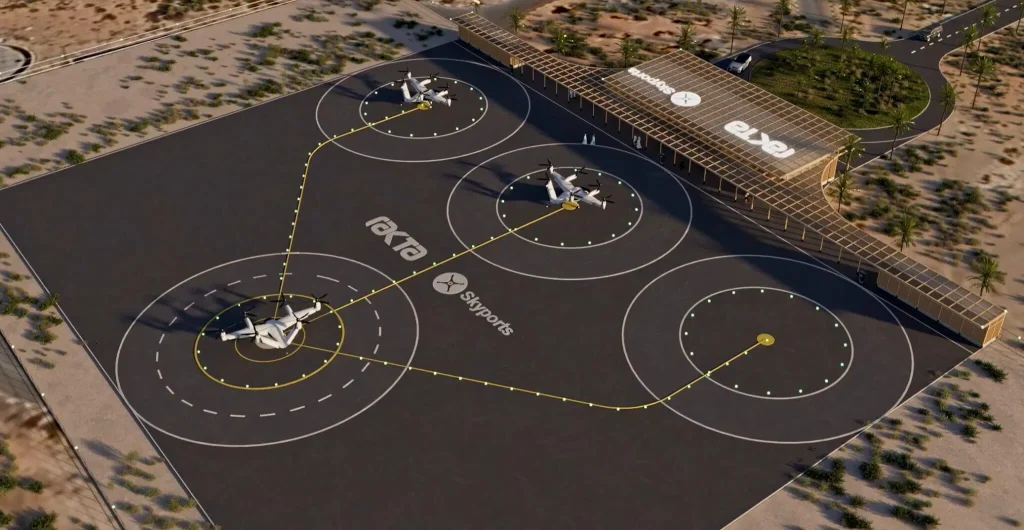
Vertiport design was identified as a structural bottleneck. Existing facilities in India are largely configured for VIP or charter helicopter use, not high-frequency passenger throughput. For AAM to resemble a mobility network rather than a boutique service, infrastructure standards will need rethinking.
Industry representatives argued that vertiports must become modular, affordable and deployable across distributed urban nodes, from hospitals and business districts to transport hubs. Overly capital-intensive designs could slow expansion. Fire safety, particularly battery fire mitigation, remains a sensitive but critical operational issue, demanding clear protocols and infrastructure adaptation.
Certification Clarity
An eVTOL manufacturer targeting certification under UK CAA and EASA frameworks by 2028 emphasised the need for predictable validation pathways in India. While working groups exist within the Ministry and the Directorate General of Civil Aviation, deeper industry roundtables and structured engagement could accelerate alignment with global regulators such as the FAA and ANAC.
For OEMs holding substantial pre-orders globally, multi-jurisdictional certification clarity is essential to maintain programme momentum. Operators, meanwhile, require certainty around designated routes, vertiport availability and phased airspace integration before committing capital.
Several participants proposed establishing a single nodal entity within MoCA or DGCA to serve as a “one-stop shop” for AAM approvals. Given that the sector intersects aviation, urban development, energy, telecommunications and public safety, centralised coordination was described as necessary rather than optional.
Developers of autonomous eVTOL platforms argued that removing the pilot could address global shortages and improve scalability. But autonomy cannot function within legacy, voice-based air traffic systems. Digitised airspace management frameworks, sometimes described as Autonomous Flight Rules, would be required to enable safe, high-density operations.

Digital validation of flight plans, pre-cleared landing zones and federated data exchange between operators and air navigation service providers were identified as building blocks for scale. Without such reform, thousands of aircraft could overwhelm existing air traffic control structures.
At the same time, workforce development cannot be deferred. Even in autonomous models, maintenance, remote supervision, MRO capability and systems oversight will require skilled personnel. India’s existing aviation talent pool provides a starting point, but structured pipelines aligned to AAM requirements will be essential.
Across the discussion, one theme remained constant: advanced air mobility in India will not succeed through aircraft innovation alone. It will require coordinated financing reform, regulatory predictability, spectrum clarity, scalable infrastructure, digitised airspace, targeted skill development and commercially realistic unit economics. Vision is abundant. Policy intent appears aligned. The next phase will test whether institutional coordination and financial pragmatism can convert promise into operational reality.
Also Read: Building Ground Infrastructure for Advanced Air Mobility