






















Table of contents
Embraer ERJ145
The Embraer ERJ 145, a twin-engine regional jet, can be described as the largest and most capable member of Embraer’s ERJ family also comprising the ERJ 135 and ERJ 140 designed by Brazilian aerospace leader Embraer. The ERJ 145 fulfils the growing demand for fast, efficient, and reliable aircraft in the regional aviation sector. Capable of accommodating 50 passengers, its took its maiden flight on August 11, 1995, and entered commercial service in December 1996 with Continental Express (now part of Envoy Air under American Eagle). Since its debut, the ERJ 145 has proved its worth in regional connectivity, serving airlines across the globe such as ExpressJet, Trans States Airlines, and Luxair.
Developed from the EMB 120 Brasilia turboprop, the ERJ145 has evolved into a jet-powered aircraft that offers superior speed and range while retaining operational flexibility for smaller airports. With over 1,231 units produced across the ERJ family by the time production wound down in 2020, hundreds of these jets remain still remain in service today. It has also been repurposed for corporate shuttle services and military applications, such as the Brazilian Air Force’s airborne early warning and control (AEW&C) variant, the E-99. blending high performance with low-cost operations, the ERJ145 stands out as a bridge between turboprops and larger jets in regional markets worldwide.
Cabin Experience
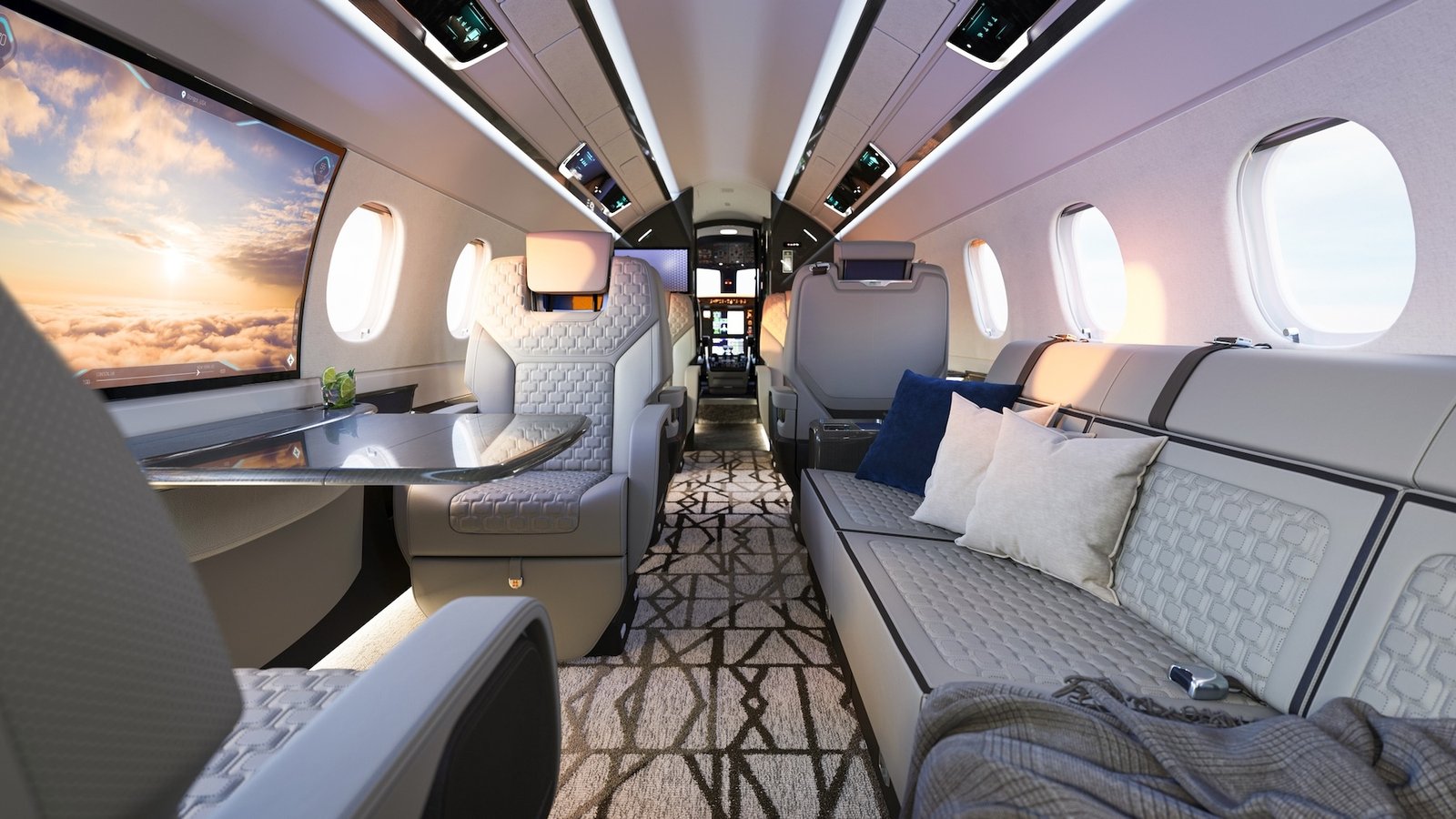
The aircraft’s passenger-friendly cabin offers maximum comfort within the constraints of regional travel. It features a single-aisle layout with a 2-2 seating configuration for a standard 50 seater, though operators can opt for customised interiors, including premium layouts with fewer seats for corporate or VIP use. Measuring 2.1 meters (6 feet 11 inches) in width and 1.82 meters (6 feet) in height, the cabin provides sufficient headroom and a comfortable environment for short- to medium-haul flights. Passengers can enjoy natural light and visibility thanks to large windows, a signature touch of Embraer’s design philosophy.
With overhead bins for carry-on luggage and a combined cargo capacity of approximately 13.5 cubic meters across forward and aft compartments, the aircraft ensures efficient baggage handling and quick turnarounds. Its added advantage manifests in rear-mounted engines and advanced soundproofing which contributes to keeping cabin noise levels low, delivering a quieter ride than many turboprop competitors, which passengers value on routes averaging 1-2 hours. The focus on efficiency, and passenger satisfaction, paired with its ability to serve smaller airports, makes the aircraft a preferred choice for regional carriers.
Technology (Engines & Avionics)
The aircraft is equipped with two Rolls-Royce AE 3007A1 turbofan engines, mounted at the rear of the fuselage, each producing up to 8,917 pounds of thrust in the enhanced LR (Long Range) variant. These engines provide durability, fuel efficiency, and low maintenance requirements, coupled with advanced technologies to meet noise and emission regulations. Shared across the ERJ category, the AE 3007A series ensures operational consistency and reduced costs for airlines.
One of the standout features of the aircraft is the Honeywell Primus 1000 avionics suite, featuring five multifunction displays (upgraded to LCD in later models) that provide pilots with clear, real-time flight data. Furthermore, its flight management system (FMS), autopilot, weather radar, and traffic collision avoidance system (TCAS), enhances safety and precision during operations. Though not supported by the full fly-by-wire technology of Embraer’s later E-Jets, the ERJ145 employs conventional controls augmented by an electronic flight control system, resulting in reliable handling. It shares 96% parts commonality with the ERJ135 and ERJ140, which simplifies maintenance, reduces training time with a single pilot type rating, and optimises fleet management for operators.
Performance
The aircraft delivers exceptional value, blending speed, range, and runway versatility, tailored to the needs of regional aviation. With a maximum cruise speed of Mach 0.78 (approximately 903 km/h or 561 mph), it can outpace turboprops and compete with larger jets on short routes. Its Long Range (LR) variant, the most widely used version, boasts a range of 2,873 kilometres (1,550 nautical miles) with a full passenger load, enabling it to connect city pairs like Chicago to Dallas or London to Edinburgh.
With a take-off distance of 2,270 meters and a landing distance of 1,370 meters (at maximum take-off weight, ISA, sea level), the ERJ145 can operate from shorter runways, accessing regional airports with limited infrastructure. Its service ceiling of 37,000 feet makes it to cruise above weather and turbulence, improving efficiency and passenger comfort. With a maximum take-off weight (MTOW) of 22,000 kg (48,501 lbs) in the LR variant, the aircraft balances payload and range effectively, while its compact design ensures nimble ground handling—an asset at busy or constrained airfields.
Specifications
| Feature | Specification |
| Seating Capacity | 50 passengers (standard) |
| Engines | 2 × Rolls-Royce AE 3007A1 |
| Maximum Thrust | 8,917 lbf per engine (LR) |
| Cruise Speed | Mach 0.78 |
| Range | 2,873 km (1,550 nm) – LR version |
| Service Ceiling | 37,000 ft |
| Take-off Distance | 2,270 m (MTOW, ISA, SL) |
| Landing Distance | 1,370 m (MLW, ISA, SL) |
| Cargo Capacity | 13.5 m³ (combined forward & aft) |
| Cabin Width | 2.1 m |
| Cabin Height | 1.82 m |
Takeaways
The Embraer ERJ 145 remains a gem the regional jet market, blending efficiency, performance, and passenger comfort. Its 2-2 seating arrangement, spacious cabin, and quiet operation elevate the travel experience beyond the capability of regional aircraft provide, making it a step-up from turboprops without the overhead of larger jets. The Rolls-Royce AE 3007A1 engines deliver reliable power and efficiency, enabling the aircraft to access to smaller airports while covering distances up to 2,873 kilometres perfect for linking regional hubs to underserved markets.
Advanced avionics and high parts commonality with the ERJ family results in operational efficiency, while the aircraft’s runway flexibility opens new route opportunities for airlines. Since its introduction, it has proven its worth as a durable, adaptable platform, serving commercial airlines, corporate clients, and even military operators with distinction. Though succeeded by the more modern E-Jet family, the ERJ145’s legacy endures, reflecting Embraer’s expertise in crafting aircraft that meet the evolving demands of modern aviation.