

















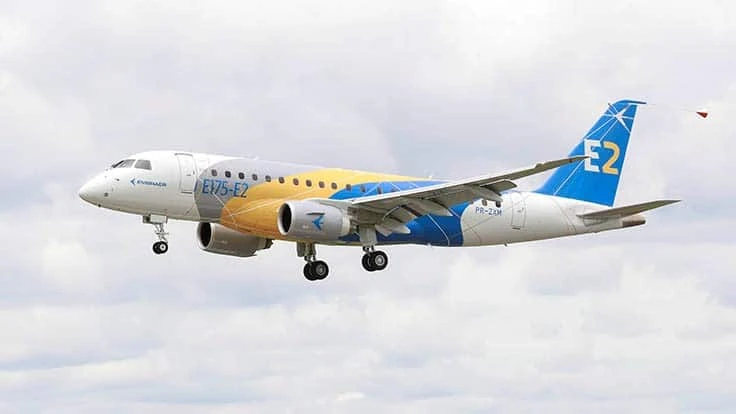
Embraer E175-E2
The Embraer E175-E2, part of the renowned Brazilian aerospace manufacturer’s renowned E-Jet series, is a standout model in the E-Jets E2 series. It embodies technological advancement, operational efficiency, and passenger-centric design. As the successor to the highly successful E175, the E175-E2 is designed to offer improved economics, reduced environmental impact, and an exceptional flying experience.
This aircraft is a popular choice in the regional jet market due to its robust performance, advanced avionics, and passenger-centric design, making it an ideal choice for airlines aiming to optimise short-haul operations. Since its introduction, it has carved out a significant market share, thanks to its versatility, efficiency, and capacity to meet regional airline demands.
The E175 has seen widespread adoption globally, particularly among major North American carriers such as United Airlines, American Airlines, and SkyWest Airlines. As of recent years, it has been a cornerstone of regional fleets, operating under brands like United Express and American Eagle. United Airlines alone ordered 25 E175 jets in 2018 for $1.1 billion, and American Airlines committed to over 100 aircraft in various deals, showcasing the model’s enduring appeal.
Embraer has continued refining the E175 to meet evolving market needs. The updated E175-E2 model offers enhanced fuel efficiency and reduced emissions, further strengthening its market position. However, delays in certification for the E2 series due to pilot scope clause restrictions have shifted some demand back to the original E175 model, demonstrating its resilience in the face of regulatory and market challenges.
Cabin Experience
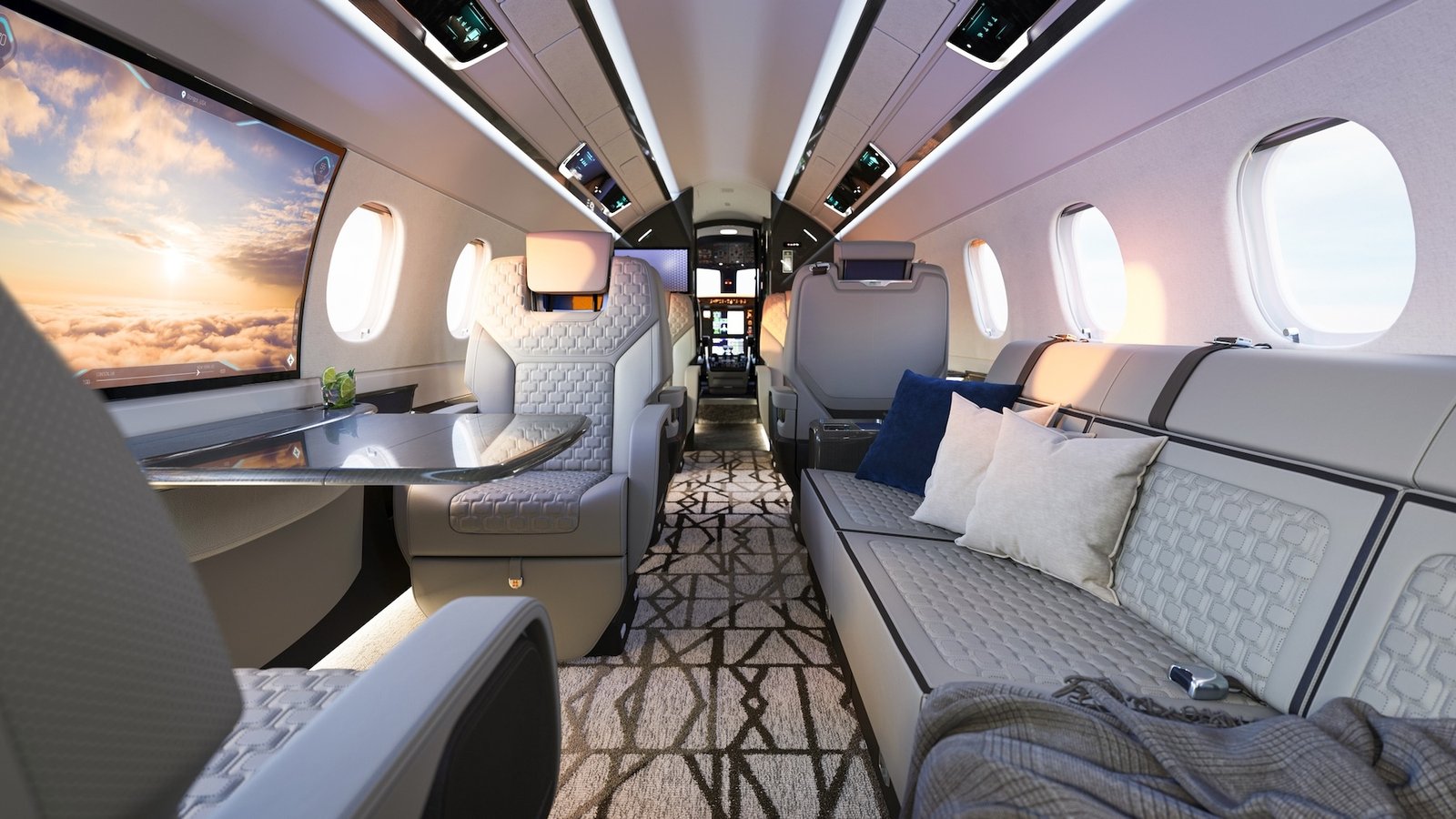
The aircraft comes with a spacious 2-2 seating configuration, eliminating middle seats to enhance the travel experience. The wider cabin allows for greater personal space, while ergonomically designed seats ensure superior comfort. Cabin design in the E175 prioritizes passenger comfort. The aircraft boasts a spacious interior with a four-abreast seating layout and ample overhead storage. The cabin dimensions—21.2 meters long, 2.74 meters wide, and 2 meters high—allow for a comfortable in-flight experience, further enhanced by noise-reduction features meeting Stage III and IV noise compliance standards.
Larger windows flood the cabin with natural light, creating an open and airy atmosphere, while quieter engines and advanced noise-dampening materials provide a serene onboard environment.
The overhead bins have been expanded to accommodate more carry-on luggage, addressing a common pain point for passengers. Airlines can also enhance the passenger experience with state-of-the-art in-flight entertainment (IFE) systems, offering Wi-Fi connectivity and a variety of entertainment options.
One of the aircraft’s strengths lies in its underfloor cargo capacity. It features two compartments: the forward compartment offers 9.92 cubic meters of space, accommodating up to 1,500 kilograms, while the rear compartment, with 7.2 cubic meters, supports 1,150 kilograms. This balance of passenger and cargo capacity has made the E175 an attractive option for airlines managing mixed-load requirements.
Technology (Engine and Avionics)
The E175-E2, equipped with Pratt & Whitney PW1700G Geared Turbofan engines, deliver a 16 per cent reduction in fuel consumption compared to its predecessor. This not only reduces operating costs but also cuts carbon emissions significantly, aligning with global sustainability goals. The redesigned, aerodynamically optimised wings further enhance fuel efficiency and contribute to a smoother, quieter ride.
The aircraft’s modern fly-by-wire control system enhances flight safety and reduces pilot workload, while its advanced digital avionics systems improve reliability and operational efficiency. Pilots benefit from multifunctional LCDs, primary flight displays (PFDs), and a state-of-the-art electronic instrument system (EIS), all designed to improve situational awareness and flight safety. Its ergonomic design also enhances operational efficiency, with easily accessible controls and acoustic insulation for reduced fatigue on long-haul flights.
These features make the aircraft a standout in its category for both performance and environmental consciousness.
Performance
With a seating capacity of up to 90 passengers and a range of 4,260 km, the aircraft is designed for versatility. Its smaller size makes it well-suited for serving secondary markets and thinner regional routes, where demand for capacity is lower but frequency is critical. Additionally, the aircraft’s operational efficiency allows airlines to profitably explore new routes and underserved markets.
The aircraft also offers significant cost advantages, with a 25 per cent reduction in direct maintenance costs due to its advanced systems and materials. This enables more flying hours and fewer maintenance delays, ensuring a high level of reliability.
The aircraft is particularly effective for replacing older regional jets, offering a modern and efficient alternative for fleet renewal. Airlines can deploy the aircraft for regional connectivity, opening new routes, or even premium short-haul services. Its performance and flexibility make it a preferred choice for carriers seeking to expand networks and improve profitability.
Specifications
| Category | Details |
| Maximum Take-off Weight | 44,800 kg (98,767 lb) |
| Maximum Landing Weight | 40,000 kg (88,185 lb) |
| Maximum Payload | 10,600 kg (23,369 lb) |
| Maximum Usable Fuel | 8,522 kg (18,788 lb) |
| Maximum Cruise Speed | Mach 0.82 |
| Take-off Field Length (MTOW) | 1,800 m (5,906 ft) |
| Take-off Field Length (500 nm mission) | 1,370 m (4,495 ft) |
| Landing Field Length | 1,350 m (4,429 ft) |
| Service Ceiling | 41,000 ft |
| Range | 2,060 nm (3,815 km) |
| Single Class (High Density) | 90 seats: 50 @ 30” pitch + 40 @ 29” pitch |
| Single Class (Standard) | 88 seats: All @ 31” pitch |
| Three Class | 80 seats: 12 @ 36” pitch + 16 @ 34” pitch + 52 @ 30” pitch |
| Fuel Efficiency | 16 per cent better fuel burn compared to earlier generation models |
Takeaways
The Embraer E175-E2 is a game-changer for regional aviation, combining innovative technology, sustainability, and passenger comfort. Its ability to reduce costs, improve operational efficiency, and enhance the flying experience makes it a valuable asset for airlines worldwide.
The aircraft’s twin-engine configuration is controlled by a Full Authority Digital Engine Control (FADEC) system, ensuring optimal efficiency and reduced pilot workload. The aircraft’s performance figures are impressive, with a maximum cruising speed of Mach 0.82 (approximately 871 km/h) and a service ceiling of 41,000 feet. Its range varies based on the version: up to 3,151 km for the standard model and 4,074 km for the advanced range (AR) model, enabling it to handle diverse operational demands.
While the E175 dominates its niche, it faces competition from aircraft like the Bombardier CRJ900 and Mitsubishi’s SpaceJet (formerly MRJ70 and MRJ90). Additionally, its dependency on the North American market makes it vulnerable to changes in regional airline regulations, particularly regarding scope clauses limiting aircraft size and seating capacity for regional carriers.
However, the Embraer E175 remains a cornerstone of regional aviation, offering airlines a balanced combination of performance, passenger comfort, and operational efficiency. Its continued success reflects Embraer’s ability to adapt to market demands while maintaining its reputation for reliability and innovation. The aircraft is poised to set new benchmarks in the regional aviation market, offering a compelling solution for the challenges of modern air travel.