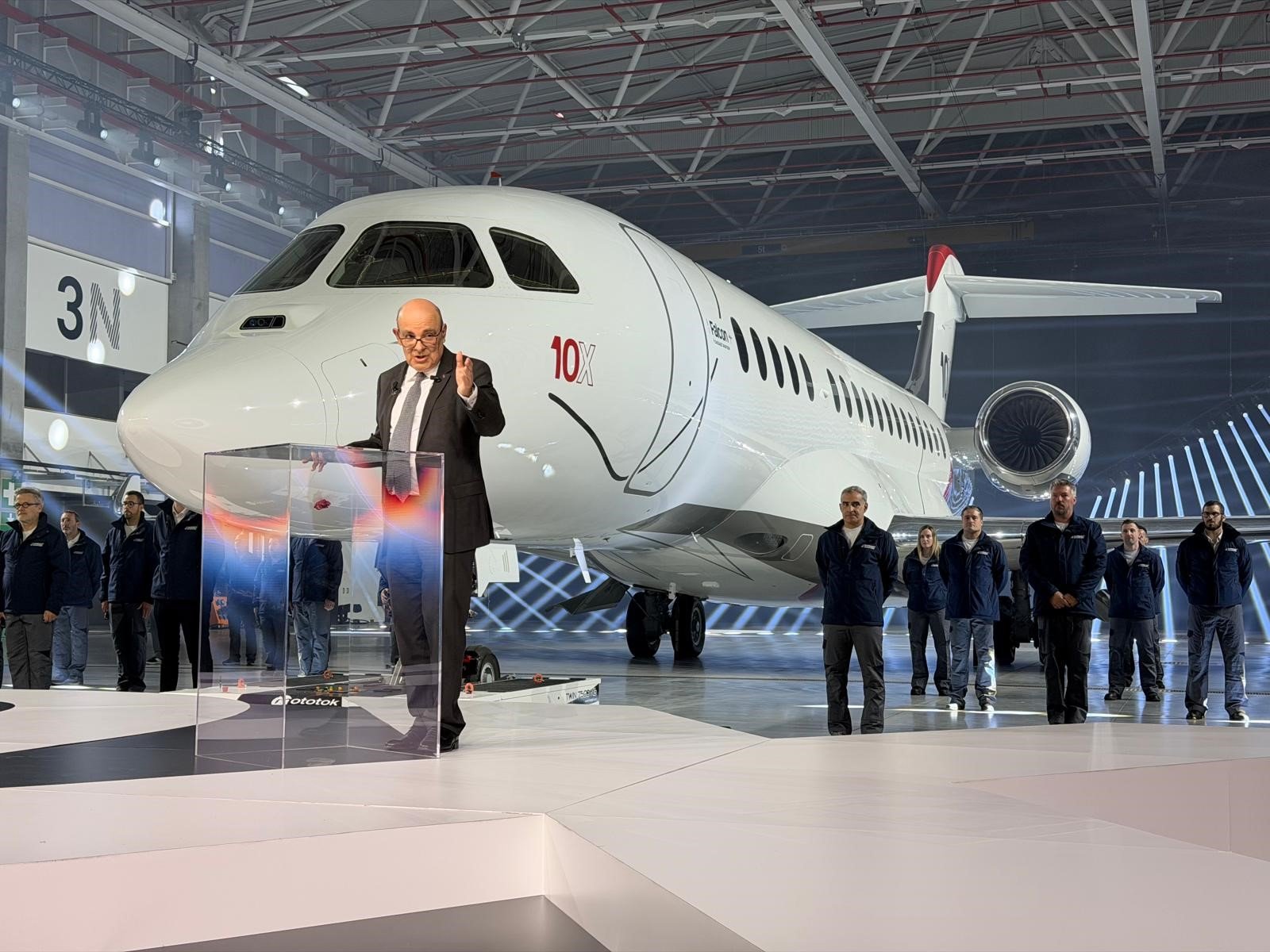







- Dassault Aviation has rolled out the Falcon 10X at its Bordeaux-Mérignac facility, marking the transition from development to the flight-test phase, with certification and entry into service currently targeted for 2027.
- The aircraft introduces a new composite wing architecture, Rolls-Royce Pearl 10X engines and the NeXus cockpit, combining advanced automation with Dassault’s third-generation digital fly-by-wire flight controls.
- Designed for ultra-long-range missions of up to 7,500 nautical miles, the Falcon 10X also places strong emphasis on cabin environment, with a wider fuselage, lower cabin altitude and large panoramic windows aimed at improving passenger comfort on long flights.
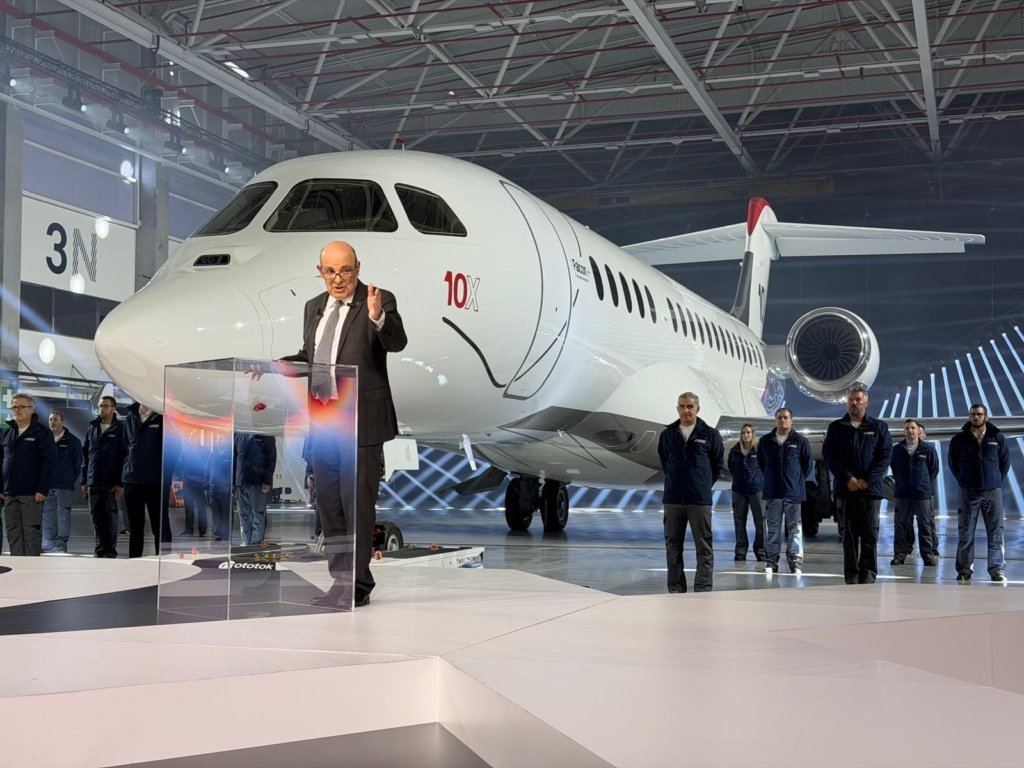
The Falcon 10X was formally announced on 6 May 2021 and has spent nearly five years in development. The roll-out at Bordeaux-Mérignac on March 10, 2026, marks the transition from engineering programme to flight-test aircraft, with entry into service currently targeted for late 2027. The aircraft enters the ultra-long-range segment with the largest cabin in the category, a fully composite wing, and a cockpit architecture drawn directly from Dassault’s military aircraft programmes.
Dassault Aviation is the only manufacturer in the world that designs and builds both advanced combat aircraft and business jets — an engineering heritage that runs through every aspect of the Falcon 10X, from its aerodynamics and materials to its avionics and flight controls.
A Cabin That Redefines the Category
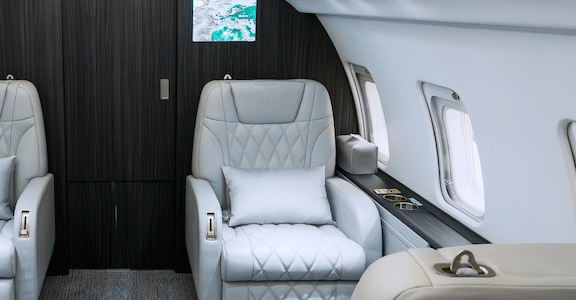
The Falcon 10X features the largest cabin ever designed into a purpose-built business jet — nine feet, one inch wide and six feet, eight inches tall, dimensions that exceed those of several regional jet aircraft. Against its closest competitor in the segment, the cabin is eight inches wider and two inches taller, a margin that fundamentally changes what interior designers can do with the space.
Customers can configure three- or four-zone layouts encompassing private suites, full-size bedrooms, dedicated dining areas, and optional shower installations. Dassault President and CEO Eric Trappier described the intent plainly: “The objective is to allow passengers to experience time on board as just another part of their everyday life — not as a long interval between origin and destination. So they arrive feeling refreshed and at their very best.”
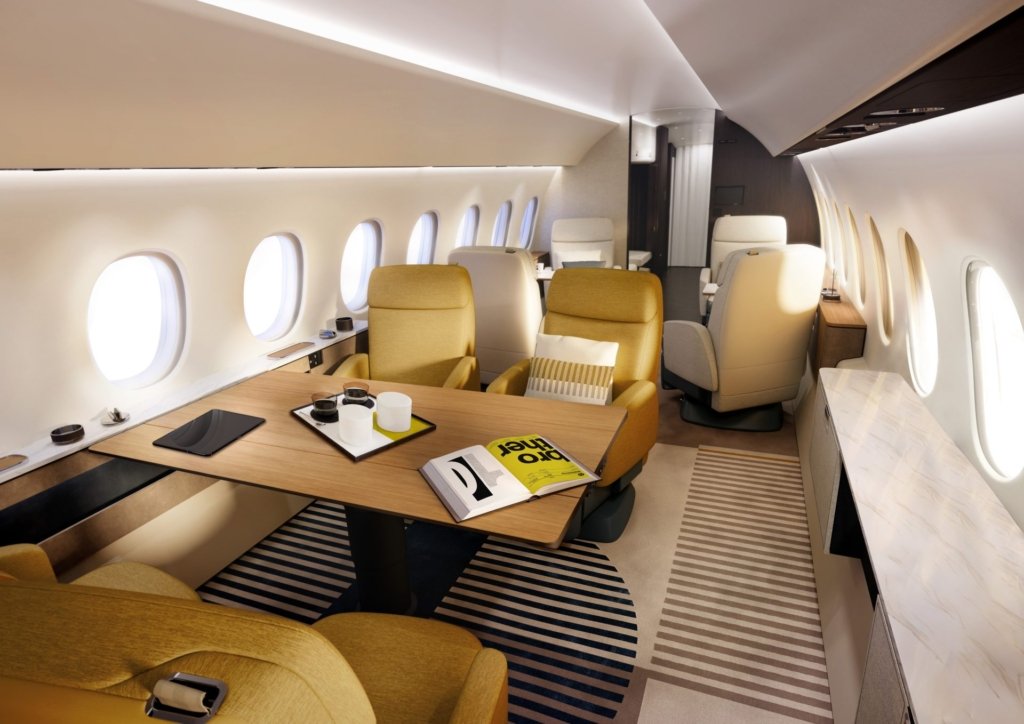
Photo: Dassault Aviation
The cabin environment has received equal attention.
Cruising at 41,000 feet, the aircraft maintains an interior pressure equivalent to 3,000 feet — considerably lower than the industry norm, with 100 per cent fresh air continuously circulated and temperature independently adjustable across zones.
Thirty-eight oversized windows, nearly 50 per cent larger than those on the Falcon 8X, give the cabin a level of natural light that no comparable aircraft currently offers, making it the brightest cabin in business aviation.
The First All-Composite Wing in Business Aviation
The Falcon 10X carries a wing architecture that has not previously appeared on a business jet — fully composite construction combined with Dassault’s established high-lift devices, slats and flaps, which increase lift during take-off and landing while the composite structure itself reduces weight and improves aerodynamic efficiency in cruise.
The design does not compromise the short-field capability that has been a defining characteristic of Falcon aircraft across generations — an important operational quality for owners who fly into airports beyond the major hubs.
As Trappier noted at the unveiling: “Dassault Falcons have always been at the vanguard of business aviation, and the 10X is no exception, embodying the very best technology available today. From the user perspective, the equation is simple: an objectively better experience.”
Range, Speed, and the Rolls-Royce Pearl 10X
The aircraft has a maximum range of 7,500 nautical miles and cruises at up to Mach .925, enabling non-stop operations across city pairs such as New York–Shanghai, Los Angeles–Sydney, São Paulo–Dubai, and Beijing–Paris. For Indian operators, the 10X’s range comfortably covers non-stop routes such as Mumbai–London or Delhi–New York that currently require a technical stop on most business jet types.
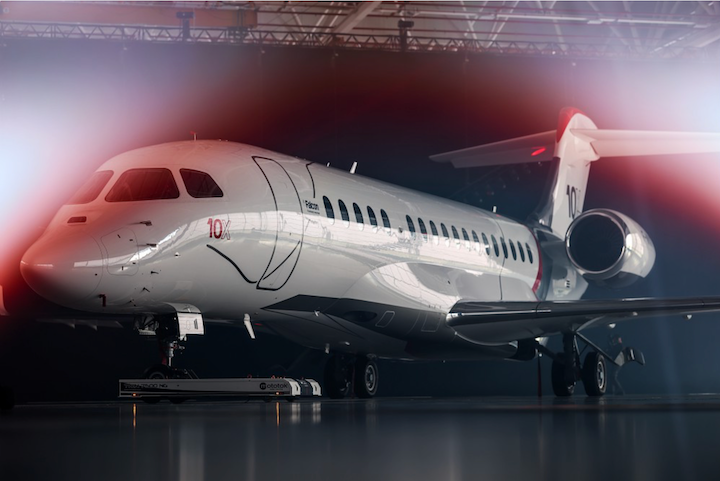
The Rolls-Royce Pearl 10X is built on the Advance2 core — the most efficient powerplant core currently available in the business aviation sector, paired with a high-performance low-pressure system for a combined thrust output exceeding 18,000 lb.
Noise and emissions performance meet the most stringent current standards, and the engine’s capabilities allow operators to access a wider range of airports, including those with more demanding runway constraints.
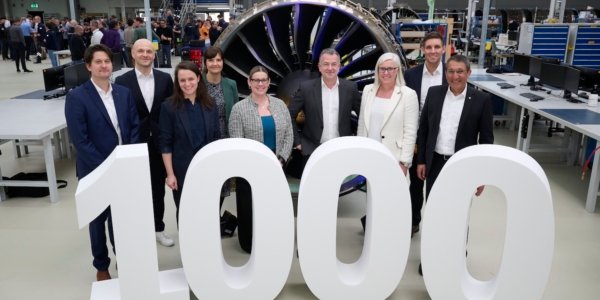
The Pearl 10X completed over 1,000 hours of ground testing ahead of the roll-out and is fully compatible with 100 per cent sustainable aviation fuel blends — a qualification with growing operational relevance as regulators and operators move toward SAF mandates across international routes.
Dr Dirk Geisinger, Director of Business Aviation at Rolls-Royce, was present at Bordeaux-Mérignac and said: “Today is a very special day for Rolls-Royce and the team. We are excited and proud to deliver the thrust for this extraordinary aircraft, and I would like to congratulate the Dassault family as well as the Falcon team on this special occasion.”
The NeXus Cockpit and the Influence of the Rafale
The aircraft’s flight deck, designated NeXus, is the most advanced cockpit installed in any business jet to date. Large touchscreen displays are integrated with automation systems designed to reduce crew workload during demanding phases of flight, while a standard dual FalconEye Enhanced Vision System extends operational capability in low-visibility conditions — including night circling approaches, among the most complex manoeuvres in routine civil operations.
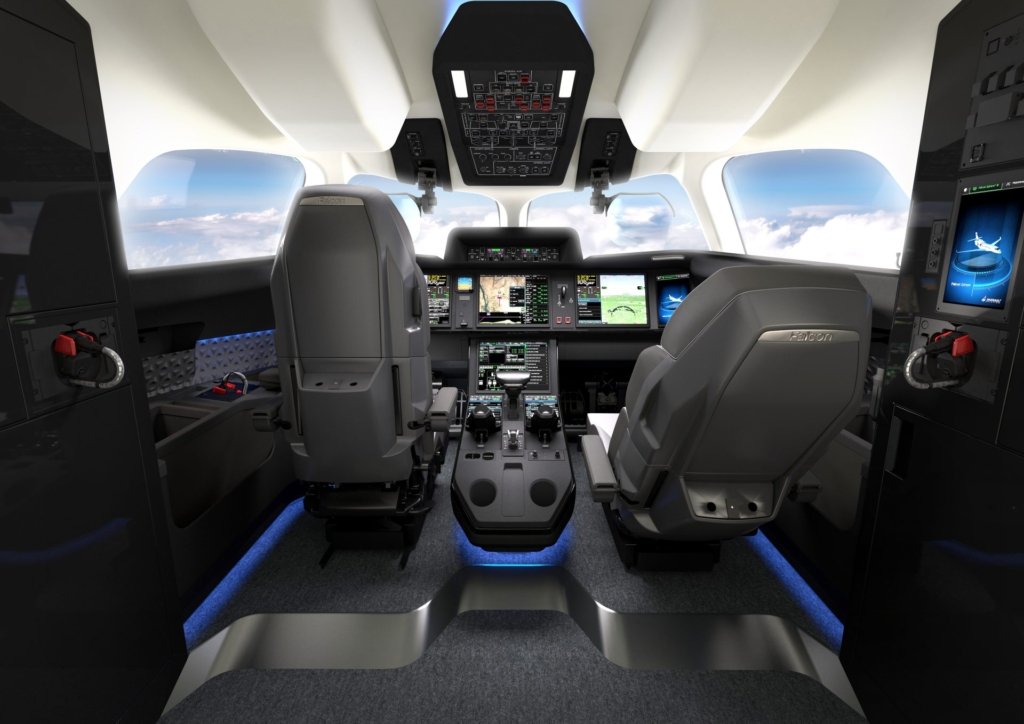
A Smart Throttle — adapted from the controls of the Rafale — consolidates management of both engines through a single input and automatically handles noise-abatement climbs and stabilised go-arounds.
Alongside the third generation of Dassault’s digital fly-by-wire flight control system — technology that prevents overspeeding, overstressing and stalling while preserving the handling qualities Falcon operators value — these capabilities introduce the first automatic recovery mode on a large business jet.
The lineage runs back to 2007, when the Falcon 7X became the first business aircraft in the world to carry fly-by-wire flight controls. The 10X is the most advanced expression of that technology in a Falcon to date.
What Comes Next
Three flight-test aircraft, now structurally complete, will begin an extensive airborne evaluation campaign through 2026, ahead of certification and first deliveries currently scheduled for late 2027.
For Dassault, the programme represents the next stage in a lineage that stretches from the early Falcons to today’s most technologically complex business aircraft. More than 2,800 Falcon jets have entered service worldwide over the past six decades, shaping the company’s approach to aerodynamics, flight controls and cabin design.
What the industry will now watch is how the 10X performs once it leaves the factory floor and enters the realities of flight testing, certification and operational service. If the aircraft delivers on the range, efficiency and flight-control innovations outlined by its designers, the Falcon 10X may do more than add a new flagship to Dassault’s portfolio — it could reset expectations for what the next generation of long-range business jets should be.
Also Read: Business Aviation in India: A Case for Structural Alignment