














Connecting cities to airports: Heli-taxis are out, air taxis are in

- Greenfield airports risk losing their edge if city connectivity is inadequate, as seen with failed heli-taxi services.
- eVTOL air taxis are emerging as a potential solution, but challenges in infrastructure, affordability, and regulations remain.

Futuristic in design, massive in scale, green-field airports might radiate a lot of glitter due to their proven potential to capitalise on the booming aviation sector. But what if the distance from the city they serve is long and taxing enough to negate that edge? If connectivity by road and rail is not fast enough, can heli-taxis and electric air taxis fill the gap? Nothing could be trickier.
India’s third busiest, the Kempegowda International Airport (KIA) in Bengaluru, had everything going for it. Exponential year-on-year growth both in passenger traffic and cargo over 16 years had it emerge as the pre-eminent gateway to South India. Yet, it has faltered big time on fast connectivity to the city proper, located a good 40km away. With heli-taxis failing to take off despite attempts by multiple players, the focus has now shifted to electric air taxis with vertical take-off capability.
The plan is this: The Bengaluru International Airport Limited (BIAL) and a city-based startup, Sarla Aviation, will collaborate to develop an electric air taxi service for airport transfers. Based on electric vertical take-off and landing (eVTOL) technology, the project could see the first flight take off three years from now. A formal collaboration agreement was inked in October 2024.
Affordability as game-changer
The technology, which leverages electric power to hover, take off and land vertically, has been in the works for years globally. Major advances in motors, batteries, fuel cells and electronic controllers have fine-tuned it to soon meet the stringent demands of aviation safety. But the game-changer could be its actual operation as an affordable airport – city commute mode.
Sarla Aviation has claimed that its fare for a 19-minute flight from distant Electronics City to the Bengaluru airport could be as low as Rs 1,700, beating even Ola / Uber rates. Tech advances show that this could be accomplished with the electric and hybrid propulsion systems. But a reality check would take at least another three years. Designed for short distance flights of 20 to 40kms, the air taxi could have a maximum range of up to 160km.

Unviable heli-taxi operations
Heli-taxi operations in the past had faltered since they could not scale the mountain of financial viability. Col Jayanth Poovaiah, director, Deccan Charters recalls how the company’s helicopter service between the airport and Electronics City had to be halted after a few months because the finances did not work out. There were not enough passengers.
Multiple factors have to align to keep a heli-taxi or air taxi in operation, he points out. “One, the distance should not be long, and the flying time should be much less than your driving time. It should make sense for people to use it. Secondly, you should have the numbers. You need to run the air taxi whether there is a passenger or not. Otherwise, you will lose credibility.”
Volumes are critical. Col Jayanth cites a scenario where an air taxi is scheduled from the airport to pick up a lone passenger from Electronics City. He explains: “The aircraft, even if it flies empty, should pick up that flyer because he is counting on you. So you have done one trip empty, and the return trip with just one passenger. That doesn’t make sense. To be financially viable, you have to have the volumes.”
Both heli-taxi and air taxi operators are mandated to strictly adhere to the airport restrictions. The manoeuvres and flight path have to be aligned to the protocols. This is true of airports across India, but KIA’s close proximity to the Yelahanka Air Force Station and the active runway there makes this even tougher. “While approaching KIA, which has its own circuit, the ATC might tell you to go around 10 nautical miles East or West because of flight operations there. This could upset the air taxi’s schedule and other calculations,” he notes.

Dynamics of passenger numbers
Guaranteed passenger numbers could help operators fly larger aircraft with more seats. But this would drive up the operating cost. “But opting for a smaller aircraft can also get problematic,” says Col Jayanth. “A passenger flying international will inevitably carry big bags, which can become an issue.”
To tide over the baggage problem, heli-taxi operators had tried sending it by road. But that only defeated the whole purpose of taking the aerial route: Saving time at a reasonable cost.
Inevitably, all previous attempts at helicopter as a taxi option failed. This included the one started by the Deccan firm despite building a helipad within the KIA campus at their cost. “Whoever starts it, whatever you do, that will be the result. Unless, let’s say, Electronics City had an airport and you had a fixed wing aircraft. That will drop the cost by 2.5 times compared to the helicopter. But the helicopter will just not do it,” feels aviation analyst Capt Aravind Sharma.
But a traditional fixed-wing aircraft requires an airstrip. “Electronics City could have built an airstrip much before its full development. If you look at the Maharashtra Industrial Development Corporation (MIDC), they planned an airstrip wherever an industrial complex came up. Today, one of those strips is not used by industrialists but by a flying club. If the Karnataka Industrial Area Development Board (KIADB) had done the same, it would have been a different matter altogether.”
So, heli-taxis are unviable, fixed-wing planes are unworkable as a retrofit option and vertical take-off electric air taxis are a good three to four years away. But the idea of air taxis as an urban mobility option is not getting dumped. In fact, the Directorate General of Civil Aviation (DGCA) is working on a roadmap to frame rules and regulations for air taxis. It has reportedly constituted multiple technical committees to build an enabling ecosystem for air taxis in Bengaluru, Mumbai, Delhi-NCR, Chennai and Hyderabad.
DGCA regulations on vertiports
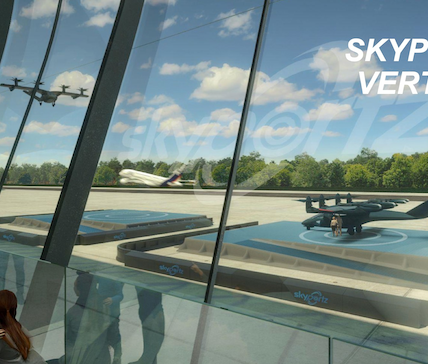
The eVTOL aircraft is at the centre of these new regulations. Guidelines are already out for vertiports, the area designated for the take-off, landing and serving of eVTOL aircraft. The panels are looking at air navigation, the routes to operate, and the safety and standards of vertiports. Aviation authorities are confident of putting in place a robust regulatory and operating mechanism for the entire ecosystem by 2026.
Driving the big push for this mode are its apparent ease of operation, accessibility and affordability. Vertical take-off negates the need for costly airstrips. The existing helipads on high rises would be adequate. In Bengaluru, post the Carlton Towers highrise fire accident that killed nine, helipads are mandated atop all buildings over 60m tall.
Currently, none of the estimated 90-plus rooftop helipads atop highrises barring one are approved by the DGCA. The regulator sees the single-engine helicopters operated as heli-taxis as a safety risk, particularly in residential areas where most of these highrises are located. Twin engine copters are not economically viable for the operators.
Multi-propeller safety shield
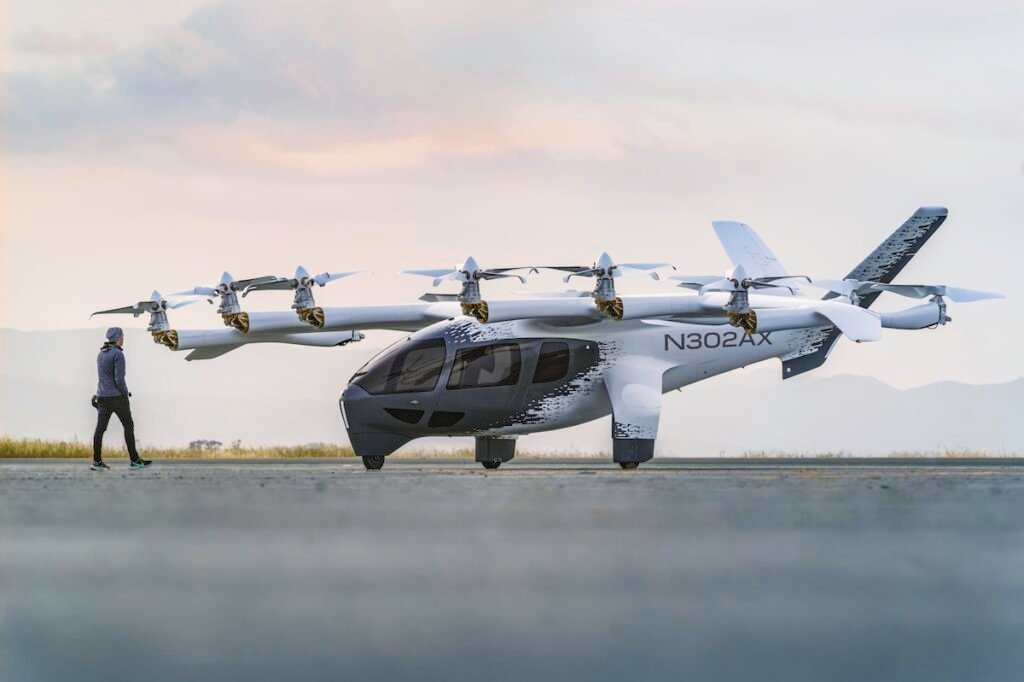
Equipped with seven propellers, the eVTOL aircraft is much safer than even a twin-engine helicopter, claim the people behind Sarla Aviation. The contention is this: Helicopters have almost a hundred single points of failure between the motor and the rotor unlike the vertical take-off aircraft. Even if one of the seven propellers fail, the others compensate. A clearer picture is expected to emerge once the DGCA completes its regulatory framework.
Multiple eVTOL aircraft designs are in the works across the globe. Besides legacy manufacturers such as Airbus, Boeing, Embraer, Toyota, Hyundai and Honda, air mobility startups Archer Aviation and Joby Aviation are also in development mode. US air taxi manufacturer Archer Aviation is reportedly collaborating with InterGlobe Enterprises (IGE) and Indian authorities to put in place the necessary EVTOL infrastructure in the country.
An enabling ecosystem could eventually bring in the passenger numbers. But, as Colonel Jayanth points out, the Government will have to subsidise the initial costs. As the business picks up and becomes sustainable, the subsidy could be reduced and eventually removed altogether. The message is clear: A hand-holding private public partnership is key for success and sustainability.
The first eVOTL aircraft as an air taxi service could take flight in New York next year. Electric aircraft manufacturer Joby Aviation has proposed to launch its commercial air taxis there and in Los Angeles. Archer Aviation is awaiting FAA approval this year to start its own service. Trial flights could start later in India and the United Arab Emirates (UAE) once DGCA gives its nod. UAE has already granted operational approval for the first vertiport in that country.
While Sarla Aviation’s claim of a Rs 1,700 fare might look improbable to achieve on paper, the topbrass of Archer Aviation is on record stating that the ticket price would be only slightly premium over Uber. The Delhi-Gurgaon Uber fare of about Rs 1,500 – 2,000 will be comparable to the projected air taxi fare of Rs 2,000 to 3,000 on the same route, the distance covered in a fraction of the road travel.
Noise reduction
The electric air taxi also scores over the heli-taxis in reducing noise. Citing the oft-heard complaints by New Yorkers about helicopter noise, Joby Aviation officials had pointed to the eVOTL aircraft’s tilting propellers. The tilt design is what enables the aircraft to take off and land vertically. Noise could be reduced by individually adjusting the propellers’ tilt, rotational speed and blade pitch.
In terms of safety, even if one propulsion unit fails the opposing unit is designed to de-power so that the balance is maintained. The eVOTL can hover with four units and fly like a traditional airplane on two propellers. To boost commute speed, Sarla Aviation says its aircraft take only 15 minutes of charging time, aiding back-to-back 40-kilometer trips. The aircraft to be developed will be built to accommodate a pilot and six passengers, luggage included.
Safety goes beyond the aircraft, and the DGCA guidelines branching out of the regulations on vertiports are specific. Besides equipment failure, the air taxi operation could also be hindered by bad weather and other unforeseen incidents. To tackle these, operators are mandated to execute robust safety protocols and contingency plans.
The guidelines also require the operators to install foolproof visual aids and landing assistance at the vertiports to guarantee safe and precise landing. Lights, markings and other navigational tools to aid the pilots are mandatory to minimise risks. The vertiport design is required to make battery charging infrastructure a necessary component, ensuring quick turnarounds and operational readiness of the eVTOL aircraft.
At the airport end, the emergence of multiple eVTOL operators will require seamless integration of the vertiports. The Bengaluru airport, for instance, might have to rethink the design of its multimodal transport hub that is currently being built to integrate only the bus, Metro and suburban trains. The new aerial platform also mandates integration at the air traffic management level, tweaking communication networks and ground control systems.
Need for stringent testing, trials
Aviation experts are convinced that the aircraft has huge potential to disrupt the entire ground-based urban connectivity ecosystem. But they demand a period of stringent testing and trials to build robust defence against the vagaries of the weather. For instance, the low-flying and low-speed aircraft would be particularly vulnerable to wind and turbulence, and the wind gusts from highrise buildings. To be prepared, they suggest pilots to be fed accurate and real-time information to ensure timely and calculated decisions.
The DGCA is yet to release any specific requirements for eVTOL aircraft pilots, but it has a template to follow: The Federal Aviation Administration (FAA) in the US has come out with rules related to the qualifications and training for instructors and pilots required to fly aircraft in the “powered-lift” category. This category features characteristics of both airplanes and helicopters.
The pilot training will have to integrate familiarisation of the unique handling qualities of these aircraft with advanced technologies. The trainees will also be required to have a comprehensive understanding of the principles and safety protocols of the new aircraft systems. Unlike traditional flights, an eVTOL pilot will have to be experienced in handling two to four critical phases of flights per hour and not per day. The training will need to incorporate fatigue management in these high cycles of flight operation.
The transition from the heli-taxi as a failed air connectivity option to electric vertical take-off aircraft might be slow. But all indications are that this could be the future, provided the safety, infrastructure and pilot training protocols take shape in time to ensure a robust eVTOL ecosystem that inspires public confidence and consequently, boosts economic viability for the operators.