


















- Despite the return of passenger flights, China’s “10-flight rule” continues to block Indian cargo airlines from fair access to its freight market.
- Slow and uncertain CCAR-129 approval processes leave Indian carriers unable to plan long-term operations, forcing exports to be rerouted via hubs like Hong Kong or Dubai.
- Time-bound approvals, bilateral charter access protocols, and measured reciprocity are set out as options to restore parity while maintaining India’s liberal cargo policy.

After a 5-year break, direct passenger flights between India and China were resumed in October 2025. The event was celebrated as a landmark to revive regional connectivity after the pandemic. However, under the friendly facade, there is still a serious issue that continues to cause Indian air cargo carriers to be at a disadvantage.
Although passenger travel has normalised, the freight sector is still facing difficulties due to China’s restrictive aviation policies, which create an uneven playing field. These measures drastically cut off Indian airlines’ access to one of the most significant and fastest-growing markets in Asia.
China’s strict limit on the number of foreign cargo charters is the core of the problem. This policy leaves Indian operators with only a very small share of their available capacity. On the other hand, India follows a more liberal and reciprocal policy, permitting foreign carriers, including Chinese ones, to have significantly more freedom of operations.
Since air freight is becoming more and more important for global trade and supply chain resilience, this disequilibrium is jeopardising the India-China logistics flows from being competitive and efficient in the long run.
In June 2024, the Civil Aviation Administration of China (CAAC) released Advisory Circular AC-129-FS-001R2, which set a cap on foreign cargo charter flights. Those airlines without a CCAR-129 certificate — China’s counterpart of foreign operator authorisation — are permitted to make no more than 10 charter flights in any consecutive 12-month period.
Even carriers with CCAR-129 certification are not without difficulties. If an operator wants to serve a different Chinese airport that is not included in its Ops Specs (Operations Specifications, which are regulatory documents that detail how an airline operates, outlining its approved aircraft, routes, airports, and safety procedures, according to its Civil Aviation Authority (CAA).
These specifications are issued alongside an airline’s Air Operator Certificate and provide specific rules that define the conditions under which an airline can legally fly and comply with safety regulations.
They are customised for each airline and are crucial for both the airline and the regulatory authority to ensure safe and efficient operations. It has to go through a long amendment procedure before they are approved. In the meantime, the 10-flight annual cap holds.
The process is uncertain and slow. Changing Ops Specs is a multi-week or multi-month process with administrative approval discretion. Even after approval, renewals of continuous charters are typically only available for two or three months at a time. The end result is an uncertain, restricted window of access that renders long-term planning difficult.
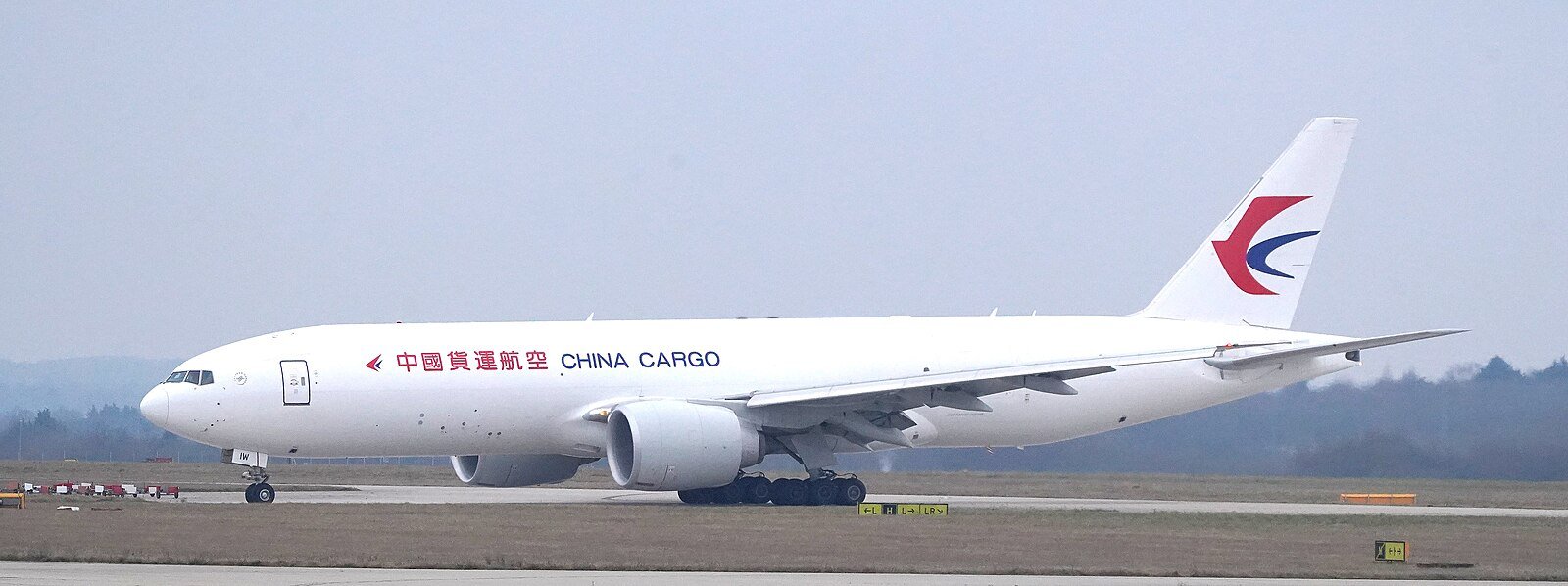
Photo: Wikimedia Commons
For Indian all-cargo carriers keen on getting a foothold in China’s freight market, the hurdles put up by the Chinese are discouraging.
Either they accept the Chinese 10 flight cap or forget business with China during peak export cycles.
On the other hand, India’s regulatory environment is totally different. Under the Indian DGCA Civil Aviation Requirements (CAR) 158/158A and the 2024 Open Sky Policy for Non-Scheduled Cargo Flights, foreign cargo charters are not subject to an annual numeric restriction.
All that foreign carriers have to do is acquire single or series permits-of course, after fulfilling safety and compliance clearances. The administrative process is not restrictive. It is fast track and clearances are completed in time with spikes in demand from perishables, pharmaceuticals, or e-commerce parcels.
This liberal approach is in keeping with India’s wider aviation policy: capacity will follow demand, not ceilings imposed at whim. In short, whereas China’s system inhibits flexibility, India’s encourages it.
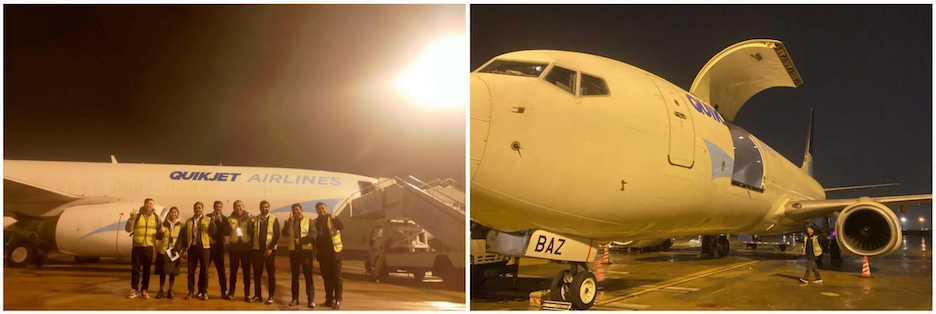
The effect of this asymmetry is real. An Indian airline lacking a CCAR-129 amendment for a specific Chinese airport can have only 10 charters per annum. A Chinese airline entering India, on the other hand, has no such numerical limit—its primary condition is to submit an application per flight and adhere to DGCA standards.
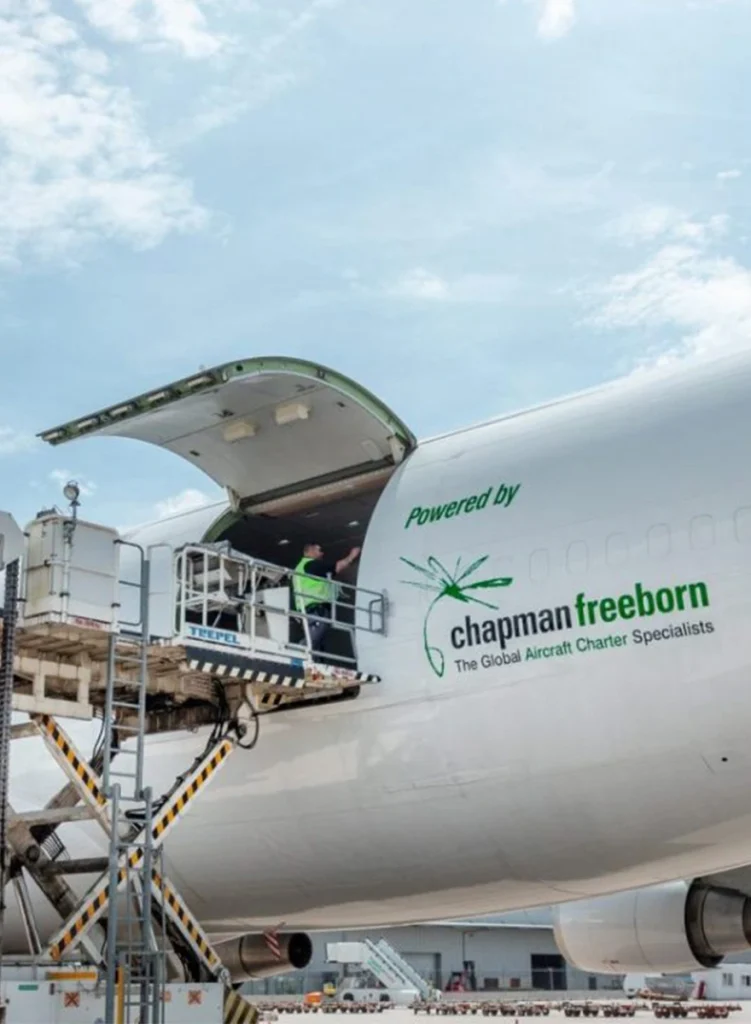
Photo: Chapman Freeborn
In the peak export seasons — whether for pharmaceuticals, perishables, or engineering goods — this imbalance is stark. Indian carriers are frequently grounded at the very moment demand is highest, conceding to foreign or third-country operators.
Goods that could otherwise move directly from India to China now route through intermediaries like Hong Kong, Singapore, or Dubai. The consequence: longer supply chains, increased costs, and reduced competitiveness for Indian exporters.
Even Indian carriers that go after CCAR-129 amendments are confronted with the fact that approvals may take so long that the commercial opportunity disappears before clearance is issued.
The stakes are high because the India–China air freight corridor is at the heart of Asian trade. In 2025, India’s international air cargo load factor averaged 195,000 tonnes per month, increasing 13% from 2019. China’s international air freight traffic in the first ten months of 2025 was 2.93 million tonnes, a 48% increase against pre-pandemic levels.
Critical bilateral corridors —Shanghai-Delhi, Beijing-Mumbai, and Shenzhen-Chennai— bear a combination of high-value, time-sensitive freight. India exports pharmaceuticals, perishables, textiles, and auto parts; China ships electronics, machinery, and synthetic textiles. These corridors are crucial veins for both economies’ production and export-driven systems.
However, with strong demand and the resumption of passenger operations, Indian cargo airlines still face a closed door in China, while Chinese carriers fly into India with adaptability and foresight.
India has an open system which follows global best standards. As a matter of fact, foreign cargo charters are allowed in a number of countries in Europe, the Middle East, and Southeast Asia based on safety and bilateral air service agreements principles rather than quota-based controls.

Photo: CFC
In cases where there are limitations, they generally refer to airport slot shortage or bilateral reciprocity capacity, rather than a total cap like China’s “10-in-12” rule.
This situation is remarkable for a big trading partner country and points to the underlying issue of lack of reciprocity, which is, in fact, quite surprising when both economies are gearing up for more post-pandemic supply chain collaboration.
It is important for India to face the Chinese challenge head-on without unleashing a tit-for-tat policy cycle. There are three options:
- Time-Limited CCAR-129 Amendments: A move can be made to impress upon China to bring a transparent, time-limited mechanism for Ops Specs amendments. Reliable turnaround periods would assist compliant foreign operators, including Indian carriers, in planning and operating effectively without being stuck in regulatory uncertainty for months.
- Create Bilateral Charter Access Protocols: India and China can formalise mutual charter access in a side agreement or protocol to the existing Air Services agreement. There could be explicit ceilings, frequency rights, and processing timelines. That would provide some sort of balance that would be similar to India’s arrangements with ASEAN or European allies.
- Measured Reciprocity: In case talks reach a deadlock, India is likely to impose restrictions on the proportion of aircraft charters from countries that limit traffic for Indian carriers. Although this would bring back equilibrium, it would go against India’s stance of a free market and put at risk the decrease of the total cargo that would be available.
India’s hope to become a global air cargo hub — the linchpin of its Make-in-India and export-oriented growth strategy — rests on equitable, reliable access to key trading partners. China, being India’s largest market, cannot be an exception.

The solution does not lie in revenge but in diplomatic engagement — urging openness, reciprocity, and written promises regarding market access.
The increase in trade volumes and the concentration of supply chains in Asia mean that opening the skies to Indian cargo carriers is not just a matter of policy anymore; it is a matter of strategy.
However, until that happens, the passenger routes along Delhi to Beijing could be congested once more, but for Indian cargo carriers, China’s ‘10-flight rule’ will continue to make the Indian exporters’ runway frustratingly brief.
Also Read: India’s Air Cargo Grows Amid Legacy ULD Systems and Rising Demand