





















Table of contents
Cessna Citation CJ3 Gen2
The Cessna Citation CJ3 Gen2, part of the renowned Citation family, is a versatile business jet built for corporate travel, private use, and various special missions. It’s designed for both single-pilot operations and group travel, offering a range of customisations tailored to specific mission profiles. The aircraft can be modified for roles such as medical evacuation, aerial surveying, or government missions, making it a practical asset for organisations requiring a reliable and capable platform for non-standard operations.
One of the most capable light jets available in today’s business aviation market, the aircraft’s ability to take off and land on shorter runways, along with its high-altitude performance, ensures that it can operate effectively in a variety of environments.
Cabin Experience
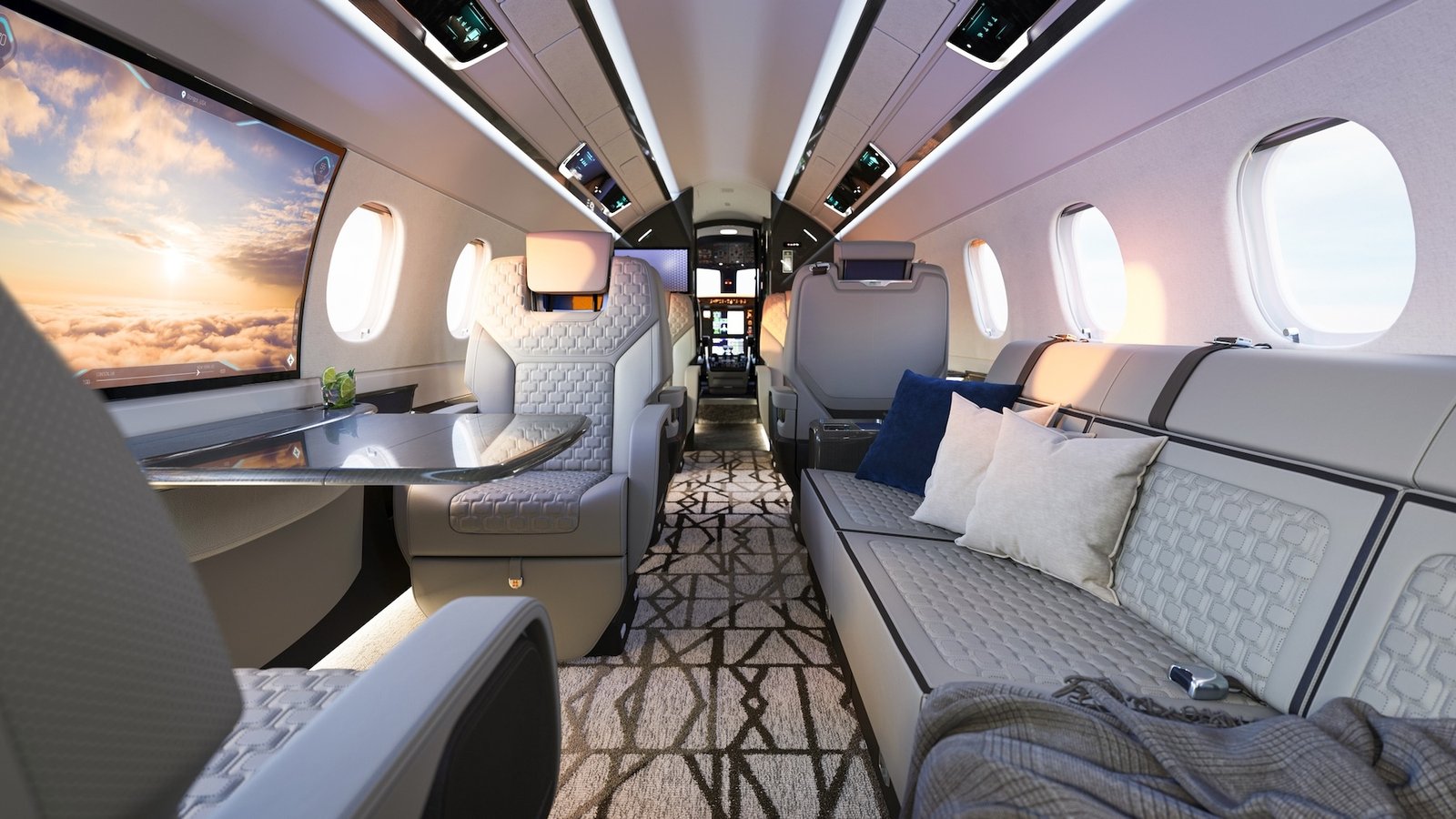
The aircraft’s cabin is tailored for luxury and functionality. With a cabin length of 15 feet 8 inches (4.8 meters), height of 57 inches (1.4 meters), and width of 58 inches (1.47 meters), the cabin offers comfortable space for up to nine passengers. The design focuses on maximising personal comfort, with flexible seating configurations, high-quality materials, and soundproofing technologies to ensure a quiet and relaxing environment.
The interior design offers multiple customisation options, allowing owners to select from a variety of colour schemes and finishes, such as Glacier, Jet Black, Truffle, Bisque, and Sandstone. Additional options include an extended refreshment centre, folding side-facing seat, and a vanity with a sink in the lavatory, enhancing the convenience and usability of the space.
The aircraft uses eco-friendly textiles and materials, which reflects Cessna’s commitment to sustainability. The cabin is also equipped with ample baggage space, with a total capacity of 65 cubic feet (1.84 cubic meters), accommodating up to 1,000 pounds (454 kg) of luggage.
Technology (Engine and Avionics)
The aircraft is powered by two Williams International FJ44-3A engines, each producing 2,820 pounds of thrust. This power allows the aircraft to achieve a maximum cruise speed of 416 ktas (770 km/h), making it capable of covering long distances swiftly. With a maximum range of 2,040 nautical miles (3,778 km), the CJ3 Gen2 can comfortably handle cross-country trips or even international flights without the need for frequent refuelling stops.
The CJ3 Gen2 is equipped with Garmin’s full-regime autothrottles, a significant enhancement that simplifies engine management while optimising fuel efficiency. The system provides over-speed and under-speed protection, ensuring that the engines maintain optimal performance throughout the flight. This feature is especially valuable during single-pilot operations, as it reduces pilot workload and enhances safety.
One of the standout features of the aircraft is its avionics suite, centred on the Garmin G3000 flight deck. The G3000 is known for its intuitive, touchscreen interface, offering pilots quick access to essential flight data and system controls. This advanced avionics system includes dual WAAS-enabled GPS receivers, providing accurate navigation capabilities.
The Garmin G3000 system also includes a Terrain Avoidance and Warning System (TAWS-B), ensuring that pilots are continuously aware of their surroundings, especially when flying near obstacles or mountainous regions. Another key safety feature is the Traffic Collision Avoidance System (TCAS II), which actively monitors surrounding air traffic and issues alerts to avoid potential mid-air collisions.
Among additional avionics, Synthetic Vision Technology (SVT) provides a 3D, real-time visual representation of terrain, obstacles, and other traffic. Garmin GWX 8000 StormOptix™ weather radar offers clear weather analysis and detection of storm cells and turbulence, while Garmin GDL 60 Datalink facilitates seamless updates for navigation and communication. Additionally, LinxUs® diagnostics systems provide real-time fault detection and reporting, either upon landing or during flight (with the optional satellite-based LinxUs® Air system). This feature minimises downtime by providing actionable maintenance alerts to ground teams, ensuring the aircraft remains airworthy.
Performance
The aircraft’s ability to perform well at high altitudes and in hot environments enhances its operational flexibility. It operates at a maximum altitude of 45,000 feet, allowing it to fly above commercial air traffic and bad weather, contributing to smoother and more efficient flights.
For runway performance, the aircraft requires just 3,180 feet for takeoff, and 2,770 feet for landing, making it suitable for smaller airports, particularly those with shorter runways. This versatility is especially beneficial for corporate users who may need to access remote or high-altitude airports. Its climb rate is impressive as well, with a maximum climb rate of 4,478 feet per minute, reaching optimal cruise altitudes quickly.
The aircraft’s wing design maximises lift and minimises drag. The jet’s wing features a computer-sculpted airfoil, optimising airflow for better performance during flight. This design minimises fuel consumption and improves overall efficiency, which contributes to lower operating costs and a reduced environmental impact.
With a wingspan of 53 feet 4 inches (16.26 meters) and a wing area of 294 square feet (27.32 square meters), the aircraft balances agility with stability. The wing design allows for smooth handling and reliable performance, even under challenging flight conditions. The aircraft’s sleek profile, combined with state-of-the-art materials and construction methods, makes the aircraft not only visually appealing but also a robust performer.
The aircraft’s basic operating weight is 8,540 pounds (3,874 kg), and it offers a useful load of 5,530 pounds (2,508 kg), ensuring it can carry a significant payload even on long-haul flights. With a fuel capacity of 703 gallons (2,661 litres), it delivers a good balance between range and efficiency. Its fuel efficiency, combined with low operating costs, makes it a cost-effective option for business and private users, despite offering features typically seen on larger jets.
One of the most attractive features of the CJ3 Gen2 is its single-pilot certification, which significantly reduces crew costs. For companies that prioritise operating economics without compromising on performance, this certification makes the CJ3 Gen2 an ideal choice.
| Specification | Details |
|---|---|
| Engines | 2 × Williams International FJ44-3A |
| Thrust (per engine) | 2,820 lb |
| Maximum Cruise Speed | 416 ktas (770 km/h) |
| Maximum Range | 2,040 nm (3,778 km) |
| Maximum Operating Altitude | 45,000 ft |
| Takeoff Distance | 3,180 ft |
| Landing Distance | 2,770 ft |
| Cabin Length | 15 ft 8 in (4.8 m) |
| Cabin Width | 58 in (1.47 m) |
| Cabin Height | 57 in (1.45 m) |
| Maximum Passengers | 9 |
| Fuel Capacity | 703 gal (2,661 L) |
| Basic Operating Weight | 8,540 lb (3,874 kg) |
| Useful Load | 5,530 lb (2,508 kg) |
| Wingspan | 53 ft 4 in (16.26 m) |
| Wing Area | 294 sq ft (27.32 m²) |
Takeaways
The CJ3 Gen2 is a continuation of Cessna’s legacy of innovation in business aviation, offering solutions that cater to the modern traveller’s needs while ensuring operational efficiency and safety for the pilot. The aircraft continues to set a benchmark in the light jet category.
Building on the legacy of the Citation line, the CJ3 Gen2 offers advancements in avionics, cabin design, and overall functionality that cater to modern aviation demands.
In addition to corporate and private use, the aircraft is also designed to accommodate special mission configurations. Cessna’s aircraft are known for their adaptability, and the CJ3 Gen2 can be tailored for medical evacuation, aerial surveys, or government and defence missions. Its ability to operate from short runways and reach high altitudes quickly makes it a versatile asset in both civilian and government sectors.
Overall, the Cessna Citation CJ3 Gen2 stands out as a light jet that combines high performance, advanced avionics, and luxurious cabin design. Whether for business executives seeking an efficient travel solution or for organisations requiring special mission capabilities, the aircraft provides the right balance of speed, range, and operational flexibility.