


















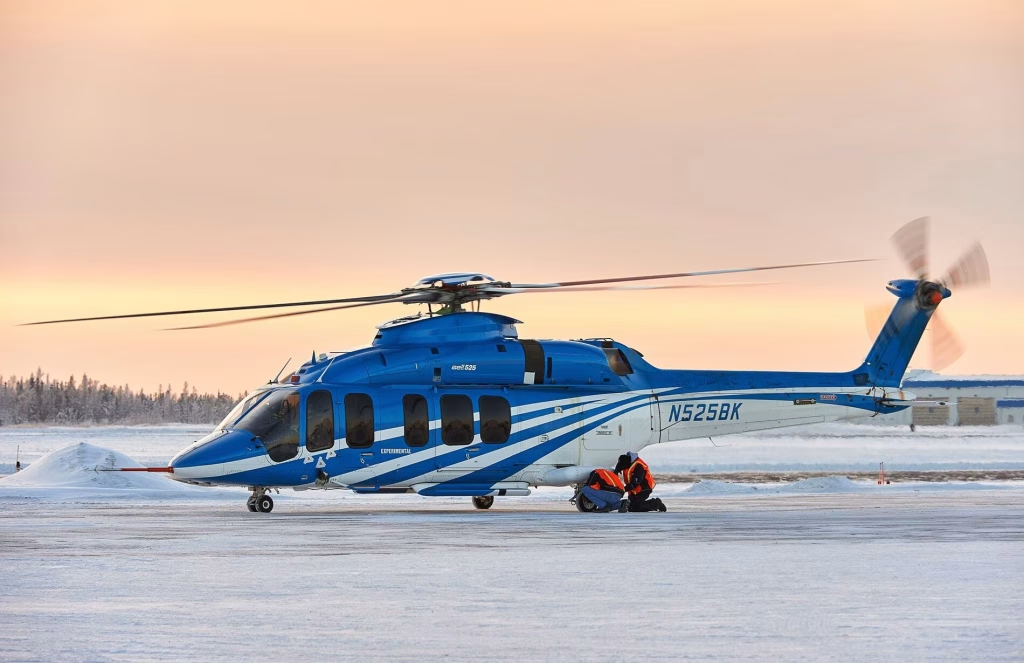
Bell 525
The Bell 525, designed and developed by Bell Textron Inc, has set new benchmarks in the commercial rotorcraft market. It has become an ideal choice for a range of missions including oil and gas transport, search and rescue (SAR), emergency response, commercial aviation sector and VIP transport.
The aircraft’s breakthrough technology and design have already attracted significant attention, with companies like Equinor signing a purchase agreement for 10 Bell 525 aircraft to support offshore operations in the North Sea. This partnership is expected to enhance the safety, reliability, and environmental impact of Equinor’s offshore missions, with deliveries expected to begin in 2026.
Cabin Experience
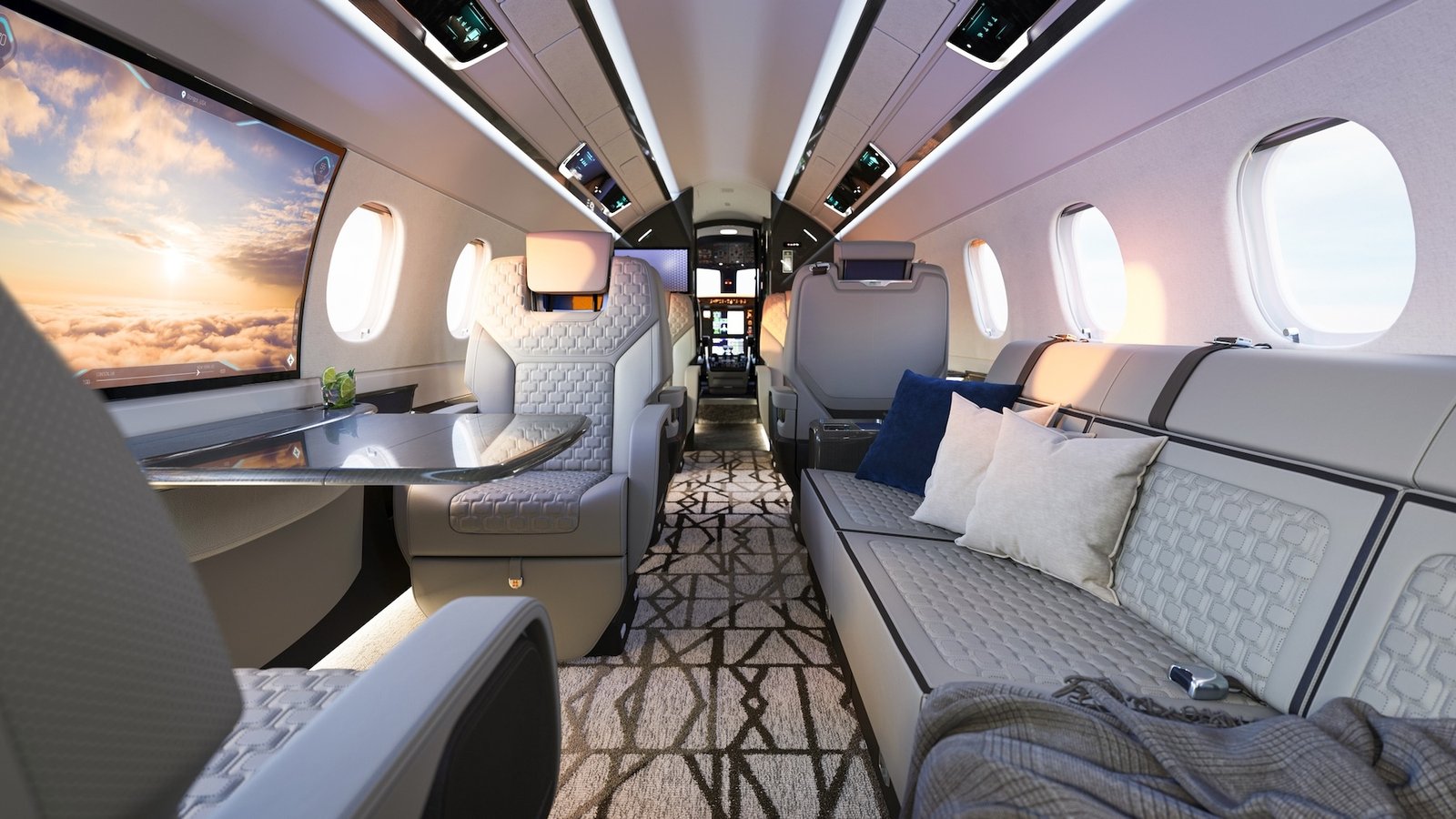
The aircraft offers a luxurious and spacious cabin designed with passenger comfort and mission versatility in mind. The helicopter’s cabin can be configured to accommodate different mission profiles, from offshore transport to executive seating arrangements. It offers an expansive, quiet, and climate-controlled environment, ensuring a smooth and comfortable flight.
One of the aircraft’s key features is its large windows, which provide excellent visibility for passengers and crew alike. The spacious cabin, combined with customisable seating arrangements, ensures that the helicopter can be tailored to meet specific operational requirements, whether it’s transporting VIPs or medical evacuation missions. Additionally, the flat floor design and wide doors enhance accessibility, allowing for quick and easy loading and unloading of cargo or personnel.
The cabin floor area measures 88 square feet (8.2 square meters), with a baggage compartment volume of 128 cubic feet (3.6 cubic meters). This ample space ensures that both passengers and essential cargo are accommodated comfortably, without compromising on the quality of the journey. The wide cabin doors also facilitate smooth boarding and deplaning, which is especially critical in high-pressure environments such as oil rigs, emergency response, and commercial aviation sectors.
For VIP transport, the aircraft offers a premium experience with leather seats, soundproofing, and cutting-edge in-flight entertainment options. It delivers the luxury expected of a high-end helicopter, making it a preferred choice for corporate or executive travel.
Cockpit
The aircraft’s cockpit is designed to enhance pilot efficiency and ensure mission success, incorporating the latest in helicopter avionics technology. Central to this is the Garmin G5000H™ avionics suite, which offers fully integrated touchscreens and flight displays that reduce pilot workload while improving situational awareness. The cockpit also features a four-axis fly-by-wire flight control system, the first of its kind in a commercial helicopter.
Fly-by-wire technology allows for precise control and automation, reducing the manual input required from the pilot and increasing overall safety. The system automatically compensates for environmental factors like wind and turbulence, enabling smoother, safer flights in challenging conditions. This innovation also allows for quicker response times, making the aircraft suitable for dynamic missions such as search and rescue or offshore operations.
The cockpit is further enhanced with synthetic vision, moving map displays, traffic collision avoidance systems, and Helicopter Terrain Awareness and Warning System (HTAWS), which provide real-time data to the pilot. With an intuitive layout and integrated controls, the aircraft’s cockpit is designed for optimal pilot performance, enabling seamless operation even during the most demanding missions.
Technology: Engine and Avionics
The aircraft is powered by two General Electric CT7-2F1 gas turbo-shaft engines. These engines provide a maximum takeoff power of 1,979 shaft horsepower (SHP) and a continuous power output of 1,714 SHP. With the dual FADEC (Full Authority Digital Engine Control) system, the engines ensure optimal fuel efficiency, reduced emissions, and a smoother, more reliable performance.
The engines are specifically designed for medium-lift helicopters and offer high fuel efficiency, enabling extended operational range and lower overall operating costs. The powerplant is also designed for redundancy, ensuring that the aircraft’s can safely complete its mission even in the event of an engine failure.
The integration of the fly-by-wire system with the advanced avionics suite further enhances the aircraft’s technological edge. The Garmin G5000H™ suite, with its touchscreens and advanced flight displays, provides the pilot with critical flight information, including engine performance, navigation, and weather data. The aircraft also features a state-of-the-art Health and Usage Monitoring System (HUMS), which continuously monitors the helicopter’s mechanical systems, providing real-time diagnostics that help to reduce maintenance costs and improve operational efficiency.
The avionics package includes Helicopter Synthetic Vision Technology™ (HSVT), which creates a 3D rendering of the terrain and obstacles, allowing for safer operations in low-visibility conditions.
Performance
The aircraft offers industry-leading performance metrics, making it one of the most capable helicopters in its class. With a maximum cruise speed of 160 knots (296 km/h), it is one of the fastest helicopters in the medium-lift category. Its maximum range of 580 nautical miles (1,074 kilometres) allows it to cover vast distances without the need for refuelling, making it ideal for offshore operations and long-range transport missions.
The aircraft also excels in vertical lift performance, with a maximum takeoff weight of 20,500 pounds (9,299 kilograms) and the ability to carry external loads of up to 5,000 pounds (2,268 kilograms). This capability makes it suitable for a variety of missions, from transporting heavy equipment to remote sites to conducting search and rescue operations in rugged terrains. The helicopter’s hover ceiling of 14,000 feet in ground effect (IGE) and 12,000 feet out of ground effect (OGE) enables it to operate efficiently in high-altitude environments, further enhancing its versatility.
In terms of endurance, the aircraft can fly for up to 3.5 hours without reserves, making it an ideal choice for extended missions. Whether flying over water or rugged landscapes, the aircraft’s superior range, speed, and lift capabilities make it a top choice for operators who require a helicopter that can handle demanding environments and long durations.
Specifications
The aircraft has a maximum gross weight (internal) of 20,500 pounds (9,299 kg), which allows it to transport heavy loads efficiently, whether it’s personnel or cargo. The standard fuel capacity is 643.8 US gallons (2,437 litres), offering extended endurance for long missions.
| Specification | Details |
|---|---|
| Hover Ceiling IGE | 9,132 ft / 2,783 m |
| Hover Ceiling OGE | 7,626 ft / 2,324 m |
| Max Cruise Speed | 160 kts / 296 km/h |
| Max Range | 619 NM / 1,146 km |
| Passenger Capacity | 2 + 16 (standard), 2 + 20 (high density) |
| Cabin Floor Area | 88 sq. ft / 8.2 sq. m |
| Aft Baggage Compartment Volume | 128 ft³ / 3.6 m³ |
| Maximum Gross Weight (Internal) | 20,500 lbs / 9,299 kg |
| Standard Fuel Capacity | 643.8 US gal / 2,437 litres |
| Powerplant (Takeoff) | 1,979 SHP / 1,476 kW |
| Powerplant (Max Continuous) | 1,714 SHP / 1,278 kW |
Takeaways
The Bell 525’s large cabin, customisable configurations, and high payload capacity make it suitable for both commercial and parapublic operations, while its advanced avionics and fly-by-wire technology ensure a smooth and safe flight experience.
The aircraft is a leading player in the medium-lift helicopter market, offering unmatched performance and versatility. Its blend of luxury, safety, and technological innovation makes it a highly sought-after platform in various industries, solidifying its place as one of the most advanced helicopters in its class.