













India’s Aviation Bilaterals at a Crossroads: Balancing Growth, Policy, and Global Ambition

- India is shifting from a reactive aviation market to one that sets its own terms, aligning bilateral expansion with the rising strength of Air India and IndiGo, and prioritising national economic value.
- Rapid outbound leisure growth, evolving India-US and India-Saudi corridors, and targeted liberalisation with Southeast Asia show how demand is outpacing old bilateral limits and forcing a recalibration of aviation diplomacy.
- Infrastructure bottlenecks and a new policy philosophy of “calibrated liberalism” are shaping how India protects market share, uses its expanding fleets effectively, and redefines access to ensure long-term gains for Indian carriers and airports.
India’s aviation story is evolving from one of catch-up to one of control. For the first time, the country’s own airlines, Air India and IndiGo, are driving the bilateral air services conversation, not merely reacting to foreign carriers’ demands. What was once a policy space dominated by Gulf hub strategies and Western network carriers is now being reshaped by Indian ambitions to capture a larger share of the international market — and the value that comes with it.
This shift marks a turning point for India’s bilateral aviation policy, a domain long criticised as overly conservative or asymmetrical. Gulf states, especially the UAE, have repeatedly sought expanded access, arguing that India’s booming demand justifies more seats. Yet the government’s restraint is strategic.
Behind the caution lies a new intent: to align bilateral expansion with India’s growing capacity, outbound appetite, and long-term national interests.
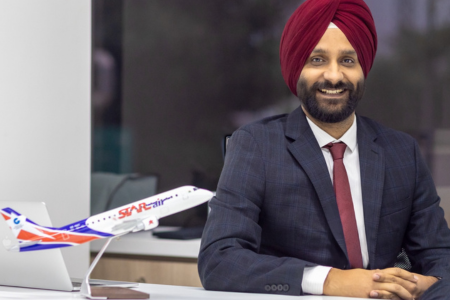
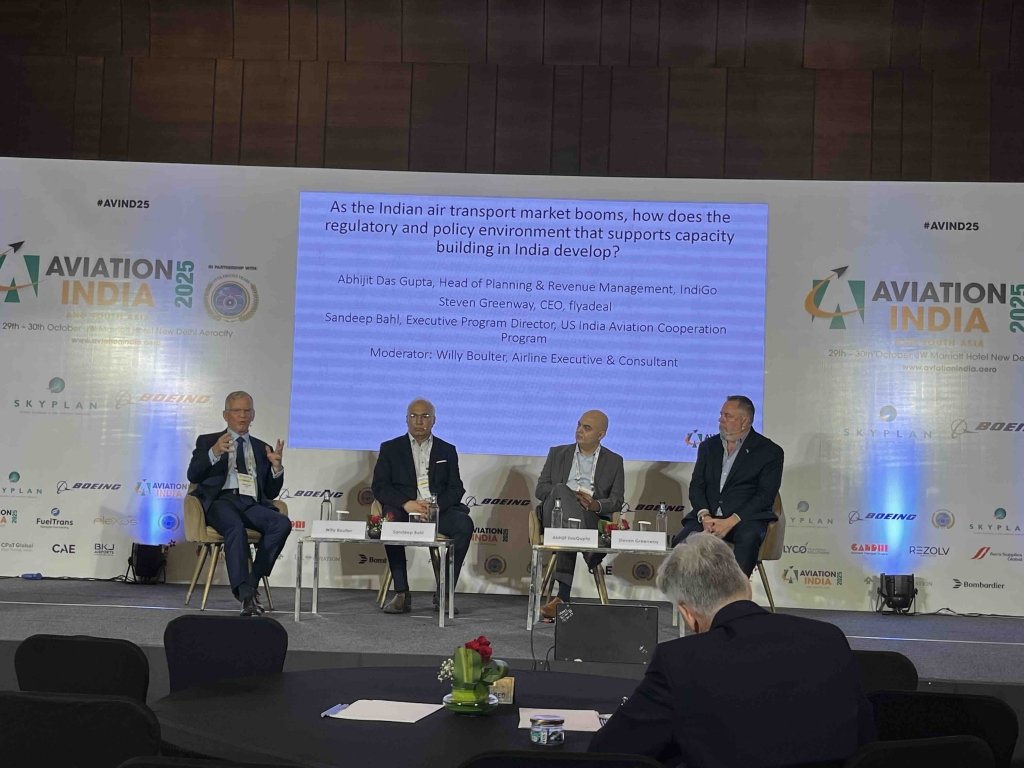
The demand curve in Indian aviation is steep — and persistent. As IndiGo’s head of Planning, Abhijit Dasgupta, explained while speaking at the Aviation India Summit, India’s aviation growth has tracked the global rule of thumb: between 1.6 and 2 times GDP growth. With India’s GDP expanding 7-8% annually, air traffic has grown roughly 15–16% over time — a pattern that has held true across shocks and cycles.

The pandemic recovery only reinforced this resilience.
Domestic travel quickly rebounded, but the most dramatic change was in the international segment.
Historically, India’s outbound traffic was dominated by VFR (visiting friends and relatives) travellers and one-way segments — students, migrant workers, and family visits.
Post-COVID, a new driver has emerged: outbound leisure travel.
Millions of Indians, having moved up the income ladder, are now holidaying abroad — from Thailand and Indonesia to Saudi Arabia and the UAE. IndiGo’s expansion into secondary Southeast Asian cities is a direct response to this surge. What was once a market defined by necessity-driven travel is now increasingly propelled by discretionary spending.
This transformation has exposed an interesting imbalance: demand is globalising faster than diplomacy. India’s international aspirations — and airline order books — are running ahead of bilateral capacity ceilings.
India’s bilateral air services policy, managed by the Ministry of Civil Aviation and the DGCA, is built around one principle: balance of benefits. In theory, both nations enjoy equal access under each treaty. But in practice, the “balance” depends on market maturity, slot availability, and the ability of both sides to deploy capacity effectively.
As Dasgupta put it: “Bilaterals are built on the principle of balance of benefits. Whatever is available is available to airlines on both sides.”
India’s policy is no longer about restriction but about sequencing — liberalising where Indian carriers can genuinely use the rights and compete on equal footing. This is why India has expanded agreements recently with Indonesia and Thailand — where mutual demand is evident — while deferring further expansion with the Gulf, where Indian airlines still need to consolidate capacity and avoid a repeat of the 2000s “Dubai effect”, when foreign hubs dominated Indian international flows.
Two bilateral relationships illustrate how India’s evolving aviation diplomacy is being tested by very different dynamics. The India-US corridor is among the largest and most lucrative in the world. Before the Russia-Ukraine conflict closed key airspace routes, United, American, and Delta operated multiple non-stop flights daily. Air India now leads with six US gateways, often flying at full capacity. As the geopolitical environment stabilises, the India-US bilateral will demand recalibration: expanding beyond legacy quotas to meet the immense two-way business, tourism, and diaspora-driven demand.

Photo: Steven Greenway
By contrast, the India-Saudi Arabia corridor reflects a more developmental phase.
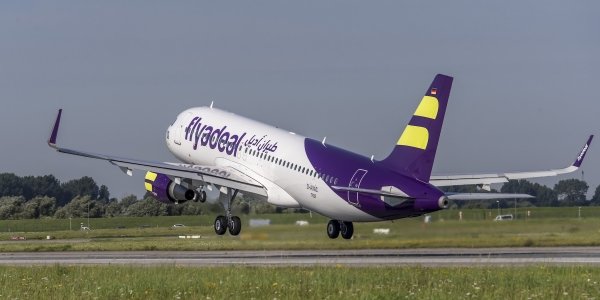
As Flyadeal CEO Steven Greenway noted, the traffic is dominated by labour migration and religious travel: an enduring but low-yield segment.
Yet this relationship is transforming as Saudi Arabia opens its economy and tourism under Vision 2030.
For India, it is both an opportunity and a caution: expansion must ensure Indian carriers retain market share rather than cede it to newer Gulf entrants, repeating the Emirates playbook.
Even as India debates bilateral access, the country’s biggest constraint may be at home. Airport infrastructure in Delhi, Mumbai, and Bengaluru is nearing saturation, limiting both domestic and international slot availability. While India offers multi-city access to foreign airlines, partner nations often have only one congested gateway — London Heathrow or Jakarta, for instance — making the theoretical “balance of benefits” difficult to achieve.
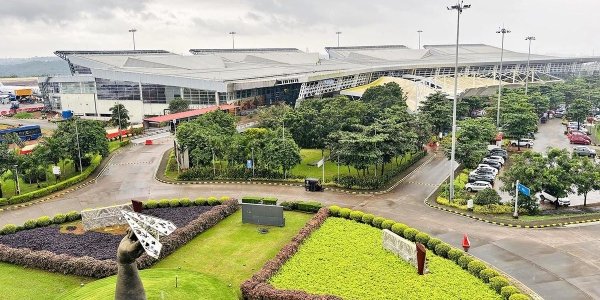
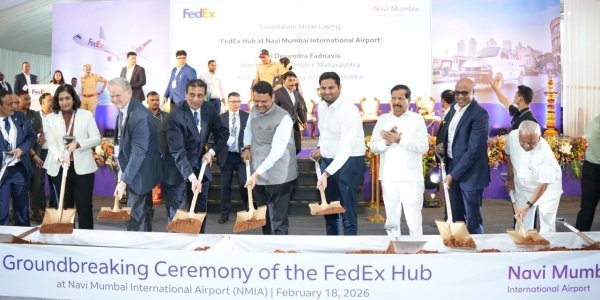
New airports such as Jewar (Noida) and Navi Mumbai will help, but until they come online, India’s ability to expand bilateral entitlements will remain partly constrained by infrastructure, not intent.
India’s upcoming revision to the National Civil Aviation Policy aims to enshrine a philosophy of calibrated liberalism — growth without surrender. New contracts will be influenced by factors such as shared benefits, regional equilibrium, and sensible economics instead of being influenced by foreign lobbying. There is a change in focus from the “open skies” talk to a framework which connects the bilaterals growth with real figures of the tourism, trade, and jobs sectors.
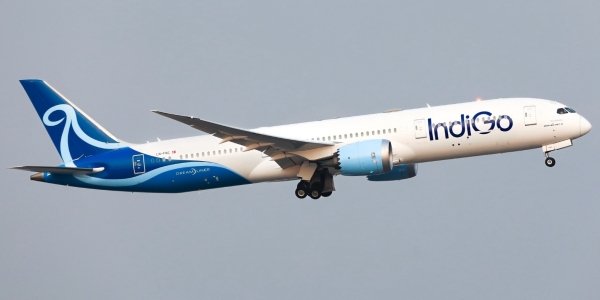
For domestic carriers, this evolution is fortuitous. Air India’s widebody resurgence under Tata ownership and IndiGo’s record fleet order signal that India now has the muscle to use its own rights. The next decade will be about deploying that muscle intelligently.
India’s aviation policy is at a strategic inflection point. The old model — where foreign carriers captured most international traffic while Indian carriers fed them passengers — is fading. The new one seeks to internalise that value: to ensure more of India’s aviation growth benefits Indian airlines, airports, and the broader economy.
If executed right, the coming decade will not be a repeat of Dubai’s rise at India’s expense. Rather, it will signify India becoming a global centre, a unique one, well-known for its energetic bilateral relations, growing fleets, and largely well-developed infrastructure throughout the country.
Simply put, the narrative of India’s bilaterals has ceased to be one of denied access — it is now about access redefined.
Also Read: India–China Flights Resume After Five Years, Starting with IndiGo’s Kolkata–Guangzhou Route