













Airports in Washington, D.C.: Aviation Infrastructure, Operations, and Regional Importance

- A Highly Coordinated Three-Airport System
The Washington metropolitan region relies on Ronald Reagan Washington National Airport (DCA), Washington Dulles International Airport (IAD), and Baltimore/Washington International Thurgood Marshall Airport (BWI) to balance domestic, international, government, and low-cost operations within tightly controlled airspace. - Dulles Handles Long-Haul & Global Connectivity
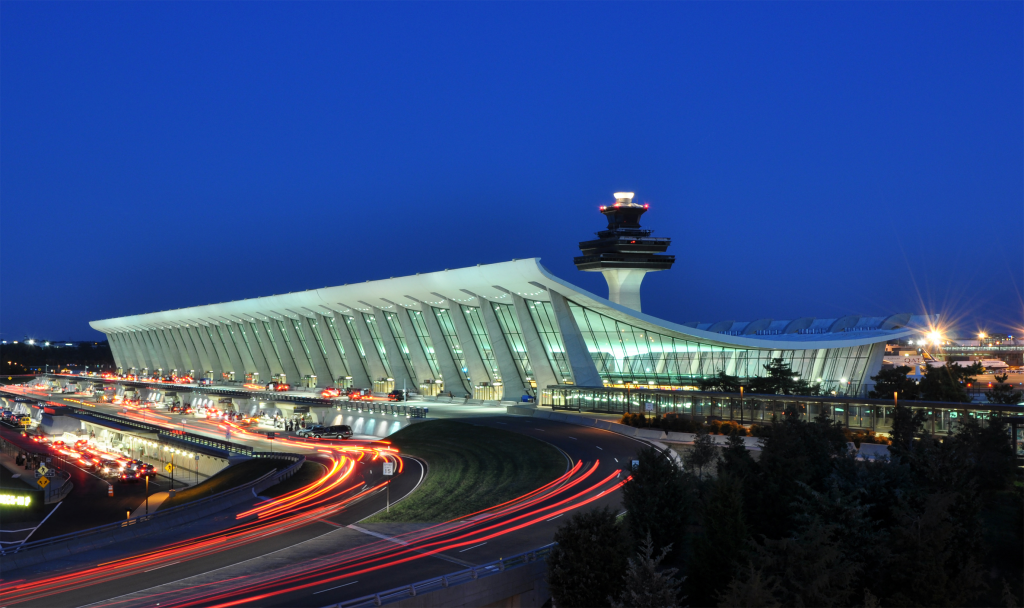
IAD serves as the region’s primary international hub, supporting widebody aircraft, long-haul routes, significant cargo operations, and acting as a major United Airlines hub. - Strict Airspace & Security Shape Operations
With Special Flight Rules Areas (SFRA), prohibited zones, and intensive civil–military coordination, Washington, D.C.’s aviation system operates within one of the most regulated airspaces in the world—prioritizing efficiency, safety, and national security. ✈️
Airports in Washington, D.C.:
Washington, D.C. is one of the most operationally unique aviation regions in the United States. As the nation’s capital, the area supports a high concentration of government, diplomatic, business, and military air traffic. Unlike many major cities, Washington, D.C. relies on a three-airport system to manage passenger demand, airspace restrictions, and specialized aviation operations.
The airports serving Washington, D.C. are critical not only for passenger travel but also for national governance, international diplomacy, cargo movement, and secure airspace management.
Washington, D.C. as a Multi-Airport Aviation Region
The Washington metropolitan area is served by three major commercial airports:
- Ronald Reagan Washington National Airport (DCA)
- Washington Dulles International Airport (IAD)
- Baltimore/Washington International Thurgood Marshall Airport (BWI)
Together, these airports form a coordinated aviation network that supports:
- Domestic and international connectivity
- Government and diplomatic travel
- Cargo and logistics
- Strict airspace security operations
This system is further shaped by Special Flight Rules Areas (SFRA) and restricted airspace around the U.S. capital.
Ronald Reagan Washington National Airport (DCA) – Government and Business Gateway
Airport Code: DCA
Location: Arlington, Virginia
Ronald Reagan Washington National Airport is the closest airport to downtown Washington, D.C. and plays a specialized role in the region’s aviation system.
Operational Role
DCA primarily serves:
- Short-haul domestic routes
- Government and congressional travel
- High-frequency business aviation demand
Due to its proximity to sensitive federal locations, DCA operates under strict security and airspace constraints, including perimeter rules that limit long-distance flights.
Aviation Characteristics
- Slot-controlled operations
- Narrowbody and regional jet dominance
- High on-time performance focus
- Limited runway and apron space
DCA prioritizes operational efficiency and reliability over capacity expansion.
Washington Dulles International Airport (IAD) – Primary International Hub
Airport Code: IAD
Location: Dulles, Virginia
Washington Dulles International Airport is the main international and long-haul airport serving the Washington, D.C. region.
Aviation Role
IAD functions as:
- A major international gateway
- A hub for United Airlines
- A key transatlantic and transpacific connector
The airport is designed to handle widebody aircraft and long-haul operations, with ample runway length and terminal capacity.
Operational Strengths
- Multiple long runways supporting heavy aircraft
- Significant cargo infrastructure
- Lower congestion compared to DCA
- Expansion-ready layout
IAD absorbs traffic that cannot be accommodated at National Airport due to operational and security limits.
Baltimore/Washington International Airport (BWI) – High-Volume Domestic and Low-Cost Hub
Airport Code: BWI
Location: Maryland
Baltimore/Washington International Airport serves as a high-capacity, cost-efficient airport for the broader D.C.–Baltimore region.
Operational Focus
BWI supports:
- High-volume domestic operations
- Strong low-cost carrier presence
- Cargo and express logistics
It is a major base for Southwest Airlines and offers operational flexibility due to fewer airspace and perimeter constraints.
Aviation Advantages
- Efficient runway utilization
- High aircraft movement capacity
- Competitive operating costs
BWI plays a critical role in balancing traffic across the region.
Airspace Complexity and Security Considerations
Washington, D.C. operates within one of the most restricted and closely monitored airspaces in the world.
Key features include:
- Special Flight Rules Area (SFRA)
- Prohibited Areas (P-56)
- Extensive coordination between civil and military aviation
These restrictions affect:
- Flight routing
- Aircraft approach and departure procedures
- General aviation operations
As a result, airport planning and air traffic management in the region require exceptional coordination.
Airlines Operating in the Washington, D.C. Region
The D.C. airport system supports a wide range of airline operations:
- Full-service domestic and international carriers
- Low-cost and point-to-point airlines
- Government and charter operators
Each airport attracts different airline types based on its infrastructure, location, and regulatory environment.
Cargo and Logistics Operations
While passenger traffic dominates, cargo operations are also significant—particularly at Dulles and BWI.
Cargo activities include:
- Government and diplomatic shipments
- Express and e-commerce logistics
- Medical and time-critical freight
Dedicated cargo flights often operate during off-peak hours to reduce congestion.
Role of General and Government Aviation
Beyond commercial airports, the region supports:
- Military aviation
- Government charter flights
- Diplomatic and special-mission aircraft
These operations are tightly integrated with national security requirements and influence overall airspace usage.
Operational Challenges
Airports in the Washington, D.C. region face several challenges:
- Limited airspace flexibility
- Noise and environmental regulations
- High demand during political and government events
- Infrastructure modernization needs
Despite these constraints, the region maintains high operational reliability.
Future Outlook for Washington, D.C. Airports
Future planning focuses on:
- Terminal modernization
- Sustainability initiatives
- Improved ground connectivity
- Enhanced air traffic management technology
Rather than expanding runways, the emphasis is on efficiency, security, and resilience.
Conclusion
Airports in Washington, D.C. form a carefully balanced aviation system designed to support government operations, international connectivity, and high-volume domestic travel within one of the world’s most controlled airspaces. From the precision-focused operations at Reagan National to the global reach of Dulles and the capacity efficiency of BWI, each airport plays a defined and essential role.
Together, they ensure that the nation’s capital remains connected, secure, and operationally efficient in an increasingly complex aviation environment.