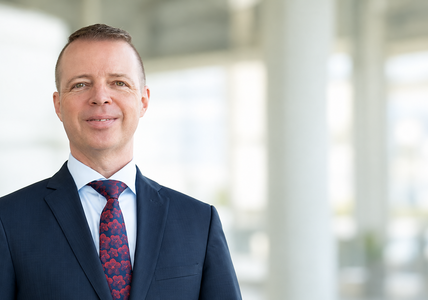




As India’s aviation sector scales rapidly, the focus on maintenance, repair and overhaul is shifting from capacity access to long-term reliability, execution and integration within global support networks. In this interview, Johanna Koch, Vice President Corporate Sales for South East Asia at Lufthansa Technik, reflects on how the company views India’s evolving role—both as a growing customer market and as an engineering and support base. She discusses changing airline engagement, the realities of operating amid sustained supply-chain constraints, and the factors that will determine how far India can be embedded into global MRO operations over time.
How does Lufthansa Technik view India today—as a customer market, an engineering hub, or a future MRO execution base—and how has that view changed over the past five years?
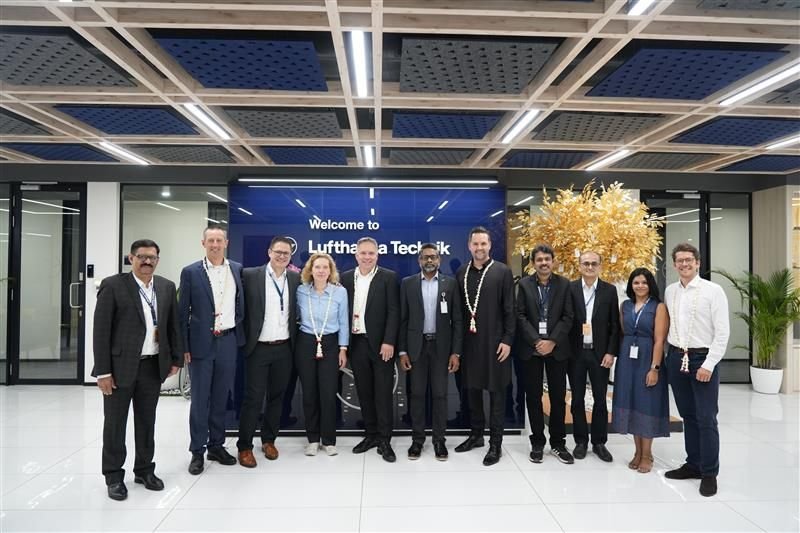
When we look at India today, we see not only a large and fast-growing customer market, but also a strong engineering and support hub. With approximately 500 employees at Lufthansa Technik Services India (LTSI) in Bengaluru, established in 2005, our footprint in the country has grown significantly over the past years.
In parallel, recent developments such as the privatisation of Air India and the extraordinary aircraft orders placed by Indian airlines have further highlighted India’s increasing relevance. Taken together, these factors naturally position India as a market of growing interest, also from an MRO perspective, alongside our continued focus on customer proximity and engineering capabilities.
How has India’s MRO demand profile evolved in recent years, and how are Indian airlines engaging with Lufthansa Technik today?
From a Southeast Asia perspective, we see a clear maturation in India’s demand profile over the past years. Indian airlines are engaging with MRO providers in a noticeably more professional and transparent manner, particularly in the way RFPs are structured and executed. The bidding processes are well organized and allow suppliers to present their most competitive and value-driven proposals, which we believe will benefit the overall MRO ecosystem in the long-term.
At the same time, we observe a shift in priorities. While capacity access remains important, airlines are increasingly focused on reliability, performance, and predictability of outcomes. There is a growing recognition that sustainable operational excellence and fleet availability require high-quality support and robust reliability commitments—not merely the lowest price point. This evolution aligns well with longer-term support models and reinforces the industry’s understanding that quality, reliability, and performance come with an appropriate investment.
When India and Southeast Asia compete for the same global MRO capacity, how does Lufthansa Technik balance customer commitments across the region?
At Lufthansa Technik, we maintain a balanced global portfolio rather than prioritising specific regions. Our resource allocation is driven by the depth of the partnership; the broader the product spectrum and the greater the mutual exposure, the more trust is built between both parties.
Crucially, our strategy in both India and Southeast Asia is built on ‘under-promising and over-delivering.’ While this transparent approach may differ from the traditional sales tactics Indian carriers often encounter, we find that the major players in the Indian market increasingly value this reliability when regional demand is at its peak.
With supply-chain disruption becoming structural, how do you manage customer expectations around turnaround times and availability without overpromising?
Transparency is key. Not only in India but with any other customer of Lufthansa Technik. The whole ecosystem is suffering from supply chain disruptions – airlines and MROs alike. To be frank: I believe dealing with supply chain issues has become the new norm and with the current growth in aviation, I would be surprised to be back to normal soon.
As the world’s biggest independent MRO provider, we at Lufthansa Technik invest in in-house capabilities or invest in assets/surplus wherever possible and economically feasible to mitigate the impact on our customers. Our strength is that we are not a “New Kid on the Block” and our experience, as well as longstanding cooperations with the OEMs, definitely help us.
In a market aware of engine MRO bottlenecks, how does Lufthansa Technik position its engine offerings while meeting pricing expectations?
Airlines today are extremely well informed about engine MRO bottlenecks, so positioning is less about explaining the situation and more about putting it into context (e.g. sharing our point of view and forecast openly).
We focus on aligning pricing with tangible value: capacity security, technical depth, and risk mitigation, while tailoring solutions to each operator’s operational reality. It’s a careful balance between market awareness and commercial expectations, and that balance is achieved through trust, dialogue, and long-term partnership rather than transactional discussions
If Lufthansa Technik were to expand further in India, which constraint poses the biggest strategic challenge today?
Very clearly: Regulatory alignment with focus on taxation. For Lufthansa Technik’s expansion, regulatory alignment regarding taxation (specifically Withholding Tax) is the most persistent strategic challenge. It requires a level of fiscal navigation that technical training or OEM licenses cannot bypass. While manpower can be trained and OEM access can be negotiated, the fiscal “red tape” between sovereign nations is often the most rigid barrier.
How critical is digital readiness in shaping Lufthansa Technik’s investment and partnership decisions in fast-scaling markets like India?
In a high-growth market like India, digital readiness is the difference between an airline that scales and one that stalls.
At Lufthansa Technik, we see digital integration as the ultimate litmus test for partnership. By moving from manual processes to digital tech-ops like AVIATAR, we shift from reactive maintenance to predictive analytics.
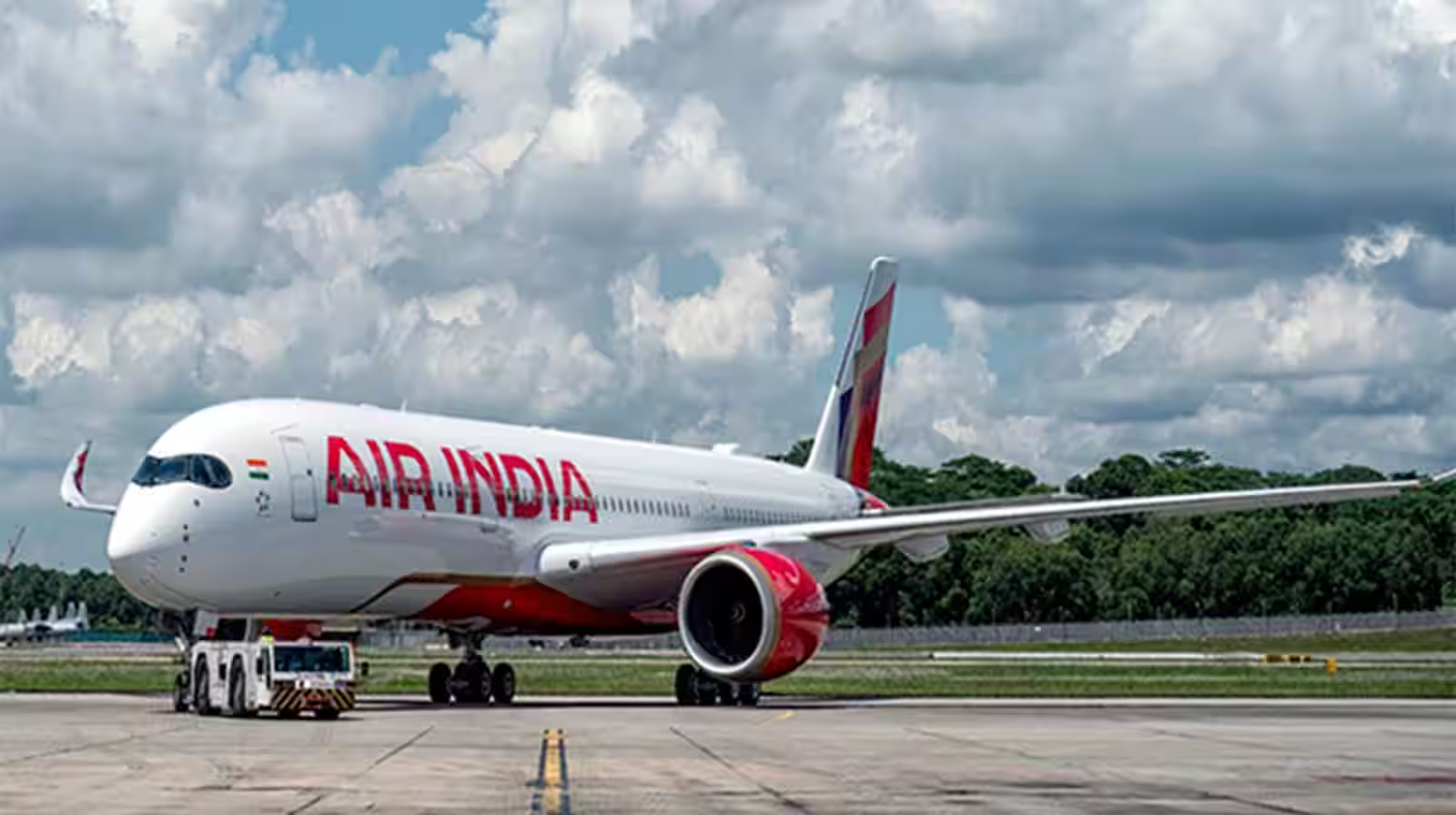
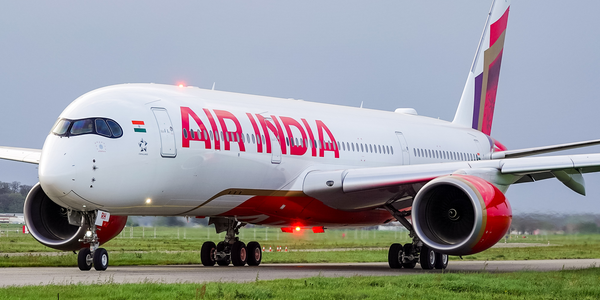
Take Air India for example, by creating a ‘Digital Twin’ of their fleet using AMOS and flydocs , they’ve turned back-office paper trails into a strategic speed advantage. We aren’t just looking for partners; we’re looking for digital-first collaborators ready to fly.
Does Lufthansa Technik see a partnership-led model—rather than asset-heavy expansion—as the most effective way to grow in India in the near term?
At Lufthansa Technik first and foremost we want to create value for our customers and partners through our products. Recent initiatives like our Cyclean Engine Wash partnership with GMR reflect a deliberate shift toward a relationship-driven, value add model in India.
For Lufthansa Technik, the near-term priority isn’t just building hangars or test benches; it’s about building trust and operational synergy with local champions. By combining our technology know-how with the local expertise of partners like GMR, we can deploy sustainable solutions faster than a greenfield project ever could.
How have Indian airline customers’ expectations evolved in terms of service quality, timelines, and value-driven decision-making?
What we clearly see is not just an increase in demand, but also a much higher level of professionalism in how that demand is managed. Major Indian operators today are far more involved in understanding what they are buying, often at a very detailed level.
There is a growing recognition that the cheapest product in the market is not always the best solution. Over the last three years especially, we have noticed a shift away from purely price-driven decisions toward more considered evaluations of value, reliability, and long-term outcomes.
We are very transparent about our own positioning. We will never be the cheapest provider in the market, but we see ourselves as offering moderate pricing with high-quality delivery. Just as importantly, we do not over-promise. Internally, I encourage my teams to walk away if we feel we cannot genuinely add value, or if a customer already has a solid solution in place. We do not pitch for the sake of winning business. We choose our engagements carefully and focus on areas—such as components and digital technical operations—where we believe we can make a meaningful contribution.
Have Indian airlines become more pragmatic in how they view delays driven by global supply-chain constraints?
Compared to some other airlines in the Asia-Pacific (APAC) region, Indian operators remain demanding, although the awareness of supply chain constraints is certainly there. That said, being demanding of suppliers is also part of the business culture, and we do experience that.
From my perspective, supply chain challenges have effectively become the new normal. We cannot continue to treat them as a temporary disruption. Instead, the focus now has to be on how we adapt and manage these constraints more efficiently.
As a maintenance, repair, and overhaul (MRO) provider, we aim to mitigate the impact of supply chain issues for our customers as much as possible. In some cases, this is within our control—for example, by building in-house capabilities. In other areas, it is not. This is why we are very selective about the products and services we offer, and realistic about what we can and cannot control.
How do you see India fitting into Lufthansa Technik’s global MRO ecosystem over the long term?
In the long term, we definitely see India as an integral part of our global MRO ecosystem. That said, there are still hurdles to address. One of the key challenges, as also discussed during the MRO panel, relates to taxation, which is largely a policy-level issue.
While recent free trade agreements help ease customs-related processes, they do not yet resolve broader taxation concerns. From our assessment, the ongoing negotiations around the double taxation agreement between India and Germany—now underway for several years—remain a significant factor. Until that is resolved, it will be difficult to scale certain activities at a much larger level.
At the same time, our footprint in India is already substantial and growing. Lufthansa Technik Services India recently crossed the 500-employee mark and continues to expand rapidly. Today, this operation provides shared service support not only to Lufthansa Technik, but also to other Lufthansa Group companies. We are steadily broadening the scope of work being done here.
Ultimately, our long-term vision is to have India fully integrated into our global MRO ecosystem, alongside our existing capabilities elsewhere.
By 2030, what would define success for Lufthansa Technik in India in terms of strategic relevance rather than scale?
Success was, if India will no longer be a region we “sell our services to,” but a location from which we drive global MRO innovation through the expansion of LTSI, new local partnerships and an established MRO footprint.
Also Read: Predictive Aircraft Maintenance Moves to the Core of Airline Operations