










As business jet passengers push for cabin connectivity that feels as seamless as the office or home, Gogo has developed a multi-orbit portfolio that combines proven geostationary (GEO) networks with new low Earth orbit (LEO) services. In this interview, David Falberg, Senior Vice President International Sales at Gogo, speaks with Rakesh Gera about how this portfolio is being tailored for business aviation, what “enterprise-grade” connectivity means in practice, and why installation, certification and fast-growing markets such as India and the wider Middle East sit at the centre of the company’s strategy.
You supply your own satellite communications (SATCOM) hardware and software, and offer a multi-orbit, multi-band portfolio. How are you positioning this against legacy networks in the Europe, Middle East and Africa (EMEA) region, and what do you see as the differentiator?
First, the legacy networks are actually an important part of our multi-band strategy. What has made those legacy solutions successful is very much carried forward into our multi-band offering, but now combined with the new networks coming to market, such as Low-Earth Orbit (LEO) constellations.
To put that in perspective, we have worked with Inmarsat (now Viasat) for more than 20 years. Their Jet ConneX (JX) Ka-band network is still the gold standard for high-speed connectivity in business aviation today. There are newer and sometimes faster systems in development, but JX already has more than 2,000 aircraft in service.

Following Gogo Business Aviation’s acquisition of Satcom Direct in December 2024, the rebranded Gogo serves roughly 70% of those aircraft.
That technology remains very valuable, is still being heavily invested in, and we continue to develop terminal equipment so customers can rely on it as a long-term, upgradeable part of their onboard solution. It gives them a resilient, proven backbone.
On top of that, we have our Plane Simple Ku-band system, using the SES network, which has been in service for about two years. It has been extremely successful in the large-cabin segment, delivering high-speed connectivity over a geostationary (GEO) network.
Now we have added LEO solutions, such as the Gogo Galileo system using the Eutelsat OneWeb network. That brings low-latency, high-capacity connectivity through a LEO constellation. We offer two antenna families there: FDX, the larger full-duplex unit and HDX, the more compact version, both of which are mounted on the fuselage.
By offering different antenna sizes, we are not limited to supporting mid- and large-cabin jets. We can now cover everything from very light jets up to head-of-state aircraft. In effect, any business jet can have high-speed, state-of-the-art satellite connectivity through our solutions. That breadth of choice across legacy GEO and new LEO networks is really the heart of our strategy.
For a large-cabin operator evaluating Galileo HDX and FDX, what are the real-world trade-offs between the two?
In real-world operations, the trade-offs tend to show up only at the extremes.
On larger aircraft, you usually have more passengers on board, all drawing bandwidth at the same time. In those scenarios, when the demand is very high, you want the widest “pipe” you can get. That’s where FDX, our full-duplex solution, comes in.
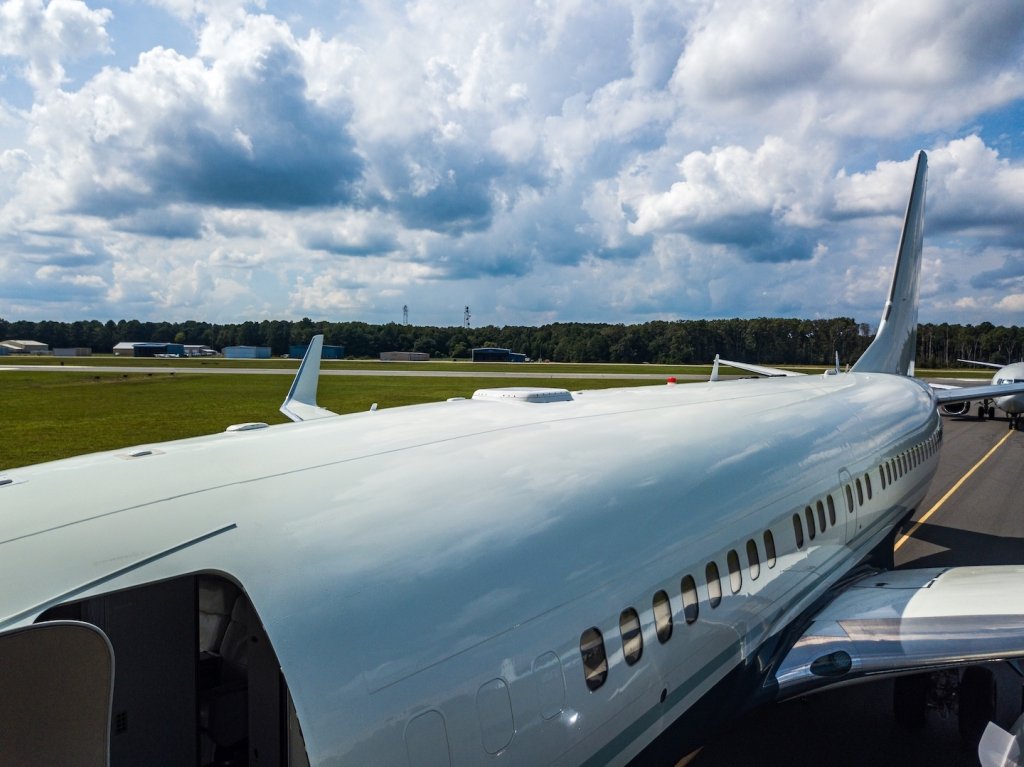
HDX is aimed at smaller aircraft, where the number of users and devices is more modest.
In those cases, you wouldn’t typically notice a performance difference compared to FDX, because you are not pushing the system to its capacity limits.
So we expect HDX to be most popular on light and mid-size jets, while VVIP, head-of-state and heavy-jet operators will usually opt for FDX.
The underlying networks — whether that’s OneWeb for Galileo or GEO services such as Viasat’s Jet ConneX or the FlexExec network, now part of SES — are all designed specifically for mobility and aviation. They are built to support aircraft flying at 500 mph and to deliver a reliable connection throughout the mission.
On the terminal side, we have designed the hardware, in partnership with others and in-house, so that an investment today is as future-proof as possible. If an operator wants to move from a Ka-band to a Ku-band solution, for example, they don’t need to strip the aircraft and start again. We have engineered our antenna and terminal architecture so that transitions like that are relatively straightforward compared with traditional retrofits.
From a service standpoint, we have also thought carefully about how business aviation uses connectivity. A good example is FlexExec, where we introduced “power-by-the-hour” pricing, customers pay a fixed rate per flight hour, regardless of how much data they use. For charter operators, that made it very easy to price the aircraft charters.
With Galileo, we have taken a modular plan approach. For HDX, we offer plans at 25 GB, 50 GB and unlimited data. For FDX, we have 50 GB, 100 GB and unlimited plans. All of that is based on our understanding of how business aviation customers actually consume data, and is priced to make it cost-effective to step into the LEO space.

Crucially, this isn’t consumer or terrestrial technology that’s been adapted for business aviation later. The solutions have been designed from the ground up to fit business aviation use cases.
There are still misconceptions in the market about LEO-powered connectivity versus GEO. How do you address those concerns in customer conversations?
Every network type has its pros and cons. LEO clearly delivers the lowest latency and very high capacity. GEO, on the other hand, is extremely well-proven and offers excellent coverage.
There are regions where, for geopolitical reasons or simply because LEO coverage isn’t fully built out yet, GEO will perform better today. So for us, the conversation isn’t about declaring one network “better” than the other.

What we try to do at Gogo is start with the customer’s mission: what they are trying to achieve, where they fly, how many people are on board, and what applications they use. From there, we work back to the best technical solution, which might be LEO, GEO, or a combination.
That’s why we have built a portfolio that is deliberately network-agnostic. We want to assemble a bespoke solution from our toolbox that prioritises customer experience above everything else.
Falcon in Dubai was the first charter fleet to adopt Galileo HDX. What did that campaign teach you about what “enterprise-grade” connectivity means for charter customers today?
We look at four key factors when we talk about truly enterprise-grade connectivity: cost, consistency, capability and coverage — the “four Cs”.
- Cost: The solution has to align with the operator’s budget and the aircraft’s mission profile.
- Consistency: The service must perform consistently across the entire mission — climb, cruise, descent, and approaches into challenging airports, such as city airports, where manoeuvres can affect link quality if not properly engineered.
- Capability: The network and terminal have to support what passengers actually want to do: heavy streaming, intensive video calls, virtual private networks (VPNs), and cybersecurity tools; these can all have different impacts on performance. The system needs enough headroom to handle those demands.
- Coverage: Finally, the service must work reliably wherever the aircraft needs to operate. There’s no point in having a great experience over one region if it falls away somewhere else that’s equally important to the operator.
Those four Cs are extremely important for our customers, and its how we define enterprise-grade. The Falcon campaign reinforced how important it is to balance all four, not just focus on speed.
You work with multiple Supplemental Type Certificates (STCs) across OEMs, including Bombardier. Where do you see the biggest bottlenecks — engineering, maintenance, repair and overhaul (MRO) capacity, or hardware supply?
Everyone in the chain, MROs, design organisations, OEMs, is working extremely hard and doing a great job of moving the technology forward. We are taking solutions from the drawing board to in-service in just a few years now, where historically that would have taken much longer.

The main challenges tend to be around the regulatory and contractual requirements we must satisfy to be compliant.
Every installation must meet a series of design, installation and operational rules, and there can be multiple parties involved on the network side as well.
All of that naturally adds complexity. The positive side is that we have built a strong ecosystem of partners over the years.
We face those challenges together and are aligned on pushing solutions through as quickly and efficiently as possible.
With players like Starlink and Viasat also targeting the same cabin, how is Gogo differentiating its offering?
A lot of our differentiation comes from being truly business-aviation led. The solutions are built from the ground up for this segment and are closely aligned with the needs of business aviation customers. This is why we created a multi-orbit, multi-band offering. It means we can deliver the connectivity our customers need, not just one solution.
Historically, one of Gogo’s biggest strengths has been support. Our support teams are fully certified and trained on all the systems we offer. So when an aircraft is on the ground with an inoperative system, and the operator calls us, they speak directly with someone who understands the hardware and the network. They are not stuck in an automated phone tree waiting for someone to call back.
Our people are a key differentiator, as is our adaptability. We design solutions with value-adds such as embedded cybersecurity, charter-specific tools that help operators manage and even offset some of their connectivity costs, and service options aligned with how aircraft are actually used. All of that is aimed at improving the end-user experience, not just adding technology for its own sake.
How has the Indian market evolved for you? Where does India stand for Gogo today, and how do you see it over the next three to five years?
India is at a very exciting point. Globally, there is a wave of new technology coming in, and India is clearly part of that. The customers we work with there have been very vocal about wanting a step change in onboard connectivity.

We are now at the cusp of that change. As STCs are delivered for the platforms most relevant to the Indian market, a process we are actively working on, operators will have real options to upgrade their aircraft and get the level of connectivity they have been waiting for.
So we see India as a growth market, and we believe the next few years will be about turning that pent-up demand into real installations and services. In fact we have just appointed a new Authorised dealer in India and we are excited to continue expanding our network and customer portfolio in the region.
How many connectivity installations have you completed in India so far?
We are well in excess of 200 installations. From a LEO perspective specifically, that’s still an emerging technology that we are in the process of introducing into the Indian fleet, but the overall installed base is already significant.
From your perspective as an industry player, what are the main regulatory hurdles in India?
There are several areas where the networks themselves face regulatory requirements, for example, lawful intercept provisions and ensuring that traffic lands in the correct jurisdictions. That introduces complexity and, in some cases, has created challenges in how we deliver end-to-end solutions.
Because the value chain now includes more companies and more moving parts, we have to work very hard to ensure that all compliance obligations are met while still protecting the customer. That means making sure regulations don’t result in higher costs or a degraded service experience for the operator and passengers. Keeping that balance right is one of the key things we need to stay focused on.
How is the Europe, Middle East and Africa (EMEA) region performing for you, particularly the Middle East?
In Europe, Middle East and Africa, we have well over 1,000 customers, and we have a long history of delivering connectivity there.
Demand for high-speed onboard connectivity in this region has never been stronger. Passenger expectations are higher than ever, and that’s true globally but particularly visible in the Middle East.
We are very excited about introducing Galileo into this fleet and delivering it within the established Gogo ecosystem that customers in the region already know and trust.
What new technologies or innovations are you most focused on in your product strategy?
The big visible shift right now is the introduction of LEO technology, which is changing how customers think about connectivity and how we, as a business, approach the market.

Beyond that, the key theme for us is making the onboard hardware sympathetic to future change.
First, that means protecting customers’ investment at the time of installation.
Second, it means building in the flexibility to move between different networks or technologies later, using the same, or very similar, hardware wherever possible.
We see the future moving towards more software-defined networking, both within and between networks. That will allow us to deliver a seamless, truly agnostic experience where the customer doesn’t have to think about which network they are on, which region they are flying over, or what systems are on board.
From their perspective, the only question is: “Does it work the way I need it to, wherever I go?” Our development focus — on internal systems, processes and onboard hardware — is about positioning customers for success and protecting the investments they make today.
What else, besides connectivity, defines your offering?
I would emphasise that connectivity is just one cornerstone of what we deliver — it’s a very exciting one, because it underpins how people now use the internet on board, but there are other pillars that are sometimes overlooked.
First, we develop hardware in-house: the Galileo antennas, the Plane Simple Ku- and Ka-band antennas — all designed from the ground up for simpler installation and to protect the operator’s investment over time.
Second, we have the software that ties everything together. Platforms like SD Pro give management companies the tools to manage onboard connectivity, analyse usage, and access up-to-date information on coverage and performance.
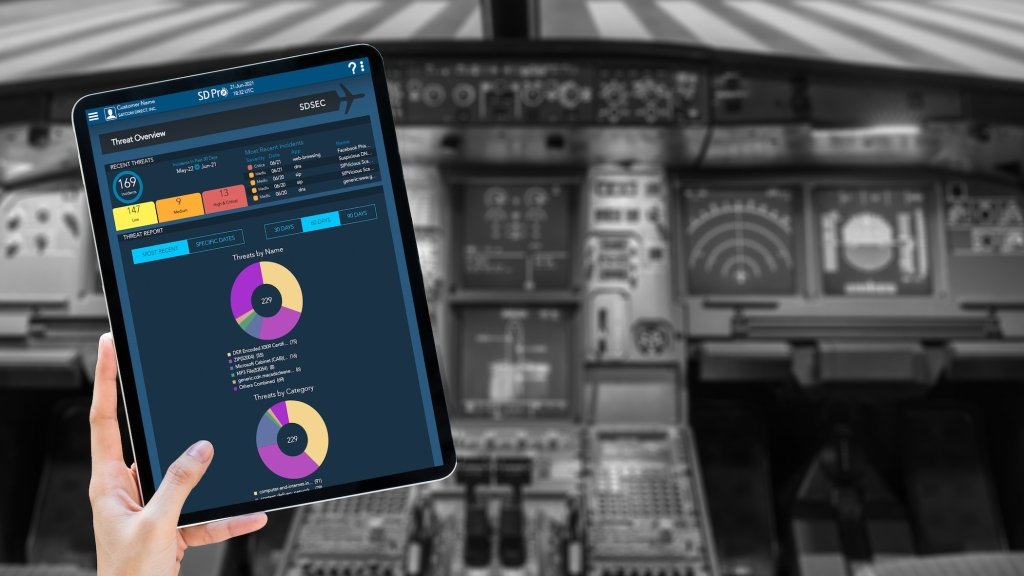
That makes the technology far more usable than if it were just a “black box” on the aircraft.
Third, we have the support infrastructure that links connectivity, hardware and software.
It adds a cybersecurity layer and gives full visibility across our support organisation. That means we can anticipate any coverage interruptions, respond faster, diagnose issues more accurately, and advise customers on how to get the most from their systems.
A lot of the market conversation understandably focuses on “which network is best.” From our standpoint, the bigger picture is customer experience. You only truly control that by mastering all the elements of the ecosystem: networks, hardware, software and support. That holistic approach is where we put our energy.
How long does a typical installation take?
It really depends — there are many variables. Installations can take anywhere from a few days to around eight weeks, depending on the aircraft type, the systems being installed and the condition of the aircraft going into the modification.
Do operators need additional certifications after installation?
We don’t perform the physical installations ourselves. We work with MRO partners and design organisations to develop the STCs (Supplemental Type Certificates) required to certify the equipment on each aircraft type.
Every system installed will already have gone through its own certification process. Once the installation is complete, we conduct an entry-into-service (EIS) process with the customer to ensure they understand how everything works and that the system is performing as expected. After that, no special additional checks are required beyond normal operational monitoring.
Also Read: Embraer Partners with Gogo to Bring High-Speed Galileo HDX Connectivity to Phenom 300