




HI-SCAN 6040 CTiX: Smiths Detection’s 3D CT Scanner for Cabin Baggage

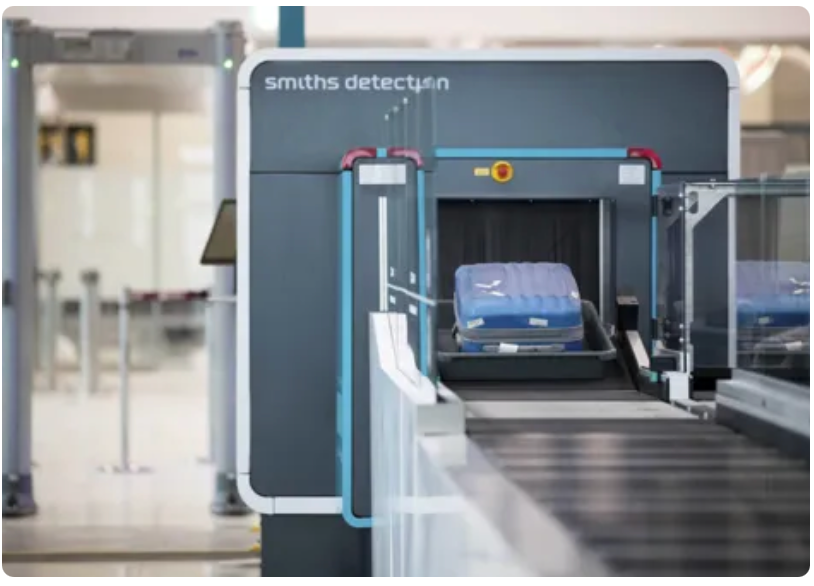
Smiths Detection’s HI-SCAN 6040 CTiX is a computed tomography scanner developed for cabin baggage screening at airport passenger checkpoints. Launched in 2017, it was the company’s first passenger checkpoint scanner based on CT technology.
The system was introduced to address a common limitation of conventional 2D X-ray scanners: when laptops, chargers, liquids and other items overlap inside a cabin bag, a flat image can take longer to assess.
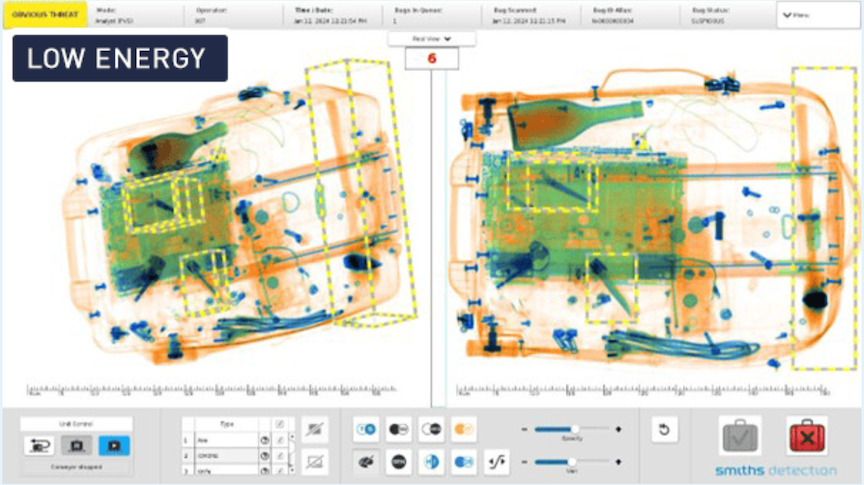
In a standard checkpoint X-ray scanner, fixed generators and detectors produce a 2D image of the bag. The HI-SCAN 6040 CTiX works differently. As the bag moves through the machine, a rotating CT gantry, the ring-shaped structure that carries the scanning components around the bag, captures hundreds of images from different angles.
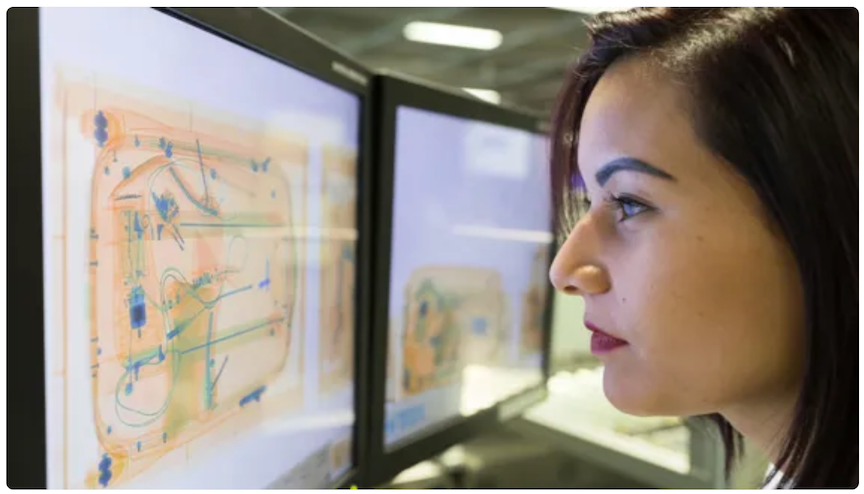
These are reconstructed into a 3D image, giving operators the ability to rotate the bag view, zoom into areas of interest and examine cross-sectional slices. This helps when electronics, chargers, liquids and tightly packed items overlap inside cabin baggage.
The system combines CT imaging with automatic explosives detection algorithms. It also supports 2D image viewing, helping operators transition from traditional X-ray interpretation to CT-based assessment. The product is built for checkpoint screening of carry-on baggage, not checked baggage or cargo screening.
One of the main operational changes is the way cabin baggage can be presented for screening. In airports where the local aviation security authority permits it, passengers can keep laptops, tablets, chargers, liquids and gels inside hand luggage. This reduces the number of separate trays, limits loose items at the checkpoint and shortens the preparation stage before the bag enters the scanner. The 0.2 m/s belt speed also enables faster tray movement through the lane.
The HI-SCAN 6040 CTiX has ECAC (European Civil Aviation Conference) EDS CB C3 approval. The ECAC Common Evaluation Process is a laboratory testing programme used by member states to assess aviation security equipment against ECAC/EU performance standards. For cabin baggage screening, EDS CB C3 approval relates to systems that can screen bags with liquids and large electronics left inside, subject to approval by the national authority.
The scanner is also certified by STAC (Service Technique de l’Aviation Civile, France’s civil aviation technical service), ENAC (Ente Nazionale per l’Aviazione Civile, Italy’s civil aviation authority) and IPMO (Israeli Prime Minister’s Office).
The HI-SCAN 6040 CTiX has TSA APSS v6.2 Level 2 certification.
The updated Model S is also qualified on the TSA Checkpoint Property Screening System Qualified Products List for base, mid and full-size checkpoint configurations. The 3D image evaluation interface received the Red Dot Award in 2020.
Smiths Detection later introduced the HI-SCAN 6040 CTiX Model S, a compact version of the scanner. The Model S is 20 cm narrower and 350 kg lighter than the standard CTiX. This makes it suitable for checkpoints where available space, floor loading or existing lane layout can affect equipment replacement.
Both versions can be integrated with Smiths Detection and third-party checkpoint systems, including tray handling and remote screening set-ups.
The CTiX can work with iCMORE, Smiths Detection’s automated object recognition software. In checkpoint use, iCMORE supports the detection of prohibited items such as guns and knives. In April 2026, iCMORE APIDS (Automated Prohibited Items Detection System) received ECAC certification for use with the HI-SCAN 6040 CTiX. It enables alarm-only screening, where bags requiring attention are flagged for the operator instead of every image being reviewed in the same way.
In March 2026, the 2,000th HI-SCAN 6040 CTiX was sold, with deployments at more than 100 airports across Europe, Asia-Pacific, the Middle East and the Americas. Jeju International Airport in South Korea became the first airport to install the system.
The Jeju deployment included HI-SCAN 6040 CTiX scanners, iLane.evo tray handling, IONSCAN 600 trace detection and Checkpoint.Evoplus management software. The airport recorded clearance of 400 to 500 trays per hour, a 50 per cent increase compared with conventional 2D X-ray systems.
Other public deployments give the product a wider reference base. Rome Fiumicino Airport, also known as Leonardo da Vinci International Airport, operates the CTiX at Terminal 1 and Terminal 3. Frankfurt Airport installed 21 CTiX units at its new Terminal 3. Fukuoka International Airport selected seven HI-SCAN 6040 CTiX Model S scanners with seven iLane A20 automatic tray return systems for its renovated international terminal. Zurich Airport selected the Model S for CT X-ray scanner trials.
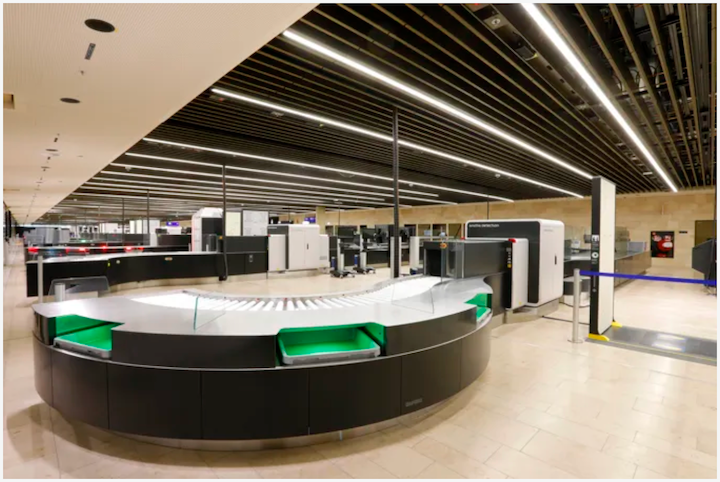
Following successful deployments across international airports, Smiths Detection announced the availability of the HI-SCAN 6040 CTiX 3D computed tomography scanner for the Indian market in September 2023.
The company had already tested the system at major Indian airports, with feedback from airport operators and security agencies.
With more than two decades of presence in India, Smiths Detection is positioning the CTiX for airports looking to move from conventional cabin baggage X-ray screening to CT-based checkpoint screening.
For India, the relevance of checkpoint CT is tied to rising passenger volumes and pressure on airport security lanes. DigiYatra is addressing the identity-check stage of travel, while CT-based cabin baggage screening targets another delay point: the security tray process. Where approved by the regulator, CT screening reduces checkpoint unpacking, saving passenger time and helping security lanes move faster.
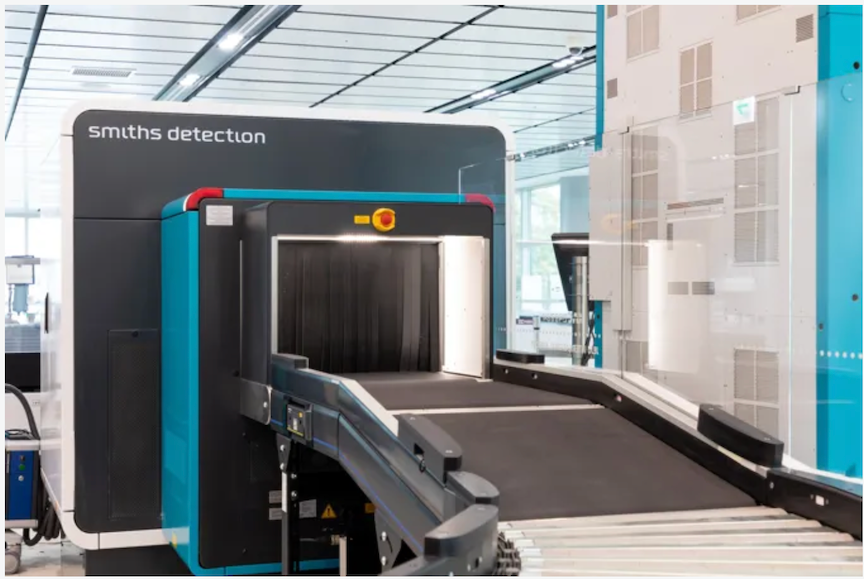
Smiths Detection has continued to expand the CTiX family for airport checkpoint operations. The range now includes the smaller Model S, iCMORE APIDS, automatic tray return, remote screening and Checkpoint.EvoPlus. This places the scanner within a wider checkpoint set-up, where tray handling, image review and final clearance of cabin bags are managed as part of the same screening process.
Also Read: Bengaluru’s Second Airport May Come Up in South Bengaluru