













- India is set to see a major leap in aviation infrastructure with the upcoming inauguration of Navi Mumbai International Airport and Noida International Airport at Jewar, aimed at easing congestion in Mumbai and Delhi.
- While both airports promise to boost regional connectivity and economic growth, their success will depend on factors like operator coordination, accessibility, and passenger traffic migration.

The second half of this year will see two new major airports in the country come to life. Navi Mumbai and Noida International Airport at Jewar are all set to open with inauguration in the next couple of weeks followed by the formal commencement of scheduled flights which will then see the opening up of international operations.
Airports serving the same city often reflect the dynamic growth of urban regions and the increasing demands of air travel. A prime example of this phenomenon can be observed in cities like New York, London, or Paris, where multiple airports operate in tandem to manage the sheer volume of passengers and cargo. Each airport typically develops its own identity and specialisation, playing a vital role in connecting the city to domestic and international destinations.
Take, for instance, New York City, which is served by both John F. Kennedy International Airport (JFK) and Newark Airport, along with LaGuardia Airport (LGA). These airports, though geographically close, cater to distinct types of travellers and offer unique services. JFK, located in Queens, is a sprawling international hub renowned for its intercontinental connections. It handles the bulk of New York’s long-haul flights and is a preferred choice for travellers heading to Europe, Asia, Africa, and beyond. With state-of-the-art terminals, lounges, and a focus on accommodating international carriers, JFK acts as a gateway to the world. It also has an efficient cargo handling system, contributing significantly to New York’s economy. The Newark airport acts as a gateway for United, one of the top three airlines in the USA. LaGuardia Airport, on the other hand, primarily serves domestic flights and short-haul routes. Located closer to Manhattan than JFK, LaGuardia is favoured by business travellers due to its proximity to the city’s financial and commercial centres. With new terminals and infrastructure upgrades, LaGuardia is gradually shedding its old reputation for congestion and delays. A similar dynamic exists in London, where there are five airports including Heathrow, the busiest and most popular, Gatwick, Stansted, Luton and London City operation within a 30 miles radius of London. Interestingly, there are airlines including some major ones like Emirates which operate in more than one airport in London.
India, hitherto, did not have two airports serving the same and that is set to change this year. It is time to see how things pan out.
Navi Mumbai International Airport
The Navi Mumbai International Airport (NMIA) is one of India’s most ambitious infrastructure projects, designed to address the growing aviation demands of the Mumbai Metropolitan Region (MMR). Its development underscores India’s efforts to expand its aviation infrastructure and reduce the overwhelming burden on Chhatrapati Shivaji Maharaj International Airport (CSMIA), Mumbai’s existing airport. NMIA, with its strategic location and advanced design, is expected to play a crucial role in bolstering India’s economy and connectivity.
The conceptualisation of Navi Mumbai Airport dates back to the early 1990s when policymakers began recognising the limitations of Mumbai’s sole airport in handling passenger and cargo volumes. CSMIA, located in the heart of the city, was facing significant operational challenges due to land constraints, increasing air traffic, and urban congestion. By the late 1990s, it was evident that a second airport was not just desirable but necessary to ensure the sustainable growth of Mumbai, India’s financial capital.
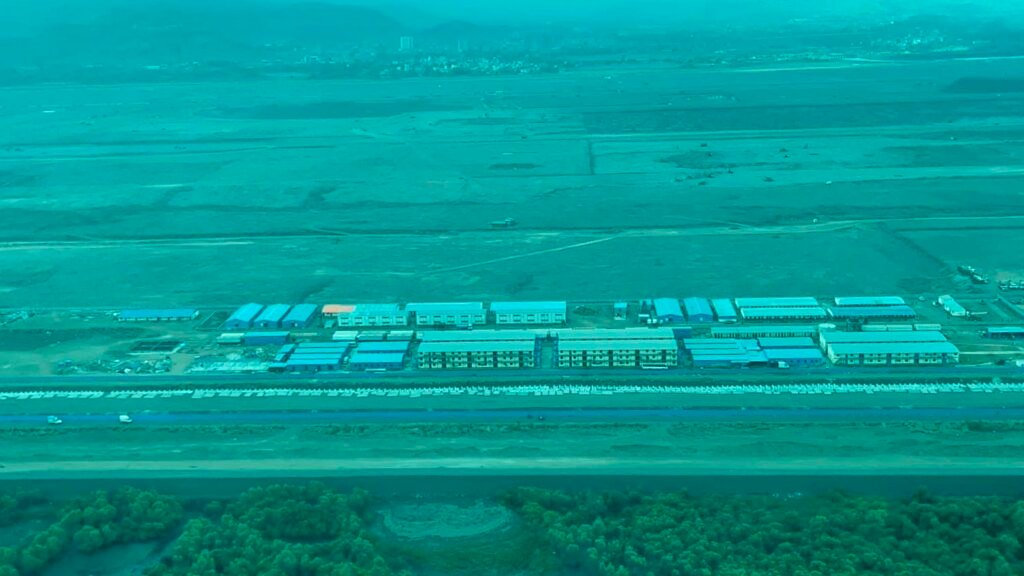
The Maharashtra government and the City and Industrial Development Corporation (CIDCO), the nodal agency for urban planning in Navi Mumbai, were entrusted with the task of identifying a suitable site. After detailed evaluations, a location in Navi Mumbai’s Panvel region was selected. The site spread across an area of approximately 1,160 hectares, offered sufficient land for the construction of a world-class airport. However, the project was delayed due to various challenges, including land acquisition, environmental clearances, and the need for rehabilitation of affected villagers.
One of the most significant hurdles in the project was obtaining environmental clearance. The site for NMIA includes mangroves, wetlands, and two rivers—Ulwe and Gadhi—which required careful planning to minimise ecological disruption. Additionally, the airport’s proximity to the Western Ghats and its position in a seismically active zone added to the complexity of design and construction. After years of negotiations and revisions, the Ministry of Environment and Forests granted clearance in 2010, paving the way for the project to proceed. The estimated cost of the project is around ₹16,000 crore, and the airport is designed to handle up to 90 million passengers annually once fully operational. The construction is planned in four phases, with the first phase expected to handle 20 million passengers per year. NMIA is envisioned as a modern, eco-friendly airport with state-of-the-art infrastructure. Its design, created by globally renowned architects Zaha Hadid Architects, reflects both functionality and sustainability. The terminal building is inspired by traditional Indian architecture and is designed to optimise natural light, reduce energy consumption, and provide passengers with a seamless travel experience. The airport will feature two parallel runways, advanced air traffic control systems, and multimodal connectivity, including access via road, rail, and the Mumbai Trans Harbour Link, a sea bridge connecting Navi Mumbai to South Mumbai.
The economic and social benefits of Navi Mumbai Airport are immense. For one, it will alleviate the congestion at CSMIA, which is currently operating beyond its designed capacity. This will not only improve the efficiency of air travel in Mumbai but also make the city more accessible for international airlines. The airport is expected to generate significant employment opportunities, both during the construction phase and once operational. Additionally, it will stimulate the development of Navi Mumbai and surrounding areas, making them attractive destinations for businesses and real estate investment.
NMIA’s impact will extend beyond Mumbai, as it is strategically located to serve passengers from Pune, Nashik, and other parts of Maharashtra. Its proximity to Jawaharlal Nehru Port Trust (JNPT), one of India’s largest container ports, will enhance the logistics and cargo handling capabilities of the region, boosting trade and commerce.
Noida International Airport – Jewar
The Noida International Airport (NIA), commonly referred to as Jewar Airport, is an ambitious aviation project located in the Gautam Buddh Nagar district of Uttar Pradesh, India. Envisioned as a major hub for air travel and a significant contributor to India’s economic and infrastructural growth, this airport aims to cater to the increasing demand for air connectivity in the National Capital Region (NCR).
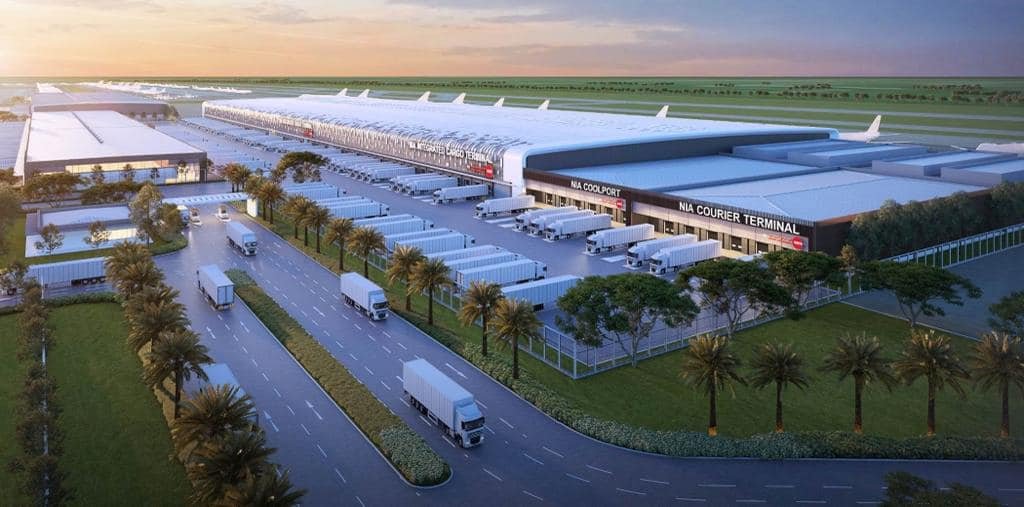
The idea of an international airport in Jewar was first conceived in the early 2000s. At the time, the Indira Gandhi International Airport (IGIA) in Delhi was already experiencing rapid growth in passenger traffic, raising concerns about its ability to handle future demand. The Uttar Pradesh government proposed the Jewar site as a solution to ease congestion at IGIA and to stimulate economic growth in the region.
The Uttar Pradesh government partnered with the central government and the Yamuna Expressway Industrial Development Authority (YEIDA) to push the project forward. In 2019, Zurich Airport International AG won the bid to develop and operate the airport, marking a significant milestone in the project’s journey. The Noida International Airport is designed to serve as a key infrastructural asset for the NCR and Uttar Pradesh. Strategically located approximately 72 kilometres from IGIA and 40 kilometres from Noida, the airport aims to cater to both domestic and international travellers, easing the burden on IGIA while fostering regional connectivity.
Additionally, the airport is expected to play a pivotal role in the economic development of the region. By boosting connectivity, the project is likely to attract investments, create jobs, and stimulate industries such as logistics, tourism, and real estate. The airport is also a cornerstone of the Uttar Pradesh government’s vision to make the state a trillion-dollar economy.
The Noida International Airport is planned to be developed in multiple phases. Upon completion, it is expected to be India’s largest airport, spanning over 5,000 hectares of land and featuring six runways—the highest number for any airport in the country. The first phase of the airport is designed to handle 12 million passengers annually. It includes a terminal building with modern architecture, efficient passenger flow, and sustainable design. A single runway will be operational initially, with plans to expand as demand increases. The Yamuna Expressway will provide direct road access, while plans for a high-speed rail link to Delhi are also underway.
By 2040, the airport is projected to handle over 70 million passengers annually, making it a critical hub for international and domestic air travel. The airport is also expected to catalyse the development of an “Aerotropolis” in the surrounding region, encompassing industrial parks, residential areas, and commercial hubs. This development will further boost economic activity and enhance the quality of life in the region.
What’s working in favour and what isn’t?
Navi Mumbai Airport is located right within the urban conglomerate area of Mumbai, with a well-developed Navi Mumbai township around. Besides the Atal Setu linking Navi Mumbai to South Mumbai, the distance has been bridged literally. With Mumbai airport having full capacity and nothing left to add, Navi Mumbai will be a natural choice. Besides, there is force involved in shifting from Mumbai to Navi Mumbai. With both airport concessionaires being the same, Adani Airports, the airport operator, will be taking up renovation and revamp of Terminal 1 at Mumbai Airport leading to multiple flights being shifted to Navi Mumbai. This could mean a quick ramp-up of flights at Navi Mumbai and passengers being forced to try the new airport as flights move.
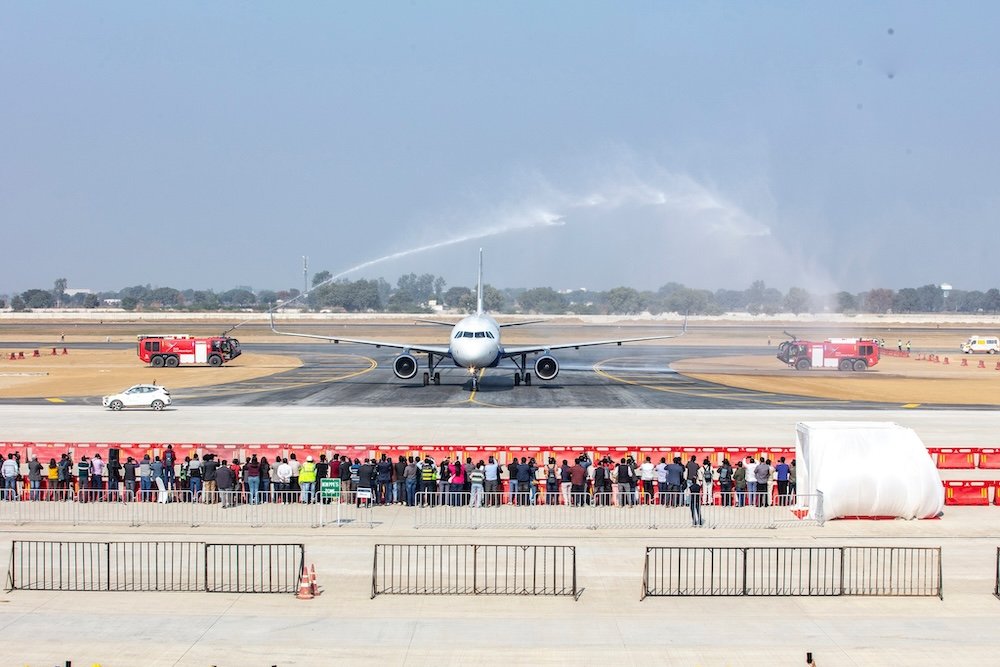

At Noida International Airport in Jewar, this is not the case. The airport’s operator is different from the Indira Gandhi Airport, which is operated by GMR Group. This will mean that any flight shifting from the current airport to the new one will mean a loss of revenue. While Mumbai is completely full, New Delhi recently went for an upgrade and now has four runways along with a terminal capacity of 100 million passengers, with last year seeing 77 million passengers indicating that there remains room for more growth. Jewar is also further away from Greater NOIDA, which itself is considered far. With connectivity restricted to access from Yamuna Expressway for now, Jewar should take a long time to be popular.
The two new airports in major cities like Delhi and Mumbai are going to open up a Pandora’s box around bilateral rights, connections and more.
Challenges
In cities where multiple airports operate, there are challenges as well. Coordination between these airports is crucial to avoid airspace congestion and ensure smooth operations. Additionally, infrastructure investments must be planned carefully to avoid redundancy and maximise efficiency.
Cities served by more than one airport benefit from the flexibility and efficiency offered by such arrangements. By dividing responsibilities and catering to different segments of air travel, these airports help manage growing demand, support economic growth, and enhance global connectivity. Their coexistence is a testament to the complexity and adaptability of modern urban aviation systems.