












- Airbus Helicopters has signed a contract to supply up to 18 Flexrotor uncrewed aerial systems to Garuda Technologies Inc., enabling the company to expand its global drone leasing and mission-service operations.
- The long-endurance VTOL Flexrotor drone can remain airborne for 12–14 hours and carry multiple sensor payloads, making it suitable for missions such as infrastructure inspection, surveillance, disaster response and maritime monitoring.
- The partnership supports Garuda Aerospace’s international expansion through its U.S. subsidiary while reflecting growing demand for tactical unmanned systems across civil, industrial and defence applications.
Airbus Helicopters has signed a contract with Garuda Aerospace’s U.S.-based subsidiary, Garuda Technologies Inc., for the delivery of up to 18 Flexrotor uncrewed aerial systems (UAS), marking a significant step in the expansion of Garuda’s global drone leasing and services business.
Under the agreement, Garuda will integrate the Airbus Flexrotor into its international leasing portfolio and offer the platform through both dry and wet lease models to customers across multiple sectors. The drones will be deployed for a wide range of civil and parapublic missions including inspection of critical infrastructure such as roads, railways, oil and gas pipelines, and power transmission lines, as well as law enforcement, search and rescue, wildfire monitoring and disaster response operations.
Agnishwar Jayaprakash, Founder and CEO of Garuda Aerospace, said the partnership represents an important milestone in the company’s global growth strategy. “Our collaboration with Airbus Helicopters to integrate the Flexrotor into our global leasing portfolio marks a significant milestone in our international expansion and investment strategy,” he said.
Garuda has already manufactured and sold more than 5,000 drones and served over 500 enterprise and government clients globally. The company currently commands around 30 percent of India’s agri-drone market and has accumulated more than one million drone flight hours across agriculture, defence and industrial applications. The addition of the Flexrotor will allow Garuda to scale its services further and expand its high-endurance unmanned capabilities for demanding global operations.
From Airbus’ perspective, the agreement signals growing demand for long-endurance tactical drones capable of operating in complex environments. Olivier Michalon, Executive Vice President for Global Business at Airbus Helicopters, said the company sees strong interest in the Flexrotor platform from both civil and defence operators. “The Flexrotor offers the best trade-off in terms of payload capability, endurance and expeditionary agility thanks to its small footprint,” he said, adding that the programme continues to see strong growth momentum as more organisations adopt unmanned systems for critical missions.
Garuda Technologies Inc., headquartered in Delaware, is a wholly owned subsidiary of Garuda Aerospace and forms the backbone of the company’s push into the North American market. Through this subsidiary, Garuda plans to expand its UAS leasing, mission services and aerial data operations across sectors such as energy, public services, agriculture, defence and industrial infrastructure monitoring.
Flexrotor, small but tactical VTOL
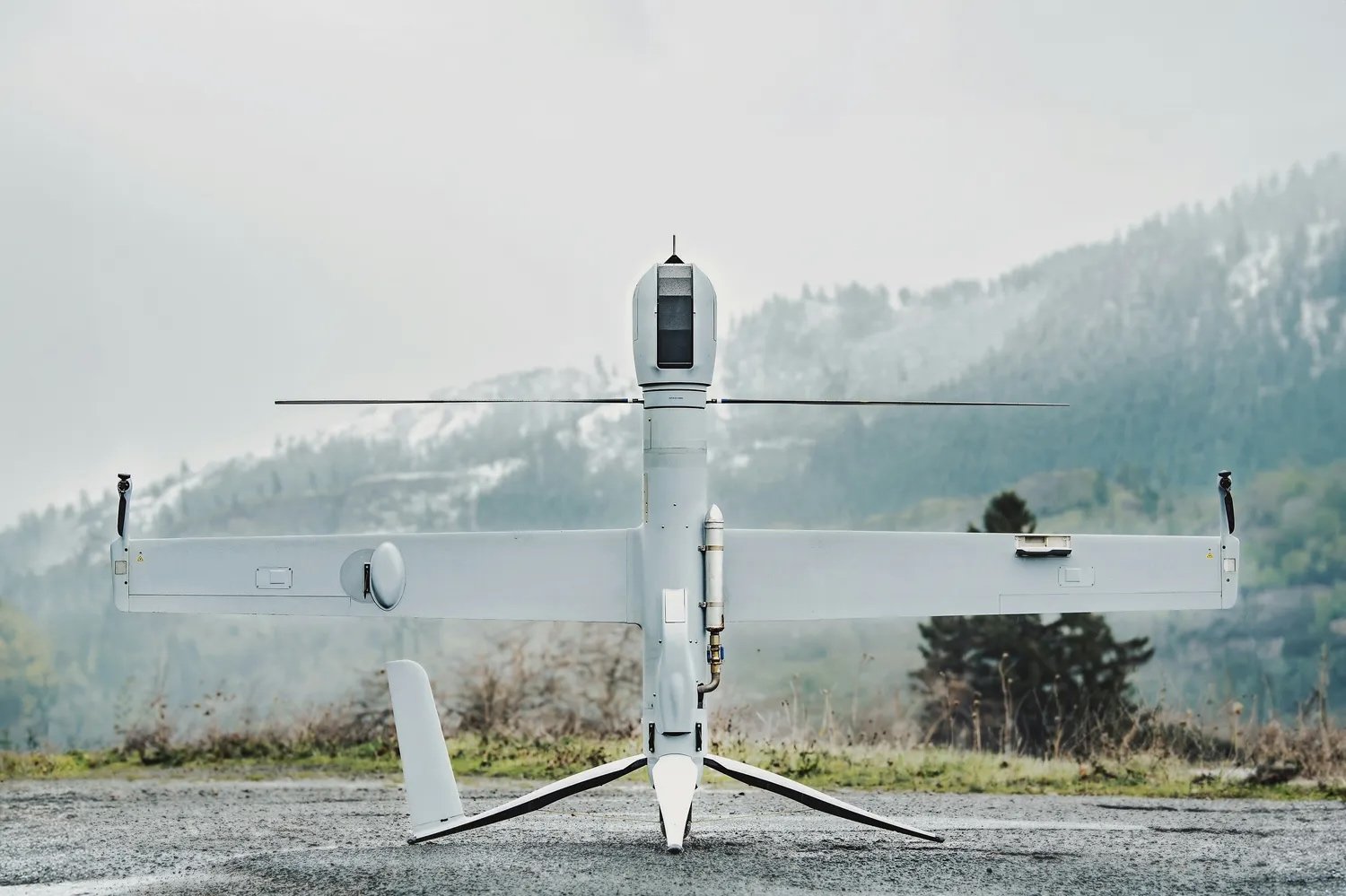
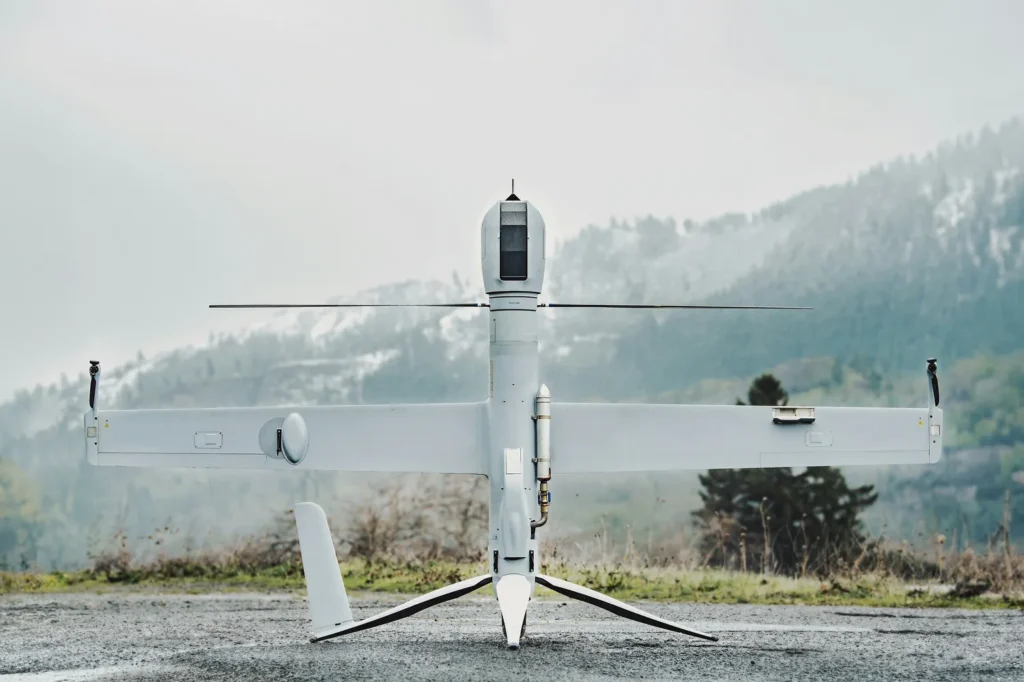
At the centre of the agreement is the Flexrotor itself, a small tactical vertical take-off and landing (VTOL) uncrewed aircraft system designed for long-endurance intelligence and surveillance missions. The platform belongs to the Group 2 category of tactical drones and has a maximum take-off weight of 25 kilograms. Despite its compact size, it is designed to carry a wide range of mission payloads and operate for extended durations, making it suitable for persistent aerial surveillance and monitoring tasks.
Endurance
One of the key strengths of the Flexrotor is its endurance. In a typical operational configuration, the drone can remain airborne for between 12 and 14 hours, enabling long-duration intelligence, surveillance, target acquisition and reconnaissance (ISTAR) missions. The aircraft can carry payloads of up to eight kilograms and integrate various sensors depending on mission requirements, including electro-optical imaging systems and other advanced surveillance equipment.
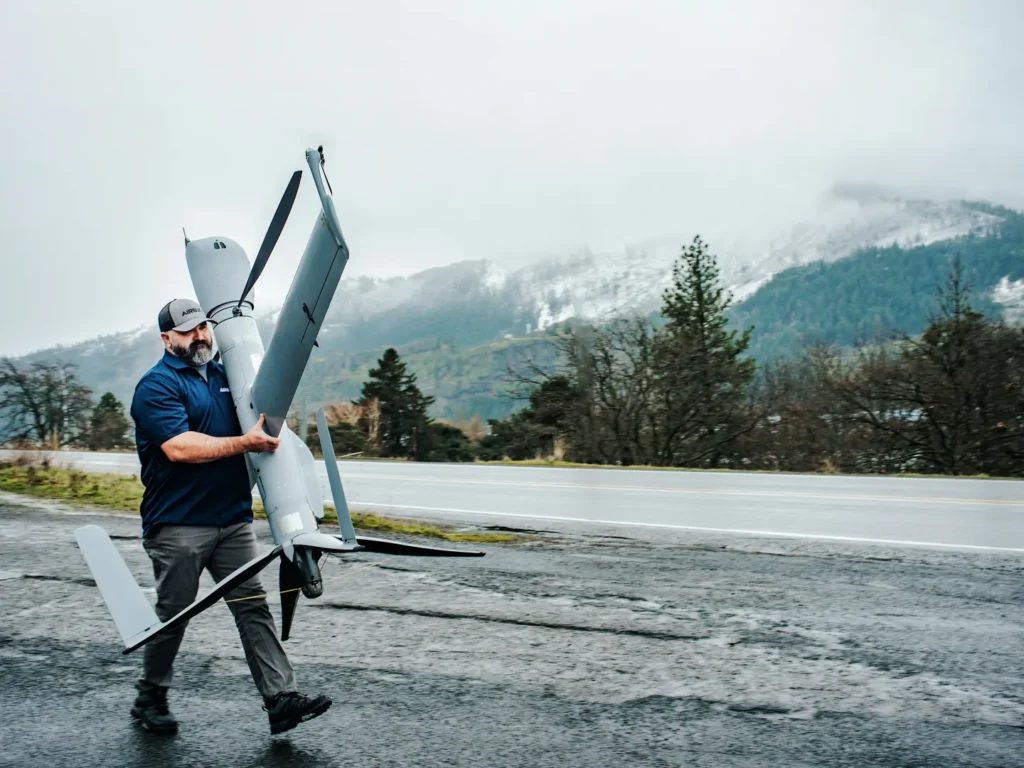
The Flexrotor’s design also emphasizes expeditionary flexibility. It can autonomously launch and recover from either land or sea using a compact footprint of just 3.7 by 3.7 metres, allowing operations from confined locations such as remote field sites or ships without dedicated flight decks.
This capability makes it particularly valuable for maritime surveillance, border monitoring and offshore infrastructure inspection. The drone’s vertical take-off and landing capability eliminates the need for conventional runways, while its compact design allows it to be transported easily and deployed quickly.
Operational Readiness
Operational readiness is another notable feature. The Flexrotor can be transported in a stowed configuration and prepared for flight in less than 30 minutes, making it suitable for rapid-response missions. Its propulsion system is powered by a 28 cc two-stroke engine, enabling efficient long-endurance flight with a dash speed of up to 140 kilometres per hour. At maximum weight with landing legs closed, the drone can hover at altitudes of up to 1,300 metres.
Civil Applications
The platform’s multi-mission architecture allows it to support a wide range of operations beyond surveillance. For civil authorities, it can assist in search and rescue operations, border security and disaster management. In the commercial sector, potential applications include precision agriculture, geospatial mapping, wildlife observation and marine research.
With the global drone services market expanding rapidly, the collaboration between Airbus Helicopters and Garuda Technologies underscores how partnerships between established aerospace companies and emerging drone operators are shaping the next phase of the unmanned aviation industry.
Also Read: An eVTOL Program Built on India’s Ground Realities