

















- Airbus has crossed 500 A220 deliveries, with the aircraft now firmly established in the 100-160 seat segment and supported by a much larger order book.
- The A220 is now serving different roles across airline fleets, replacing regional jets, older small narrowbodies and, in some cases, replacing a mix of smaller aircraft with a single fleet.
- Its strength lies in its ability to operate on short domestic, regional and longer thin routes, but India still has no operator because the market remains largely split between ATR turboprops and larger A320 or 737-family jets.

Airbus has taken the A220 past the 500-delivery mark, a milestone that underlines how firmly the aircraft has moved into airline fleet planning.
By March 31, 2026, the A220 family stood at 959 orders, 501 deliveries and 497 aircraft in operation.
The order split also shows where customer preference has settled, with 108 orders for the A220-100 and 851 for the larger A220-300.
Originally launched by Bombardier as the CSeries and brought into the Airbus fold in 2018, the A220 was developed for the 100-150 seat category, a space that had long remained underserved between regional jets and larger single-aisle aircraft.
Airbus now positions the family across the 100-160 seat segment, with a range of up to 3,600 nautical miles for the A220-100 and 3,400 nautical miles for the A220-300. That gives airlines room to use the aircraft on short regional sectors, longer domestic services and thinner international routes without moving up to a larger A320 or 737-family jet.
The next phase for Airbus depends as much on output as on sales.
The A220 production ramp-up is continuing, with Airbus targeting a rate of 13 aircraft per month in 2028 as it works through supply-chain and industrial integration constraints.
While the customer base now spans large network airlines, low-cost operators, regional carriers and lessors. That range is important because it shows that the aircraft is no longer tied to a single narrow fleet role or market type.
Replacing Older Fleets
The A220’s place in the market becomes clearer when viewed through the aircraft it is replacing. At JetBlue and Air Canada, it took over from the Embraer 190. JetBlue selected the A220-300 as a lower-cost successor to the E190, citing around 40% lower fuel burn per seat and greater flexibility across its network.
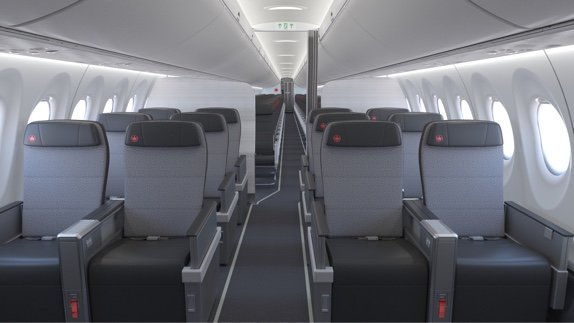
Air Canada brought in the A220 as the replacement for its Embraer 190s, with lower fuel and operating costs, longer range and the ability to serve markets that did not justify the capacity of larger Boeing 737 MAX 8 or Airbus A321 aircraft.
A different pattern appears in other fleets. Qantas is using the A220-300 to replace the Boeing 717, with the aircraft offering enough range to operate nonstop across its domestic network.
SWISS deployed the type in place of the Avro RJ100 on short-haul services. Air France has deployed the A220-300 to replace A318s and A319s on short- and medium-haul services.
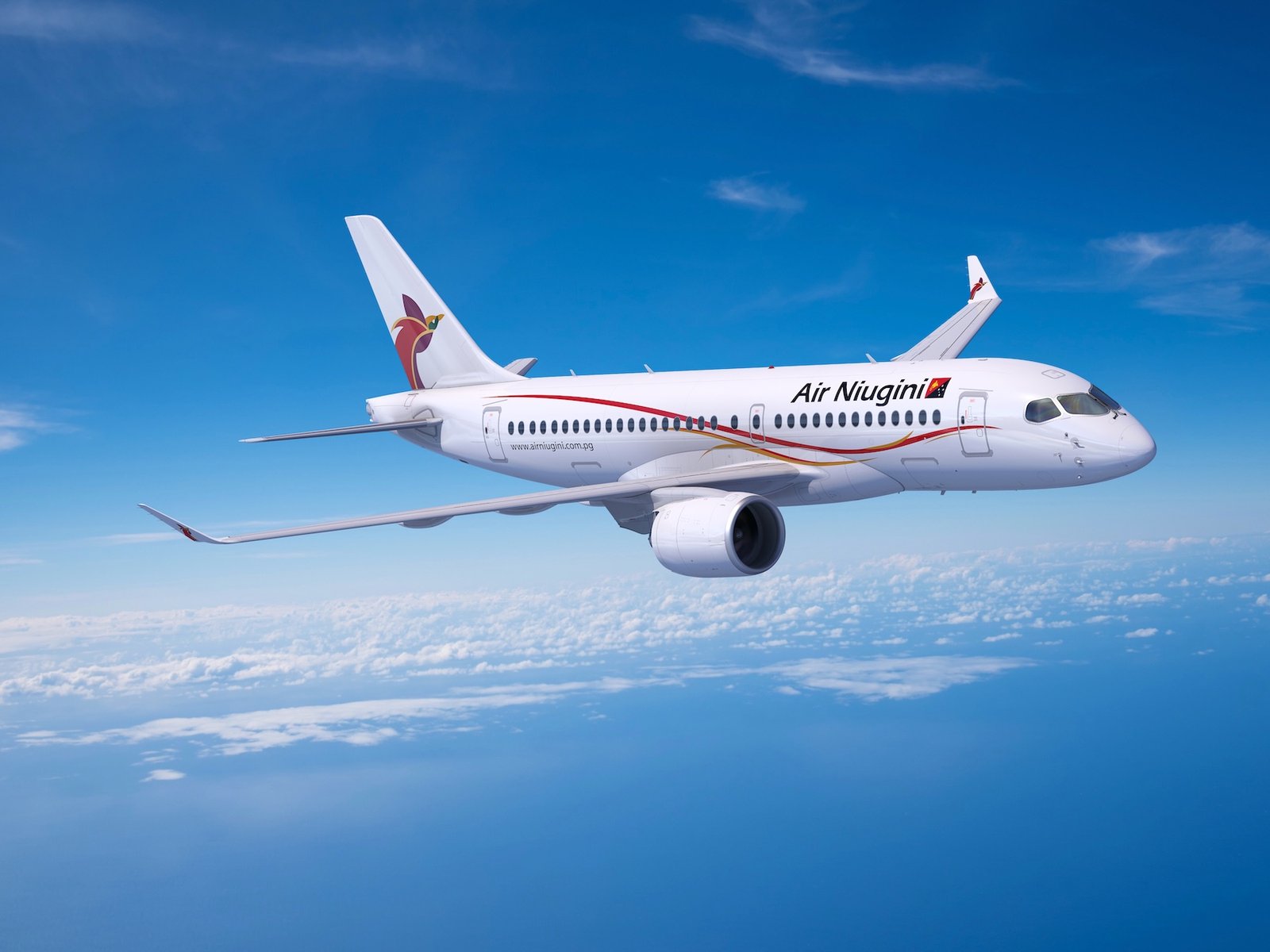
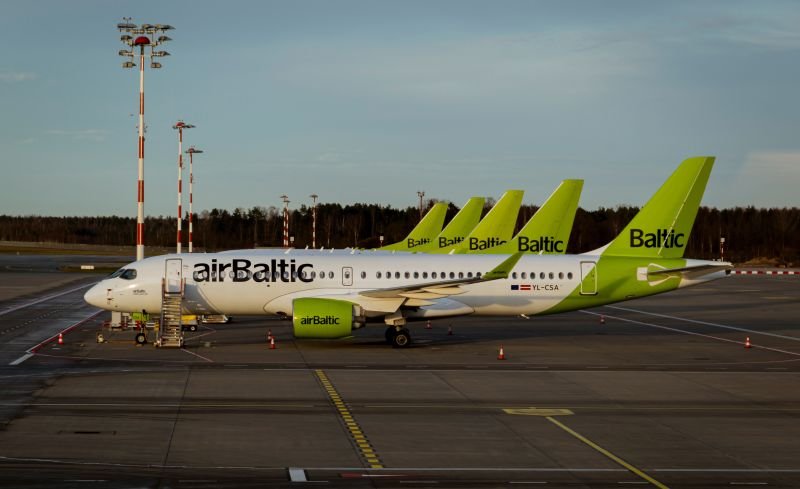
For some airlines, the aircraft forms part of a wider fleet renewal and simplification effort. Croatia Airlines is moving from A319s, A320s and Dash 8 Q400s to the A220. Air Niugini has outlined a two-stage transition in which the aircraft first replaces Fokker 100 and Fokker 70 aircraft on domestic routes before later moving to the Boeing 737 replacement. airBaltic has taken that logic further, building a single-type A220 fleet around its network from Riga.
That is what gives the A220 its commercial relevance; it is not replacing one aircraft family worldwide. In some fleets, it has stepped in for ageing regional jets, in others, it is taking over from older small narrowbodies. Elsewhere, it is helping airlines move away from a patchwork of smaller aircraft toward one common fleet type.
From Short Domestic to Longer Routes
The A220’s route profile is just as important as its role as a replacement. Delta has deployed the A220 on domestic U.S. sectors such as LaGuardia-Dallas/Fort Worth. Air Canada introduced the aircraft on the Montreal-Seattle and Toronto-San Jose routes. Air France first deployed the A220 on services from Paris to Berlin, Madrid, Barcelona, Milan and Venice.
Qantas is using it on services such as Melbourne-Canberra, Sydney-Coffs Harbour and Brisbane-Wellington, while SWISS has put it on routes such as Cairo and Hurghada and at constrained airports including London City and Florence.
From an Indian perspective, these routes cover three broad use cases. The first is the core domestic jet market, where sectors such as Paris–Berlin (880 km) or Paris–Madrid (1,050 km) are closer in role to India’s established metro routes, such as Delhi–Mumbai (1,150 km), Mumbai–Chennai (1,035 km) or Delhi–Hyderabad (1,250 km).
The second is the shorter regional jet market, where services such as Melbourne–Canberra (470 km) or Sydney–Coffs Harbour (435 km) resemble metro-to-tier-2 or regional leisure links—a segment that in India includes routes such as Mumbai–Goa (435 km) or Delhi–Varanasi (680 km).
The third is the longer end of the network, where routes such as Montreal–Seattle (3,675 km), Brisbane–Wellington (2,510 km) or Riga–Abu Dhabi (4,370 km) are closer to the kind of long domestic or near-abroad sectors that are above regional flying but below the density of a typical A320 or 737 deployment.
In India, this group includes long domestic sectors such as Guwahati–Mumbai (2,070 km), Port Blair–Delhi (2,485 km) and Srinagar–Chennai (2,395 km), and on the international side, routes such as Mumbai–Tbilisi (3,300 km).
That range of use is a major part of the aircraft’s appeal, as the A220 is not restricted to a single route category.
It can move from short domestic sectors to longer, lower-density international services without forcing an airline into the seat-count risk of a larger narrowbody.
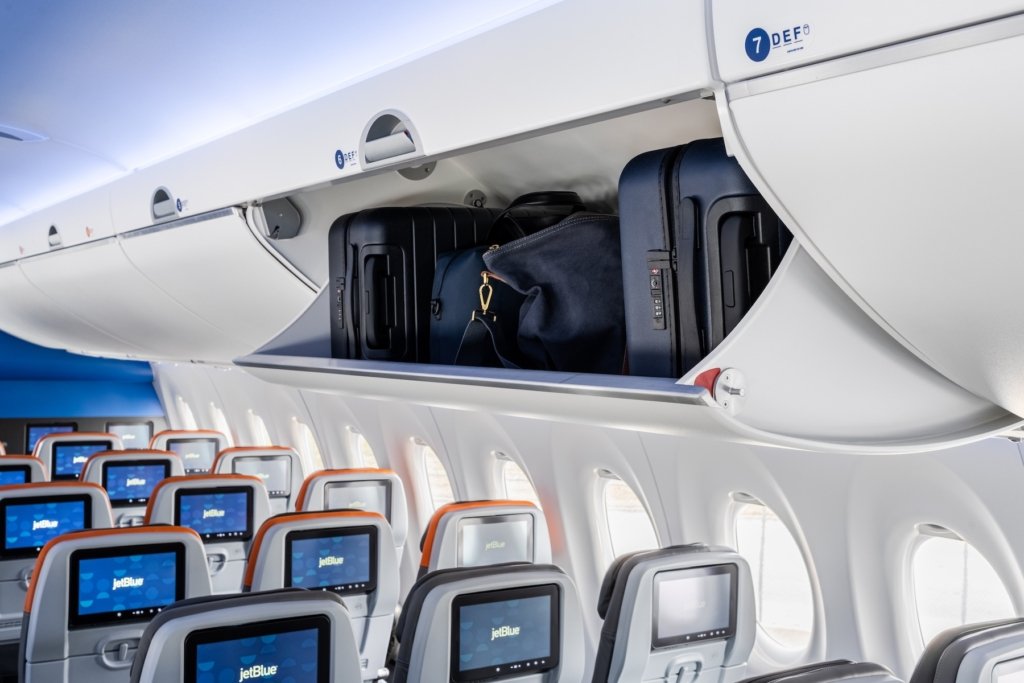
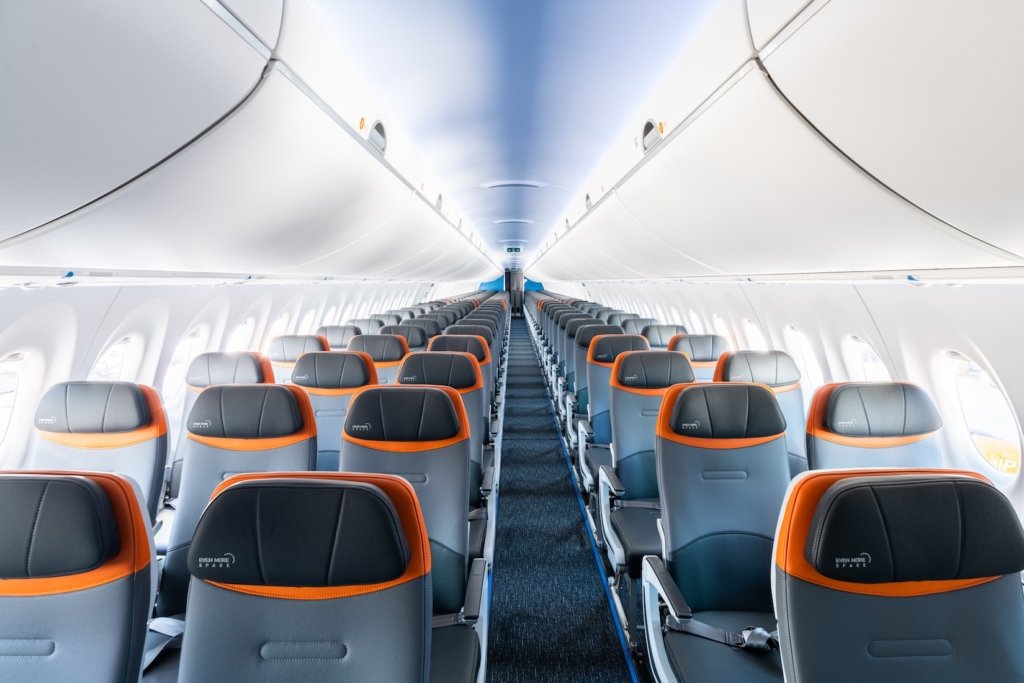
The cabin product supports that case, with five-abreast 2-3 seating, wider economy seats, large windows and larger bins, but the stronger draw is still economic. Airlines are choosing the aircraft because it offers a full mainline product on routes where range, trip cost and capacity all have to be judged more carefully.
Why India Still Has No A220 Operator
India remains outside the A220 operator map. The aircraft has the range and seat count for a wide spread of domestic and near-abroad missions, but the question in India has never been one of technical capability. It has been shaped by the structure of the market.
Scheduled aviation in the country has long been split between turboprops, such as the ATR72, on thinner routes, and A320 or 737-family aircraft on higher-volume sectors. That has left limited room for a 100-160-seat jet to build scale.
Examples from other markets are useful because they show where the aircraft performs best. Qantas is using it across a dispersed domestic and regional network while replacing the 717. airBaltic has built a single-type strategy around it in a relatively small home market and used the aircraft to extend from Riga to longer European and near-abroad routes.
Air Tanzania has operated the A220 on domestic and regional services, and later on Extended-range Twin-engine Operations (ETOPS) flights from Dar es Salaam to Mumbai. These are not direct parallels to India, but they do show that the aircraft can operate where a single fleet type is expected to cover both regional and longer sectors.

For India, the commercial question is whether enough routes emerge between ATR economics and A320 or 737 scale to support an aircraft such as the A220. That could apply to selected metro-to-tier-2 links, longer domestic sectors where a turboprop is too small, or thinner international markets where a larger narrowbody adds too much capacity risk. The A220 has already shown in other geographies that this part of the market can be commercially useful. India has simply not chosen to build around it so far.
Also Read: How India Taxes Business Aviation Out of Its Own Market