











The Missing Link in Air Traffic Management: Managing Delays on the Ground

- Air traffic flow management works best when delays are absorbed on the ground through coordinated planning, instead of being pushed into taxiway congestion or airborne holding.
- Collaborative decision-making among airlines, airports, ATC, and flow managers is key to improving predictability, reducing fuel burn, and using available capacity more efficiently.
- ICAO’s 2012 framework established the collaborative model, but outcomes have depended on adoption: where managed ground delays were accepted as part of operations, performance improved; where they were not, implementation did not translate into meaningful operational gains.
Aviation runs on precision. Departure boards are planned down to the minute. An airline’s performance is judged by whether a door closed on time.
Airport slot coordinators allocate capacity within defined time intervals.
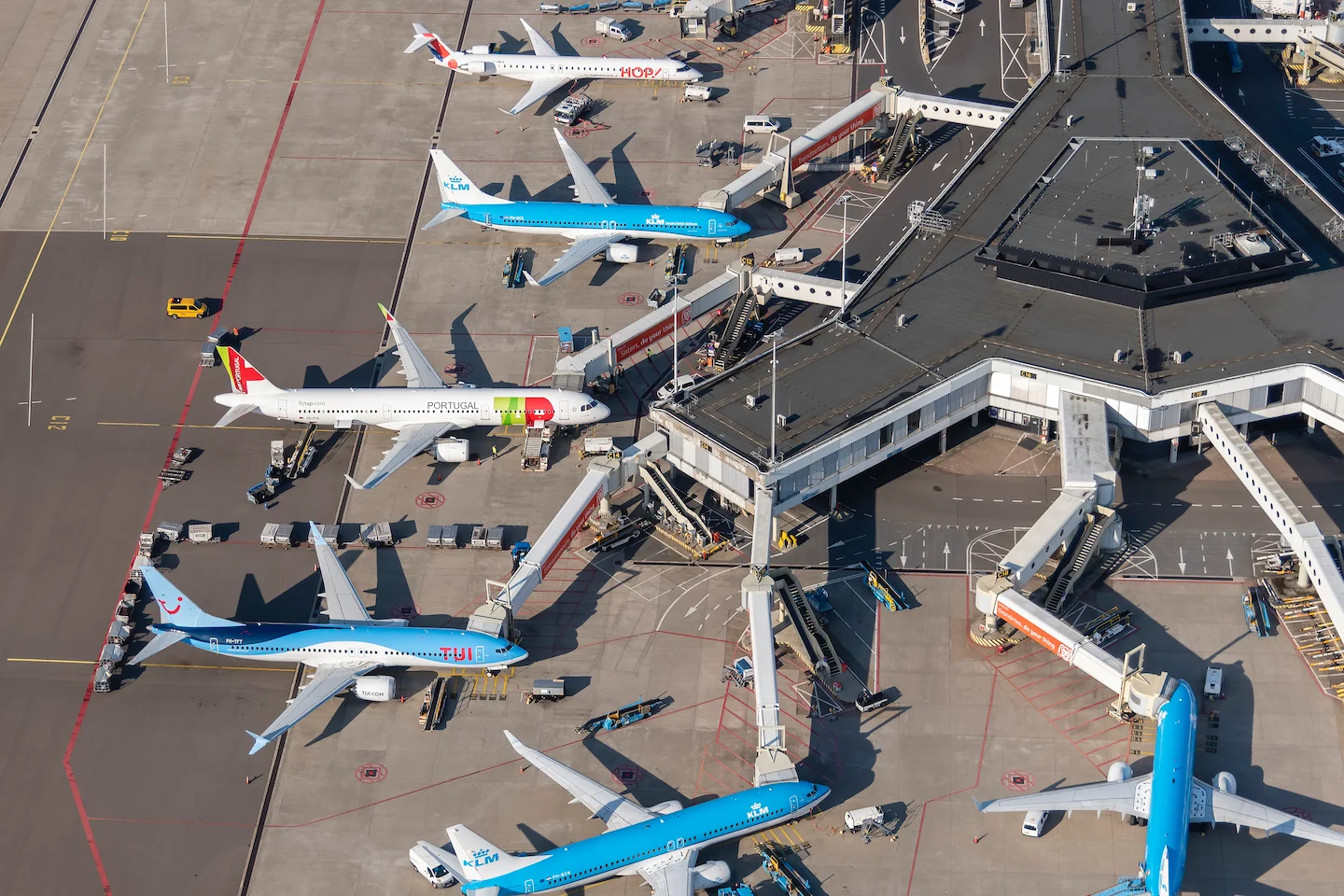
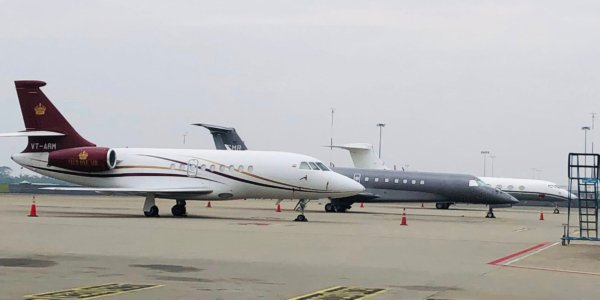
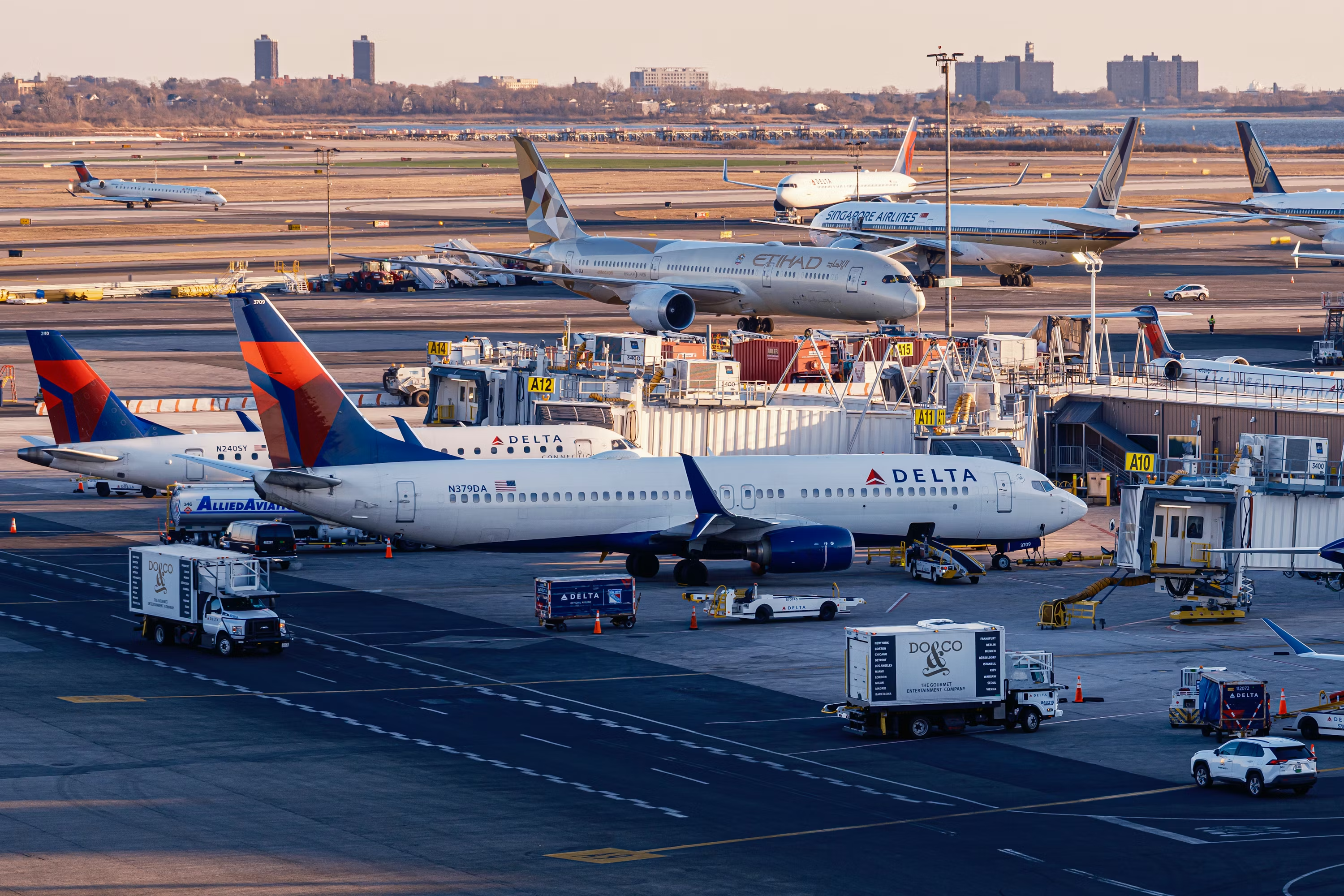
Yet across many airports worldwide, a quiet but growing inefficiency continues: aircraft waiting on taxiways with engines running, burning fuel and producing emissions while waiting for a runway that is handling too many flights at once.
Likewise, on the approach sector of busier TMAs (Terminal Manoeuvring Areas), flights await for approach clearance. The solution to this problem was proposed more than a decade ago. Many regions have yet to adopt it.
Demand Outpacing Capacity
Air Traffic Flow Management (ATFM) is the function responsible for optimising the use of airspace and airports’ infrastructure by avoiding congestion, both airborne and on the ground. When a thunderstorm blocks arrival routes into a major airport, when a runway is closed for maintenance, or when too many departures are scheduled during a busy period, the ATFM function is expected to act as needed to minimise congestion and disruptions.
Traditionally, those decisions were made in a reactive and local way. Controllers deliberately delayed flights on the ground or airborne, with engines on, leading airlines to experience ad-hoc flight delays, which resulted in both rising fuel use and poor on-time performance.
In 2012, recognising that air traffic demand was historically growing faster than the infrastructure could accommodate, the International Civil Aviation Organisation (ICAO) introduced a new ATFM concept, outlined in its Document 9971 (Manual on Collaborative Air Traffic Flow Management).
The new framework proposed by ICAO brought together all stakeholders involved, airlines, airport operators, air traffic control and air traffic flow management, to jointly decide how to respond when demand was expected to exceed capacity.
What that meant was that the Air Traffic Flow Management function evolved to Air Traffic Flow and Capacity Management, where unavoidable flight delays arising from an imbalance between demand and capacity would be collaboratively scheduled while aircraft were on the ground with engines off.
This approach, known as Collaborative Decision-Making (CDM), introduced a principle that proved more difficult than it first appeared.
Ground Over Airborne Delays
The ICAO framework did more than improve coordination. It changed what the system is trying to optimise. When demand exceeds capacity, ICAO Doc 9971 places fuel efficiency, environmental impact, and overall schedule stability above the on-time departure of individual flights.
This was a significant shift. Airline performance has long been measured by departure time. Passengers notice it, regulators track it, airline leaders report it, and airports use it to justify investments. Asking stakeholders to accept planned delays on the ground and to keep an aircraft at the gate for 30 or 40 minutes to avoid fuel burn in the air requires a shift in thinking. The focus moves from individual flights to the performance of the entire network.

In Europe and North America, this shift was accepted. Eurocontrol and the Federal Aviation Administration (FAA) built systems around this idea.
The Ground Delay Programme, where flights are held at departure airports to manage congestion at the destination, became standard practice.
Airlines followed Calculated Take-Off Times set by flow management units. This led to clear results: less airborne holding, lower fuel use, and more predictable operations.
In many other regions, the same approach was not accepted. Ground delays were seen as restrictions rather than a way to improve the system. When flights were delayed, it was blamed on air traffic control rather than recognised as part of managing overall capacity. This difference in perception is critical. One approach creates resistance, while the other encourages cooperation.
Where Adoption Falls Short
Eurocontrol’s Airport CDM framework, which proposes real-time sharing of turnaround data between airports, airlines, ground handlers, and air traffic control, has shown clear benefits. European airports reported shorter taxi times, lower fuel use, fewer ad hoc delays and better predictability.
Airports in regions where ATFCM (Collaborative ATFM) have not been discussed or agreed upon have attempted to adopt Eurocontrol Airport CDM, under a software perspective, without properly understanding CDM’s basic assumptions and consequences.
Milestone tracking systems were introduced, Target Off-Block Times (TOBTs) and Target Start-Up Approval Times (TSATs) were adopted, requiring aircraft to request pushback within a fixed time window calculated based upon airlines’ precise estimates.

The outcomes have been inconsistent. Airlines that were used to pushing back as close to schedule as possible were now expected to hold at the gate within strict time windows every day.
For operators who had not accepted managed delays even when necessary, this felt like an unnecessary restriction rather than an improvement.
The issues that followed were not due to technology. The systems worked as designed, and the sequencing calculation logic was correct. The real problem was that there had been no prior agreement on the essence of collaborative (CDM) operation. The systems were introduced without a proper understanding and acceptance of their underlying principles.
Integration Requires Alignment
The airport’s surface and the airspace above it are not separate systems; they are part of a single, continuous flow. From the moment an aircraft leaves the gate, it becomes part of a sequence that includes taxiways, runways, departure routes, en-route airspace, and arrival flows at its destination. Decisions made on the ground affect what happens in the air, and constraints in the air must be managed somewhere.
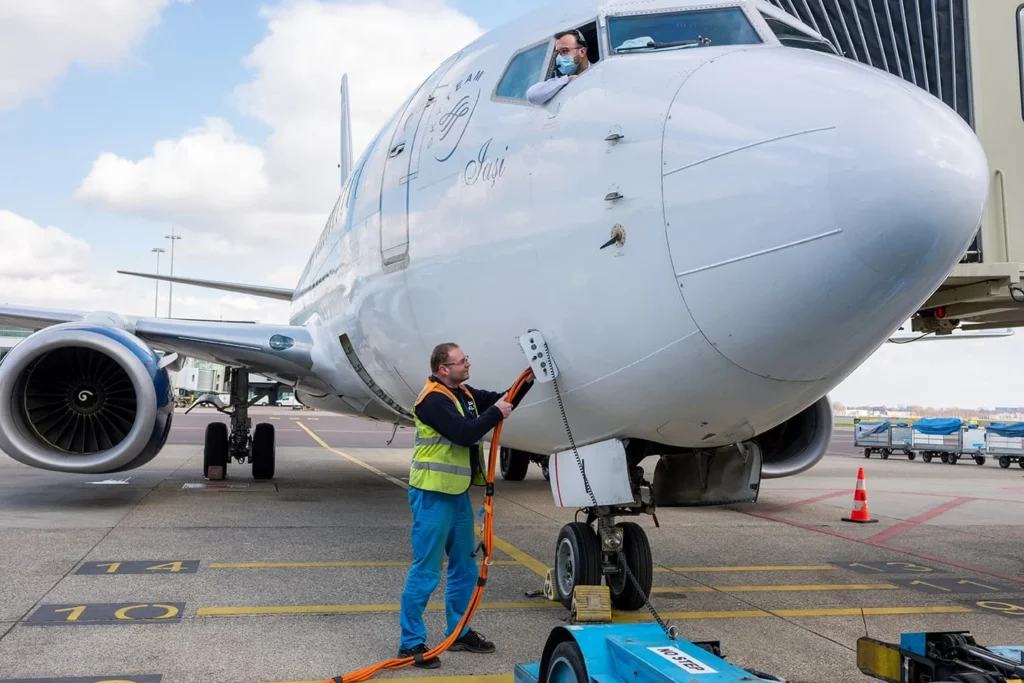
CDM introduction has also been successfully implemented in the US. NASA research at Charlotte Douglas International Airport showed what proper integration can achieve. Over four years of trials, aircraft were held at gates with engines off and released only when runway capacity was available. This avoided long taxiway queues, which are one of the most fuel-intensive parts of a flight.
The result was a saving of more than a million gallons of fuel and a reduction in emissions equivalent to the carbon absorbed by 170,000 trees. This was achieved without new infrastructure, simply through better timing based on real-time data.
The FAA is now expanding its Surface CDM programme to 27 major airports through an extension to its Terminal Flight Data Manager programme. This builds on a long-standing CDM culture in which gate holds are accepted because the rationale is clear and the benefits are shared.
Agreeing on Trade-Offs
No system, software, or tracking process will deliver the benefits of Airport CDM and ATFM unless all stakeholders first agree on the goal. Fuel efficiency and environmental performance cannot be improved if each participant focuses only on on-time departures. The choice between individual flexibility and network efficiency is not technical—it is about governance and shared understanding.
What ICAO introduced in 2012 was not just a framework but a starting point for discussion.
It requires airlines, airports, service providers, and regulators to agree on priorities when the system is under pressure, define acceptable trade-offs, and decide how delays should be shared fairly.
This conversation is not difficult; it is simply often avoided. In regions where it was skipped, systems were introduced without the necessary cultural shift. As a result, the expected benefits remained theoretical instead of being reflected in actual fuel savings or emission reductions.
The missing link in collaborative air traffic management was never technology or data. It was agreement, and that remains the case today.
* Sergio Martins is an engineer with over 40 years of experience across air traffic control, airline operations and air traffic management. He began his career as an air traffic controller in Brazil and later worked at Varig Airlines and with global air traffic management solutions providers SITA, Indra and Saab. He retired in 2025.
Also Read: The Amelia–Thales Blueprint: The Case for Scalable Contrail Avoidance